García-González Silvia Beatríz, Huerta-Franco María Raquel, Miguel-Andrés Israel, de Jesús Mayagoitia-Vázquez José, León-Rodríguez Miguel, Barrera-Beltrán Karla, Espinoza-Macías Gilberto
Departamento de Ciencias Aplicadas al Trabajo, Universidad de Guanajuato, Campus Leon, Guanajuato 37128, Mexico.
Rehabilitación, Hospital Regional de Alta Especialidad del Bajío, Leon 37660, Mexico.
Healthcare (Basel). 2022 Apr 11;10(4):707. doi: 10.3390/healthcare10040707.
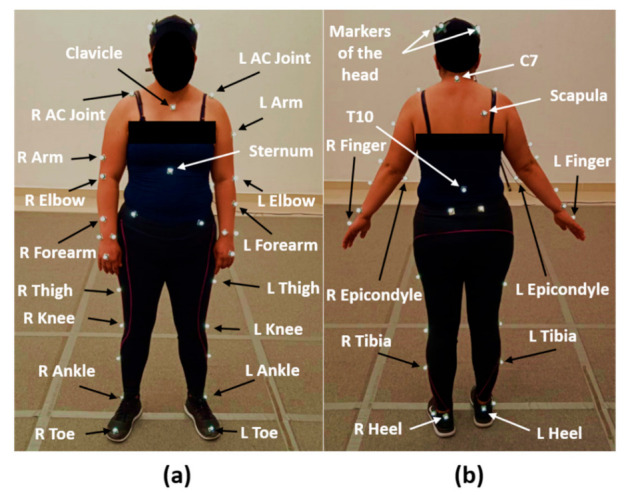
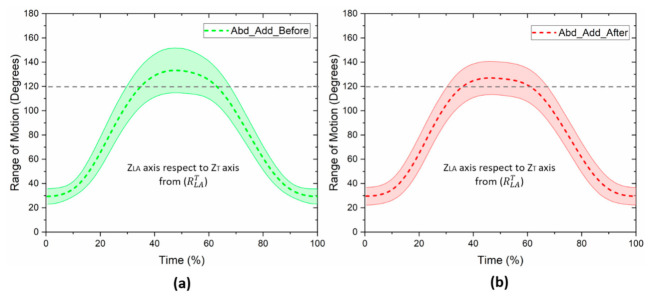
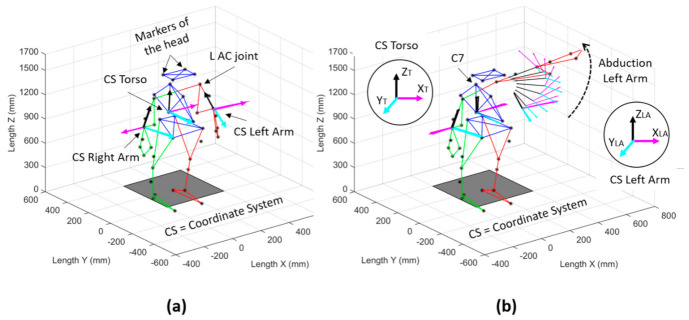
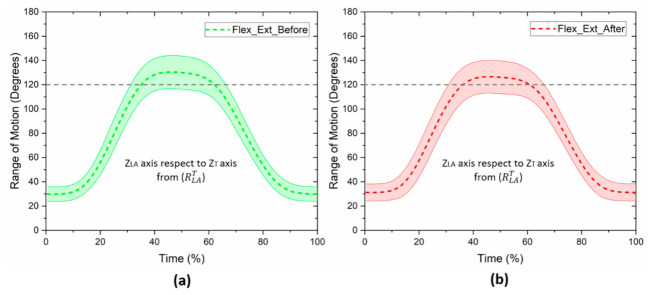
After mastectomy, women might lose mobility and develop kinematic changes in the shoulder. The objective of this research was to compare the kinematics of the glenohumeral joint in women, before and after unilateral breast cancer surgery. This was a longitudinal study with a pre- and post-evaluation design; in total, 15 Mexican women who had a mastectomy for breast cancer and who received a physical therapy program after surgery were evaluated. Flexion-extension and abduction-adduction movements of the glenohumeral joint were evaluated (15 days before and 60 days after mastectomy). For the kinematic analysis of the glenohumeral joint, an optoelectronic motion capture system was used to monitor 41 reflective markers located in anatomical landmarks. There was no significant difference in the range of motion of the glenohumeral joint when comparing pre- and post-mastectomy, flexion-extension ( = 0.138), and abduction-adduction ( = 0.058). Furthermore, patients who received chemotherapy (53%) before mastectomy were more affected (lower range of motion) than those who did not receive it. There were no significant differences in the kinematics of the glenohumeral joint after mastectomy in this group of patients who received a physical therapy program after surgery. Moreover, patients who received chemotherapy treatment before breast cancer surgery tended to have a lower range of motion than those who did not receive it. Therefore, it is necessary for the physical rehabilitation team to attend to these patients even before the mastectomy.
乳房切除术后,女性可能会失去活动能力,并出现肩部运动学变化。本研究的目的是比较单侧乳腺癌手术前后女性肱盂关节的运动学。这是一项采用术前和术后评估设计的纵向研究;总共评估了15名因乳腺癌接受乳房切除术且术后接受物理治疗方案的墨西哥女性。评估了肱盂关节的屈伸和外展内收运动(乳房切除术前15天和术后60天)。对于肱盂关节的运动学分析,使用了一个光电运动捕捉系统来监测位于解剖标志点的41个反光标记。比较乳房切除术前和术后,肱盂关节的运动范围在屈伸( = 0.138)和外展内收( = 0.058)方面没有显著差异。此外,在乳房切除术前接受化疗的患者(53%)比未接受化疗的患者受影响更大(运动范围更低)。在这组术后接受物理治疗方案的患者中,乳房切除术后肱盂关节的运动学没有显著差异。此外,在乳腺癌手术前接受化疗的患者往往比未接受化疗的患者运动范围更低。因此,物理康复团队甚至在乳房切除术之前就有必要关注这些患者。