Department of Medicine, University of Ottawa, Ottawa, ON K1Y 4E9, Canada.
Department of Medicine, University of Toronto, Toronto, ON M5G 2C4, Canada.
Viruses. 2022 Mar 22;14(4):657. doi: 10.3390/v14040657.
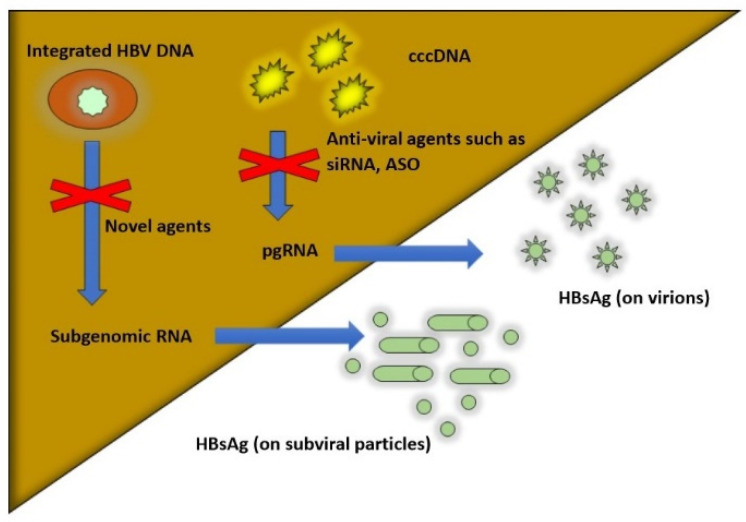
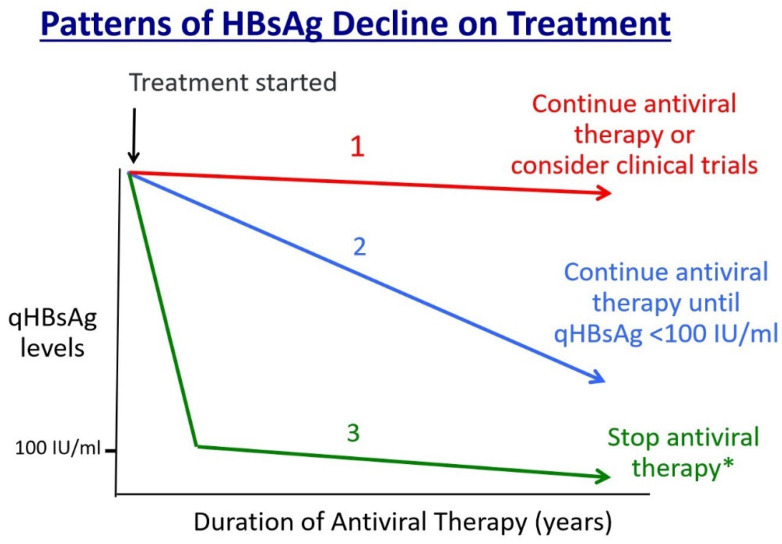
Despite the availability of effective vaccines and antiviral therapy over the past two to three decades, chronic hepatitis B virus (HBV) infection remains a major global health threat as a leading cause of cirrhosis and liver cancer. Functional HBV cure defined as hepatitis B surface antigen (HBsAg) loss and undetectable serum HBV DNA is associated with improved clinical outcomes in patients with chronic HBV infection. However, spontaneous loss of HBsAg is rare and occurs in only 1% of all HBsAg-positive individuals annually. Furthermore, the rate of functional cure with currently available antiviral therapy is even lower, <1% patients on treatment per year. Nonetheless, HBsAg loss has become the new target or therapeutic endpoint for antiviral treatment. Recently, there has been much excitement surrounding the development of novel antiviral agents such as small interfering RNA (siRNA), core assembly modulators (CAMs), nucleic acid polymers (NAPs) among others, which may be used in combination with nucleos(t)ide analogs and possibly immunomodulatory therapies to achieve functional cure in a significant proportion of patients with chronic hepatitis B. Novel assays with improved sensitivity for detection of very low levels of HBsAg and to determine the source of HBsAg production will also be required to measure efficacy of newer antiviral treatments for HBV cure. In this narrative review, we will define HBV cure, discuss various sources of HBsAg production, evaluate rates of HBsAg loss with current and future antiviral agents, review clinical factors associated with spontaneous HBsAg loss, and explore clinical implications of functional cure.
尽管在过去的二三十年中已经有了有效的疫苗和抗病毒疗法,但慢性乙型肝炎病毒(HBV)感染仍然是一个主要的全球健康威胁,是肝硬化和肝癌的主要原因。功能性 HBV 治愈定义为乙型肝炎表面抗原(HBsAg)丢失和血清 HBV DNA 不可检测,与慢性 HBV 感染患者的临床结局改善相关。然而,HBsAg 的自发丢失很少见,每年仅发生在所有 HBsAg 阳性个体中的 1%。此外,目前可用的抗病毒治疗的功能性治愈率甚至更低,每年接受治疗的患者中<1%。尽管如此,HBsAg 丢失已成为抗病毒治疗的新目标或治疗终点。最近,新型抗病毒药物如小干扰 RNA(siRNA)、核心组装调节剂(CAM)、核酸聚合物(NAP)等的开发引起了广泛关注,这些药物可能与核苷(酸)类似物联合使用,并且可能与免疫调节疗法联合使用,以实现相当一部分慢性乙型肝炎患者的功能性治愈。还需要具有更高灵敏度检测非常低水平 HBsAg 的新型检测方法以及确定 HBsAg 产生来源的方法,以衡量新型抗病毒治疗乙型肝炎治愈的疗效。在本叙述性综述中,我们将定义 HBV 治愈,讨论 HBsAg 产生的各种来源,评估当前和未来抗病毒药物的 HBsAg 丢失率,回顾与自发性 HBsAg 丢失相关的临床因素,并探讨功能性治愈的临床意义。