Kovář Pavel, Puričer Pavel, Kovářová Kateřina
Department of Radioelectronics, Faculty of Electrical Engineering, The Czech Technical University in Prague, 166 27 Prague, Czech Republic.
Department of Economics and Management, Jan Evangelista Purkyne University in Usti nad Labem, 400 96 Usti nad Labem, Czech Republic.
Sensors (Basel). 2022 Apr 10;22(8):2902. doi: 10.3390/s22082902.
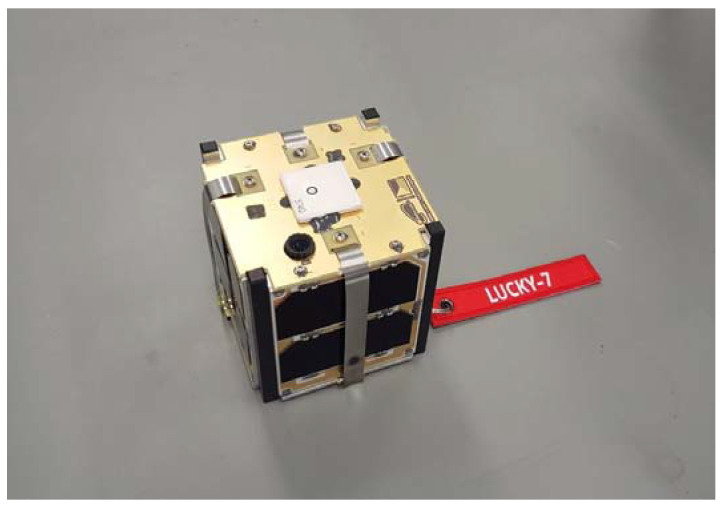
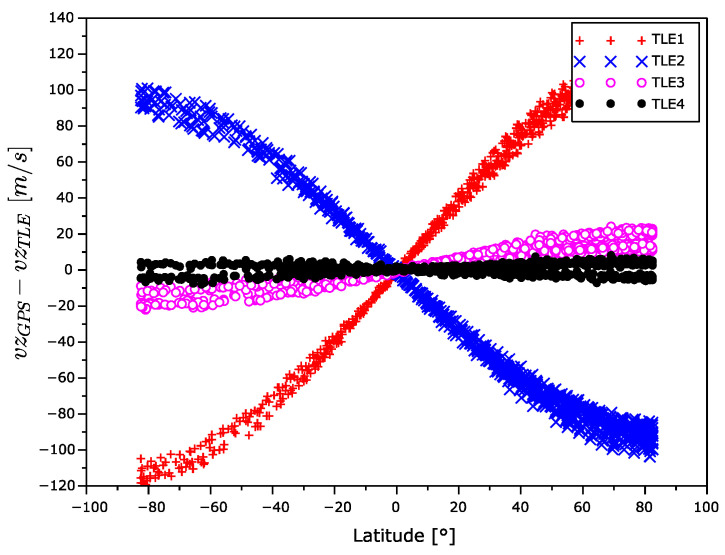
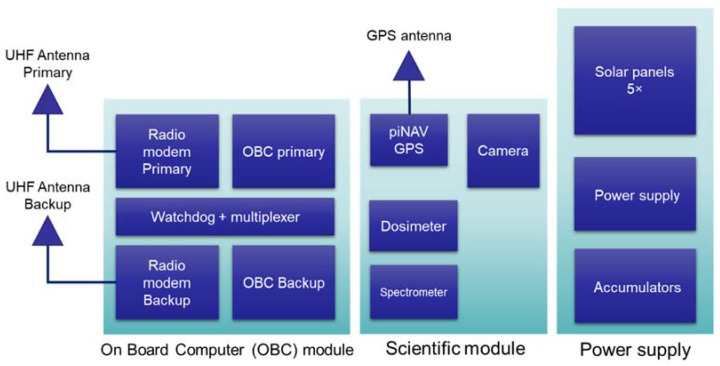
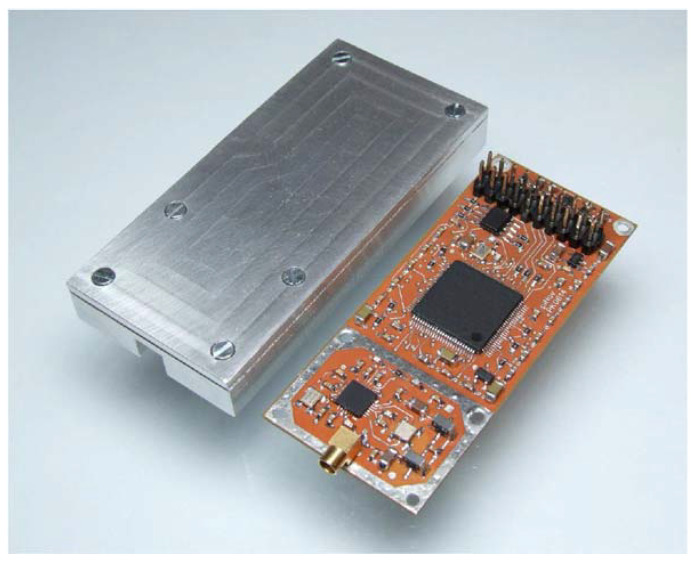
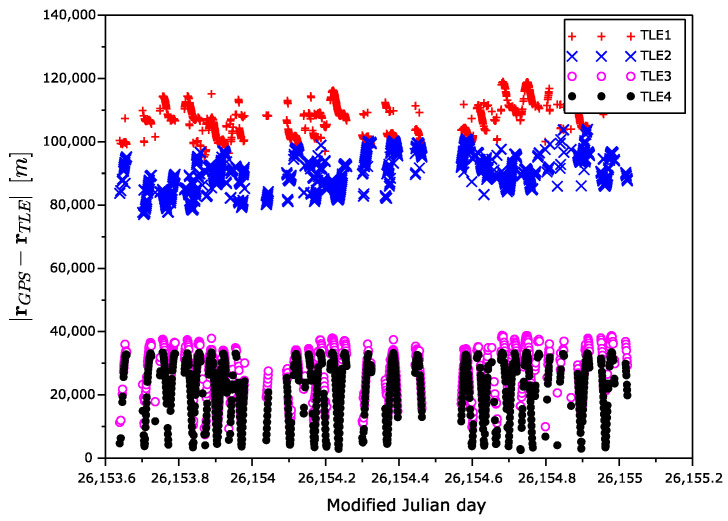
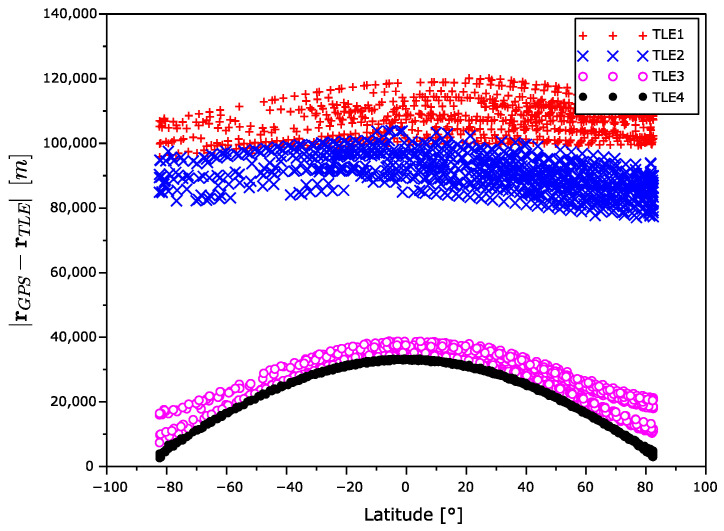
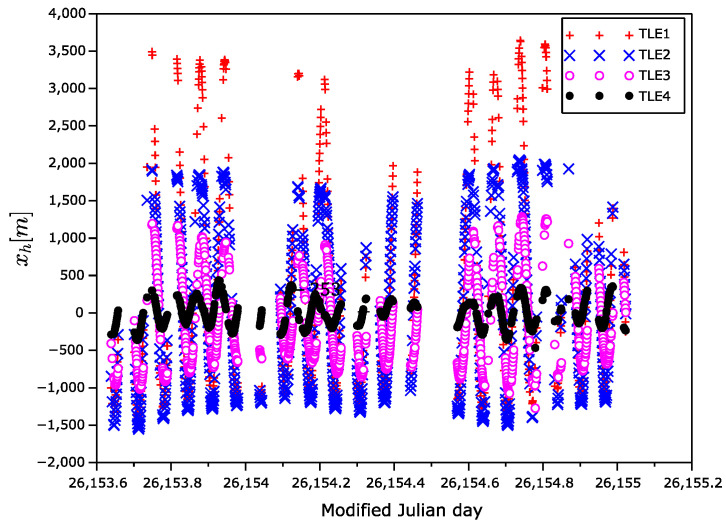
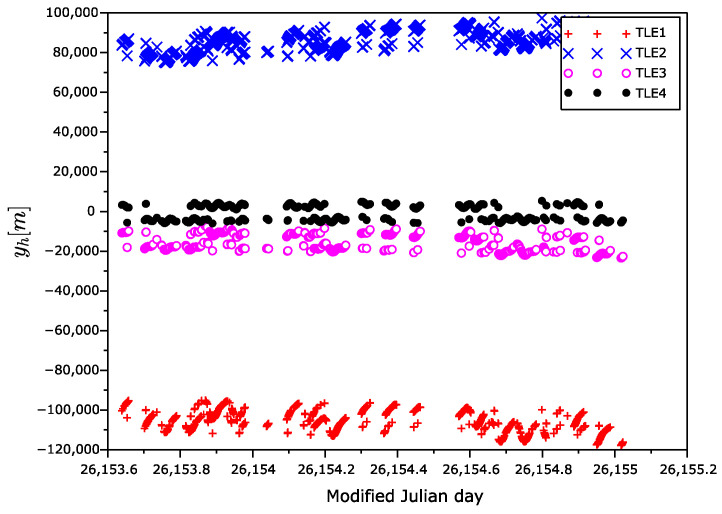
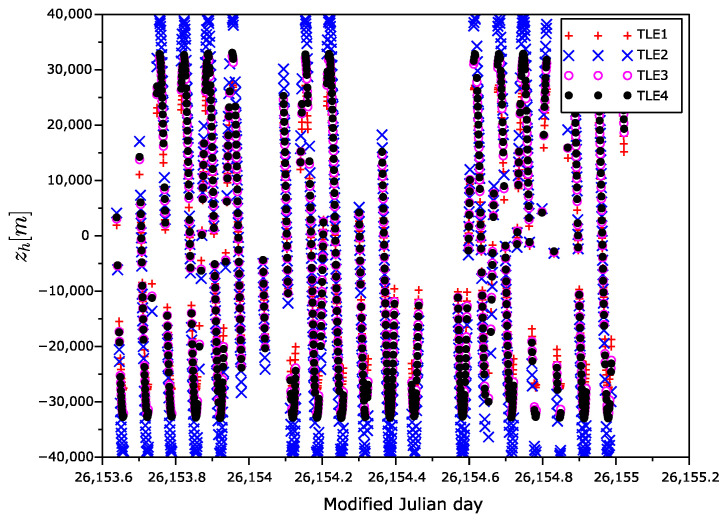
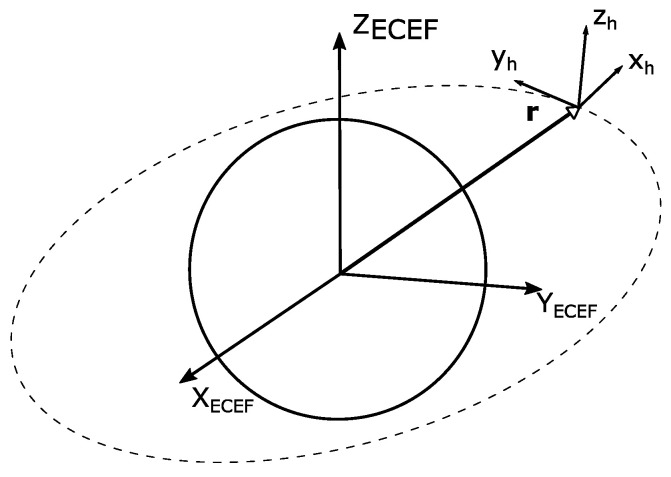
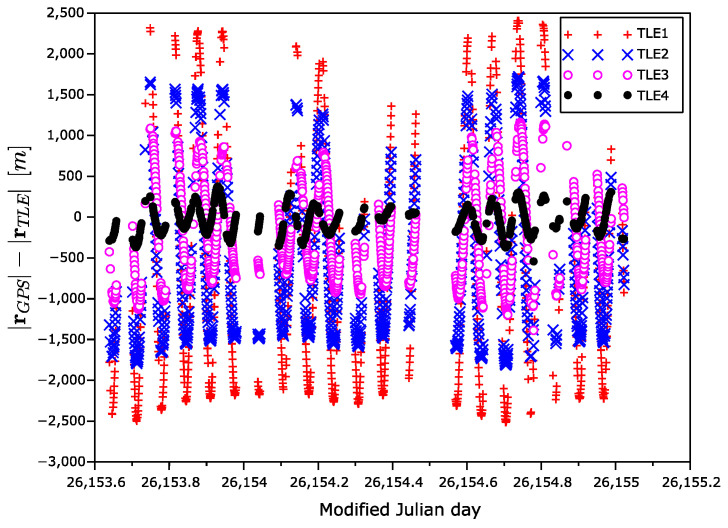
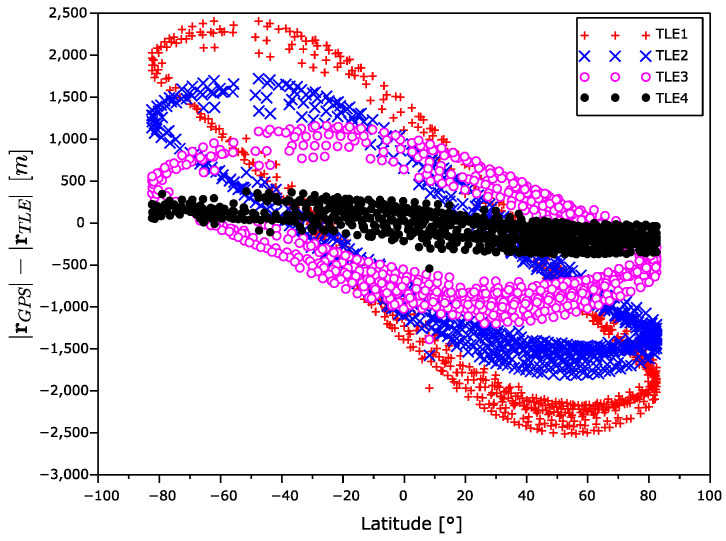
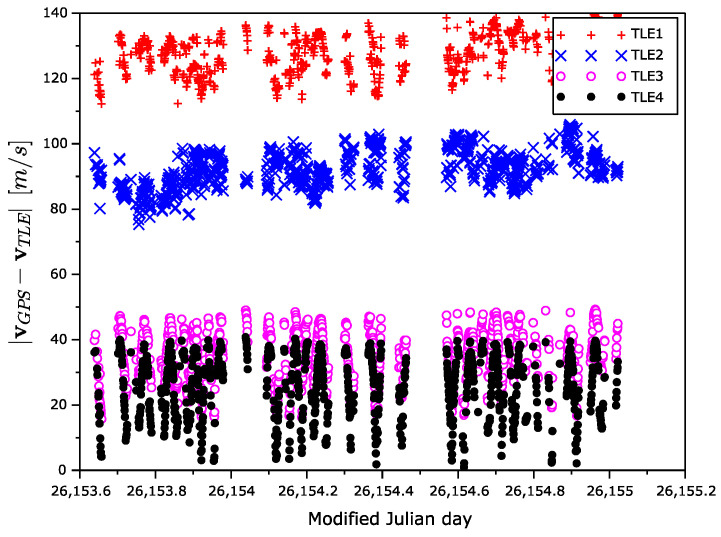
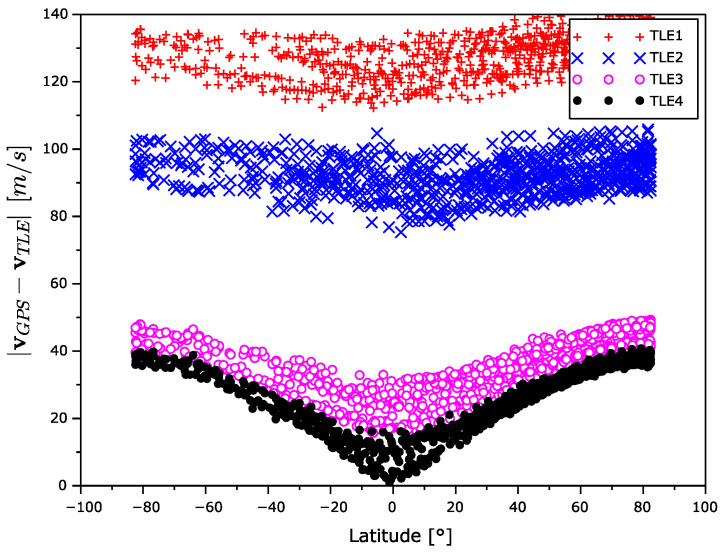
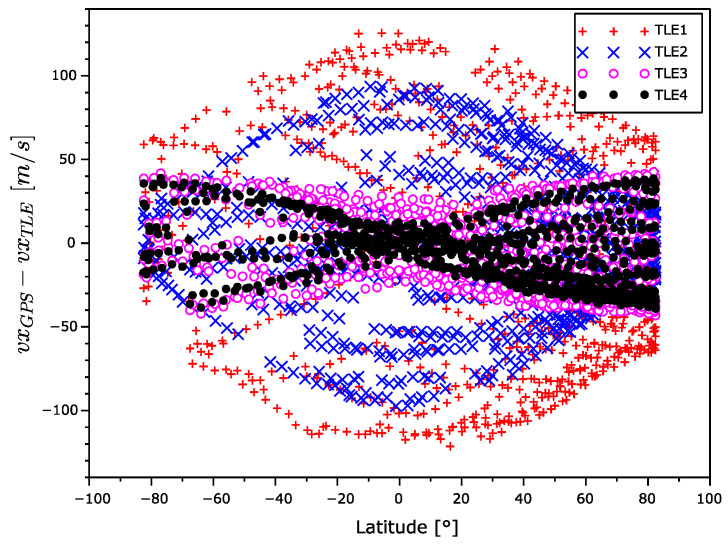
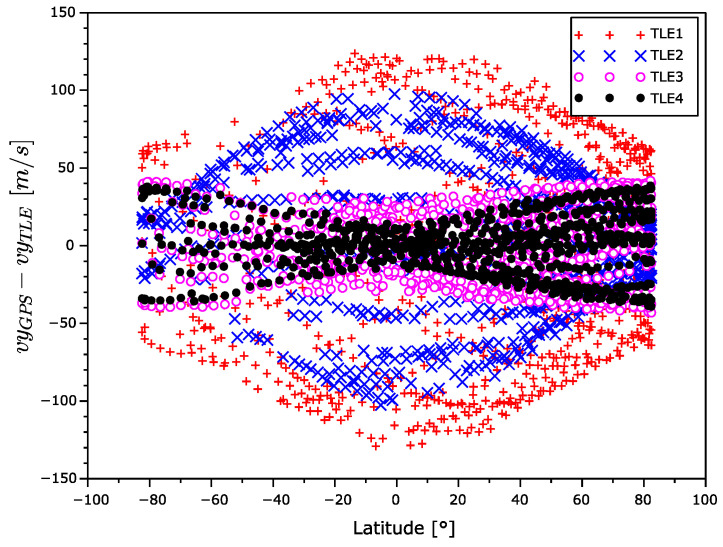
There is a common practice to calculate orbital trajectories of space objects like satellites and space debris using Two-Line Element Sets (TLEs). However, TLEs provide rather coarse parameters for fine orbit computation and their precision varies with age of their issue and position of the satellite. The paper evaluates such induced position determination error using the comparison of a position calculated from TLE data for a small CubeSat class satellite and a position obtained from the on-board custom GPS receiver that is a part of such satellite payload. The analyses of the impact of satellite position at the orbit, i.e., a dependency of position error on satellite geographical latitude, and impact of the ageing of TLE data in frame of position and velocity vector were made. There was shown that use of TLE data can bring some significant errors in calculation of predicted satellite position which can affect performance and efficiency of some related tasks like steering the ground station antenna for communication with the satellite or planning the satellites operations namely for the classes of small and amateur satellites.
使用两行轨道根数(TLE)来计算卫星和空间碎片等空间物体的轨道轨迹是一种常见做法。然而,TLE为精确轨道计算提供的参数相当粗略,其精度会随发布时间以及卫星位置而变化。本文通过比较由小型立方星类卫星的TLE数据计算得出的位置与从该卫星有效载荷中作为一部分的机载定制GPS接收器获得的位置,来评估这种诱导的位置确定误差。分析了卫星在轨道上的位置影响,即位置误差对卫星地理纬度的依赖性,以及在位置和速度矢量框架下TLE数据老化的影响。结果表明,使用TLE数据在预测卫星位置的计算中可能会带来一些显著误差,这可能会影响一些相关任务的性能和效率,比如为与卫星通信而操纵地面站天线,或者规划卫星运行,特别是对于小型和业余卫星类别。