Institute of Applied Microbiology, Justus-Liebig University Giessen, IFZ-Heinrich-Buff-Ring 26-32, 35392, Giessen, Germany.
Department of Bioresources, Fraunhofer Institute for Molecular Biology and Applied Ecology, Giessen, Germany.
Antonie Van Leeuwenhoek. 2022 Jun;115(6):821-837. doi: 10.1007/s10482-022-01735-7. Epub 2022 Apr 22.
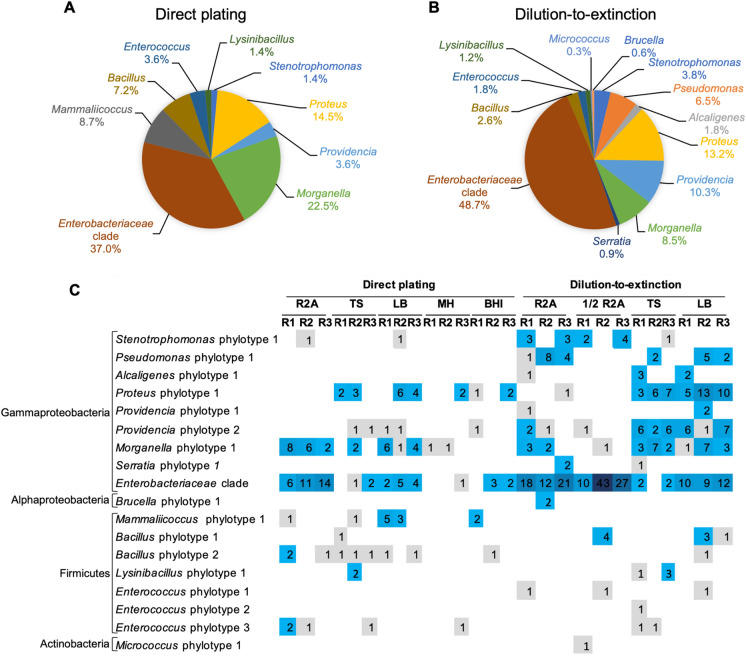
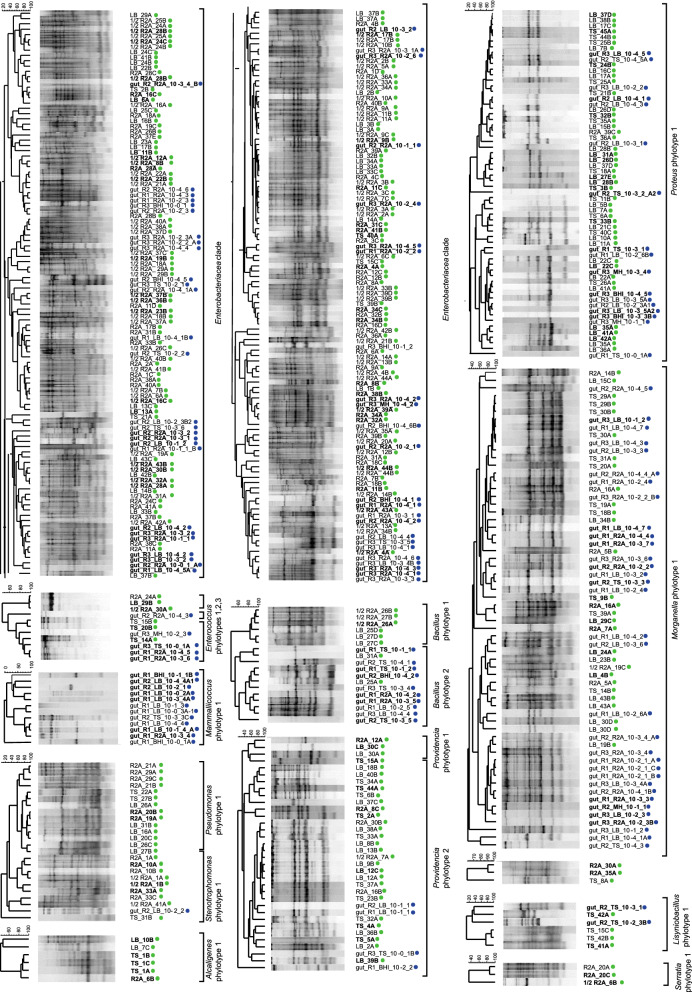
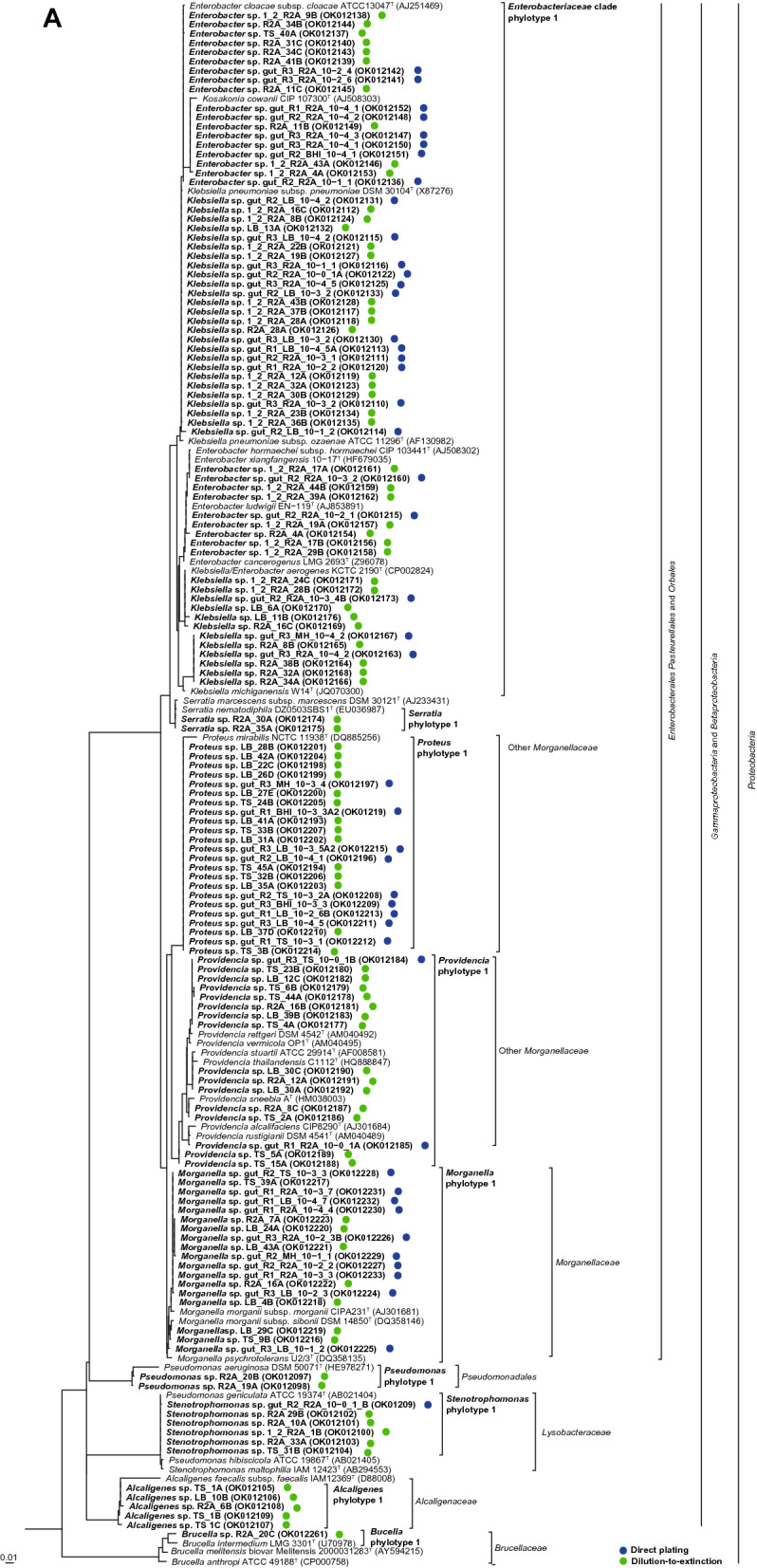
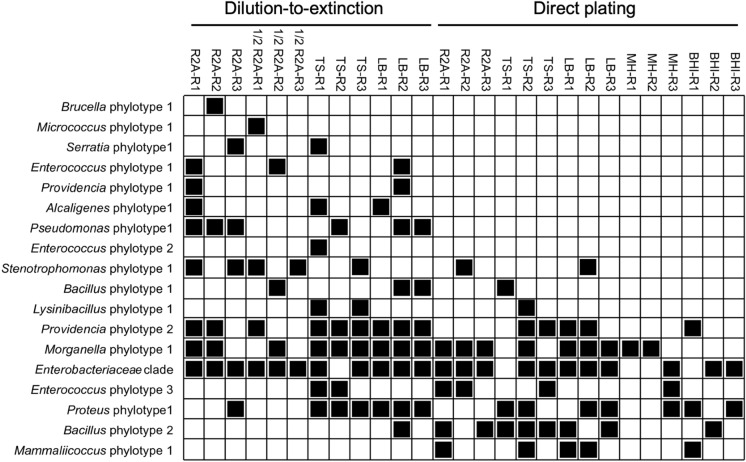
Hermetia illucens larvae (black soldier fly larvae, BSFL) convert efficiently organic waste to high quality biomass. To gain knowledge on the specific functions of gut microbes in this process it is a prerequisite to culture members of the core gut microbiota. Two different cultivation strategies were applied here for this purpose, a dilution-to-extinction cultivation and direct plating using six different media to culture aerobic heterotrophic bacteria. A total of 341 isolates were obtained by the dilution-to-extinction cultivation and 138 isolates by direct plating from guts of BSFL reared on chicken feed. Bacterial isolates were phylogenetically identified at the genus level by 16S rRNA gene sequencing (phylotyping) and differentiated at the strain level by genomic fingerprinting (genotyping). The main proportion of isolates was assigned to Proteobacteria, Firmicutes (Bacilli), and Actinobacteria. Predominant genera discussed in literature as member of a potential BSFL core gut microbiota, Providencia, Proteus, Morganella, Enterococcus, Bacillus, and members of the family Enterobacteriaceae, were isolated. A high intra-phylotype diversity was obtained by genomic fingerprinting which was especially enhanced by the dilution-to-extinction cultivation. This study showed that the application of different cultivation strategies including a dilution-to-extinction cultivation helps to culture a higher diversity of the BSFL gut microbiota and that genomic fingerprinting gives a better picture on the genetic diversity of cultured bacteria which cannot be covered by a 16S rRNA gene sequence based identification alone.
家蝇幼虫(黑蝇幼虫,BSFL)能有效地将有机废物转化为高质量的生物质。为了了解肠道微生物在这个过程中的特定功能,首先需要培养核心肠道微生物群的成员。为此,本文采用了两种不同的培养策略,即稀释至灭绝培养和直接平板培养,使用六种不同的培养基来培养需氧异养细菌。通过稀释至灭绝培养从以鸡饲料饲养的 BSFL 肠道中获得了 341 个分离株,通过直接平板培养获得了 138 个分离株。通过 16S rRNA 基因测序(系统发育分析)对细菌分离株进行属水平的系统发育鉴定,并通过基因组指纹图谱(基因分型)对菌株水平进行区分。分离株的主要比例被分配到变形菌门、厚壁菌门(芽孢杆菌)和放线菌门。主要讨论的属有文献中认为是潜在的 BSFL 核心肠道微生物群的成员,如普罗维登斯菌属、变形杆菌属、摩根菌属、肠球菌属、芽孢杆菌属和肠杆菌科的成员。通过基因组指纹图谱获得了很高的种内多样性,特别是通过稀释至灭绝培养得到了增强。本研究表明,应用不同的培养策略,包括稀释至灭绝培养,可以培养更高多样性的 BSFL 肠道微生物群,而基因组指纹图谱可以更好地反映培养细菌的遗传多样性,这是单独基于 16S rRNA 基因序列的鉴定无法覆盖的。