Smith Kevin B, Leary Paul, Deal Thomas, Joseph John, Ryan John, Miller Chris, Dawe Craig, Cray Benjamin
Naval Postgraduate School, Monterey, California 93943, USA.
Naval Undersea Warfare Center, Newport, Rhode Island 02841, USA.
J Acoust Soc Am. 2022 Apr;151(4):2507. doi: 10.1121/10.0010162.
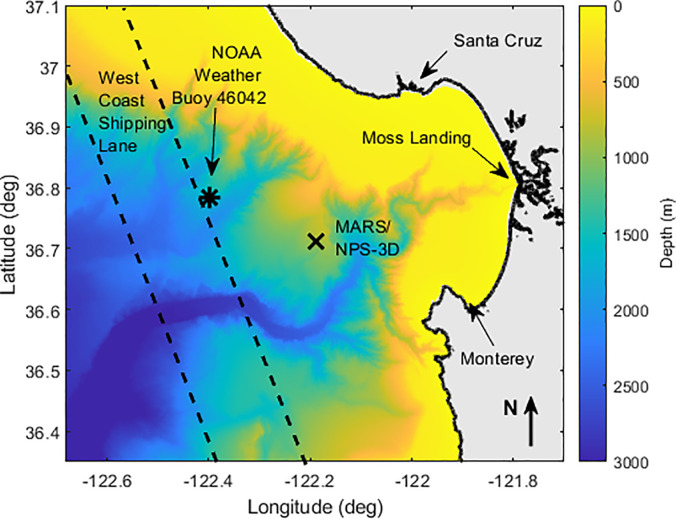
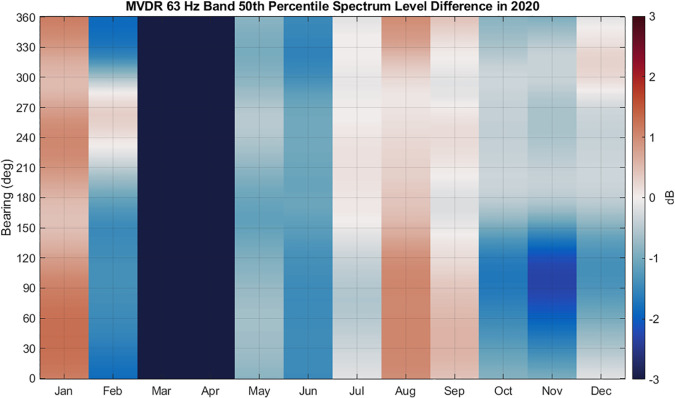
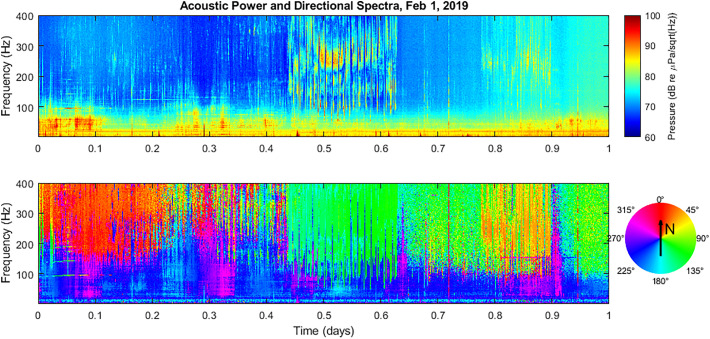
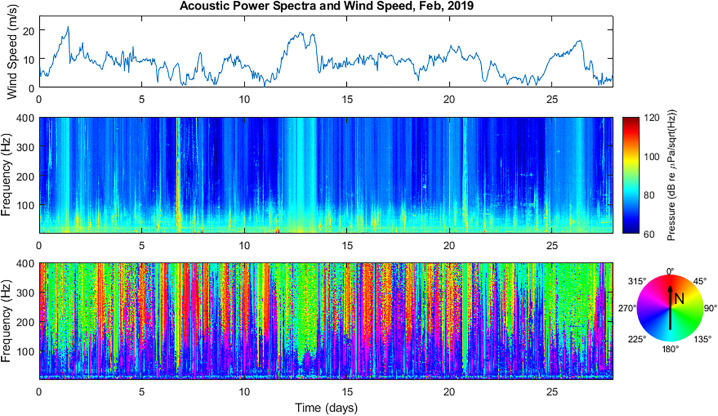
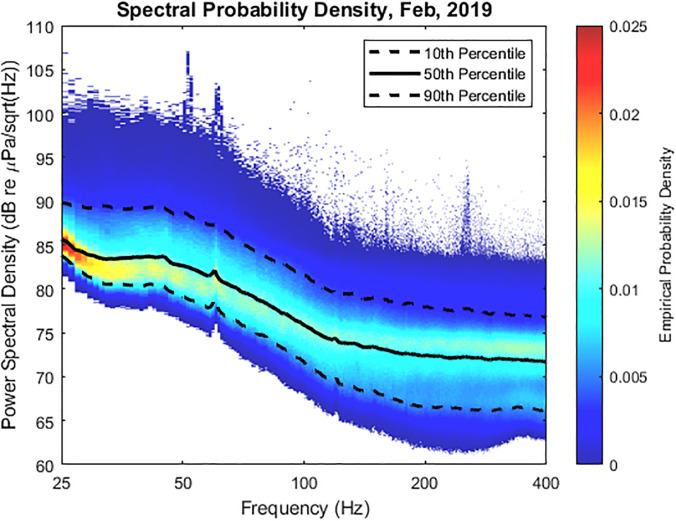
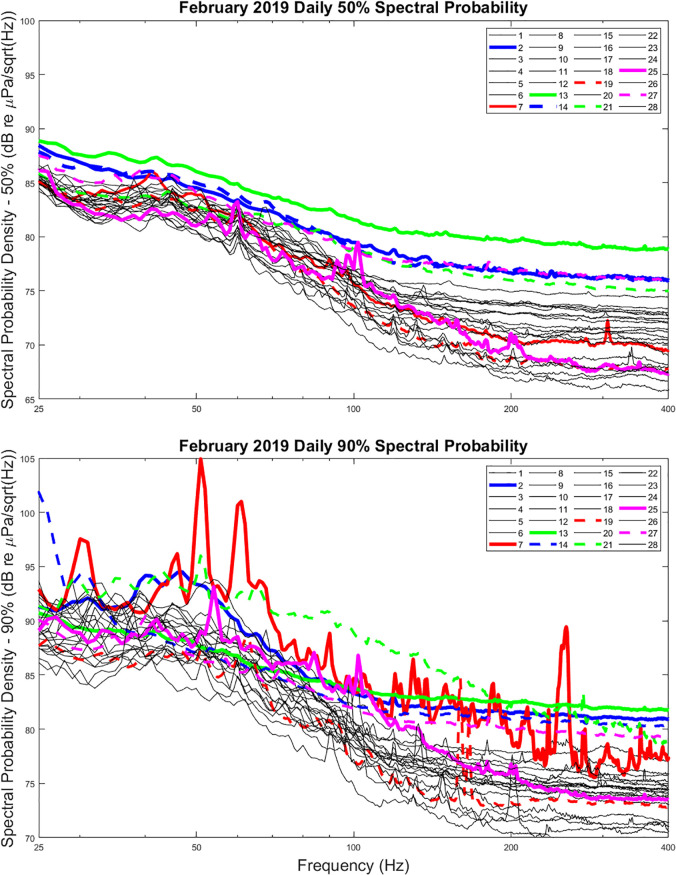
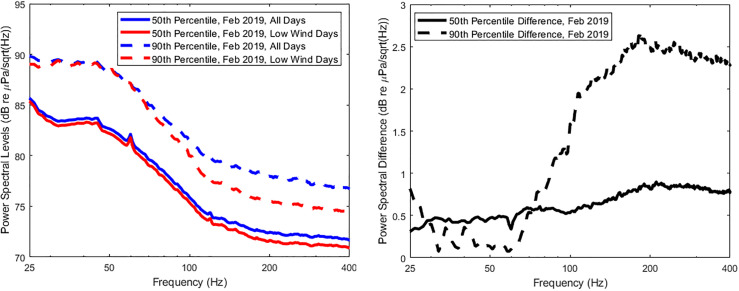
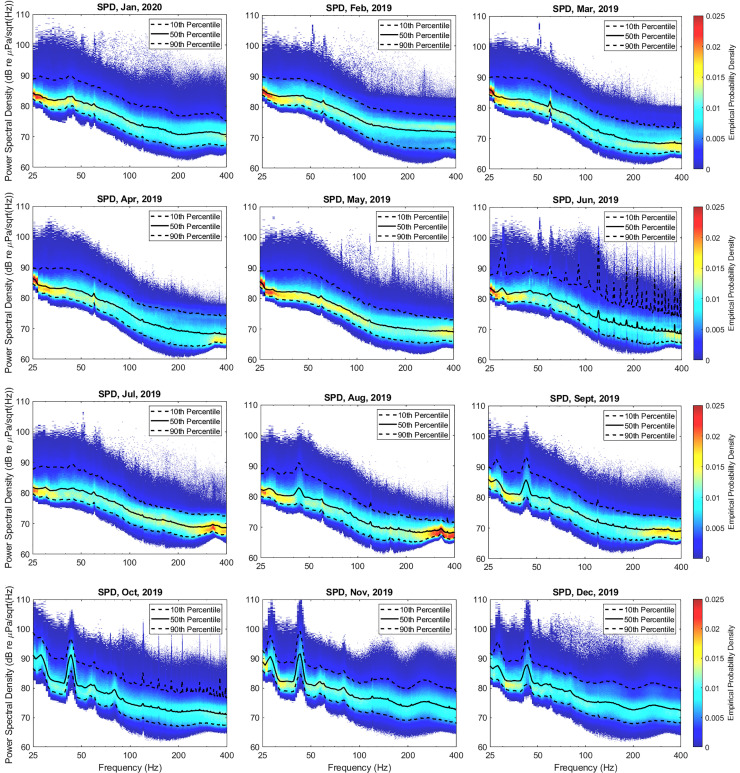
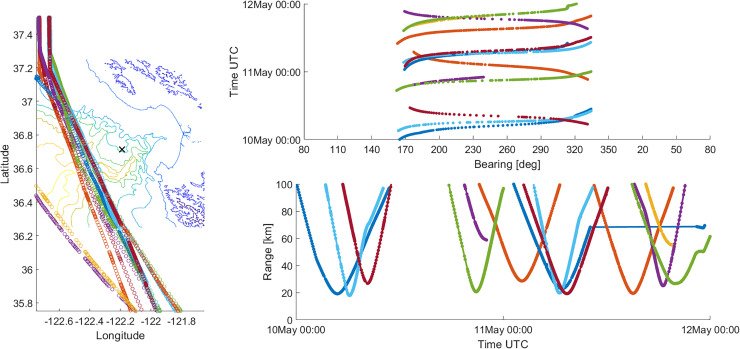
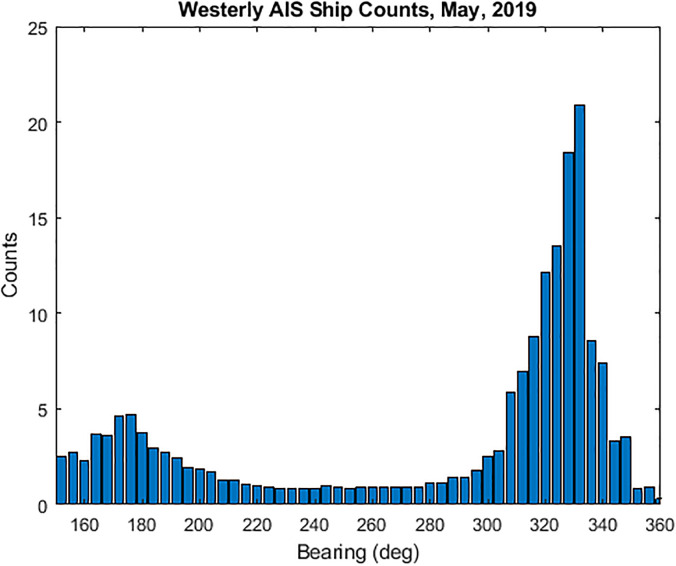
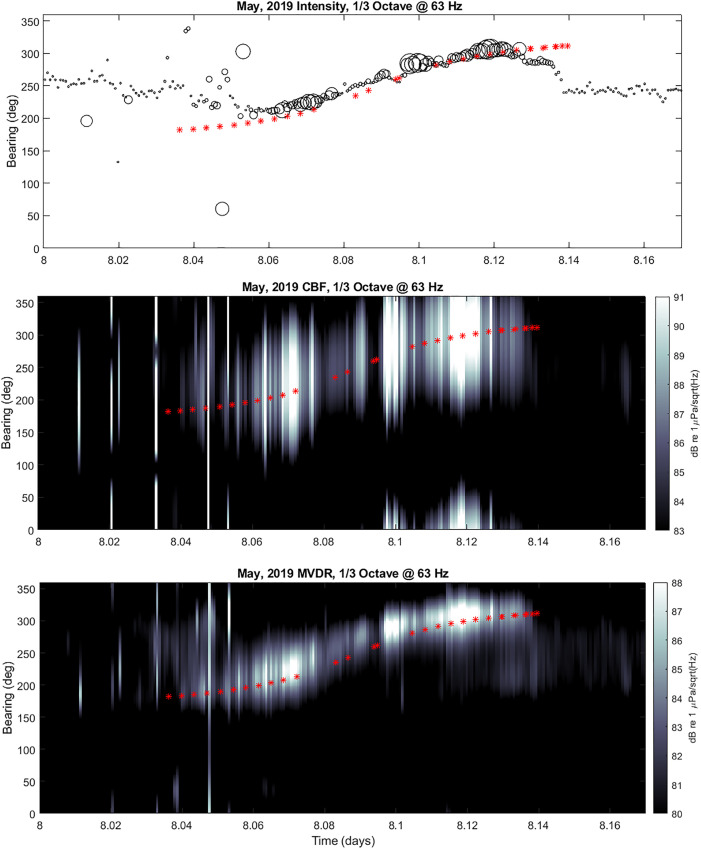
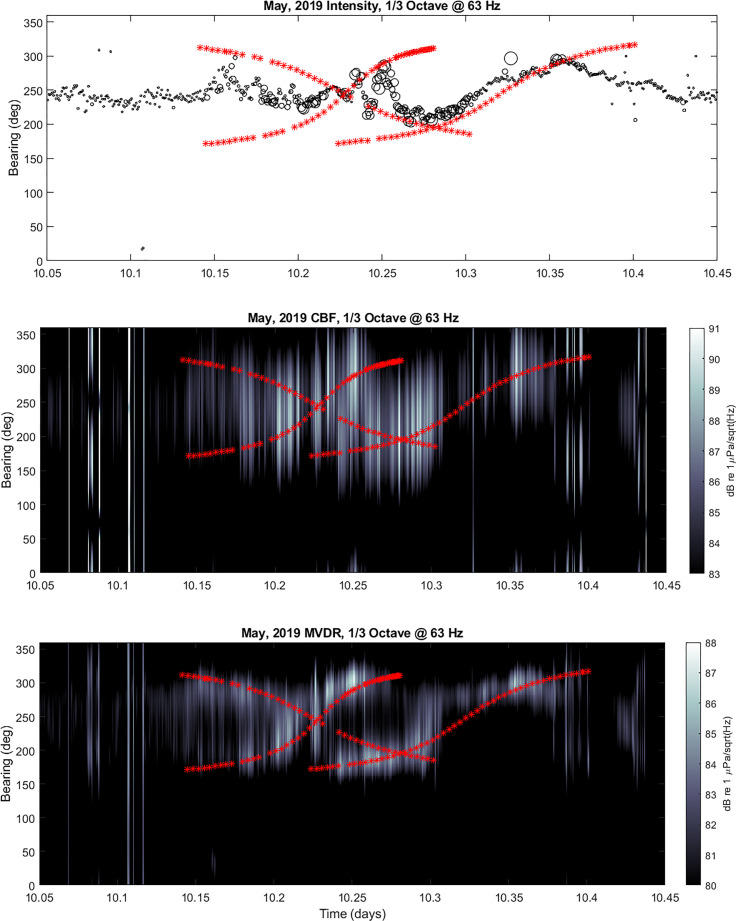
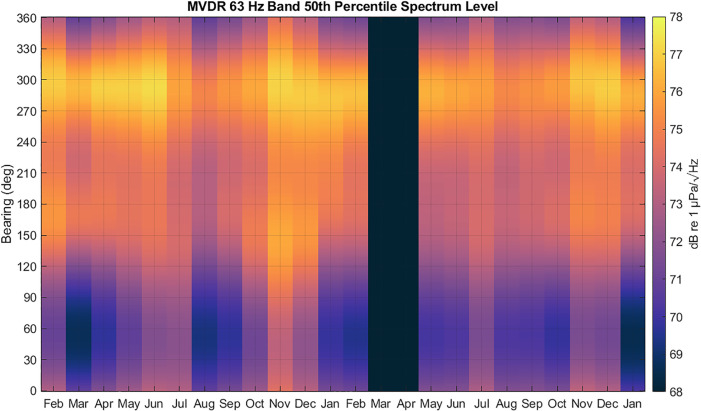
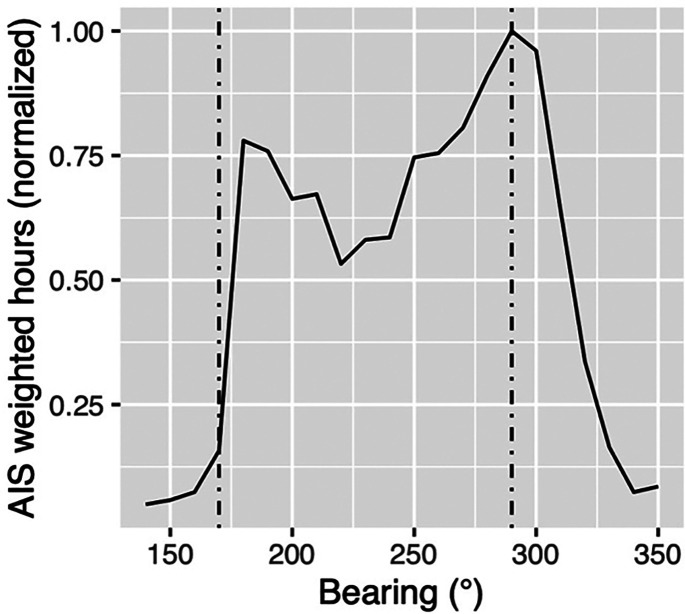
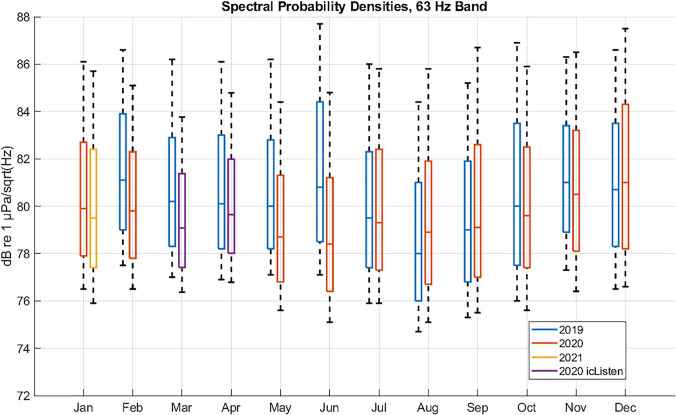
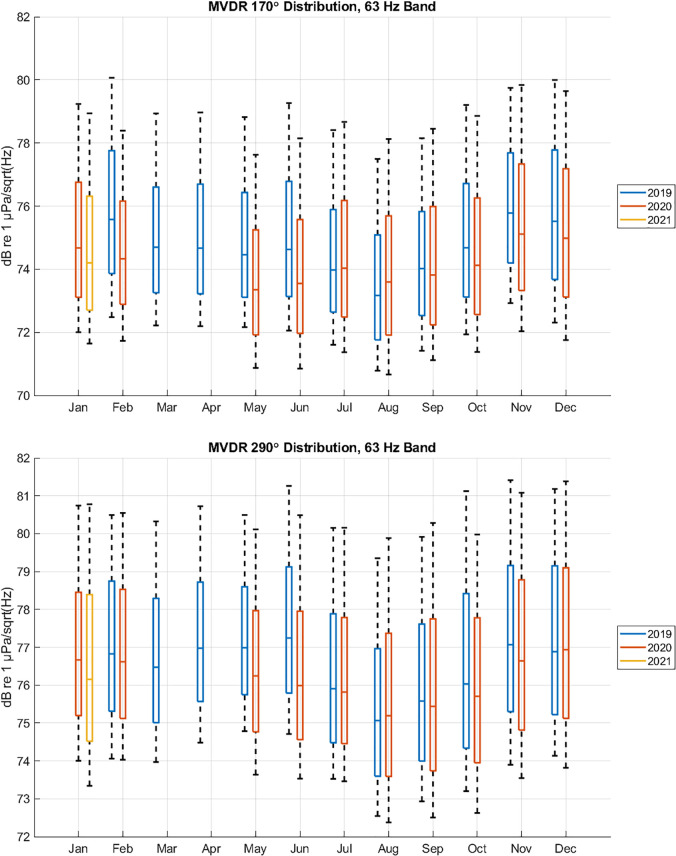
From February 2019 through January 2021, data were collected by an acoustic vector sensor moored on the seafloor at a depth of approximately 900 m just outside of Monterey Bay, California, near a major shipping lane off the California coast. Analysis of the vector sensor data has shown the ability to accurately determine bearings to merchant vessels at ranges up to 60 km. This paper examines the features of the low-frequency soundscape using spectral probability densities and evaluates directional features through vector intensity processing as well as coherent linear and adaptive processing of the vector sensor channels. Merchant vessel acoustic data were analyzed using the 1/3 octave band centered at 63 Hz. Over the period analyzed, a reduction in merchant vessel noise was observed between February and June 2020 relative to the same period in 2019, consistent with a reduction in vessel traffic due to the worldwide response to COVID-19. The directional features of the data evaluated through adaptive processing methods also suggest this reduction can be most clearly distinguished towards the south, where the shipping lane is limited to transiting vessels, rather to the north-northwest, where merchant vessels tend to congregate on approach into the San Francisco Bay area.
从2019年2月到2021年1月,数据由一个声学矢量传感器收集,该传感器系泊在加利福尼亚州蒙特雷湾外约900米深的海底,靠近加利福尼亚海岸的一条主要航道。对矢量传感器数据的分析表明,能够在高达60公里的范围内准确确定商船的方位。本文使用频谱概率密度研究低频声景的特征,并通过矢量强度处理以及矢量传感器通道的相干线性和自适应处理来评估方向特征。使用以63赫兹为中心的1/3倍频程带分析商船声学数据。在分析期内,相对于2019年同期,2020年2月至6月观察到商船噪声有所降低,这与全球对新冠疫情的应对导致船舶交通量减少一致。通过自适应处理方法评估的数据方向特征还表明,这种减少在南部最为明显,那里的航道仅限于过境船只,而不是西北偏北方向,商船在接近旧金山湾区时往往聚集在那里。