
黄芪建中汤治疗胃癌靶点的网络药理学分析
Network Pharmacology Analysis of Huangqi Jianzhong Tang Targets in Gastric Cancer.
作者信息
Li Long, Lu Yizhuo, Liu Yanling, Wang Dan, Duan Linshan, Cheng Shuyu, Liu Guoyan
机构信息
School of Medicine, Xiamen University, Xiamen, China.
Department of General Surgery, Zhongshan Hospital of Xiamen University, School of Medicine, Xiamen University, Xiamen, China.
出版信息
Front Pharmacol. 2022 Apr 8;13:882147. doi: 10.3389/fphar.2022.882147. eCollection 2022.
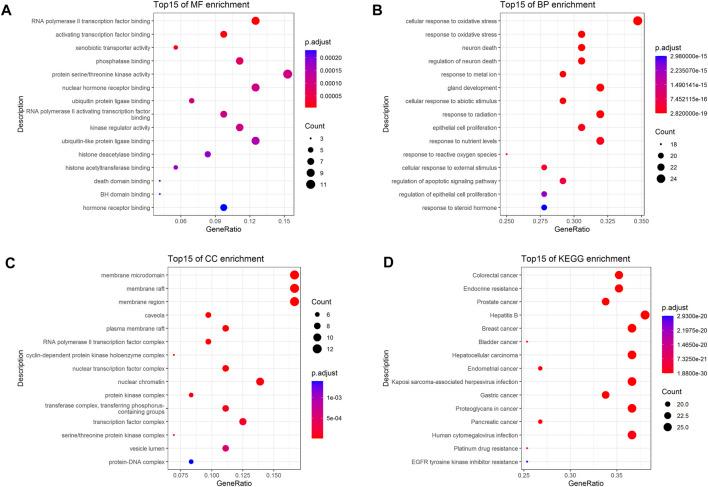
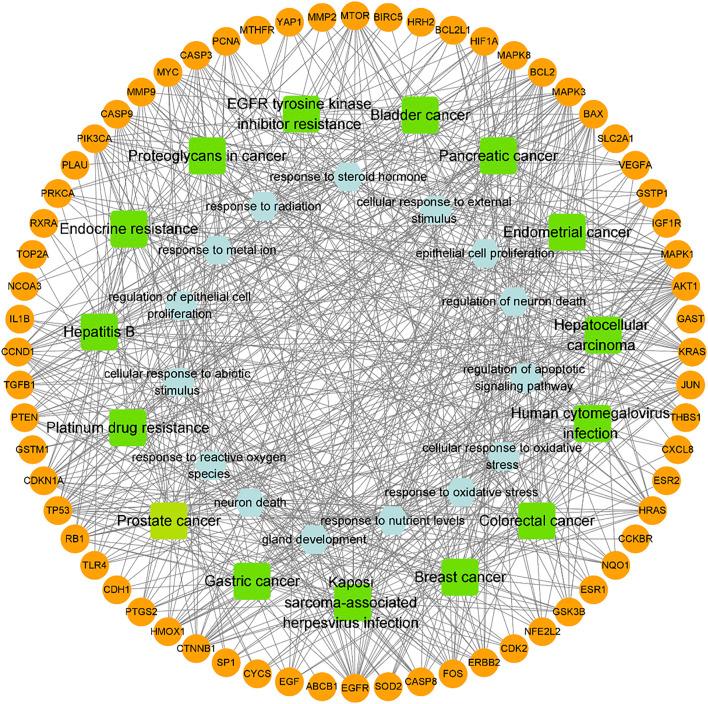
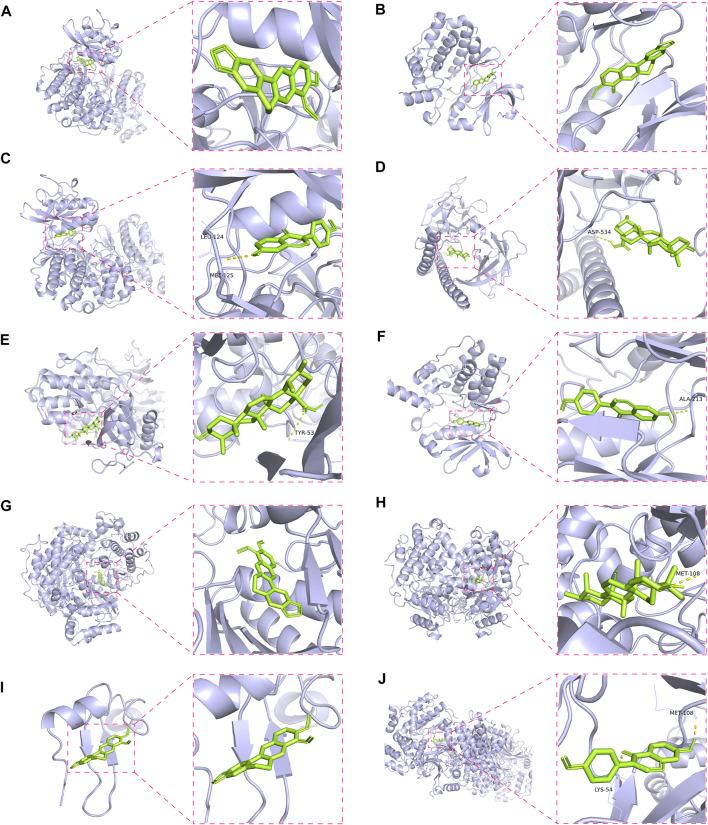
The Chinese medicine, Huangqi Jianzhong Tang (HJT), is widely used to treat gastric cancer (GC). In this study, network pharmacological methods were used to analyze the potential therapeutic targets and pharmacological mechanisms of HJT in GC. Bioactive components and targets of HJT and GC-related targets were identified using public databases. The protein-protein interaction network of potential targets of HJT in GC was constructed using the Cytoscape plug-in (v3.8.0), CytoHubba. Gene Ontology (GO) and Kyoto Encyclopedia of Genes and Genomes (KEGG) pathway enrichment analyses were performed, in addition to molecular docking and animal experiments to verify the results of network pharmacology analysis. A total of 538 GC-related targets were identified. The bioactive components of HJT were selected for drug-likeness evaluation and binomial statistical model screening, which revealed 63 bioactive components and 72 targets. Based on GO enrichment analysis, all targets in the protein-protein interaction network were mainly involved in the response to oxidative stress and neuronal death. Further, KEGG enrichment analysis suggested that the treatment of GC with HJT mainly involved the Wnt signaling pathway, PI3K-Akt signaling pathway, TGF-β signaling pathway, and MAPK signaling pathway, thereby providing insights into the mechanism of the effects of HJT on GC. This study revealed the potential bioactive components and molecular mechanisms of HJT, which may be useful for the treatment of GC, and provided insights into the development of new drugs for GC.
中药黄芪建中汤(HJT)被广泛用于治疗胃癌(GC)。在本研究中,采用网络药理学方法分析HJT治疗GC的潜在治疗靶点和药理机制。利用公共数据库鉴定HJT的生物活性成分和靶点以及GC相关靶点。使用Cytoscape插件(v3.8.0)CytoHubba构建HJT在GC中潜在靶点的蛋白质-蛋白质相互作用网络。除了进行分子对接和动物实验以验证网络药理学分析结果外,还进行了基因本体论(GO)和京都基因与基因组百科全书(KEGG)通路富集分析。共鉴定出538个GC相关靶点。对HJT的生物活性成分进行药物相似性评估和二项式统计模型筛选,结果显示有63种生物活性成分和72个靶点。基于GO富集分析,蛋白质-蛋白质相互作用网络中的所有靶点主要参与氧化应激反应和神经元死亡。此外,KEGG富集分析表明,HJT治疗GC主要涉及Wnt信号通路、PI3K-Akt信号通路、TGF-β信号通路和MAPK信号通路,从而为HJT对GC作用机制提供了见解。本研究揭示了HJT的潜在生物活性成分和分子机制,这可能对GC的治疗有用,并为GC新药的开发提供了见解。



 Zotero 插件