Megersa Moa, Tamrat Nigussie
Department of Biology, School of Natural and Computational Sciences, Madda Walabu University, P.O. Box 247, Robe, Ethiopia.
Evid Based Complement Alternat Med. 2022 Apr 14;2022:5242033. doi: 10.1155/2022/5242033. eCollection 2022.
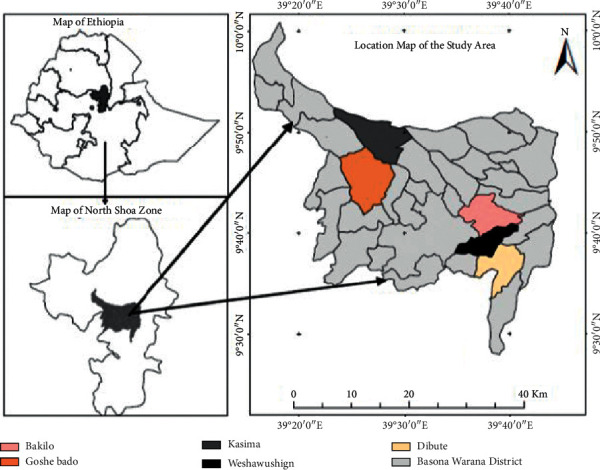
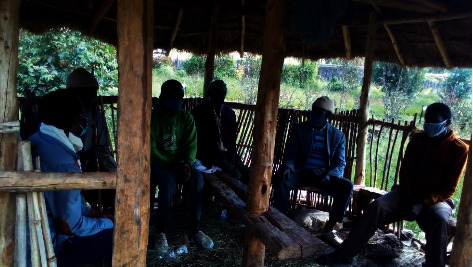
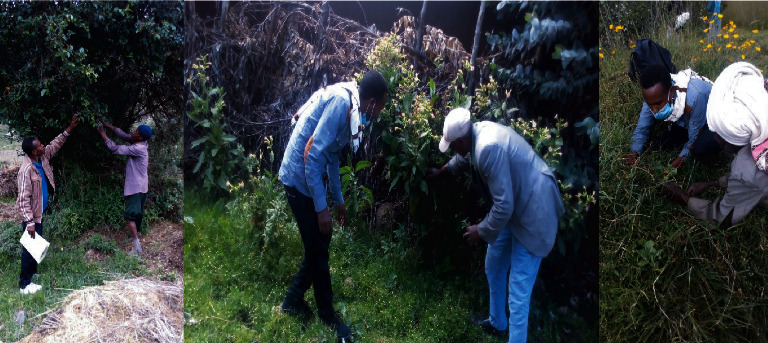
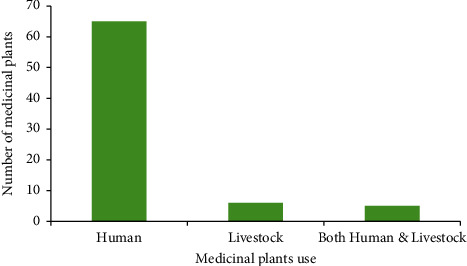
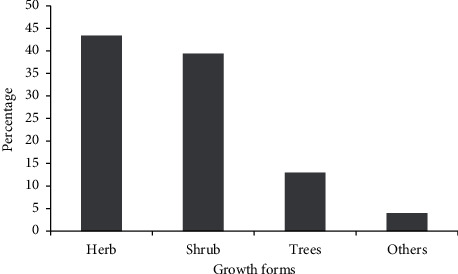
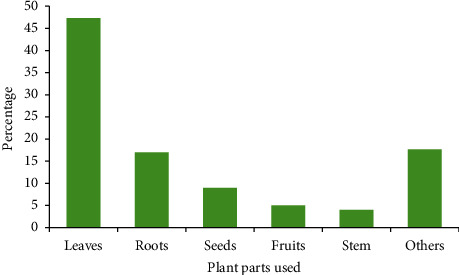
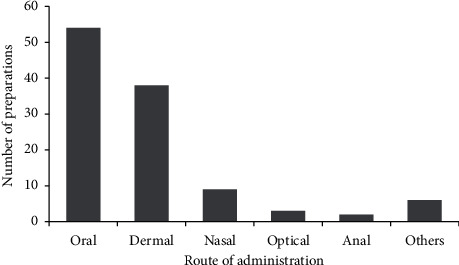
This study was conducted on medicinal plants used for the treatment of human and livestock ailments in Basona Werana District, North Shewa Zone, Amhara Region. Data were collected through semi-structured interviews, field walk observation, preference, and direct matrix ranking with randomly and purposefully selected informants. A total of 80 respondents (46 men and 14 women) and 20 (16 men and 4 women) traditional healers participated in this study. A total of 76 plant species distributed in 75 genera and 45 families were collected and identified. Of the 76 medicinal plants collected from the study area, 85.5% were used to treat human ailments. The Lamiaceae came out as a leading family with 8 (10.5%) species followed by Asteraceae and 7 (9%) medicinal plant species each, while Solanaceae followed with 6 (7.8%) species. The majority of medicinal plants were collected from wild habitat and accounted for 56 plant species (73.6%). The result of growth form analysis showed that herbs constituted the highest proportion of medicinal plants represented by 33 species (43.4%), followed by shrubs with 30 species (39.4%) and trees with 10 species (13.1%). The medicinal plants were administered through oral, which accounts for 54 species (48.1%), followed by dermal with 38 species (33.9%) and nasal with 9 species (8%), respectively. Leaves were the most frequently used plant parts for the preparation of traditional herbal medicines in the study area. Crushing was the widely used preparation method (33.9%) followed by pounding (16%). A. Rich. was the most preferred plant used to treat stomachache. Phytochemical and pharmacological studies of this type of plant are recommended to get the most out of the plant.
本研究针对阿姆哈拉州北谢瓦区巴索纳韦拉纳地区用于治疗人类和牲畜疾病的药用植物展开。通过半结构化访谈、实地观察、偏好调查以及与随机和有目的选择的信息提供者进行直接矩阵排序来收集数据。共有80名受访者(46名男性和14名女性)以及20名传统治疗师(16名男性和4名女性)参与了本研究。共收集并鉴定了分布于75属45科的76种植物。从研究区域收集的76种药用植物中,85.5%用于治疗人类疾病。唇形科以8种(10.5%)成为主导科,其次是菊科,各有7种(9%)药用植物,茄科则有6种(7.8%)。大多数药用植物采集自野生栖息地,有56种(73.6%)。生长形式分析结果表明,草本植物构成药用植物的比例最高,有33种(43.4%),其次是灌木,有30种(39.4%),树木有10种(13.1%)。药用植物通过口服给药的有54种(48.1%),其次是经皮给药的有38种(33.9%),经鼻给药的有9种(8%)。在研究区域,叶子是制备传统草药最常用的植物部位。粉碎是广泛使用的制备方法(33.9%),其次是捣碎(16%)。A. Rich.是治疗胃痛最常用的植物。建议对这类植物进行植物化学和药理学研究,以充分利用该植物。