Assen Yimer, Woldearegay Mesfin, Haile Abeba
Department of Biology, College of Natural and Computational Sciences, Debre Birhan University, P.O. Box 445, Debre Birhan, Ethiopia.
Evid Based Complement Alternat Med. 2021 Feb 24;2021:6651922. doi: 10.1155/2021/6651922. eCollection 2021.
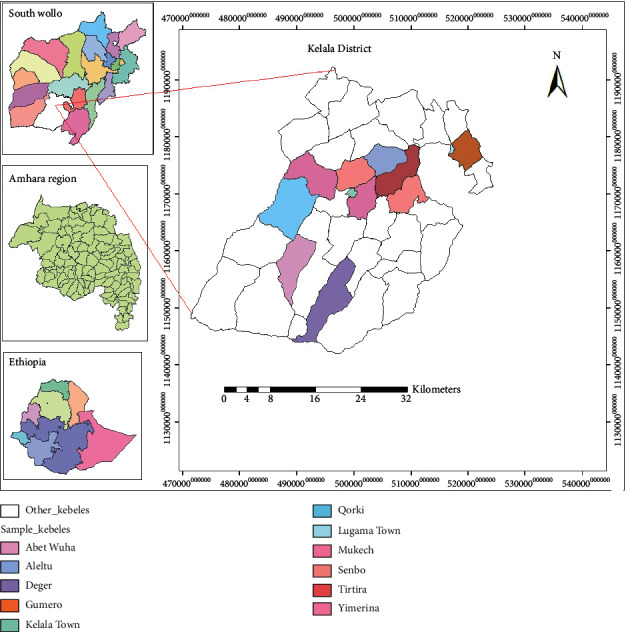
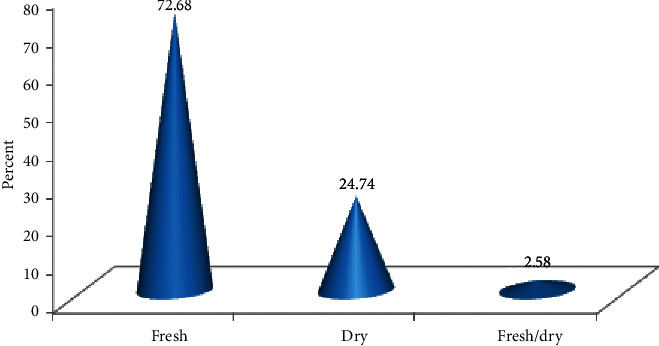
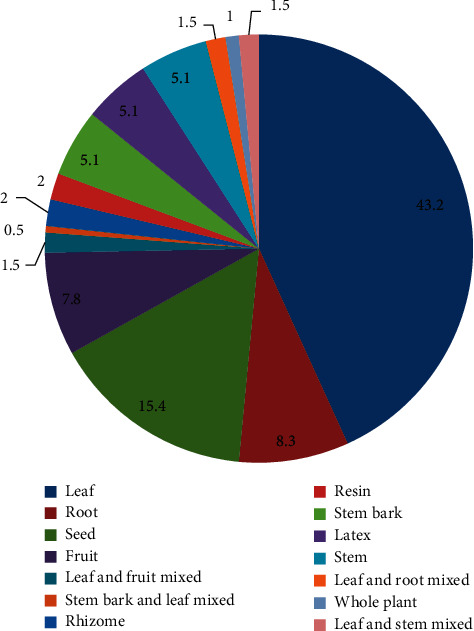
This research was carried out to record and document the medicinal plants and associated indigenous plant use knowledge of the local people in Kelala District of Amhara Region, Ethiopia. Ethnobotanical data were collected by conducting preprepared semistructured interview items with 60 informants. Focus group discussion and guided field walk were also used. Data were analyzed using basic analytical tools and descriptive statistics. Determination of informant consensus factor, fidelity level, and ranking was performed. A total of 82 medicinal plants distributed in 79 genera and 45 families were collected. Of these plants, 43 species were used to treat human ailments, and 33 species were used to treat livestock ailments and the remaining 6 species were used to treat both human and livestock ailments. The majority of medicinal plants were harvested from the wild environments. The family Solanaceae occupied the first rank with seven species followed by Fabaceae, Asteraceae, Cucurbitaceae, Apiaceae, and Euphorbiaceae with four species each. The most frequently used plant parts were leaves (42.2%) followed by seeds (15.2%), roots (8.1%), and fruits (7.6%). Freshly harvested plant parts (72.68%) were mostly used for remedy preparation compared to dried forms (24.74%) whereas crushing, which accounted for 41.12%, and powdering (24.37%) were the most widely used methods of remedy preparation in the study area. Expansion of farmlands by cutting trees heavily threatens medicinal plants and therefore needs due attention. High ranking medicinal plants are good candidates for further research in drug discovery and development.
本研究旨在记录和整理埃塞俄比亚阿姆哈拉地区凯拉拉区当地居民使用的药用植物及相关本土植物知识。通过对60名信息提供者进行预先准备好的半结构化访谈项目来收集民族植物学数据。还采用了焦点小组讨论和实地引导走访的方式。使用基本分析工具和描述性统计方法对数据进行分析。进行了信息提供者共识因子、忠诚度水平和排序的测定。共收集到82种药用植物,分布在79个属和45个科。其中,43种用于治疗人类疾病,33种用于治疗家畜疾病,其余6种用于治疗人类和家畜疾病。大多数药用植物是从野生环境中采集的。茄科以7种植物位居榜首,其次是豆科、菊科、葫芦科、伞形科和大戟科,各有4种植物。最常用的植物部位是叶子(42.2%),其次是种子(15.2%)、根(8.1%)和果实(7.6%)。与干燥形式(24.74%)相比,新鲜采集的植物部位(72.68%)大多用于制备药物,而在研究区域,捣碎(占41.12%)和研磨(占24.37%)是最广泛使用的药物制备方法。大量砍伐树木以扩大农田对药用植物构成严重威胁,因此需要给予充分关注。高排名的药用植物是药物发现和开发进一步研究的良好候选对象。