Liu Kai, Qiu Qingtao, Qin Yonghui, Chen Ting, Zhang Diangang, Huang Li, Yin Yong, Wang Ruozheng
Department of Head and Neck Comprehensive Radiotherapy, Affiliated Tumor Hospital of Xinjiang Medical University, Urumqi, China.
Department of Radiation Oncology, Shandong Cancer Hospital and Institute, Shandong First Medical University and Shandong Academy of Medical Sciences, Jinan, China.
Front Oncol. 2022 Apr 7;12:852348. doi: 10.3389/fonc.2022.852348. eCollection 2022.
Although the tumor-node-metastasis staging system is widely used for survival analysis of nasopharyngeal carcinoma (NPC), tumor heterogeneity limits its utility. In this study, we aimed to develop and validate a radiomics model, based on multiple-sequence magnetic resonance imaging (MRI), to estimate the probability of overall survival in patients diagnosed with NPC.
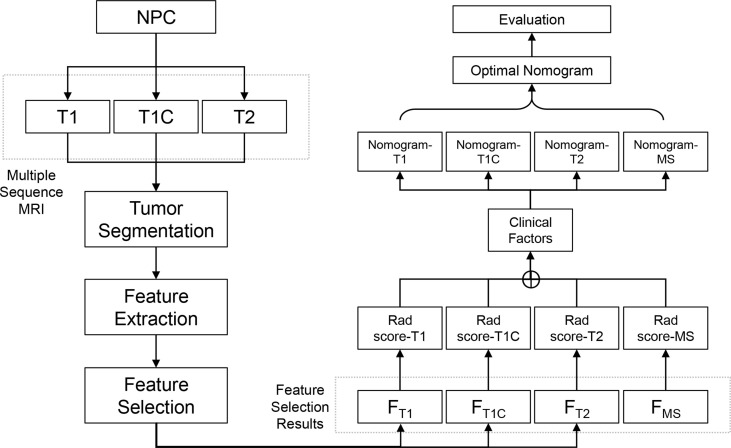
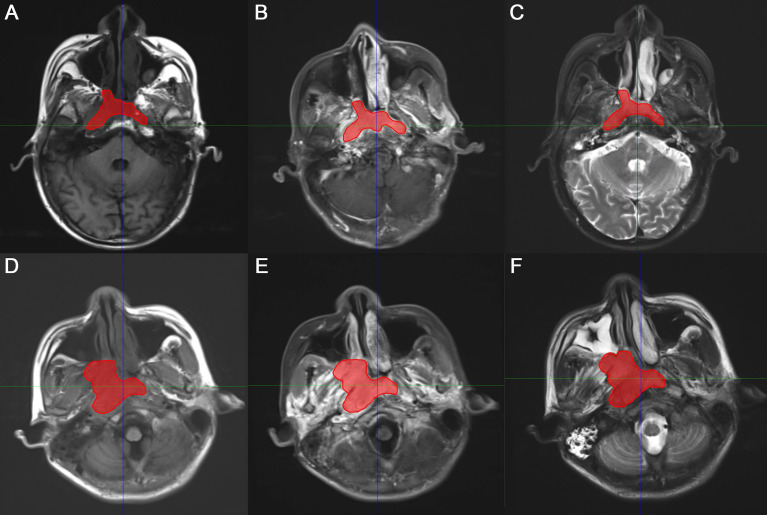
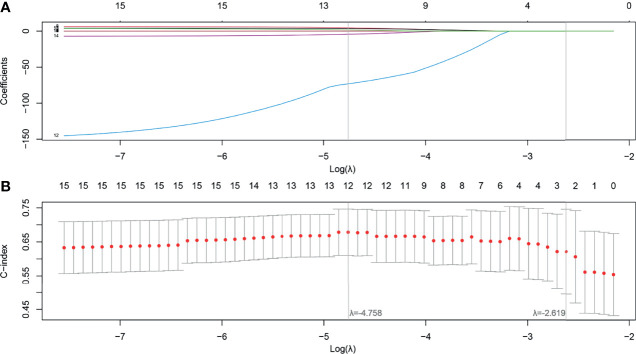
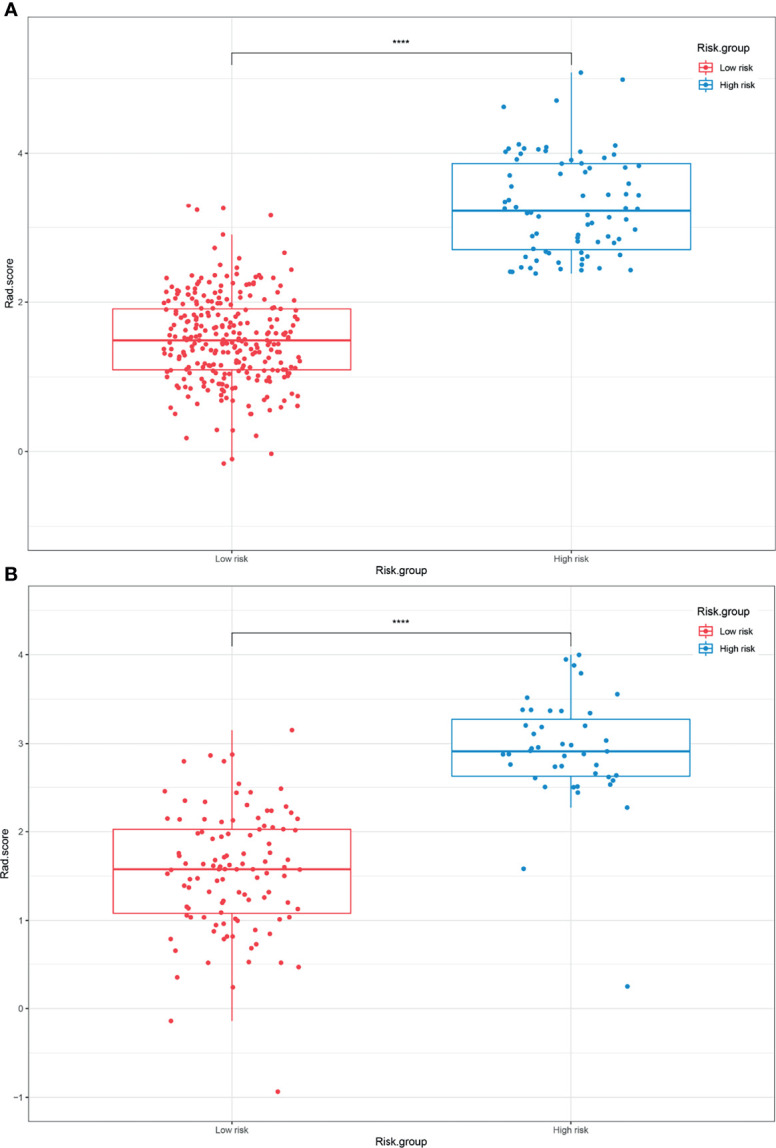
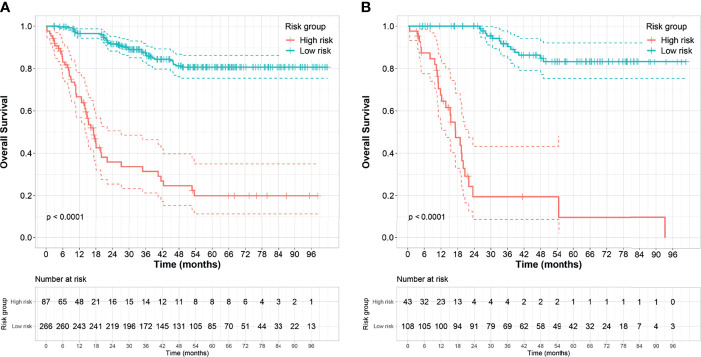
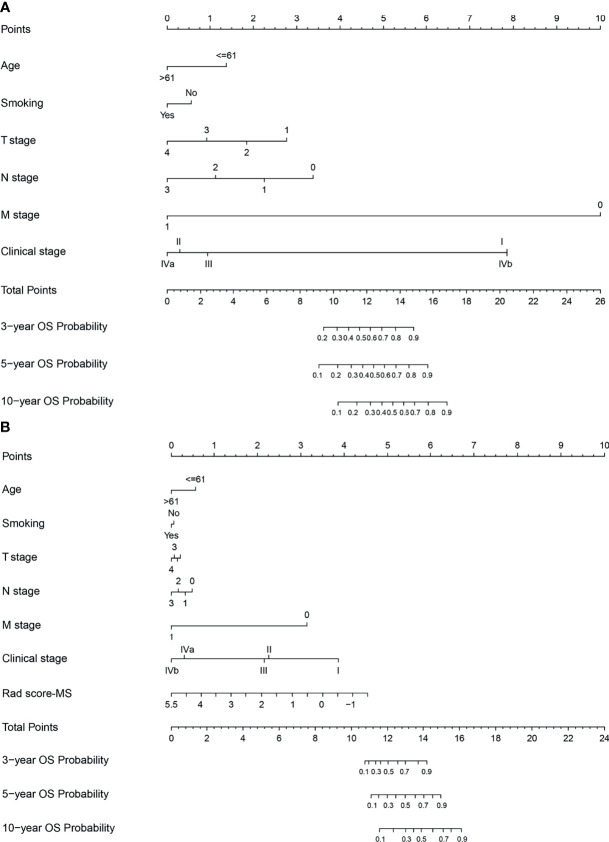
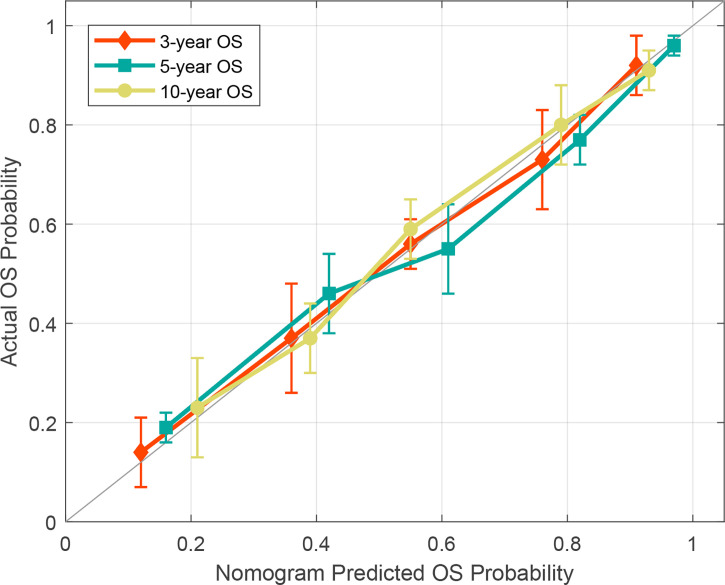
Multiple-sequence MRIs, including T1-weighted, T1 contrast, and T2-weighted imaging, were collected from patients diagnosed with NPC. Radiomics features were extracted from the contoured gross tumor volume of three sequences from each patient using the least absolute shrinkage and selection operator with the Cox regression model. The optimal Rad score was determined using 12 of the 851 radiomics features derived from the multiple-sequence MRI and its discrimination power was compared in the training and validation cohorts. For better prediction performance, an optimal nomogram (radiomics nomogram-MS) that incorporated the optimal Rad score and clinical risk factors was developed, and a calibration curve and a decision curve were used to further evaluate the optimized discrimination power.
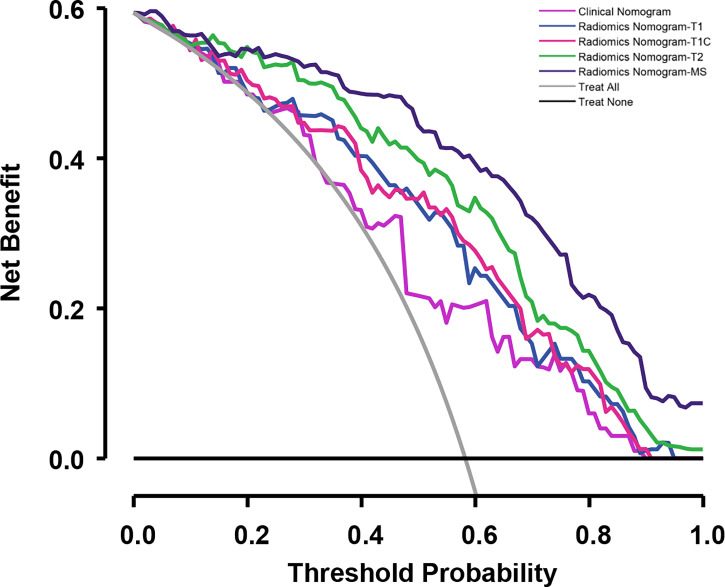
A total of 504 patients diagnosed with NPC were included in this study. The optimal Rad score was significantly correlated with overall survival in both the training [C-index: 0.731, 95% confidence interval (CI): 0.709-0.753] and validation cohorts (C-index: 0.807, 95% CI: 0.782-0.832). Compared with the nomogram developed with only single-sequence MRI, the radiomics nomogram-MS had a higher discrimination power in both the training (C-index: 0.827, 95% CI: 0.809-0.845) and validation cohorts (C-index: 0.836, 95% CI: 0.815-0.857). Analysis of the calibration and decision curves confirmed the effectiveness and utility of the optimal radiomics nomogram-MS.
The radiomics nomogram model that incorporates multiple-sequence MRI and clinical factors may be a useful tool for the early assessment of the long-term prognosis of patients diagnosed with NPC.
尽管肿瘤-淋巴结-转移分期系统广泛用于鼻咽癌(NPC)的生存分析,但肿瘤异质性限制了其效用。在本研究中,我们旨在开发并验证一种基于多序列磁共振成像(MRI)的放射组学模型,以估计NPC患者的总生存概率。
收集诊断为NPC患者的多序列MRI,包括T1加权、T1增强和T2加权成像。使用最小绝对收缩和选择算子与Cox回归模型,从每位患者三个序列的轮廓化大体肿瘤体积中提取放射组学特征。利用从多序列MRI得出的851个放射组学特征中的12个确定最佳Rad评分,并在训练和验证队列中比较其鉴别能力。为获得更好的预测性能,开发了纳入最佳Rad评分和临床危险因素的最佳列线图(放射组学列线图-MS),并使用校准曲线和决策曲线进一步评估优化后的鉴别能力。
本研究共纳入504例诊断为NPC的患者。最佳Rad评分在训练队列[C指数:0.731,95%置信区间(CI):0.709-0.753]和验证队列(C指数:0.807,95%CI:0.782-0.832)中均与总生存显著相关。与仅使用单序列MRI开发的列线图相比,放射组学列线图-MS在训练队列(C指数:0.827,95%CI:0.809-0.845)和验证队列(C指数:0.836,95%CI:0.815-0.857)中均具有更高的鉴别能力。校准曲线和决策曲线分析证实了最佳放射组学列线图-MS的有效性和实用性。
纳入多序列MRI和临床因素的放射组学列线图模型可能是早期评估NPC患者长期预后的有用工具。