Prabhala Sai Vivek, Gierach Izabela, Wood David W
William G. Lowrie Department of Chemical and Biomolecular Engineering, The Ohio State University, Columbus, OH, United States.
Protein Capture Science, Columbus, OH, United States.
Front Mol Biosci. 2022 Apr 8;9:857566. doi: 10.3389/fmolb.2022.857566. eCollection 2022.
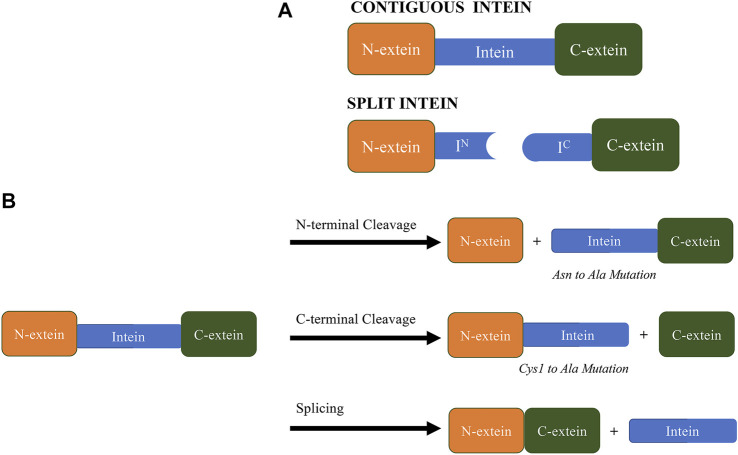
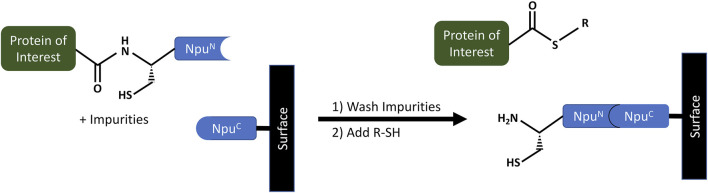
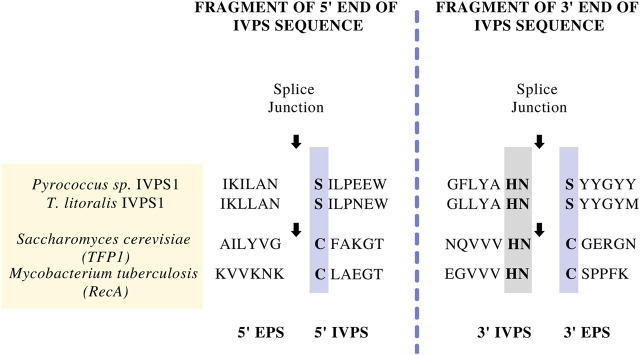
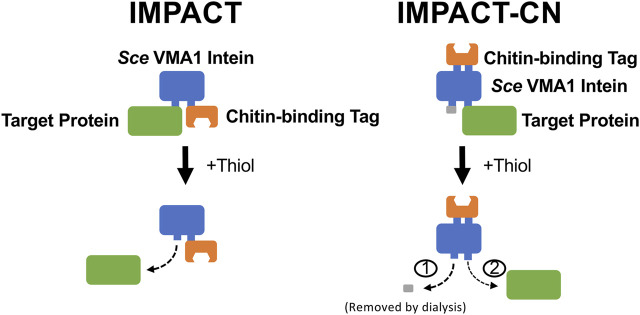
Self-cleaving affinity tags, based on engineered intein protein domains, have been touted as a universal single step purification platform for tagless non-mAb proteins. These approaches provide all of the power and flexibility of tag-based affinity methods, but deliver a tagless target protein suitable for clinical applications without complex process development. This combination of features might accelerate and de-risk biopharmaceutical development by bridging early discovery to full-scale manufacturing under a single platform. Despite this profound promise, intein-based technologies have yet to reach their full potential. This review examines the evolution of intein-based purification methods in the light of several significant intein patents filed over the last 3 decades. Illustrated with actual key figures from each of the relevant patents, key advances are described with a focus on applications in basic research and biopharmaceutical production. Suggestions for extending intein-based purification systems to emerging therapies and non-protein applications are presented as concluding remarks.
基于工程化内含肽蛋白结构域的自切割亲和标签,被誉为无标签非单克隆抗体蛋白的通用单步纯化平台。这些方法具备基于标签的亲和方法的所有优势和灵活性,且能提供适合临床应用的无标签靶蛋白,无需复杂的工艺开发。这些特性的结合可能通过在单一平台上搭建早期发现与大规模生产之间的桥梁,加速生物制药的开发并降低风险。尽管有如此重大的前景,基于内含肽的技术尚未发挥其全部潜力。本综述根据过去三十年提交的多项重要内含肽专利,审视了基于内含肽的纯化方法的演变。文中展示了每项相关专利的实际关键数据,并重点描述了在基础研究和生物制药生产中的应用方面的关键进展。作为结束语,还提出了将基于内含肽的纯化系统扩展到新兴疗法和非蛋白质应用的建议。