Lennon Christopher W, Stanger Matthew, Belfort Marlene
Department of Biological Sciences, RNA Institute, University at Albany, Albany, New York 12222, USA.
Department of Biomedical Sciences, School of Public Health, University at Albany, Albany, New York 12201, USA.
Genes Dev. 2016 Dec 15;30(24):2663-2668. doi: 10.1101/gad.289280.116. Epub 2016 Dec 28.
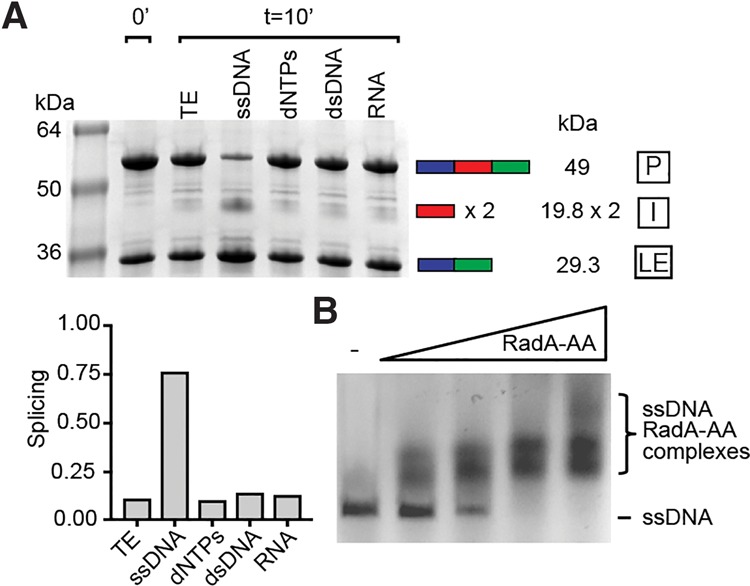
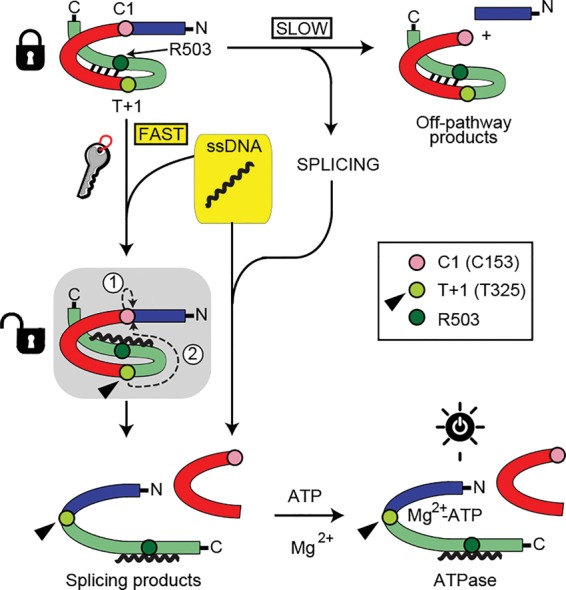
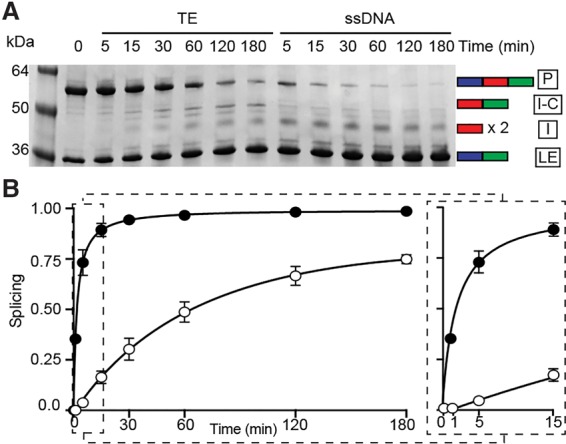
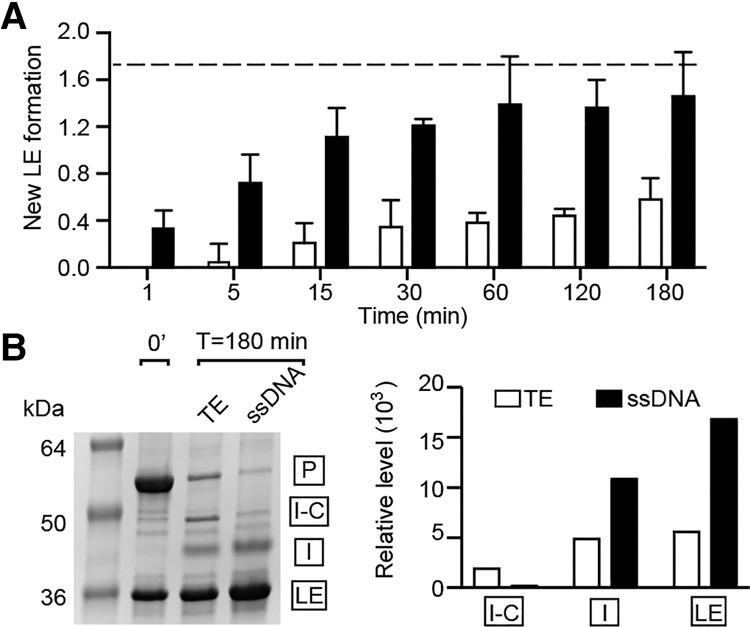
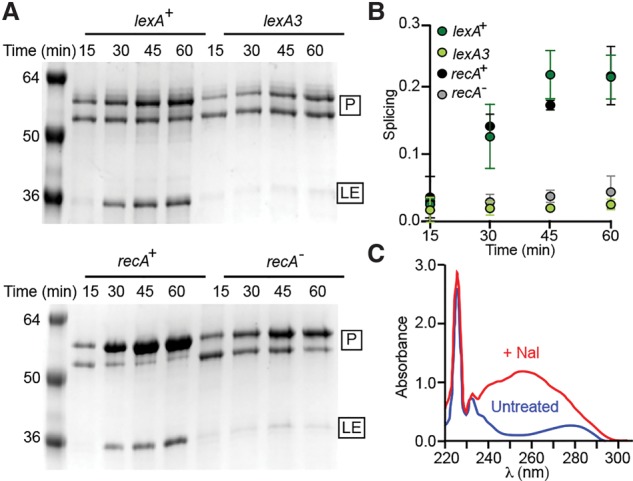
Inteins (or protein introns) autocatalytically excise themselves through protein splicing. We challenge the long-considered notion that inteins are merely molecular parasites and posit that some inteins evolved to regulate host protein function. Here we show substrate-induced and DNA damage-induced splicing, in which an archaeal recombinase RadA intein splices dramatically faster and more accurately when provided with ssDNA. This unprecedented example of intein splicing stimulation by the substrate of the invaded host protein provides compelling support in favor of inteins acting as pause buttons to arrest protein function until needed; then, an immediate activity switch is triggered, representing a new form of post-translational control.
内含肽(或蛋白质内含子)通过蛋白质剪接进行自我催化切除。我们对长期以来认为内含肽仅仅是分子寄生物的观点提出质疑,并认为一些内含肽进化而来是为了调节宿主蛋白质的功能。在这里,我们展示了底物诱导和DNA损伤诱导的剪接,其中一种古菌重组酶RadA内含肽在有单链DNA时剪接速度显著加快且更准确。这种由被入侵宿主蛋白质的底物刺激内含肽剪接的前所未有的例子,为内含肽作为暂停按钮以阻止蛋白质功能直到需要时的观点提供了有力支持;然后,触发立即的活性转换,这代表了一种新的翻译后控制形式。