Porter Katherine Ackerman, O'Neill Cara, Drake Elise, Andrews Sara M, Delaney Kathleen, Parker Samantha, Escolar Maria L, Montgomery Stacey, Moon William, Worrall Carolyn, Peay Holly L
Center for Genomics, Bioinformatics, and Translational Research, RTI International, Research Triangle Park, NC, USA.
Cure Sanfilippo Foundation, Columbia, SC, USA.
J Patient Rep Outcomes. 2022 Apr 25;6(1):40. doi: 10.1186/s41687-022-00447-w.
Sanfilippo syndrome is a rare multisystem disease with no approved treatments. This study explores caregiver perspectives on the most impactful symptoms and patient-relevant clinical outcomes assessments. The pediatric onset and progressive neurodegenerative nature of Sanfilippo limits use of self-report in clinical research. This study obtains Sanfilippo caregiver data to support the selection of fit-for-purpose and patient-relevant clinical outcome assessments (COAs).
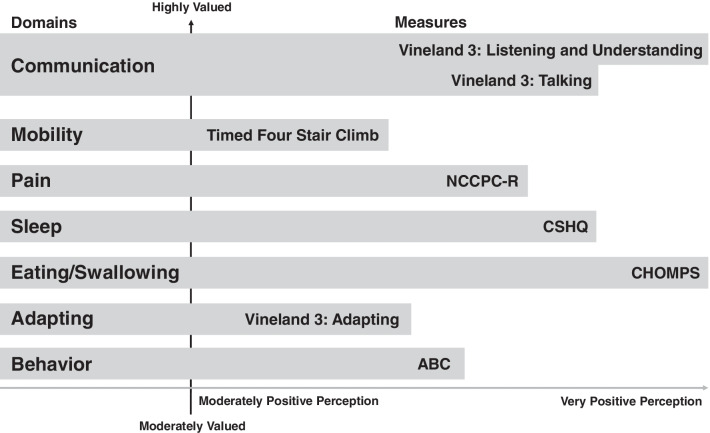
We conducted an asynchronous online focus group (n = 11) followed by individual interviews with caregivers (n = 19) of children with Sanfilippo syndrome. All participants reported on the impact of disease symptoms and level of unmet treatment need across Sanfilippo symptom domains. Focus group participants reviewed existing assessments relating to 8 symptom domains (15 total assessments) and provided feedback on meaningfulness and relevance. Focus group data were used to reduce the number of assessments included in subsequent interviews to 8 COAs across 7 symptom domains: communication, eating, sleep, mobility, pain, behavior and adapting. Interview respondents provided data on meaningfulness and relevance of assessments. Data were coded using an item-tracking matrix. Data summaries were analyzed by caregivers' responses regarding meaningfulness; relevance to Sanfilippo syndrome; and based on caregiver indication of missing or problematic subdomains and items.
Participants' children were 2-24 years in age and varied in disease progression. Caregivers reported communication and mobility as highly impactful domains with unmet treatment needs, followed closely by pain and sleep. Domains such as eating, adaptive skills, and behaviors were identified as impactful but with relatively less priority, by comparison. Participants endorsed the relevance of clinical outcome assessments associated with communication, eating, sleep, and pain, and identified them as highly favorable for use in a clinical trial. Participants specified some refinements in existing assessments to best reflect Sanfilippo symptoms and disease course.
The identification of impactful symptoms to treat and relevant and meaningful clinical outcome assessments supports patient-focused drug development. Our results inform targets for drug development and the selection of primary and secondary outcome assessments with high meaningfulness and face validity to Sanfilippo syndrome caregivers. Assessments identified as less optimal might be refined, replaced, or remain if the clinical trial necessitates.
桑菲利波综合征是一种罕见的多系统疾病,目前尚无获批的治疗方法。本研究探讨了护理人员对最具影响力的症状以及与患者相关的临床结局评估的看法。桑菲利波综合征的儿童期发病和进行性神经退行性本质限制了自我报告在临床研究中的应用。本研究获取了桑菲利波综合征护理人员的数据,以支持选择适合目的且与患者相关的临床结局评估(COA)。
我们开展了一次异步在线焦点小组访谈(n = 11),随后对桑菲利波综合征患儿的护理人员进行了个人访谈(n = 19)。所有参与者都报告了疾病症状的影响以及桑菲利波综合征各症状领域未满足的治疗需求水平。焦点小组参与者审查了与8个症状领域相关的现有评估(共15项评估),并就评估的意义和相关性提供了反馈。焦点小组的数据用于将后续访谈中纳入的评估数量减少到7个症状领域的8个COA:沟通、进食、睡眠、活动能力、疼痛、行为和适应能力。访谈受访者提供了关于评估的意义和相关性的数据。数据使用项目跟踪矩阵进行编码。通过护理人员对意义的回答、与桑菲利波综合征的相关性以及基于护理人员对缺失或有问题的子领域和项目的指示来分析数据总结。
参与者的孩子年龄在2至24岁之间,疾病进展情况各不相同。护理人员报告称,沟通和活动能力是未满足治疗需求的最具影响力的领域,其次是疼痛和睡眠。相比之下,进食、适应技能和行为等领域虽被确定为有影响,但优先级相对较低。参与者认可与沟通、进食、睡眠和疼痛相关的临床结局评估的相关性,并认为它们非常适合用于临床试验。参与者指出了对现有评估的一些改进,以最好地反映桑菲利波综合征的症状和病程。
确定需要治疗的有影响力的症状以及相关且有意义的临床结局评估有助于以患者为中心的药物研发。我们的研究结果为药物研发的目标以及对桑菲利波综合征护理人员具有高意义和表面效度的主要和次要结局评估的选择提供了信息。如果临床试验有必要,被认为不太理想的评估可能会得到改进、替换或保留。