Department of Family Medicine, Chung-Kang Branch, Cheng Ching Hospital, Taichung, Taiwan.
Center for General Education, Tunghai University, Taiwan.
Aging (Albany NY). 2022 Apr 25;14(8):3633-3651. doi: 10.18632/aging.204034.
Diabetes and sarcopenia are verified as mutual relationships, which seriously affect the quality of life of the elderly. Endothelin-1 is well investigated, is elevated in patients with diabetes, and is related to muscle cellular senescence and fibrosis. However, the mechanism of ET-1 between diabetes and myopathy is still unclear. The aim of this study was to evaluate the prevalence of sarcopenia in the elderly with diabetes and to clarify its relationship with ET-1 molecular biological mechanism, progress as well as changes in muscle and fat.
We recruited 157 type 2 diabetes patients over 55 years old and investigated the prevalence of sarcopenia in diabetes patients and examined the association of ET-1 alterations with HbA1c, creatinine, or AMS/ht2. Next, sought to determine how ET-1 regulates inflammation in muscle cells by western blot and qPCR assay. Using XF Seahorse Technology, we directly quantified mitochondrial bioenergetics in 3T3-L1 cells.
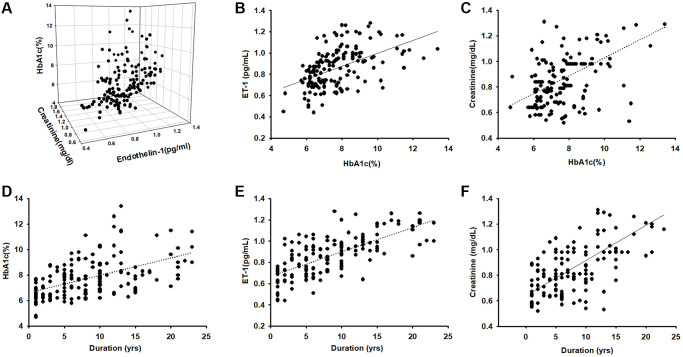
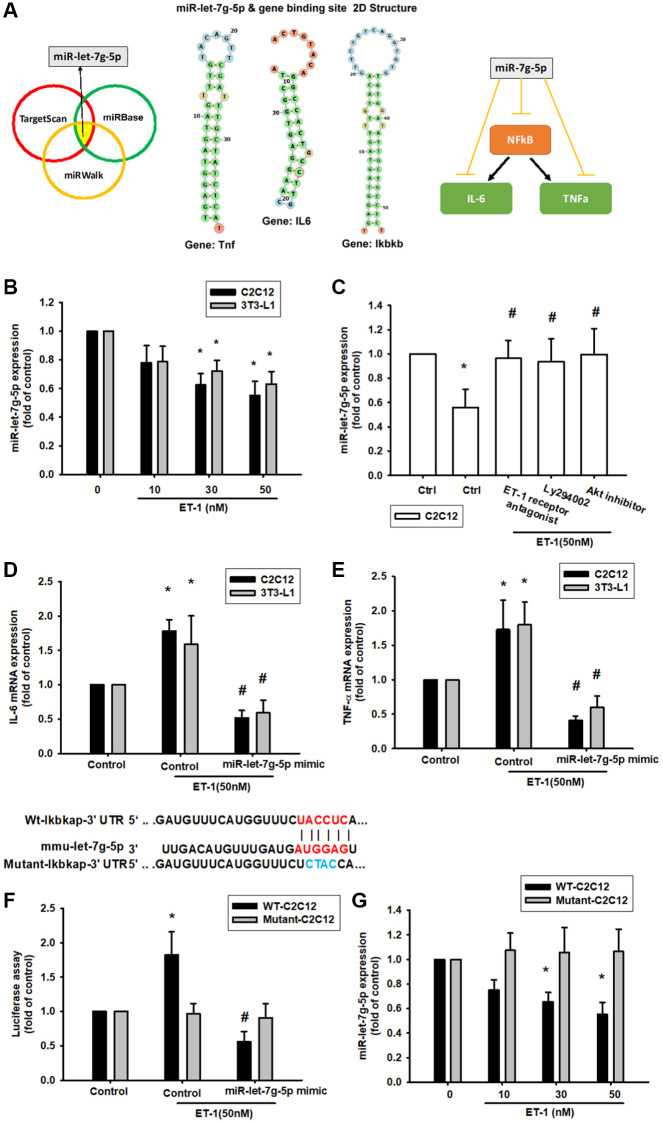
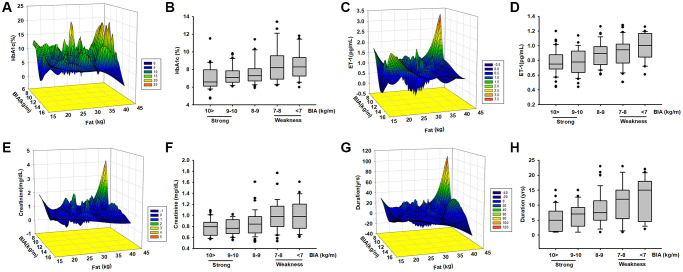
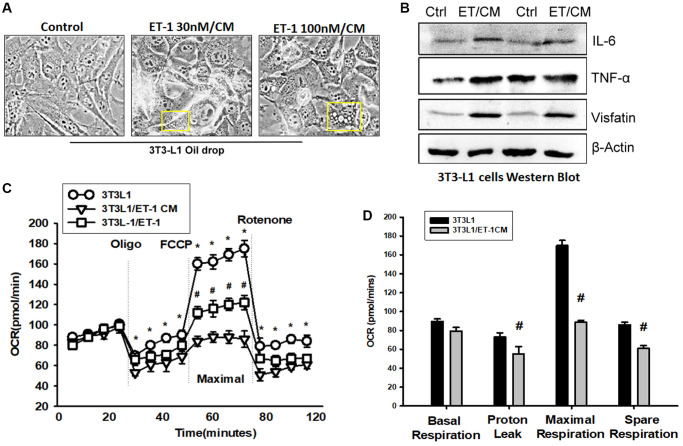
ET-1 was positively correlated with HbA1c, creatinine levels, and duration of disease, and negatively correlated with AMS/ht2. We found that ET-1 dose-dependently induces tumor necrosis factor-α (TNF-α) and interleukin (IL)-6β expression through the PI3K/AKT, and NF-κB signaling pathways in C2C12 cells. Also identified that TNF-α, IL-6β, and visfatin releases were found in co-cultured with conditioned medium of ET-1/C2C12 in 3T3-L1 cells. ET-1 also reduces the energy metabolism of fat and induces micro-environment inflammation which causes myopathy. ET-1 also suppresses miR-let-7g-5p expression in myocytes and adipocytes.
We describe a new mechanism of ET-1 triggering chronic inflammation in patients with hyperglycemia.
糖尿病和肌肉减少症已被证实为相互关系,这严重影响了老年人的生活质量。内皮素-1(ET-1)的研究较为充分,在糖尿病患者中升高,并与肌细胞衰老和纤维化有关。然而,ET-1 在糖尿病和肌肉减少症之间的机制仍不清楚。本研究旨在评估老年 2 型糖尿病患者中肌肉减少症的患病率,并阐明其与 ET-1 分子生物学机制、进展以及肌肉和脂肪变化的关系。
我们招募了 157 名 55 岁以上的 2 型糖尿病患者,调查了糖尿病患者中肌肉减少症的患病率,并检查了 ET-1 改变与 HbA1c、肌酐或 AMS/ht2 的关系。接下来,我们试图通过 Western blot 和 qPCR 检测来确定 ET-1 如何调节肌细胞中的炎症。使用 XF Seahorse 技术,我们直接在 3T3-L1 细胞中定量线粒体生物能。
ET-1 与 HbA1c、肌酐水平和疾病持续时间呈正相关,与 AMS/ht2 呈负相关。我们发现 ET-1 通过 C2C12 细胞中的 PI3K/AKT 和 NF-κB 信号通路,呈剂量依赖性诱导肿瘤坏死因子-α(TNF-α)和白细胞介素(IL)-6β 的表达。还发现 ET-1/C2C12 条件培养基在 3T3-L1 细胞中共同培养时,可释放 TNF-α、IL-6β 和内脏脂肪素。ET-1 还降低脂肪的能量代谢并诱导微环境炎症,从而导致肌肉减少症。ET-1 还抑制肌细胞和脂肪细胞中的 miR-let-7g-5p 表达。
我们描述了一种新的 ET-1 触发高血糖患者慢性炎症的机制。