School of Chinese Medicine, Li Ka Shing Faculty of Medicine, The University of Hong Kong, Hong Kong SAR, China.
First Clinical Medical College, Guangzhou University of Chinese Medicine, Guangzhou 510405, China.
Cells. 2024 Sep 27;13(19):1620. doi: 10.3390/cells13191620.
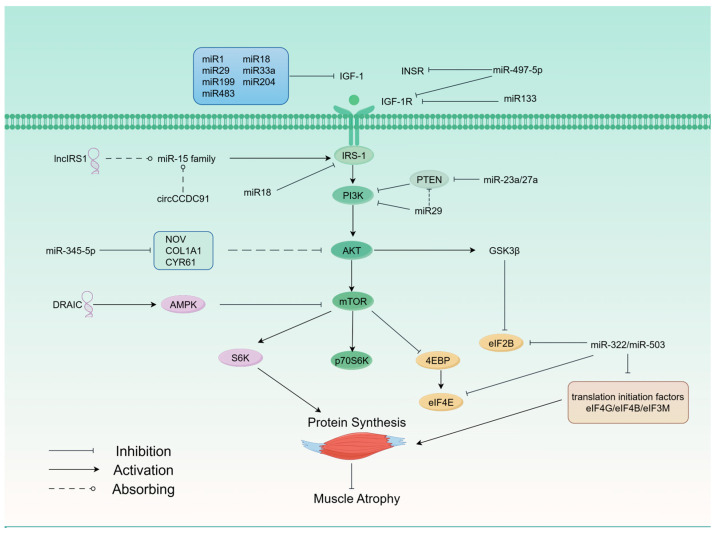
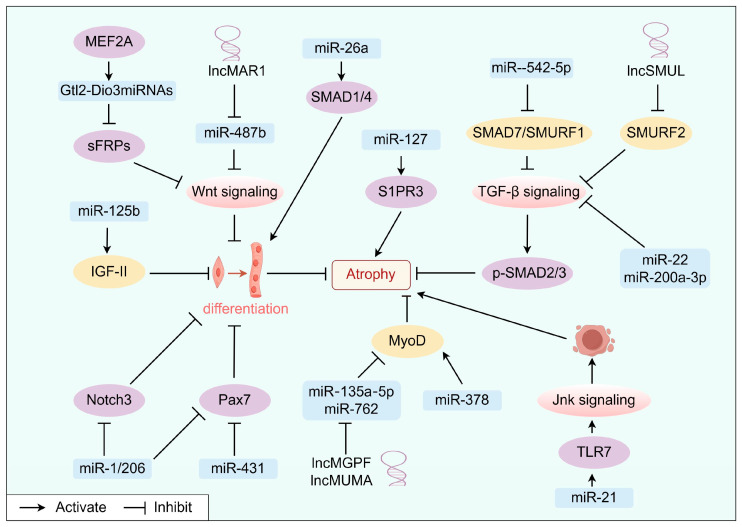
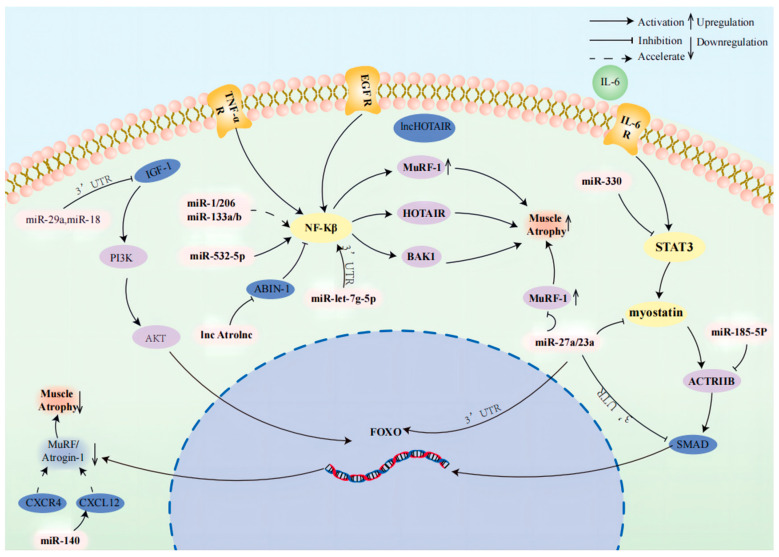
Cachexia is a late consequence of various diseases that is characterized by systemic muscle loss, with or without fat loss, leading to significant mortality. Multiple signaling pathways and molecules that increase catabolism, decrease anabolism, and interfere with muscle regeneration are activated. Non-coding RNAs (ncRNAs), such as microRNAs (miRNAs), long non-coding RNAs (lncRNAs), and circular RNAs (circRNAs), play vital roles in cachexia muscle atrophy. This review mainly provides the mechanisms of specific ncRNAs to regulate muscle loss during cachexia and discusses the role of ncRNAs in cachectic biomarkers and novel therapeutic strategies that could offer new insights for clinical practice.
恶病质是多种疾病的晚期后果,其特征是全身肌肉减少,伴有或不伴有脂肪减少,导致死亡率显著升高。多种信号通路和分子被激活,这些通路和分子增加分解代谢,减少合成代谢,并干扰肌肉再生。非编码 RNA(ncRNA),如 microRNAs(miRNAs)、长非编码 RNA(lncRNAs)和环状 RNA(circRNAs),在恶病质肌肉萎缩中发挥重要作用。本综述主要介绍了特定 ncRNA 调节恶病质肌肉丢失的机制,并讨论了 ncRNA 在恶病质生物标志物和新的治疗策略中的作用,这可能为临床实践提供新的见解。