Precision Immunology Institute, Icahn School of Medicine at Mount Sinai, New York, NY, 10029, USA.
Laboratory of Mucosal Immunology, The Rockefeller University, New York, NY, 10065, USA.
Cell Mol Immunol. 2022 Jul;19(7):777-790. doi: 10.1038/s41423-022-00864-3. Epub 2022 Apr 25.
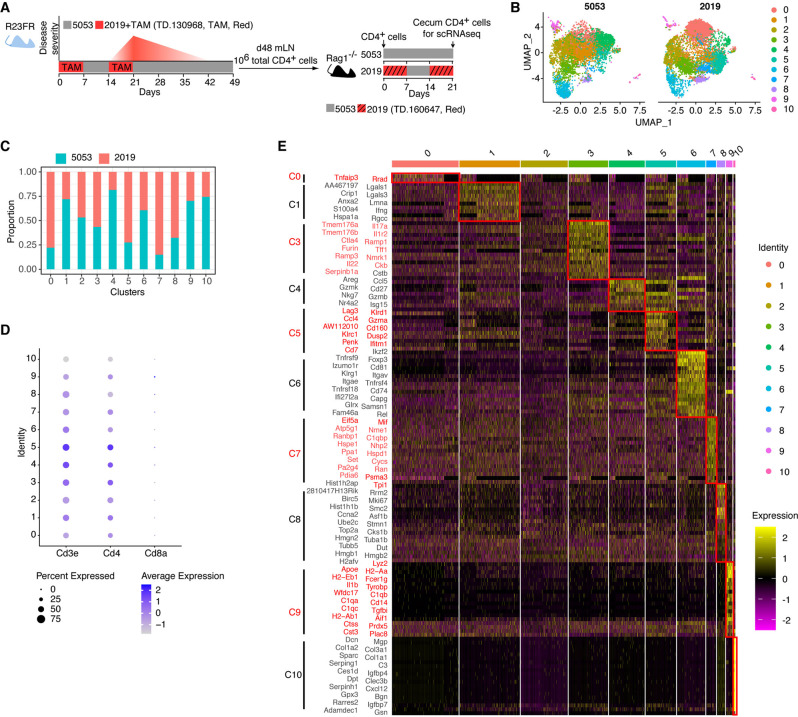
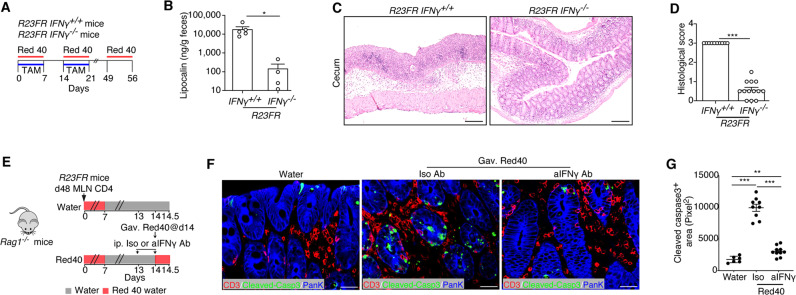
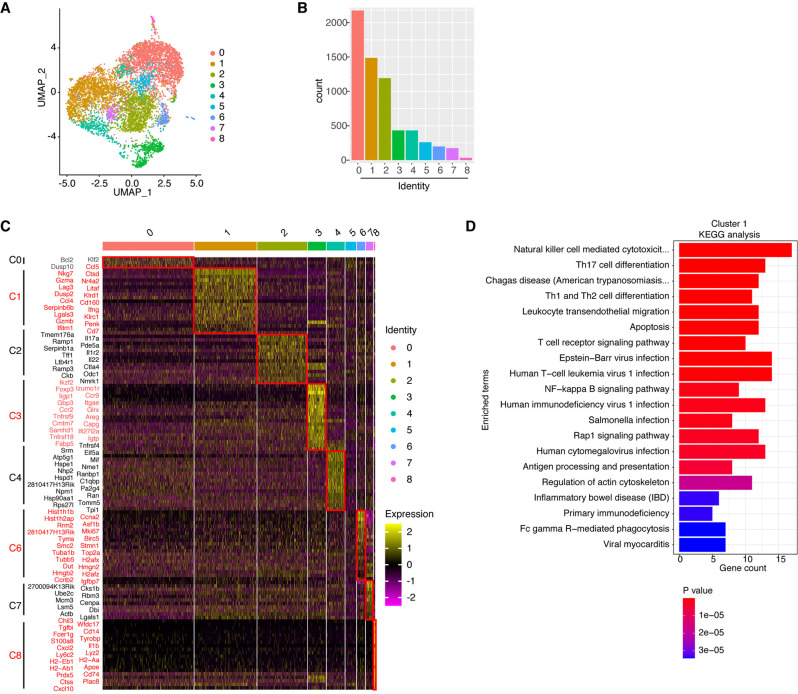
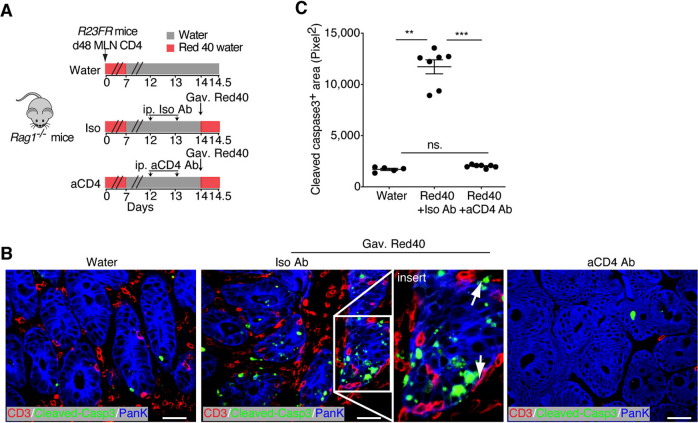
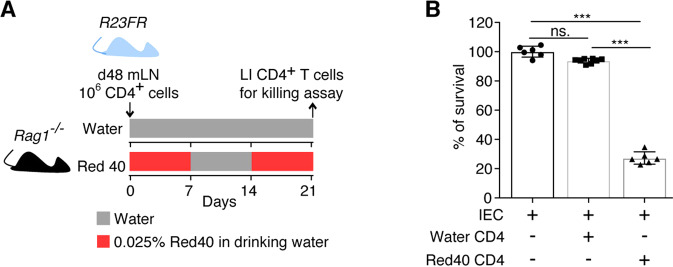
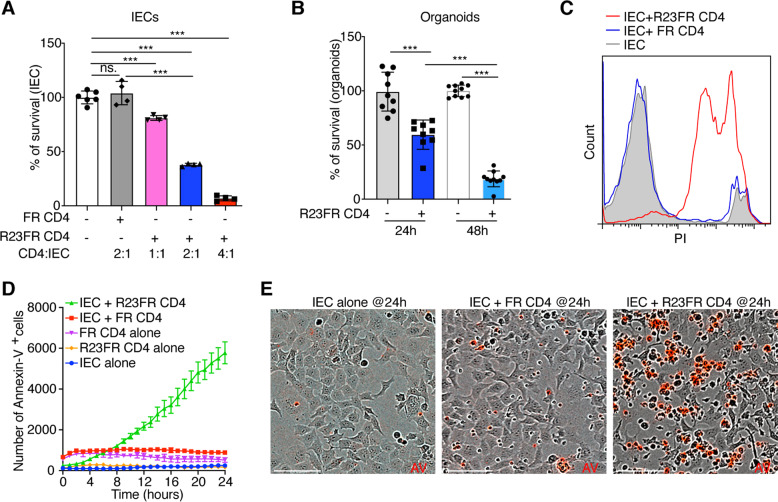
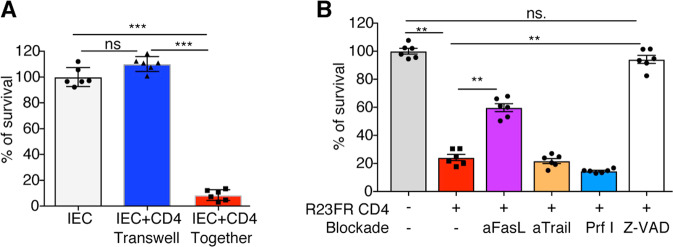
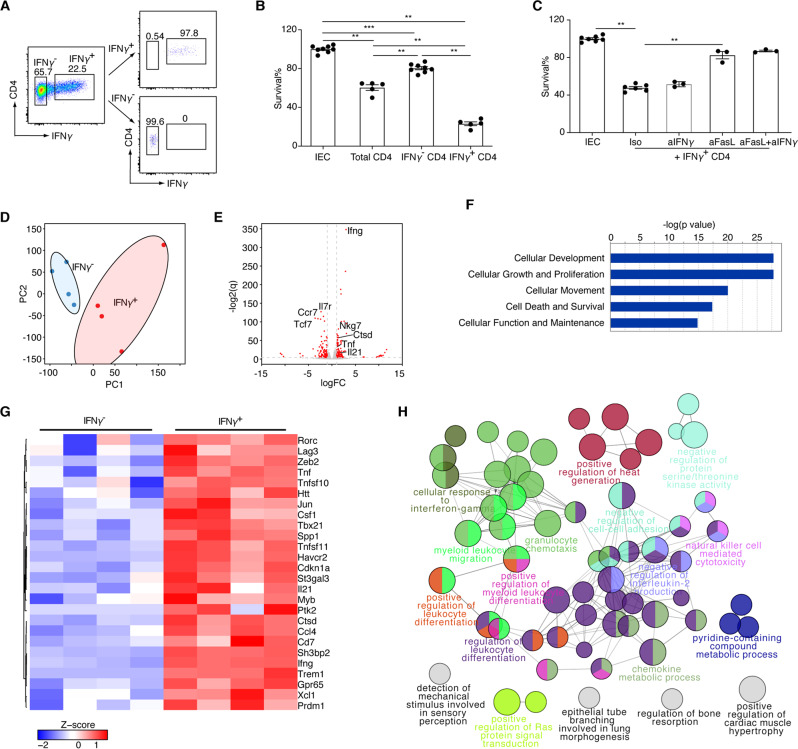
The food colorant Red 40 is an environmental risk factor for colitis development in mice with increased expression of interleukin (IL)-23. This immune response is mediated by CD4 T cells, but mechanistic insights into how these CD4 T cells trigger and perpetuate colitis have remained elusive. Here, using single-cell transcriptomic analysis, we found that several CD4 T-cell subsets are present in the intestines of colitic mice, including an interferon (IFN)-γ-producing subset. In vivo challenge of primed mice with Red 40 promoted rapid activation of CD4 T cells and caused marked intestinal epithelial cell (IEC) apoptosis that was attenuated by depletion of CD4 cells and blockade of IFN-γ. Ex vivo experiments showed that intestinal CD4 T cells from colitic mice directly promoted apoptosis of IECs and intestinal enteroids. CD4 T cell-mediated cytotoxicity was contact-dependent and required FasL, which promoted caspase-dependent cell death in target IECs. Genetic ablation of IFN-γ constrained IL-23- and Red 40-induced colitis development, and blockade of IFN-γ inhibited epithelial cell death in vivo. These results advance the understanding of the mechanisms regulating colitis development caused by IL-23 and food colorants and identify IFN-γ cytotoxic CD4 T cells as a new potential therapeutic target for colitis.
食品着色剂红色 40 是白细胞介素(IL)-23 表达增加的小鼠结肠炎发展的环境风险因素。这种免疫反应是由 CD4 T 细胞介导的,但这些 CD4 T 细胞如何引发和持续结肠炎的机制仍不清楚。在这里,我们使用单细胞转录组分析发现,结肠炎小鼠的肠道中存在几种 CD4 T 细胞亚群,包括产生干扰素(IFN)-γ的亚群。用红色 40 对致敏小鼠进行体内挑战可快速激活 CD4 T 细胞,并导致明显的肠上皮细胞(IEC)凋亡,而 CD4 细胞耗竭和 IFN-γ 阻断可减轻这种凋亡。离体实验表明,结肠炎小鼠的肠道 CD4 T 细胞可直接促进 IEC 的凋亡和肠类器官的凋亡。CD4 T 细胞介导的细胞毒性是接触依赖性的,需要 FasL,它可促进靶 IEC 中半胱天冬酶依赖性细胞死亡。IFN-γ 的基因缺失限制了 IL-23 和红色 40 诱导的结肠炎发展,体内 IFN-γ 阻断可抑制上皮细胞死亡。这些结果推进了对由 IL-23 和食品着色剂调节结肠炎发展的机制的理解,并确定 IFN-γ 细胞毒性 CD4 T 细胞作为结肠炎的一个新的潜在治疗靶点。