Lung and Placenta Laboratory, Department of Cell Biology and Physiology, Brigham Young University, Provo, UT, USA.
Department of Chemistry and Biochemistry, Brigham Young University, Provo, UT, USA.
BMC Pulm Med. 2022 Apr 26;22(1):160. doi: 10.1186/s12890-022-01935-x.
Smoke exposure culminates as a progressive lung complication involving airway inflammation and remodeling. While primary smoke poses the greatest risk, nearly half of the US population is also at risk due to exposure to secondhand smoke (SHS).
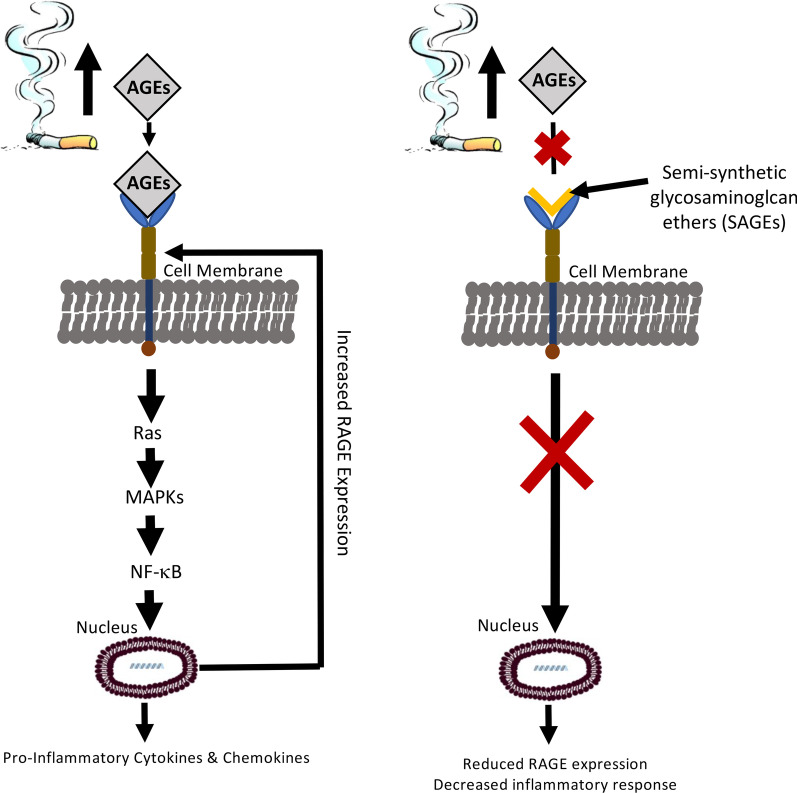
We used WT, RAGE-/- (KO), and Tet-inducible lung-specific RAGE overexpressing transgenic (TG) mice to study the role of RAGE during short-term responses to SHS. We evaluated SHS effects in mice with and without semi-synthetic glycosaminoglycan ethers (SAGEs), which are anionic, partially lipophilic sulfated polysaccharide derivatives known to inhibit RAGE signaling. TG Mice were weaned and fed doxycycline to induce RAGE at postnatal day (PN) 30. At PN40, mice from each line were exposed to room air (RA) or SHS from three Kentucky 3R4F research cigarettes via a nose-only delivery system (Scireq Scientific, Montreal, Canada) five days a week and i.p. injections of PBS or SAGE (30 mg/kg body weight) occurred three times per week from PN40-70 before mice were sacrificed on PN70.
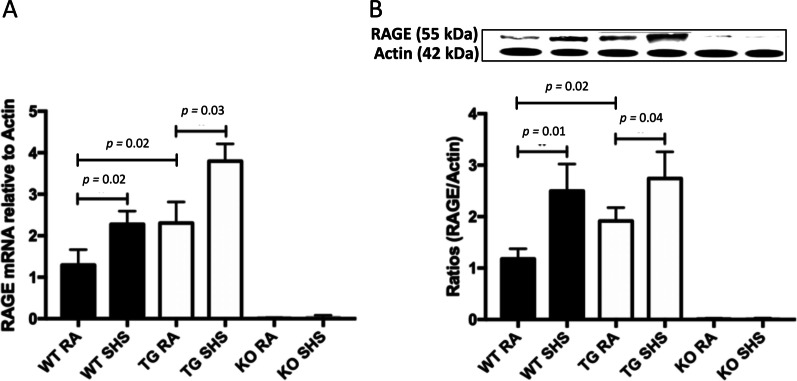
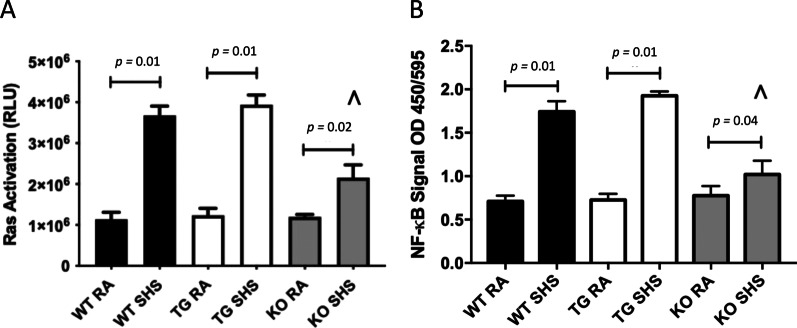
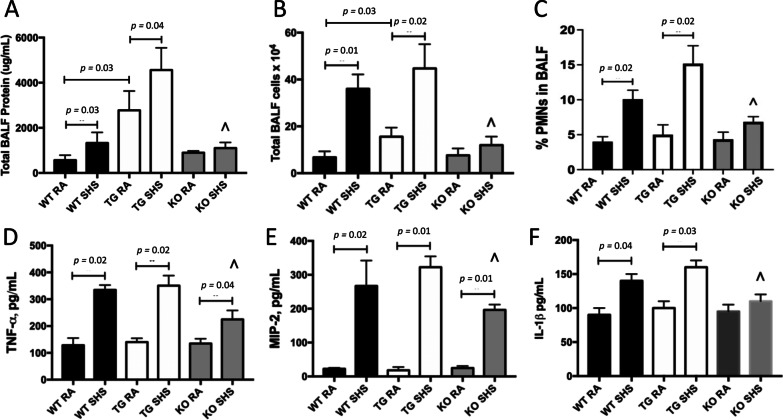
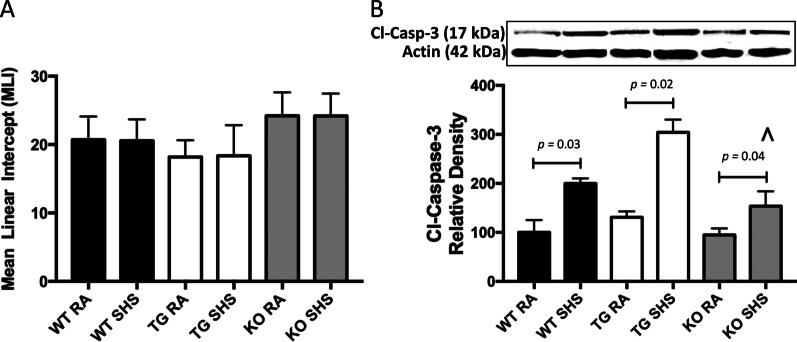
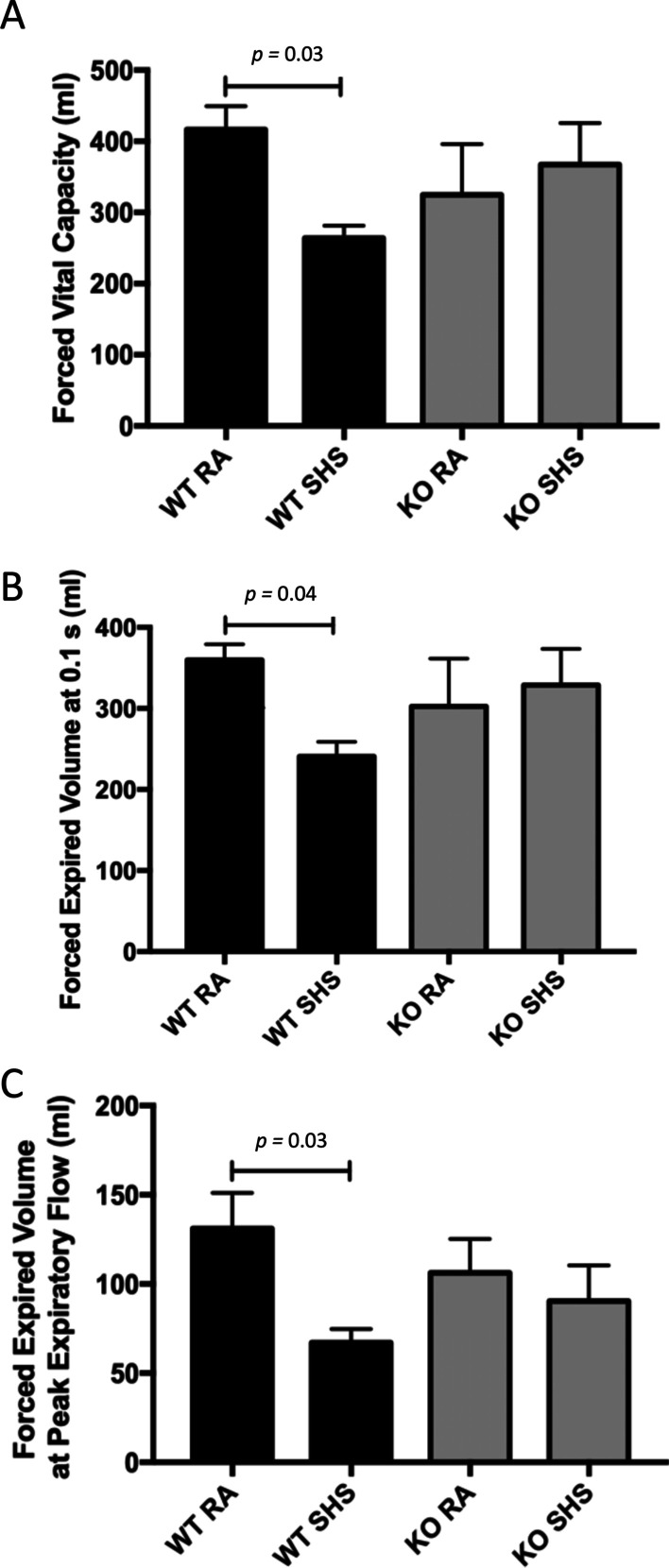
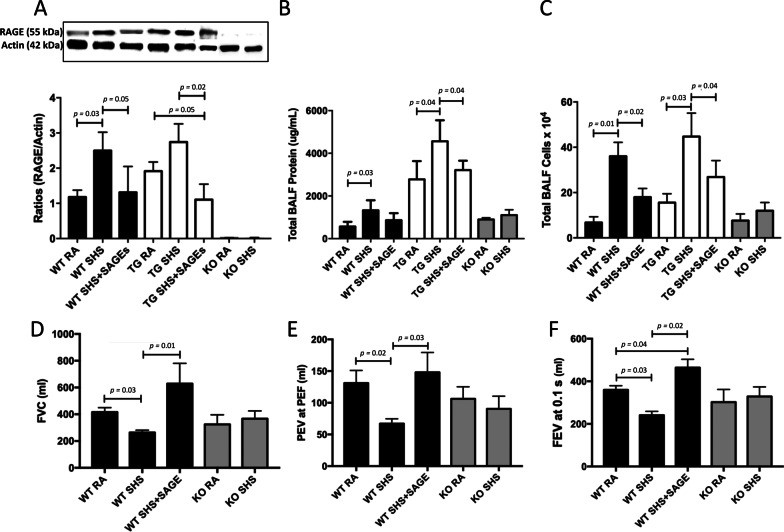
RAGE mRNA and protein expression was elevated following SHS exposure of control and TG mice and not detected in RAGE KO mice. Bronchoalveolar lavage fluid (BALF) analysis revealed RAGE-mediated influence on inflammatory cell diapedesis, total protein, and pro-inflammatory mediators following exposure. Lung histological assessment revealed indistinguishable morphology following exposure, yet parenchymal apoptosis was increased. Inflammatory signaling intermediates such as Ras and NF-κB, as well as downstream responses were influenced by the availability of RAGE, as evidenced by RAGE KO and SAGE treatment.
These data provide fascinating insight suggesting therapeutic potential for the use of RAGE inhibitors in lungs exposed to SHS smoke.
烟雾暴露最终会导致肺部进行性并发症,包括气道炎症和重塑。虽然主要烟雾带来的风险最大,但由于接触二手烟(SHS),近一半的美国人口也面临风险。
我们使用 WT、RAGE-/-(KO)和 Tet 诱导的肺特异性 RAGE 过表达转基因(TG)小鼠来研究 RAGE 在短期 SHS 反应中的作用。我们评估了有和没有半合成糖胺聚糖醚(SAGEs)的 SHS 影响,SAGEs 是已知抑制 RAGE 信号的带负电荷、部分亲脂性硫酸多糖衍生物。TG 小鼠在出生后第 30 天(PN)断奶并喂食强力霉素以诱导 RAGE。在每个品系的 PN40 时,用来自三个肯塔基 3R4F 研究香烟的 SHS 通过鼻内输送系统(Scireq Scientific,蒙特利尔,加拿大)每周 5 天暴露于空气(RA)或 SHS,并且从 PN40-70 每周三次进行 i.p. 注射 PBS 或 SAGE(30mg/kg 体重),然后在 PN70 时处死小鼠。
在对照和 TG 小鼠的 SHS 暴露后,RAGE mRNA 和蛋白表达增加,而在 RAGE KO 小鼠中未检测到。支气管肺泡灌洗液(BALF)分析显示,在暴露后,RAGE 介导了炎症细胞渗出、总蛋白和促炎介质的影响。肺组织学评估显示暴露后形态相似,但实质细胞凋亡增加。RAGE KO 和 SAGE 处理证明,炎症信号转导中间物如 Ras 和 NF-κB 以及下游反应受到 RAGE 可用性的影响。
这些数据提供了引人入胜的见解,表明 RAGE 抑制剂在暴露于 SHS 烟雾的肺部中的治疗潜力。