Division of Neurogeriatrics, Department of Neurobiology, Care Sciences and Society, Center for Alzheimer Research, Karolinska Institutet, Solna, Sweden.
Theme Inflammation and Aging, Karolinska University Hospital, Huddinge, Sweden.
BMC Geriatr. 2022 Apr 26;22(1):365. doi: 10.1186/s12877-022-03070-y.
The COVID-19 pandemic has caused large disruptions to healthcare systems. Refocus on COVID-19 related care might have contributed to indirect effects on other healthcare areas. Care focused on acute conditions have been negatively affected although research into the effects on chronic and care intensive patient groups such as patients with dementia diseases is lacking. In this study we evaluated dementia diagnosis trends in Sweden during 2015-2020 according to International Classification of Disease version 10 coding of common dementia diseases.
Regional and national statistics in the form of International Classification of Disease version 10 coding, COVID-19 incidence, mortality data, and population census data were collected from the National Institute of Health and Welfare. Logistic regression analysis was performed to identify trends of dementia diagnosis during 2015-2020. Correlation test was performed between COVID-19 incidence, mortality rates, and dementia coding.
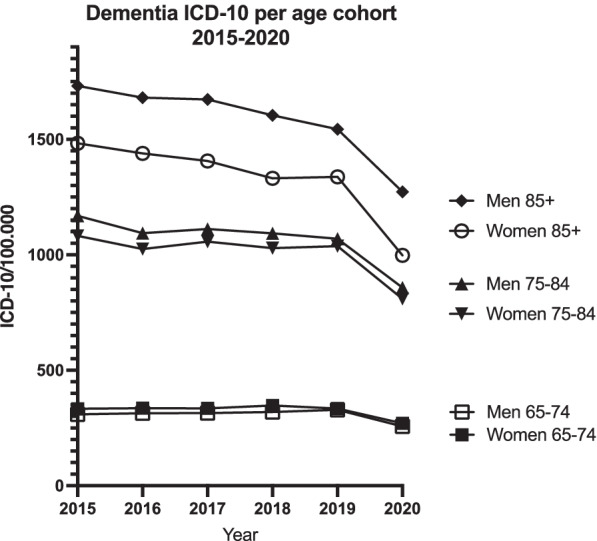
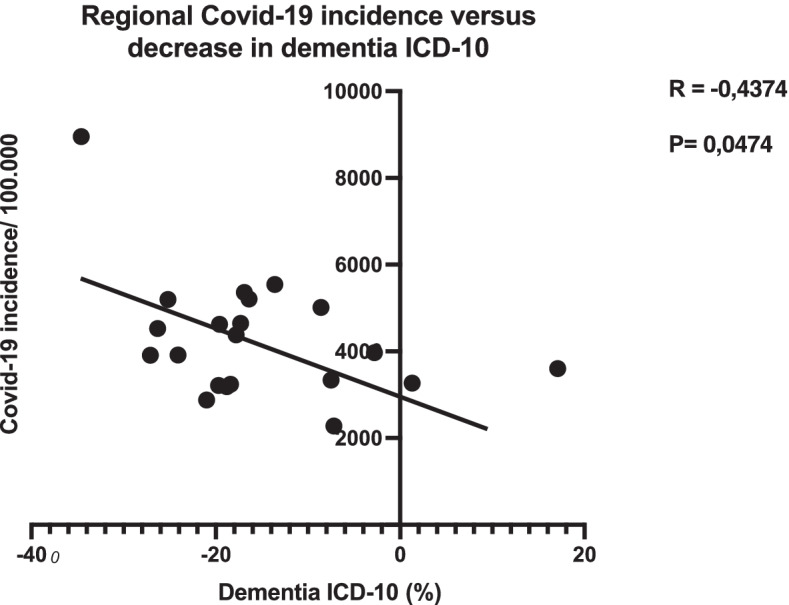
Dementia diagnosis incidence has been declining since 2015 and further decline was noted in many regions in Sweden during 2020. As COVID-19 incidence increased, fewer cases of dementia were diagnosed, a decrease that differentially impacted women and those who were advanced in age.
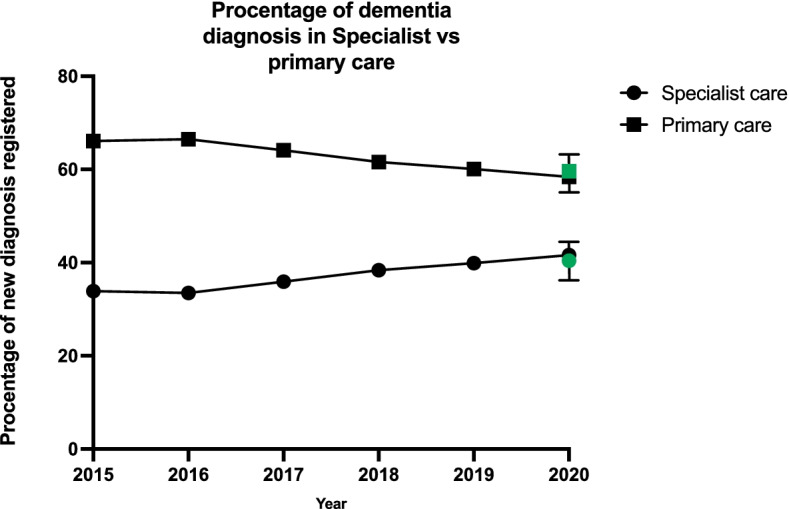
Dementia diagnosis incidence in Sweden has been on a decline since 2015. The COVID-19 pandemic caused a further larger decline in dementia diagnosis incidence during 2020. COVID-19 incidence, but not mortality, was associated with decrease in dementia diagnosis incidence. There might be a large number of undiagnosed patients with dementia and healthcare reforms should be enacted to address this. Women and elderly are particularly vulnerable groups.
COVID-19 大流行对医疗系统造成了严重干扰。重新关注与 COVID-19 相关的护理可能对其他医疗保健领域产生间接影响。尽管针对痴呆症等慢性和护理密集型患者群体的研究缺乏,但急性疾病护理受到了负面影响。在这项研究中,我们根据国际疾病分类第十版(ICD-10)对常见痴呆症疾病的编码,评估了 2015 年至 2020 年期间瑞典的痴呆症诊断趋势。
从国家卫生福利研究所收集了区域和国家统计数据,以 ICD-10 编码的形式、COVID-19 发病率、死亡率数据和人口普查数据。采用逻辑回归分析来确定 2015-2020 年期间痴呆症诊断的趋势。进行了相关性测试,以确定 COVID-19 发病率、死亡率和痴呆症编码之间的关系。
自 2015 年以来,痴呆症诊断的发病率一直在下降,而且在瑞典的许多地区,2020 年的发病率进一步下降。随着 COVID-19 发病率的增加,痴呆症的诊断病例减少,这种下降对女性和高龄人群的影响更大。
自 2015 年以来,瑞典的痴呆症诊断发病率一直在下降。COVID-19 大流行导致 2020 年痴呆症诊断发病率进一步大幅下降。COVID-19 发病率与痴呆症诊断发病率的下降有关,但死亡率与痴呆症诊断发病率的下降无关。可能有大量未被诊断的痴呆症患者,应制定医疗改革措施来解决这个问题。女性和老年人是特别脆弱的群体。