Department of Biochemistry and Molecular Biophysics, Columbia University, New York, NY, 10032, USA.
Tianjin Institute of Industrial Biotechnology, Chinese Academy of Sciences, Tianjin, 300308, China.
Nat Commun. 2022 Apr 26;13(1):2248. doi: 10.1038/s41467-022-29937-7.
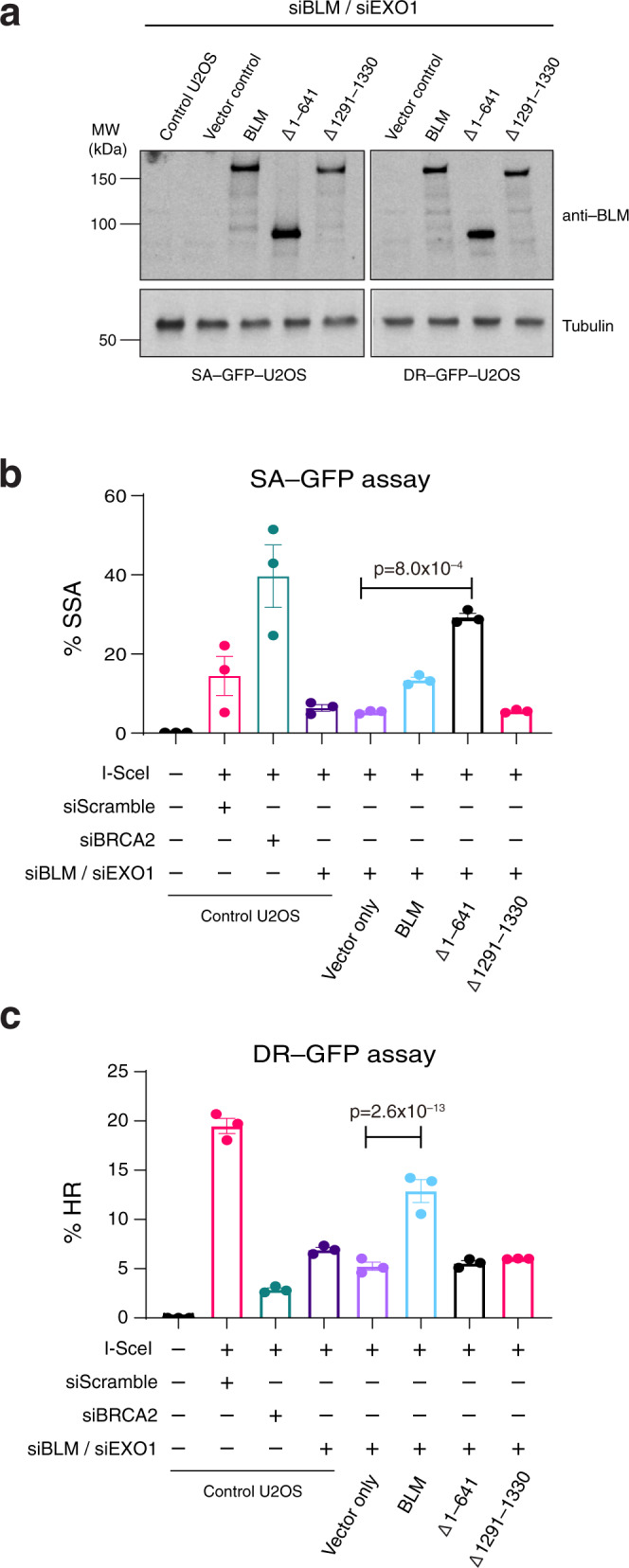
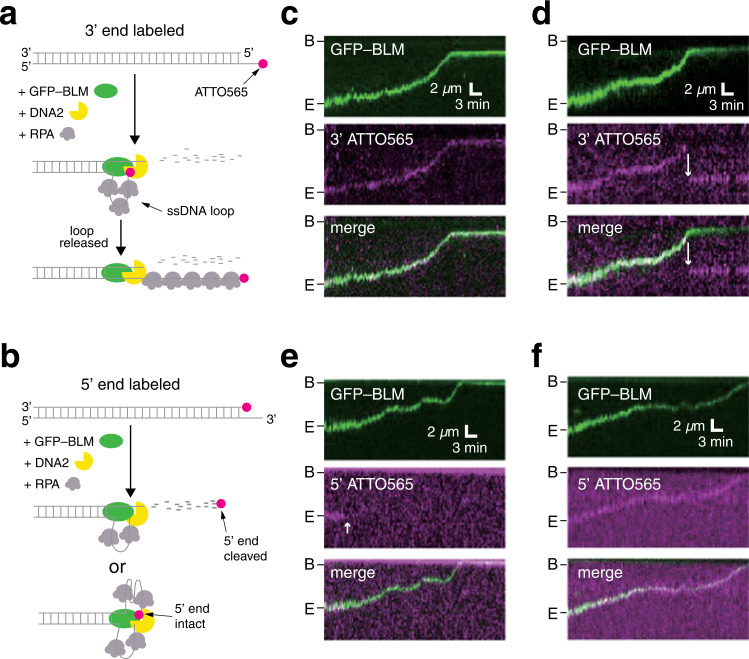
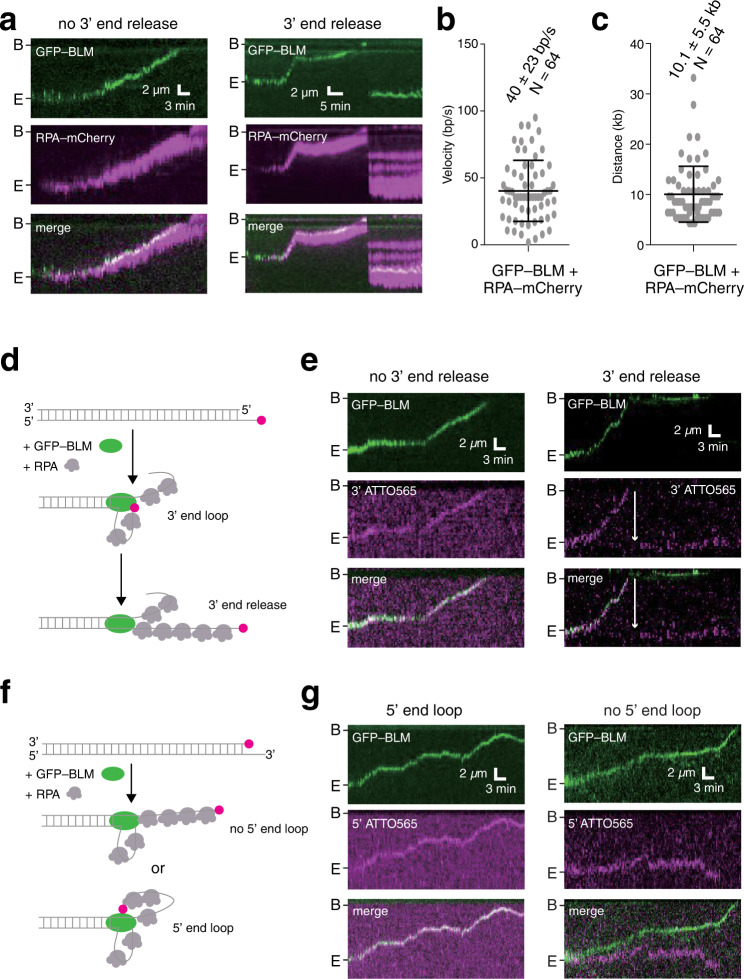
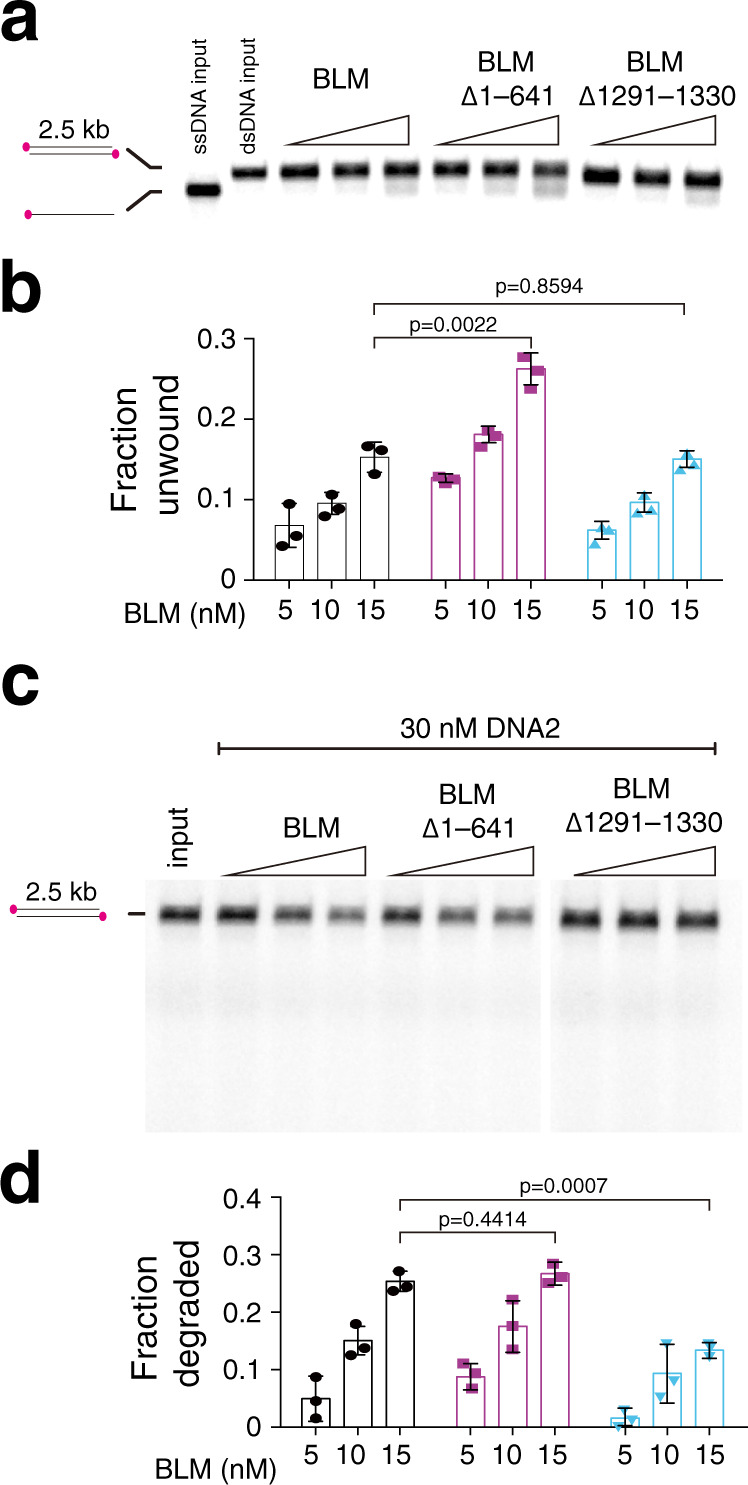
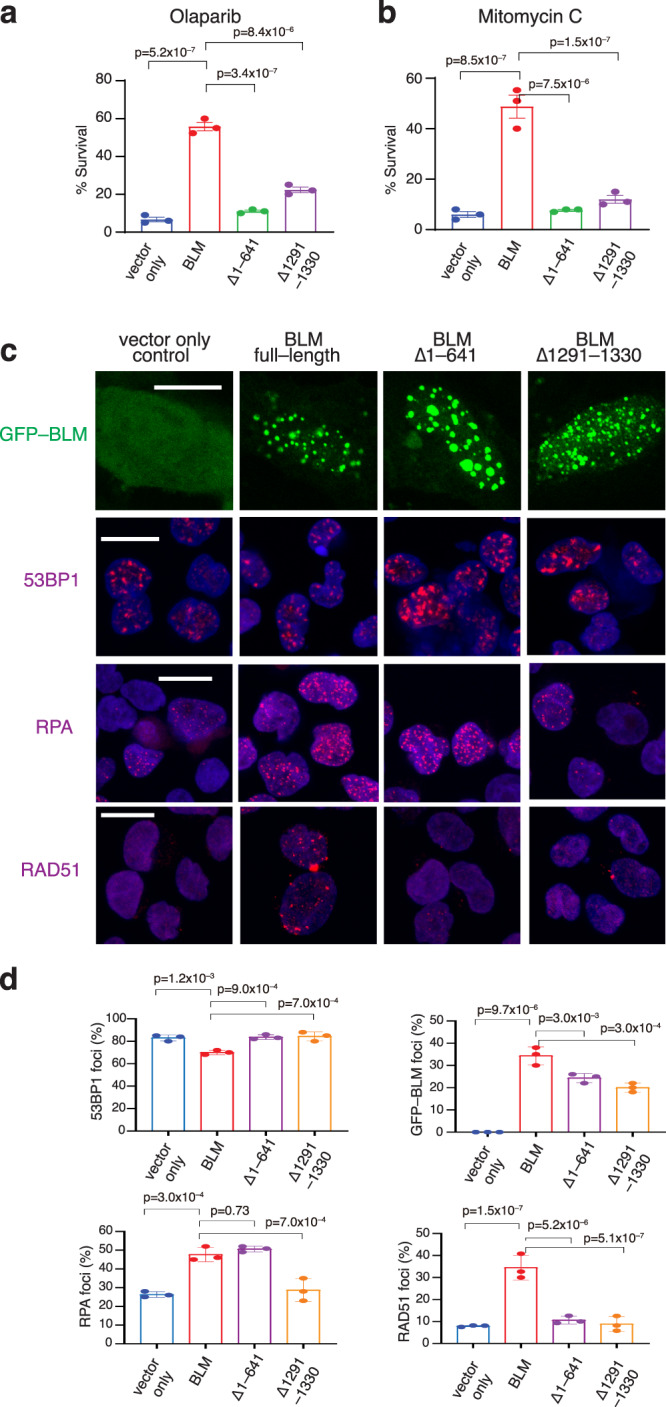
Bloom syndrome (BS) is associated with a profoundly increased cancer risk and is caused by mutations in the Bloom helicase (BLM). BLM is involved in the nucleolytic processing of the ends of DNA double-strand breaks (DSBs), to yield long 3' ssDNA tails that serve as the substrate for break repair by homologous recombination (HR). Here, we use single-molecule imaging to demonstrate that BLM mediates formation of large ssDNA loops during DNA end processing. A BLM mutant lacking the N-terminal domain (NTD) retains vigorous in vitro end processing activity but fails to generate ssDNA loops. This same mutant supports DSB end processing in cells, however, these cells do not form RAD51 DNA repair foci and the processed DSBs are channeled into synthesis-dependent strand annealing (SSA) instead of HR-mediated repair, consistent with a defect in RAD51 filament formation. Together, our results provide insights into BLM functions during homologous recombination.
布卢姆综合征(BS)与癌症风险显著增加有关,是由布卢姆解旋酶(BLM)的突变引起的。BLM 参与 DNA 双链断裂(DSB)末端的核酸酶加工,产生长的 3' ssDNA 尾巴,作为同源重组(HR)修复的底物。在这里,我们使用单分子成像技术证明 BLM 在 DNA 末端加工过程中介导大的 ssDNA 环的形成。一种缺乏 N 端结构域(NTD)的 BLM 突变体保留了强烈的体外末端加工活性,但不能产生 ssDNA 环。然而,这种相同的突变体支持细胞中的 DSB 末端加工,但是这些细胞不会形成 RAD51 修复焦点,并且加工的 DSB 被引导到合成依赖性链退火(SSA)而不是 HR 介导的修复,这与 RAD51 丝形成缺陷一致。总之,我们的结果提供了 BLM 在同源重组过程中的功能的见解。