Simon Matthew, Wang Marie Xun, Ismail Ozama, Braun Molly, Schindler Abigail G, Reemmer Jesica, Wang Zhongya, Haveliwala Mariya A, O'Boyle Ryan P, Han Warren Y, Roese Natalie, Grafe Marjorie, Woltjer Randall, Boison Detlev, Iliff Jeffrey J
Neuroscience Graduate Program, Oregon Health & Science University, Portland, OR, USA.
Department of Anesthesiology and Perioperative Medicine, Oregon Health & Science University, Portland, OR, USA.
Alzheimers Res Ther. 2022 Apr 26;14(1):59. doi: 10.1186/s13195-022-00999-5.
Slowed clearance of amyloid β (Aβ) is believed to underlie the development of Aβ plaques that characterize Alzheimer's disease (AD). Aβ is cleared in part by the glymphatic system, a brain-wide network of perivascular pathways that supports the exchange of cerebrospinal and brain interstitial fluid. Glymphatic clearance, or perivascular CSF-interstitial fluid exchange, is dependent on the astroglial water channel aquaporin-4 (AQP4) as deletion of Aqp4 in mice slows perivascular exchange, impairs Aβ clearance, and promotes Aβ plaque formation.
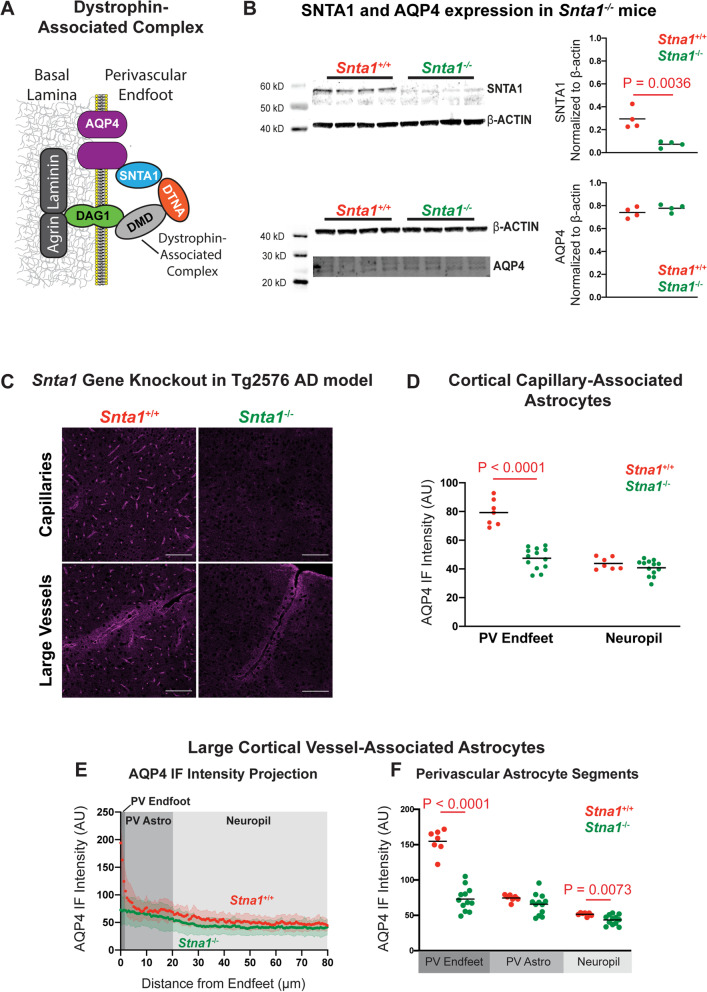
To define the role of AQP4 in human AD, we evaluated AQP4 expression and localization in a human post mortem case series. We then used the α-syntrophin (Snta1) knockout mouse model which lacks perivascular AQP4 localization to evaluate the effect that loss of perivascular AQP4 localization has on glymphatic CSF tracer distribution. Lastly, we crossed this line into a mouse model of amyloidosis (Tg2576 mice) to evaluate the effect of AQP4 localization on amyloid β levels.
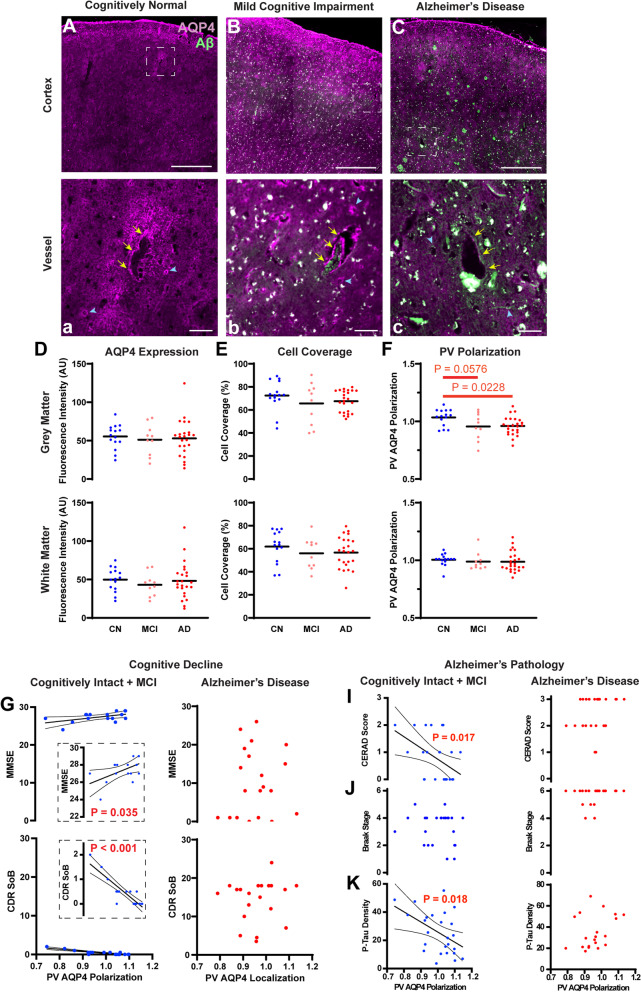
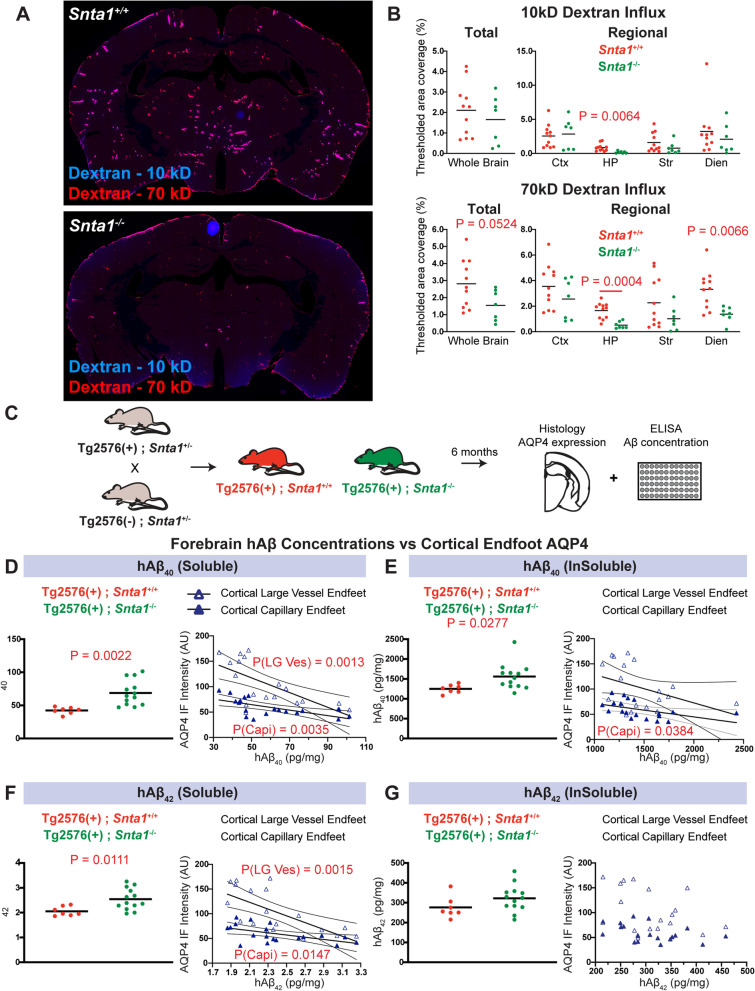
In the post mortem case series, we observed that the perivascular localization of AQP4 is reduced in frontal cortical gray matter of subjects with AD compared to cognitively intact subjects. This decline in perivascular AQP4 localization was associated with increasing Aβ and neurofibrillary pathological burden, and with cognitive decline prior to dementia onset. In rodent studies, Snta1 gene deletion slowed CSF tracer influx and interstitial tracer efflux from the mouse brain and increased amyloid β levels.
These findings suggest that the loss of perivascular AQP4 localization may contribute to the development of AD pathology in human populations.
淀粉样β蛋白(Aβ)清除减慢被认为是阿尔茨海默病(AD)特征性Aβ斑块形成的基础。Aβ部分通过类淋巴系统清除,这是一个全脑范围的血管周围通路网络,支持脑脊液和脑间质液的交换。类淋巴清除,即血管周围脑脊液 - 间质液交换,依赖于星形胶质细胞水通道蛋白4(AQP4),因为小鼠中Aqp4基因缺失会减缓血管周围交换,损害Aβ清除,并促进Aβ斑块形成。
为了确定AQP4在人类AD中的作用,我们在一个人类尸检病例系列中评估了AQP4的表达和定位。然后,我们使用缺乏血管周围AQP4定位的α - 突触核蛋白(Snta1)基因敲除小鼠模型,来评估血管周围AQP4定位缺失对类淋巴脑脊液示踪剂分布的影响。最后,我们将该品系与淀粉样变性小鼠模型(Tg2576小鼠)杂交,以评估AQP4定位对淀粉样β蛋白水平的影响。
在尸检病例系列中,我们观察到与认知功能正常的受试者相比,AD受试者额叶皮质灰质中AQP4的血管周围定位减少。血管周围AQP4定位的这种下降与Aβ和神经原纤维病理负担的增加以及痴呆发作前的认知衰退有关。在啮齿动物研究中,Snta1基因缺失减缓了脑脊液示踪剂流入和间质示踪剂从小鼠脑内流出,并增加了淀粉样β蛋白水平。
这些发现表明,血管周围AQP4定位的丧失可能促成人类AD病理学的发展。