Zieba Jennifer, Forlenza Kimberly N, Heard Kelly, Martin Jorge H, Bosakova Michaela, Cohn Daniel H, Robertson Stephen P, Krejci Pavel, Krakow Deborah
Department of Orthopedic Surgery, Los Angeles, CA, 90095, USA.
Department of Biology, Faculty of Medicine, Masaryk University, 62500, Brno, Czech Republic.
Bone Res. 2022 Apr 26;10(1):37. doi: 10.1038/s41413-022-00200-5.
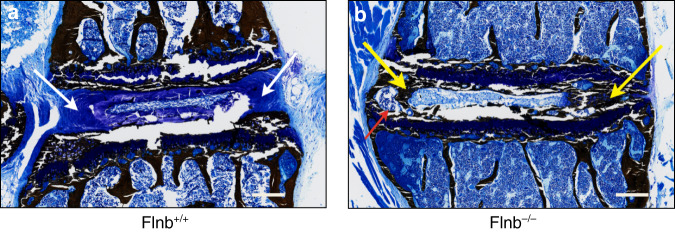
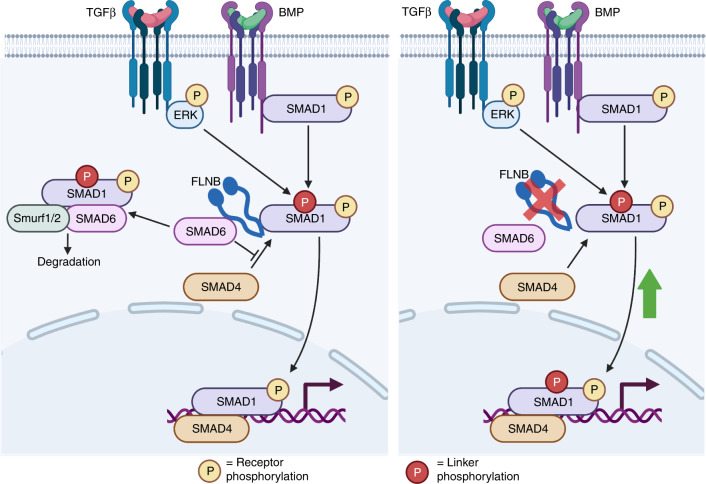
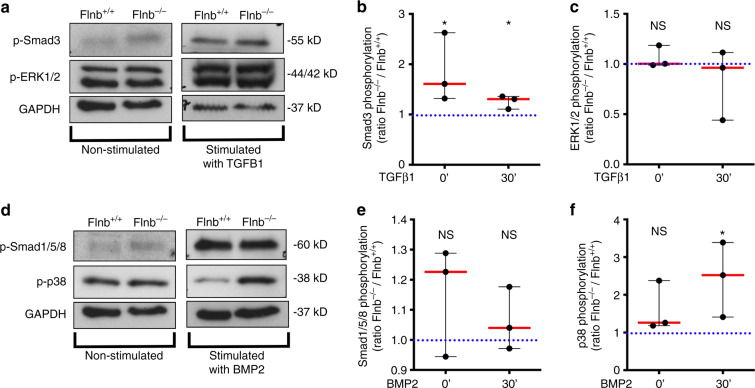
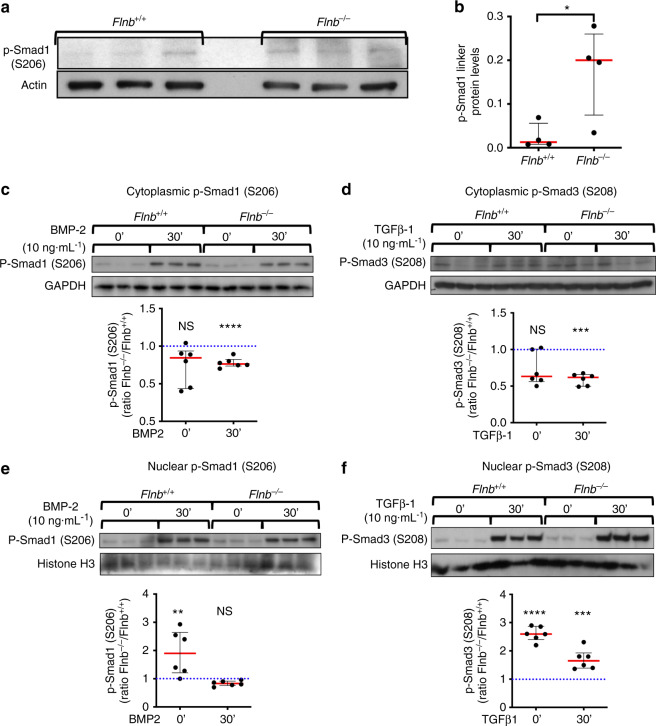
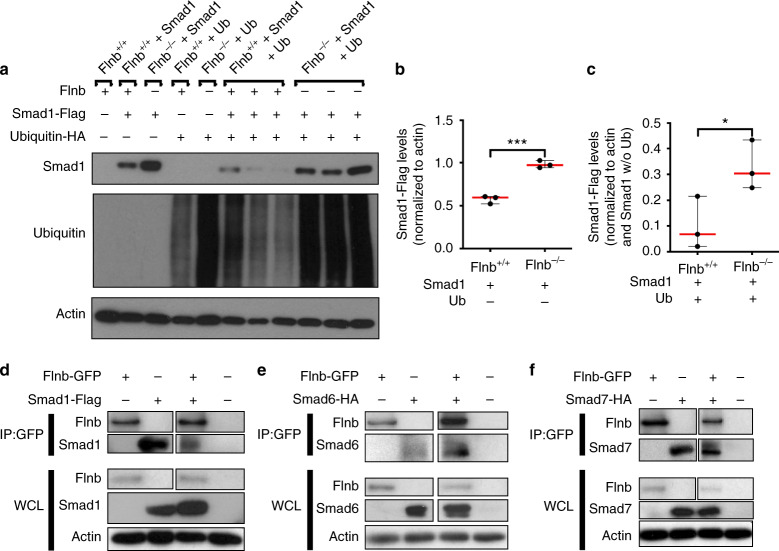
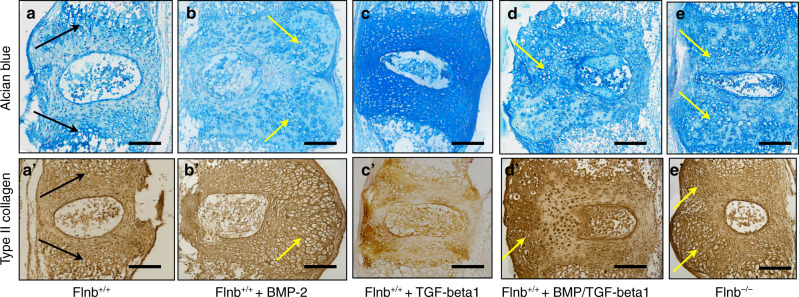
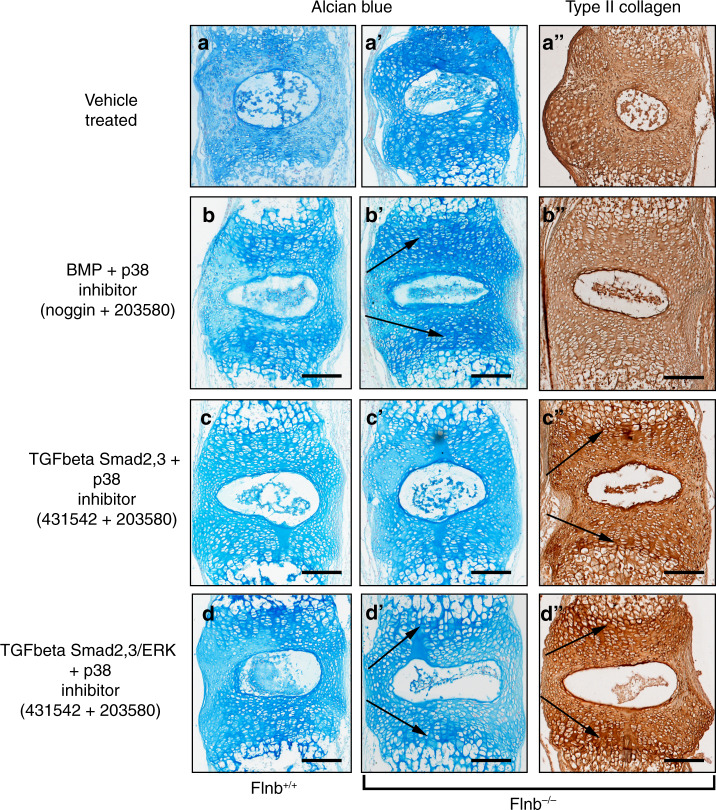
Spondylocarpotarsal syndrome (SCT) is a rare musculoskeletal disorder characterized by short stature and vertebral, carpal, and tarsal fusions resulting from biallelic nonsense mutations in the gene encoding filamin B (FLNB). Utilizing a FLNB knockout mouse, we showed that the vertebral fusions in SCT evolved from intervertebral disc (IVD) degeneration and ossification of the annulus fibrosus (AF), eventually leading to full trabecular bone formation. This resulted from alterations in the TGFβ/BMP signaling pathway that included increased canonical TGFβ and noncanonical BMP signaling. In this study, the role of FLNB in the TGFβ/BMP pathway was elucidated using in vitro, in vivo, and ex vivo treatment methodologies. The data demonstrated that FLNB interacts with inhibitory Smads 6 and 7 (i-Smads) to regulate TGFβ/BMP signaling and that loss of FLNB produces increased TGFβ receptor activity and decreased Smad 1 ubiquitination. Through the use of small molecule inhibitors in an ex vivo spine model, TGFβ/BMP signaling was modulated to design a targeted treatment for SCT and disc degeneration. Inhibition of canonical and noncanonical TGFβ/BMP pathway activity restored Flnb IVD morphology. These most effective improvements resulted from specific inhibition of TGFβ and p38 signaling activation. FLNB acts as a bridge for TGFβ/BMP signaling crosstalk through i-Smads and is key for the critical balance in TGFβ/BMP signaling that maintains the IVD. These findings further our understanding of IVD biology and reveal new molecular targets for disc degeneration as well as congenital vertebral fusion disorders.
脊椎腕跗骨综合征(SCT)是一种罕见的肌肉骨骼疾病,其特征为身材矮小以及由于编码细丝蛋白B(FLNB)的基因双等位基因无义突变导致的脊椎、腕骨和跗骨融合。利用FLNB基因敲除小鼠,我们发现SCT中的脊椎融合是由椎间盘(IVD)退变和纤维环(AF)骨化演变而来,最终导致完全的小梁骨形成。这是由TGFβ/BMP信号通路的改变引起的,包括经典TGFβ信号增加和非经典BMP信号增加。在本研究中,使用体外、体内和离体处理方法阐明了FLNB在TGFβ/BMP通路中的作用。数据表明,FLNB与抑制性Smad 6和7(i-Smads)相互作用以调节TGFβ/BMP信号,FLNB缺失会导致TGFβ受体活性增加和Smad 1泛素化减少。通过在离体脊柱模型中使用小分子抑制剂,调节TGFβ/BMP信号以设计针对SCT和椎间盘退变的靶向治疗。抑制经典和非经典TGFβ/BMP通路活性可恢复Flnb IVD形态。这些最有效的改善是由TGFβ和p38信号激活的特异性抑制导致的。FLNB通过i-Smads作为TGFβ/BMP信号串扰的桥梁,是维持IVD的TGFβ/BMP信号关键平衡的关键。这些发现加深了我们对IVD生物学的理解,并揭示了椎间盘退变以及先天性脊椎融合障碍的新分子靶点。