Perez-Gonzalez Anna P, Provost Frédéric, Rousse Isabelle, Piovesana Roberta, Benzina Ouafa, Darabid Houssam, Lamoureux Benoit, Wang Yu Shi, Arbour Danielle, Robitaille Richard
Département de Neurosciences, Université de Montréal, Montréal, Québec, Canada.
Groupe de Recherche sur le Système Nerveux Central, Université de Montréal, Montréal, Québec, Canada.
Glia. 2022 Sep;70(9):1605-1629. doi: 10.1002/glia.24184. Epub 2022 Apr 27.
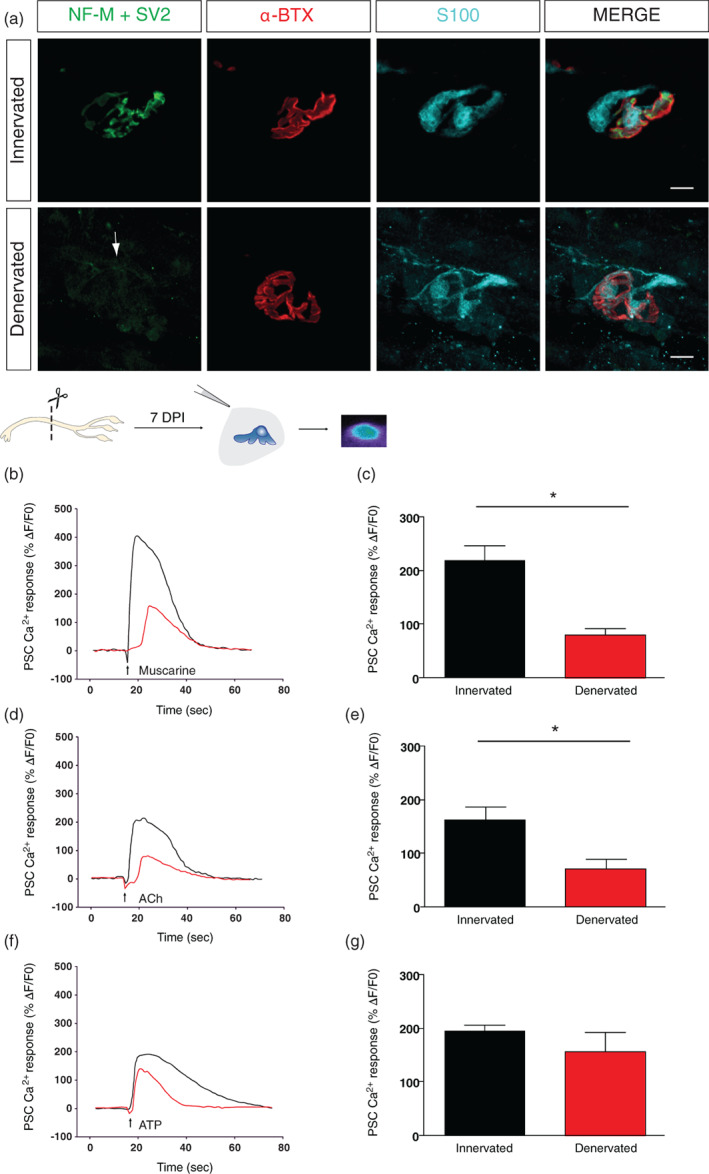
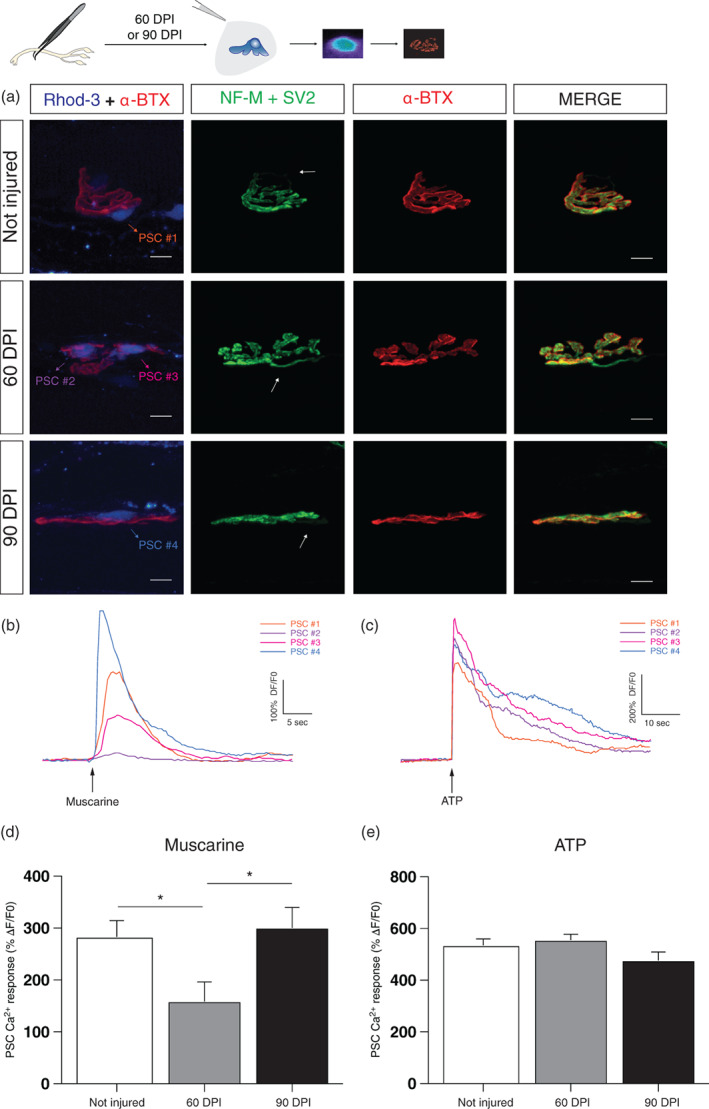
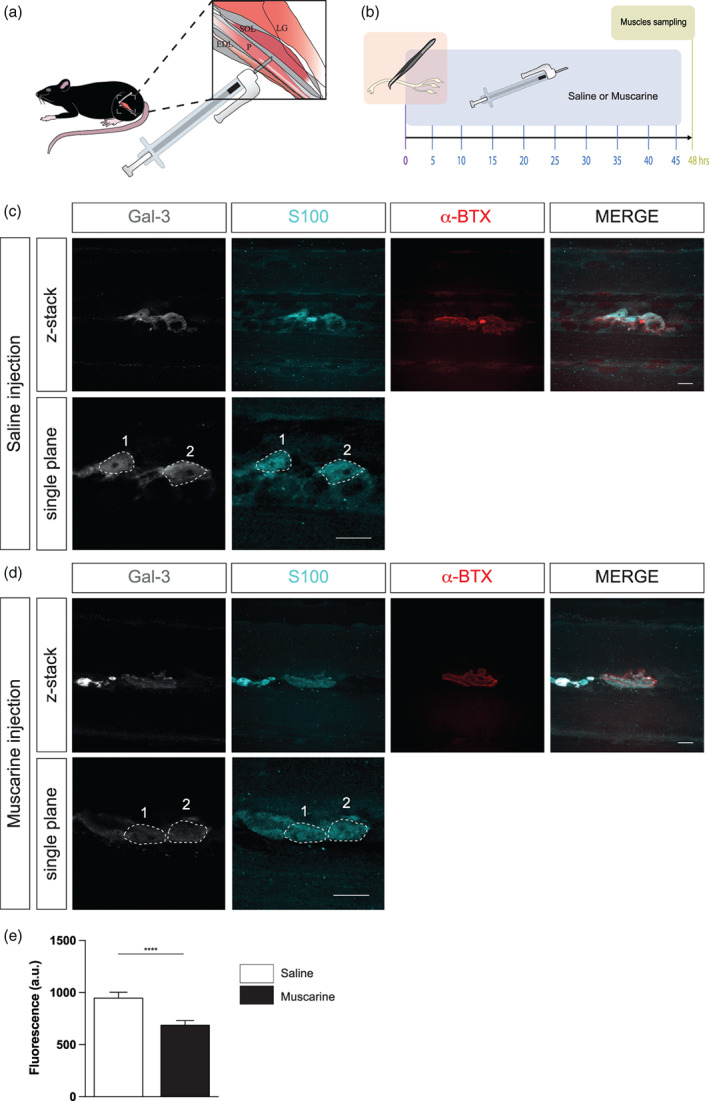
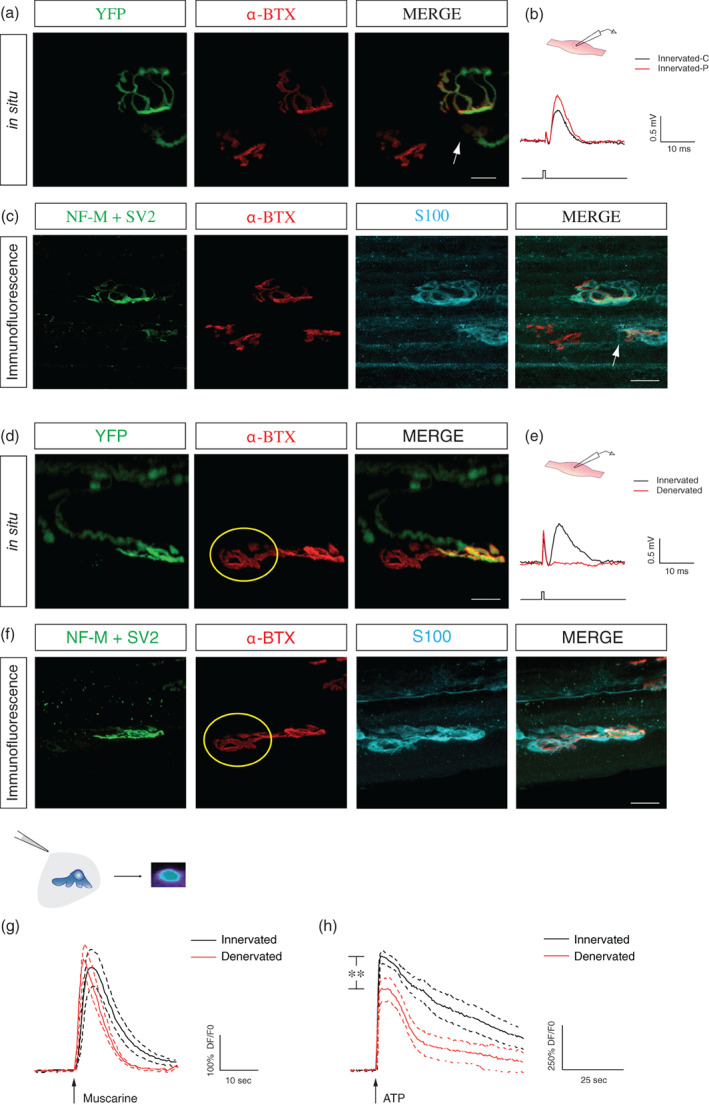
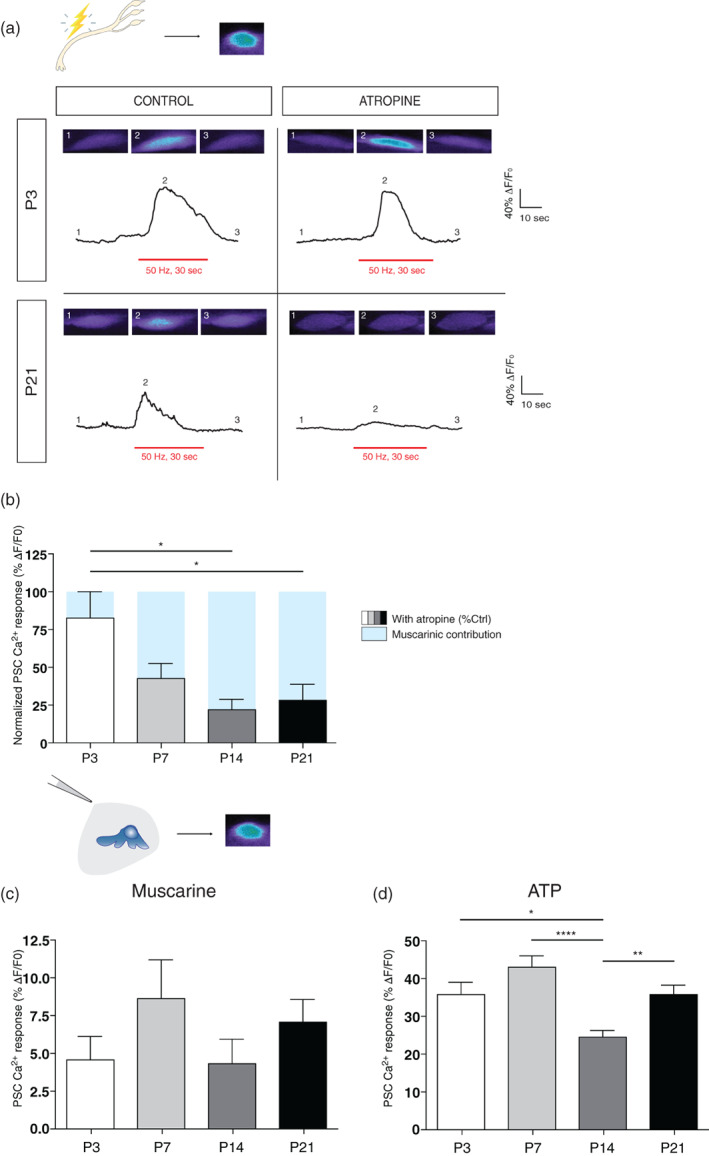
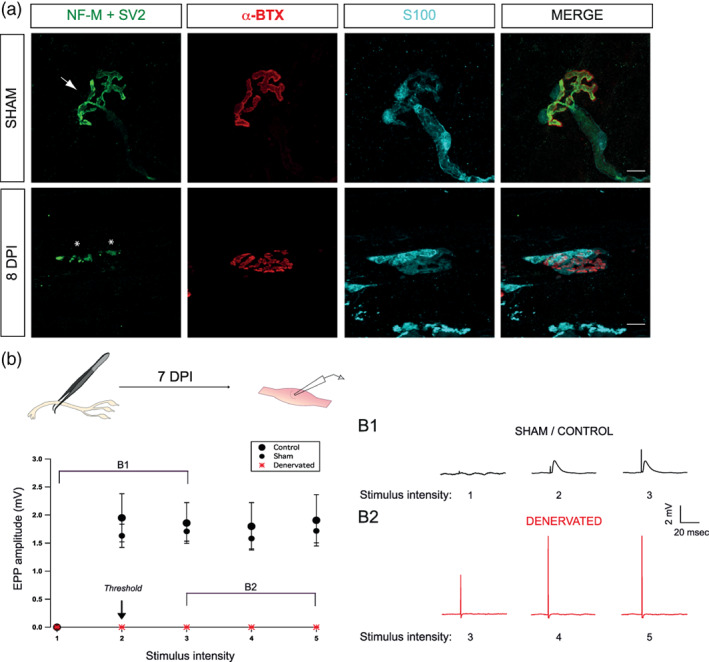
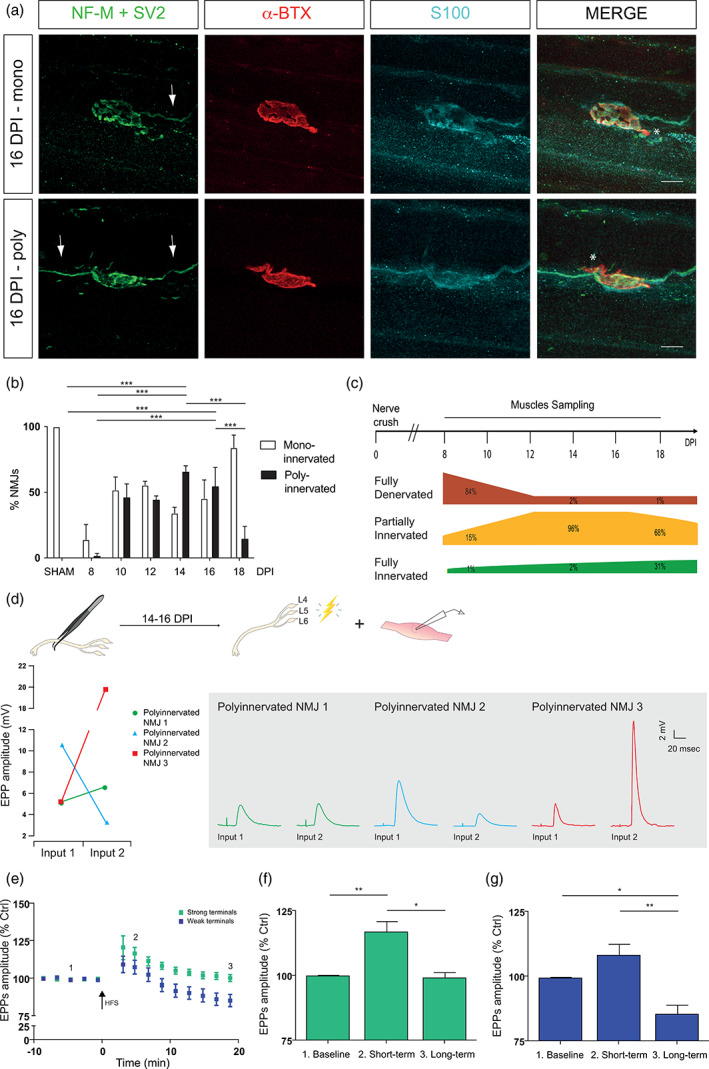
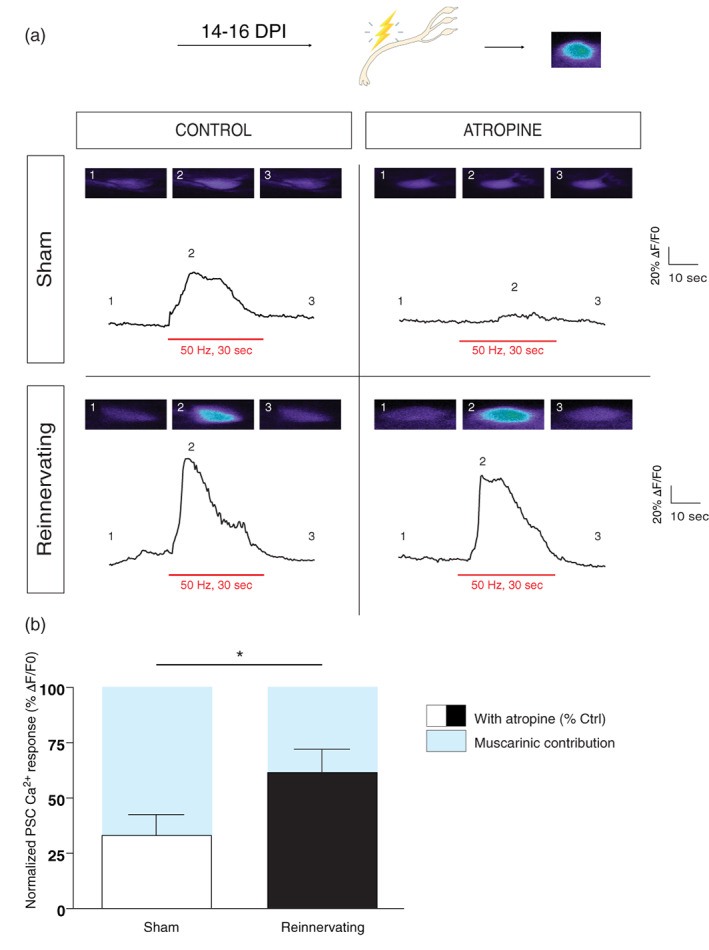
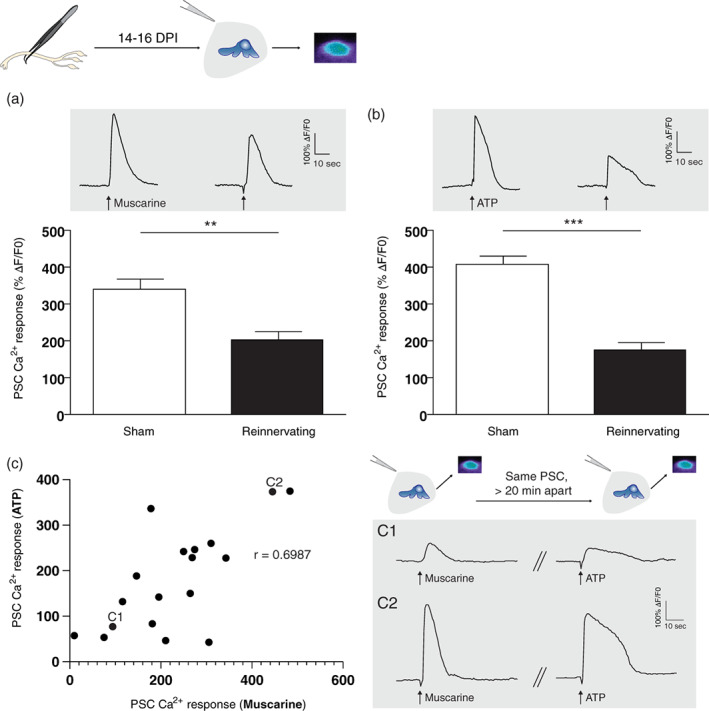
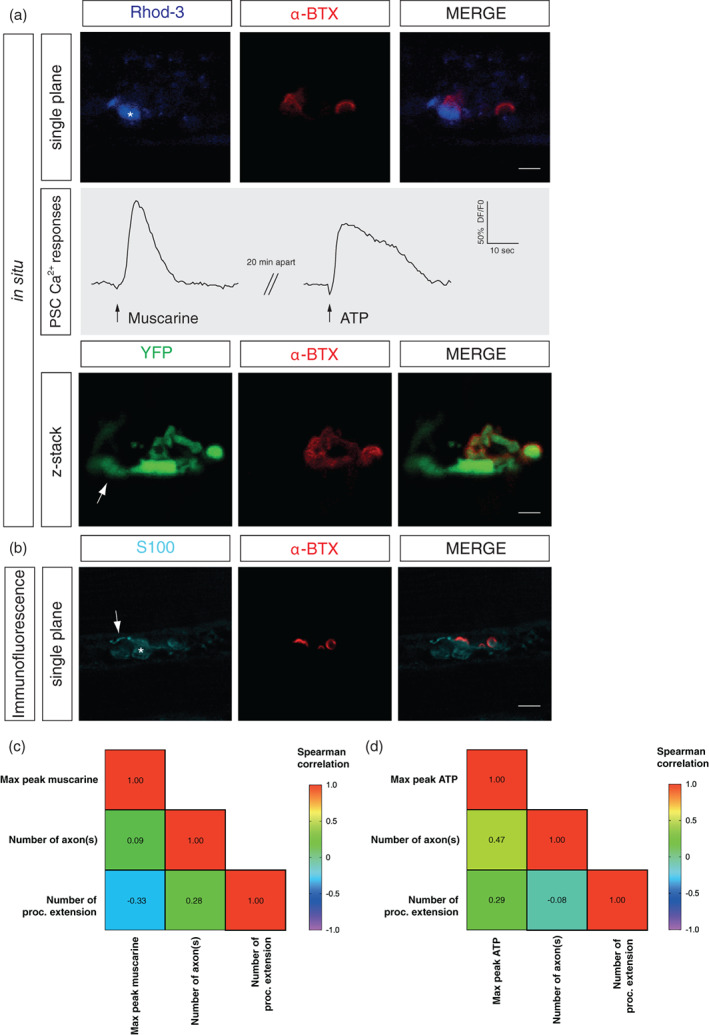
Synaptic elements from neuromuscular junctions (NMJs) undergo massive morphological and functional changes upon nerve injury. While morphological changes of NMJ-associated glia in response to injury has been investigated, their functional properties remain elusive. Perisynaptic Schwann cells (PSCs), glial cells at the NMJ, are essential for NMJ maintenance and repair, and are involved in synaptic efficacy and plasticity. Importantly, these functions are regulated by PSCs ability to detect synaptic transmission through, notably, muscarinic (mAChRs) and purinergic receptors' activation. Using Ca imaging and electrophysiological recordings of synaptic transmission at the mouse NMJ, we investigated PSC receptors activation following denervation and during reinnervation in adults and at denervated NMJs in an ALS mouse model (SOD1 ). We observed reduced PSCs mAChR-mediated Ca responses at denervated and reinnervating NMJs. Importantly, PSC phenotypes during denervation and reinnervation were distinct than the one observed during NMJ maturation. At denervated NMJs, exogenous activation of mAChRs greatly diminished galectin-3 expression, a glial marker of phagocytosis. PSCs Ca responses at reinnervating NMJs did not correlate with the number of innervating axons or process extensions. Interestingly, we observed an extended period of reduced PSC mAChRs activation after the injury (up to 60 days), suggesting a glial memory of injury. PSCs associated with denervated NMJs in an ALS model (SOD1 mice) did not show any muscarinic adaptation, a phenotype incompatible with NMJ repair. Understanding functional mechanisms that underlie this glial response to injury may contribute to favor complete NMJ and motor recovery.
神经肌肉接头(NMJ)的突触元件在神经损伤后会发生大规模的形态和功能变化。虽然已经研究了NMJ相关神经胶质细胞对损伤的形态学变化,但其功能特性仍然难以捉摸。突触周围施万细胞(PSC)是NMJ处的神经胶质细胞,对NMJ的维持和修复至关重要,并参与突触效能和可塑性。重要的是,这些功能受PSC通过毒蕈碱(mAChRs)和嘌呤能受体激活来检测突触传递的能力调节。利用小鼠NMJ处突触传递的钙成像和电生理记录,我们研究了去神经支配后以及成年小鼠再支配过程中以及ALS小鼠模型(SOD1)中去神经支配的NMJ处PSC受体的激活情况。我们观察到在去神经支配和再支配的NMJ处,PSC的mAChR介导的钙反应降低。重要的是,去神经支配和再支配期间的PSC表型与NMJ成熟期间观察到的表型不同。在去神经支配的NMJ处,mAChRs的外源性激活大大降低了半乳糖凝集素-3的表达,半乳糖凝集素-3是吞噬作用的神经胶质标记物。再支配的NMJ处PSC的钙反应与支配轴突的数量或突起延伸不相关。有趣的是,我们观察到损伤后PSC的mAChRs激活减少的时期延长(长达60天),这表明神经胶质细胞对损伤有记忆。与ALS模型(SOD1小鼠)中去神经支配的NMJ相关的PSC没有表现出任何毒蕈碱适应性,这种表型与NMJ修复不兼容。了解这种神经胶质细胞对损伤反应的功能机制可能有助于促进NMJ的完全恢复和运动恢复。