Laboratory of Investigative Dermatology, The Rockefeller University, New York, New York, USA.
Icahn School of Medicine at Mount Sinai, New York, New York, USA.
Exp Dermatol. 2022 Sep;31(9):1341-1351. doi: 10.1111/exd.14582. Epub 2022 May 16.
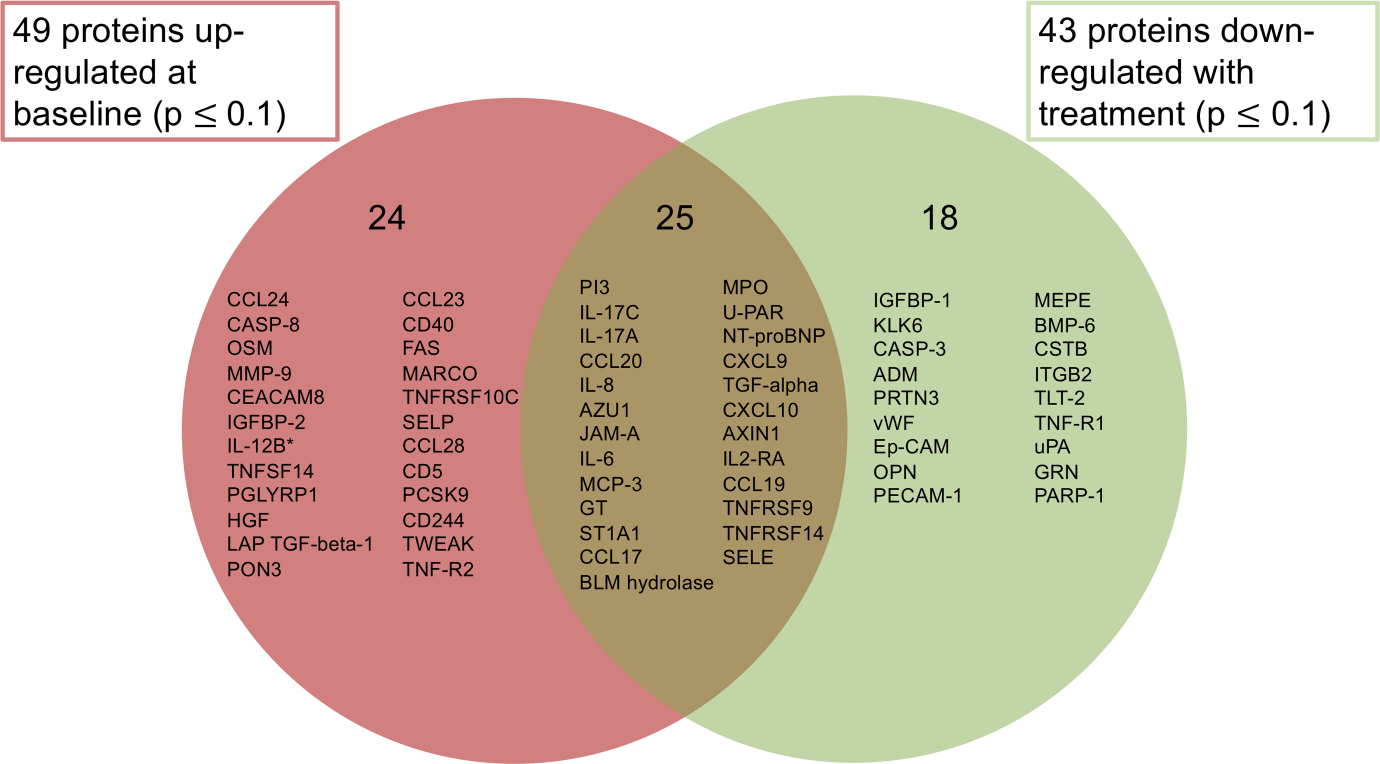
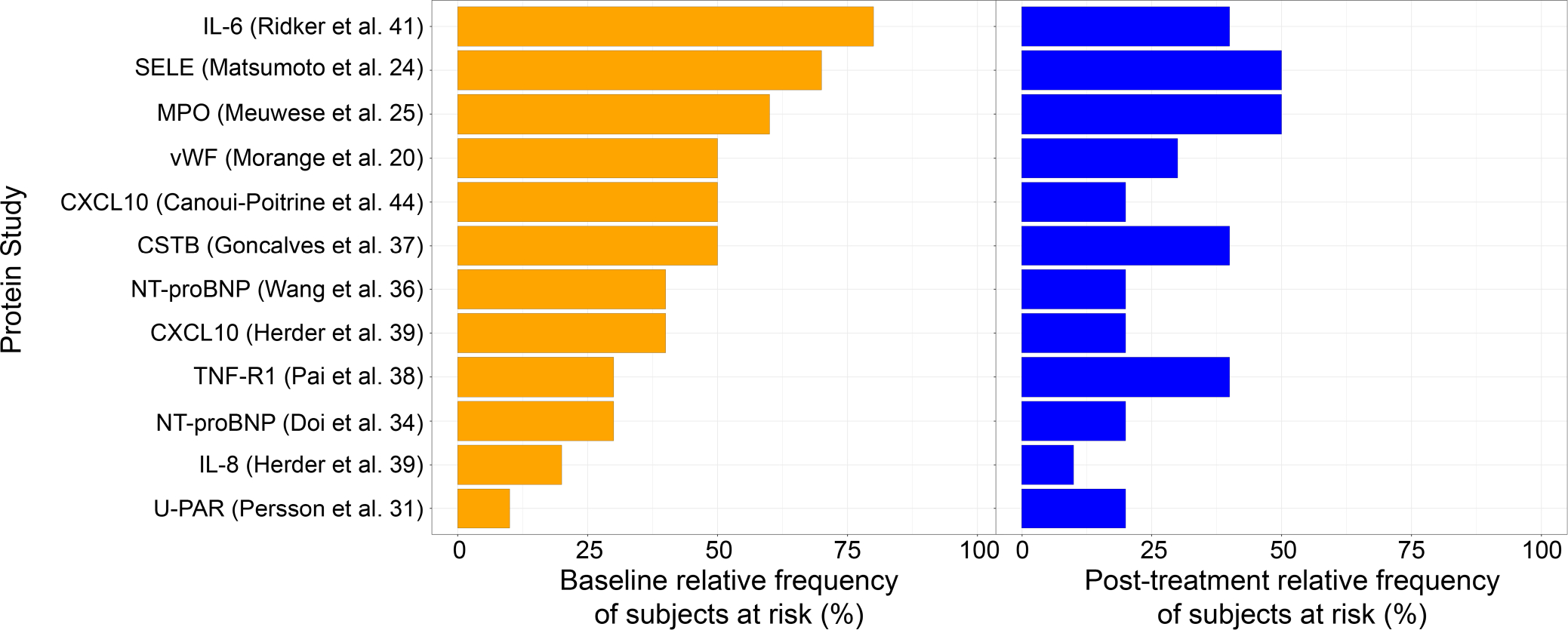
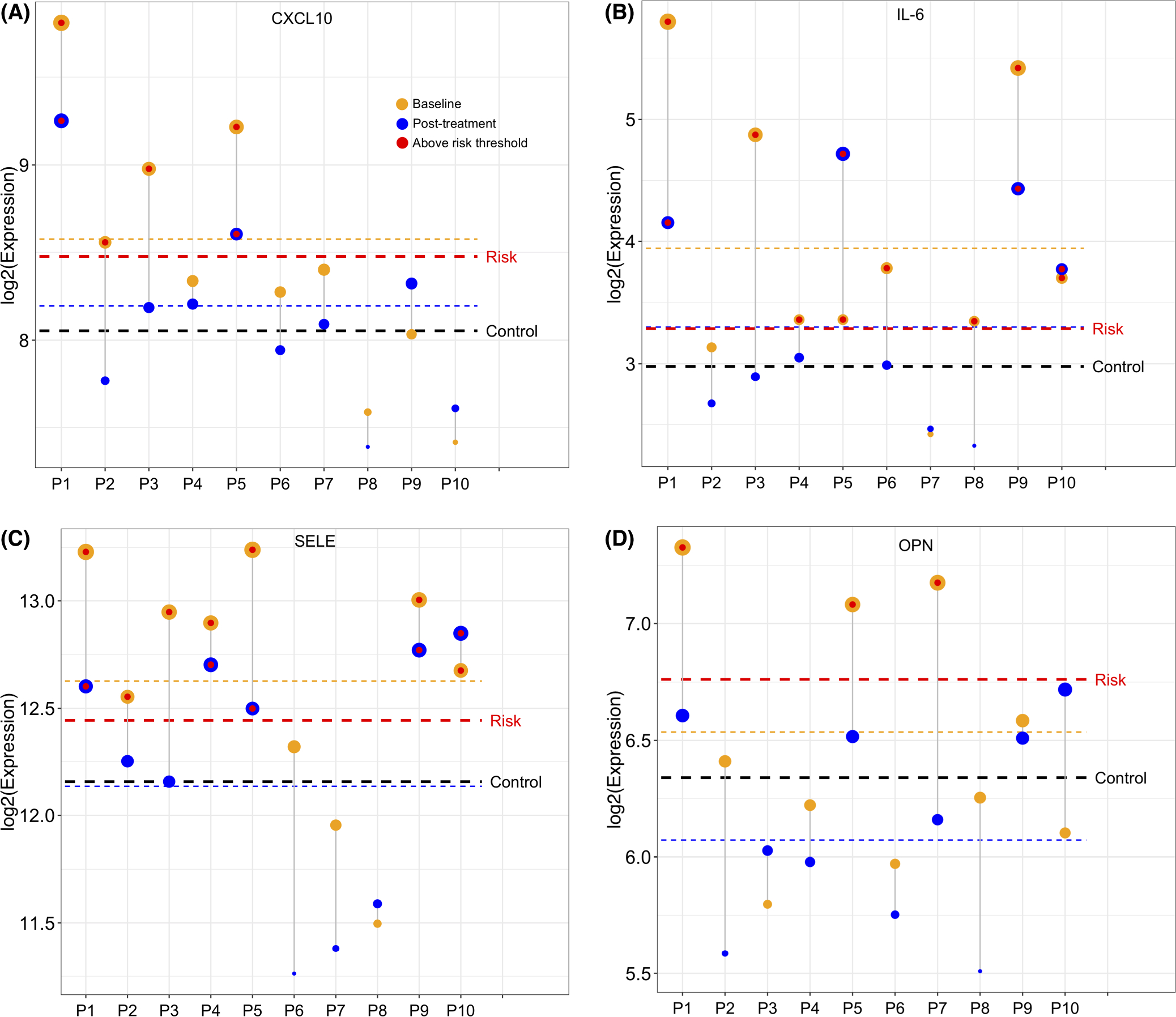
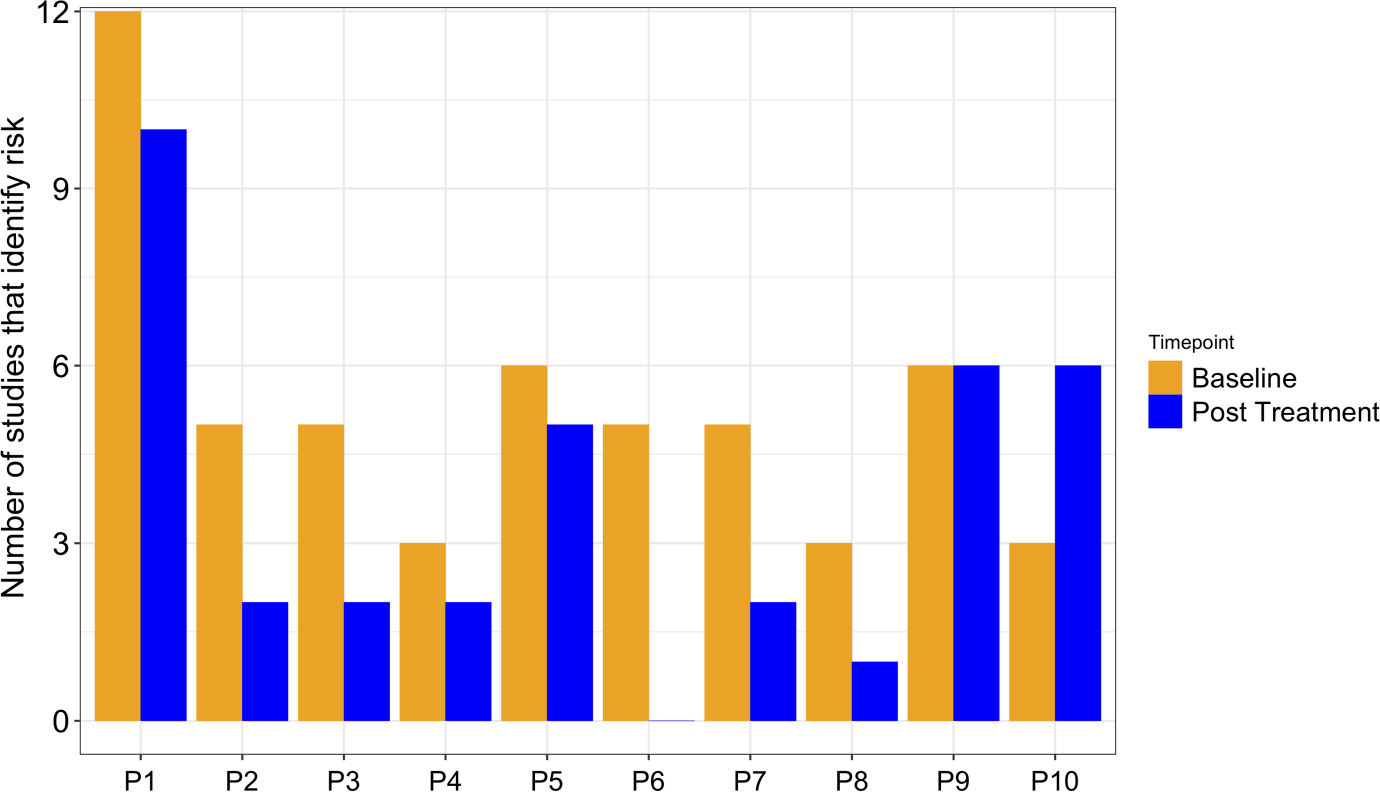
Psoriasis increases the risk of cardiovascular disease (CVD). Biomarkers for cardiovascular (CV) risk stratification in psoriasis are lacking, and the effects of psoriasis biologics on CV risk reduction remain unclear. The goal of this study was to identify biomarkers of CV risk in psoriasis blood that are reduced by ustekinumab. We quantified 276 inflammatory and CV-related serum proteins with Olink's multiplex assay in 10 psoriasis patients (vs. 18 healthy controls) and after 12 weeks of ustekinumab treatment. For each protein down-regulated after treatment, the literature was reviewed for studies assessing the protein's association with CVD. Data were collected from each study to calculate CV risk thresholds for each protein, which were compared with protein levels in psoriasis patients before and after treatment. Our results showed that 43 out of 276 proteins were down-regulated after treatment, 25 of which were initially up-regulated at baseline (vs. controls, all p-values ≤0.1). 8 down-regulated proteins were initially elevated above thresholds associated with enhanced CV risk in the literature (myeloperoxidase, C-X-C motif chemokine 10, E-selectin, interleukin-6, cystatin B, von Willebrand factor, tumor necrosis factor receptor 1 and N-terminal prohormone brain natriuretic peptide). Treatment lowered these proteins to below their risk thresholds, except for IL-6, which was lowered but remained at its risk threshold despite successful psoriasis skin treatment. In summary, 12 weeks of ustekinumab treatment reduced serum proteins present at levels associated with CV risk in psoriasis patients. Further studies can evaluate these proteins as potential ustekinumab-modulated biomarkers of CV risk in psoriasis and the impact of ustekinumab on CV risk reduction.
银屑病增加了心血管疾病(CVD)的风险。银屑病心血管(CV)风险分层的生物标志物缺乏,而银屑病生物制剂对降低 CV 风险的作用仍不清楚。本研究的目的是确定银屑病血液中可被乌司奴单抗降低的 CV 风险生物标志物。我们使用 Olink 的多重检测法对 10 名银屑病患者(vs. 18 名健康对照者)和乌司奴单抗治疗 12 周后的血清中 276 种炎症和 CV 相关的蛋白进行了定量分析。对于每种治疗后下调的蛋白,我们都对评估该蛋白与 CVD 相关性的研究进行了文献回顾。从每个研究中收集数据,以计算每种蛋白的 CV 风险阈值,并将其与治疗前后银屑病患者的蛋白水平进行比较。结果显示,276 种蛋白中有 43 种在治疗后下调,其中 25 种在基线时最初升高(与对照者相比,所有 p 值均≤0.1)。8 种下调的蛋白最初高于文献中与增强 CV 风险相关的阈值(髓过氧化物酶、C-X-C 基序趋化因子 10、E-选择素、白细胞介素 6、胱抑素 B、血管性血友病因子、肿瘤坏死因子受体 1 和 N-末端脑钠肽前体)。治疗将这些蛋白降低到低于风险阈值,但白细胞介素 6 除外,尽管银屑病皮肤治疗成功,但它仍处于风险阈值以下。总之,12 周的乌司奴单抗治疗降低了银屑病患者血清中与 CV 风险相关的蛋白水平。进一步的研究可以评估这些蛋白作为潜在的乌司奴单抗调节的银屑病 CV 风险生物标志物,以及乌司奴单抗对降低 CV 风险的影响。