BioNTech US Inc., 40 Erie Street, Suite 110, Cambridge, MA 02139, USA.
Cell Rep Methods. 2021 Sep 16;1(5):100084. doi: 10.1016/j.crmeth.2021.100084. eCollection 2021 Sep 27.
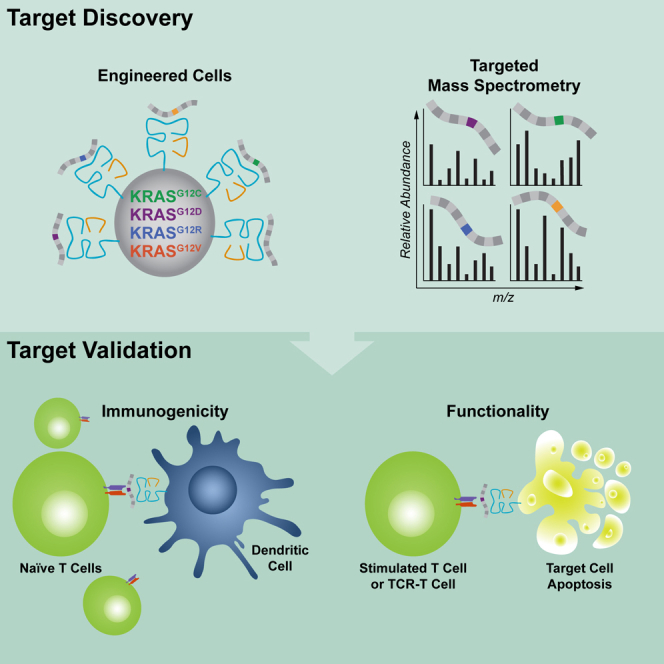
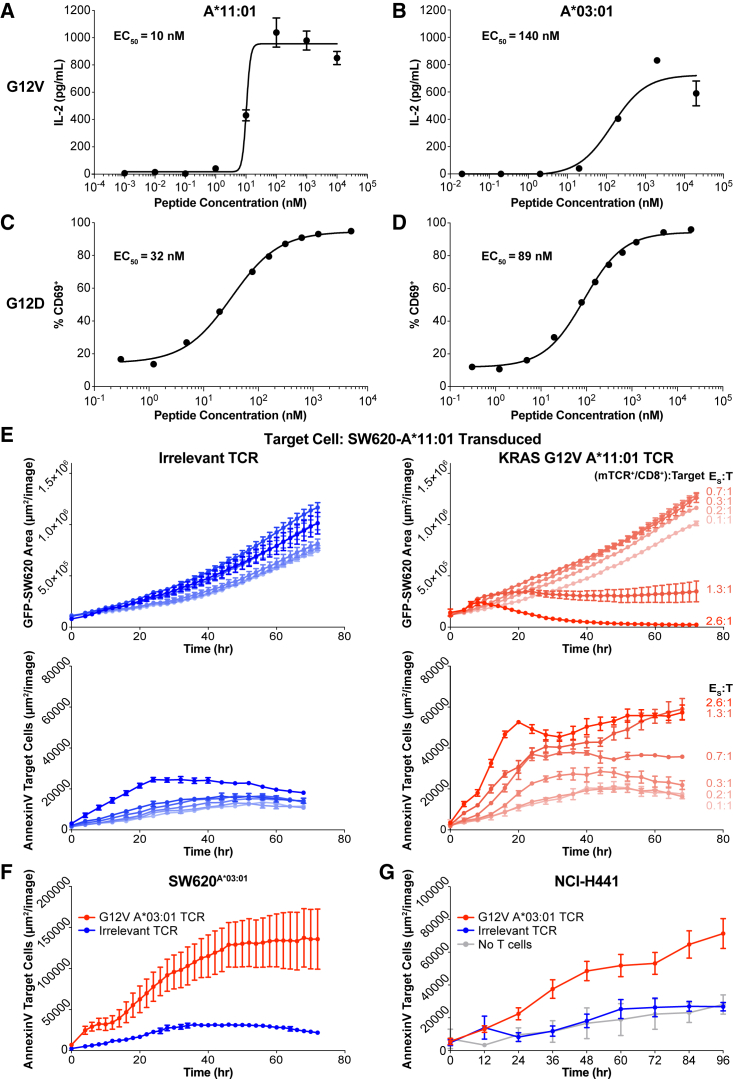
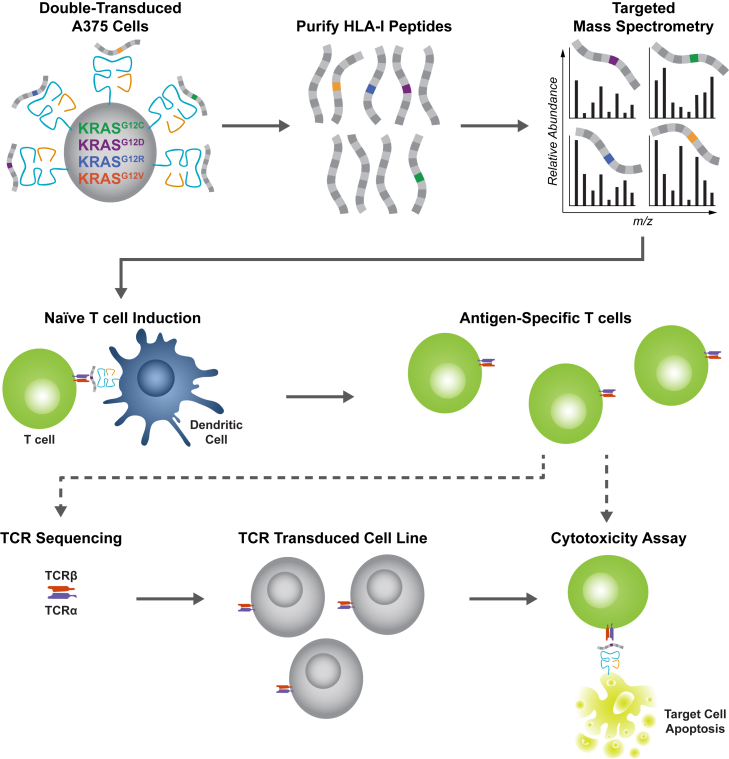
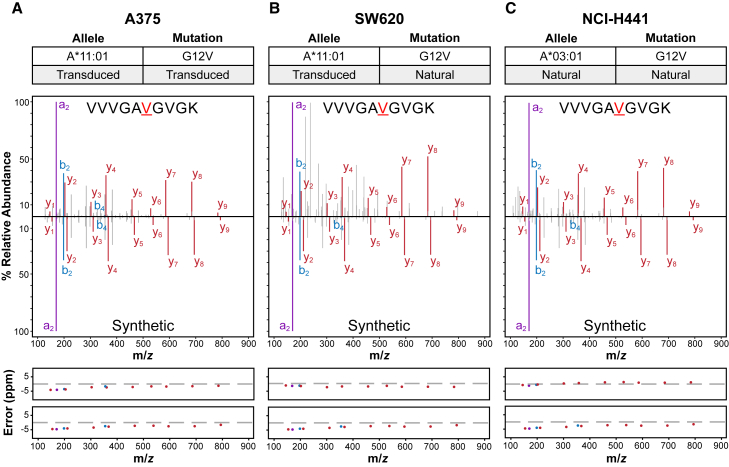
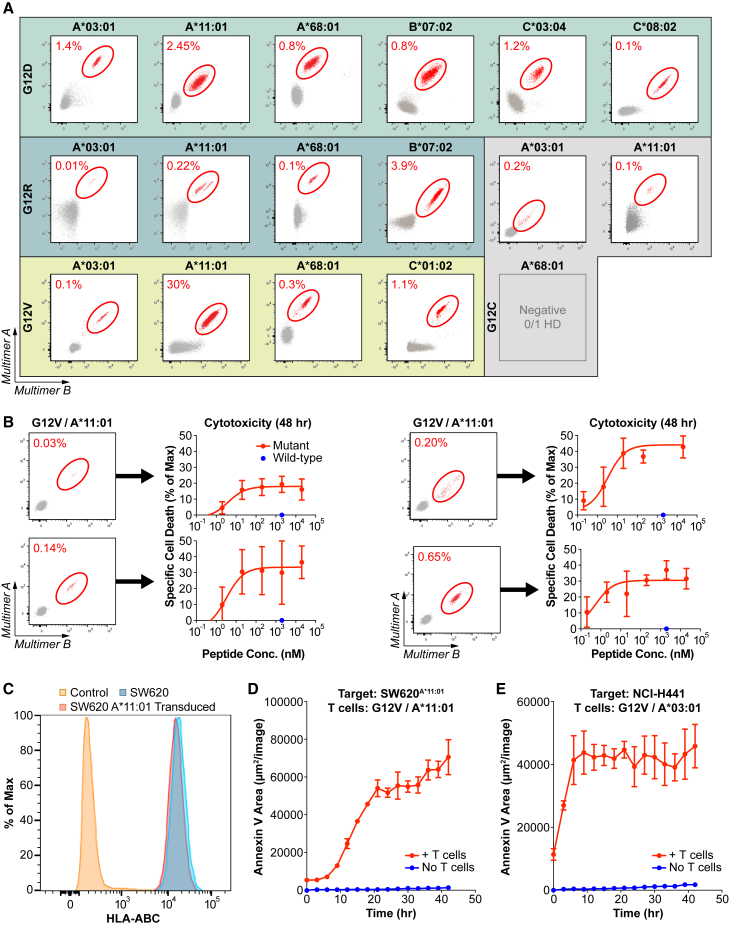
Oncogenic mutations in KRAS can be recognized by T cells on specific class I human leukocyte antigen (HLA-I) molecules, leading to tumor control. To date, the discovery of T cell targets from KRAS mutations has relied on occasional T cell responses in patient samples or the use of transgenic mice. To overcome these limitations, we have developed a systematic target discovery and validation pipeline. We evaluate the presentation of mutant KRAS peptides on individual HLA-I molecules using targeted mass spectrometry and identify 13 unpublished KRAS mutation/HLA-I pairs and nine previously described pairs. We assess immunogenicity, generating T cell responses to nearly all targets. Using cytotoxicity assays, we demonstrate that KRAS-specific T cells and T cell receptors specifically recognize endogenous KRAS mutations. The discovery and validation of T cell targets from KRAS mutations demonstrate the potential for this pipeline to aid the development of immunotherapies for important cancer targets.
KRAS 中的致癌突变可被特定的人类白细胞抗原 I 类(HLA-I)分子上的 T 细胞识别,从而控制肿瘤。迄今为止,从 KRAS 突变中发现 T 细胞靶点依赖于患者样本中偶尔出现的 T 细胞反应或使用转基因小鼠。为了克服这些限制,我们开发了一种系统的靶标发现和验证管道。我们使用靶向质谱法评估突变 KRAS 肽在个体 HLA-I 分子上的呈递,并鉴定出 13 对以前未发表的 KRAS 突变/HLA-I 对和 9 对以前描述的 KRAS 突变/HLA-I 对。我们评估免疫原性,对几乎所有的靶点都产生 T 细胞反应。通过细胞毒性测定,我们证明了 KRAS 特异性 T 细胞和 T 细胞受体可特异性识别内源性 KRAS 突变。从 KRAS 突变中发现和验证 T 细胞靶点表明,该管道有可能为开发针对重要癌症靶点的免疫疗法提供帮助。