Lu Dan, Chen Yuan, Jiang Min, Wang Jie, Li Yiting, Ma Keke, Sun Wenqiao, Zheng Xing, Qi Jianxun, Jin Wenjing, Chen Yu, Chai Yan, Zhang Catherine W H, Liang Hao, Tan Shuguang, Gao George F
CAS Key Laboratory of Pathogen Microbiology and Immunology, Institute of Microbiology, Chinese Academy of Sciences, Beijing, China.
Savaid Medical School, University of Chinese Academy of Sciences, Beijing, China.
Nat Commun. 2023 Oct 12;14(1):6389. doi: 10.1038/s41467-023-42010-1.
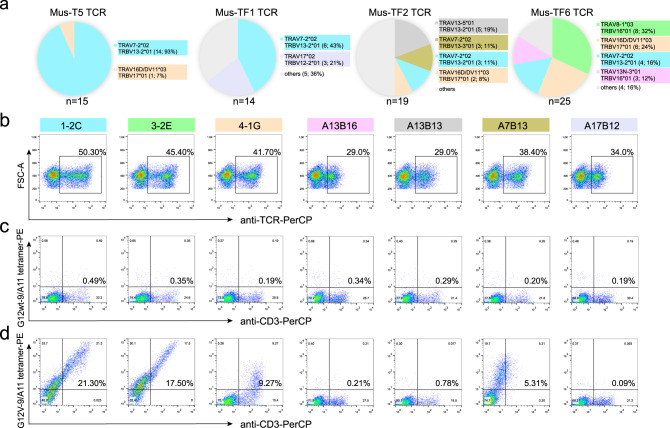
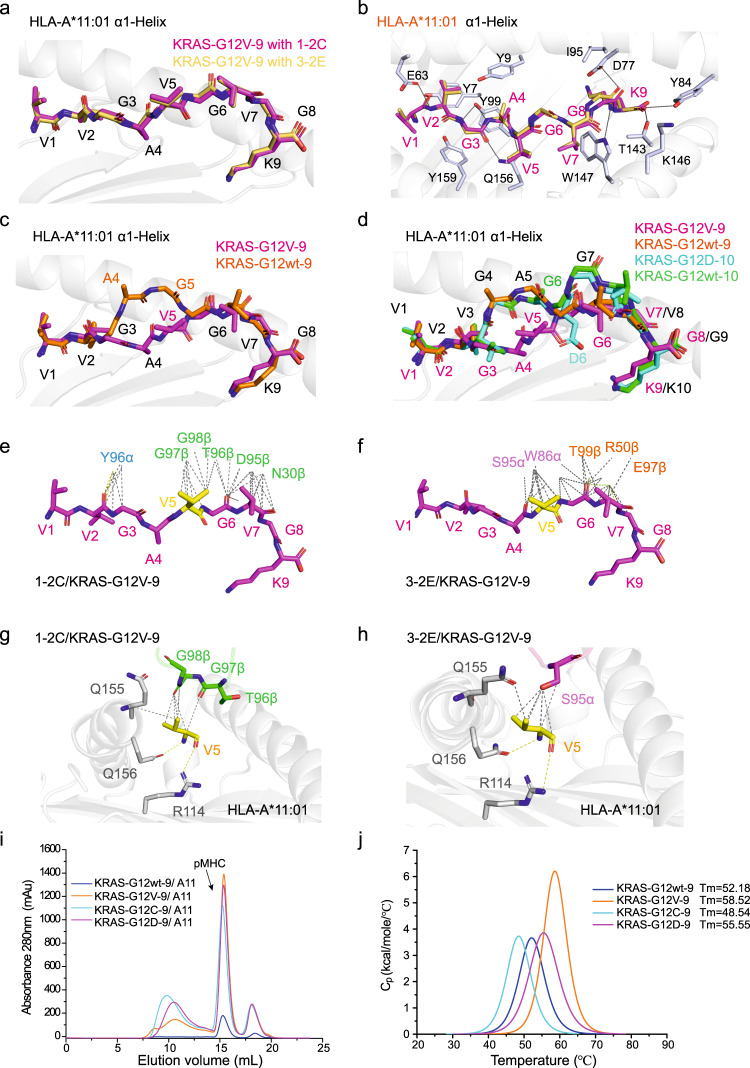
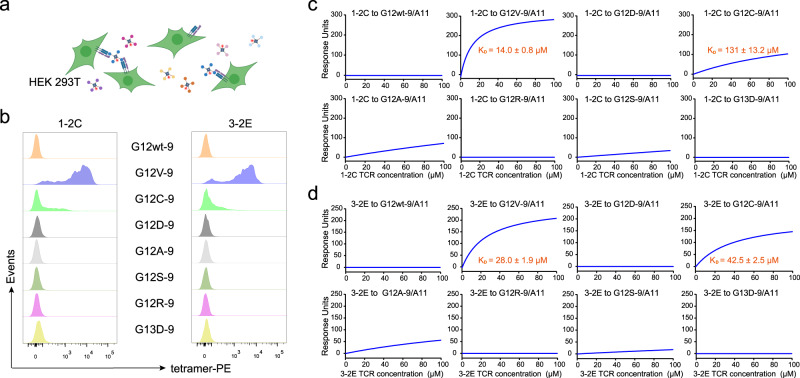
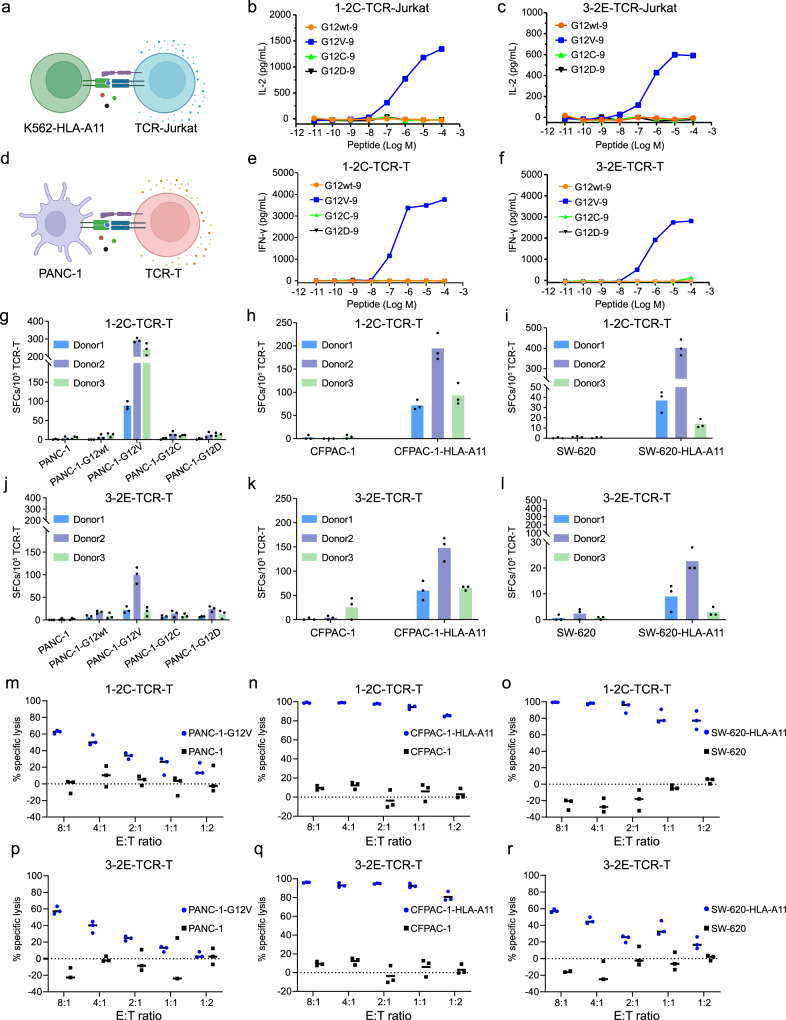
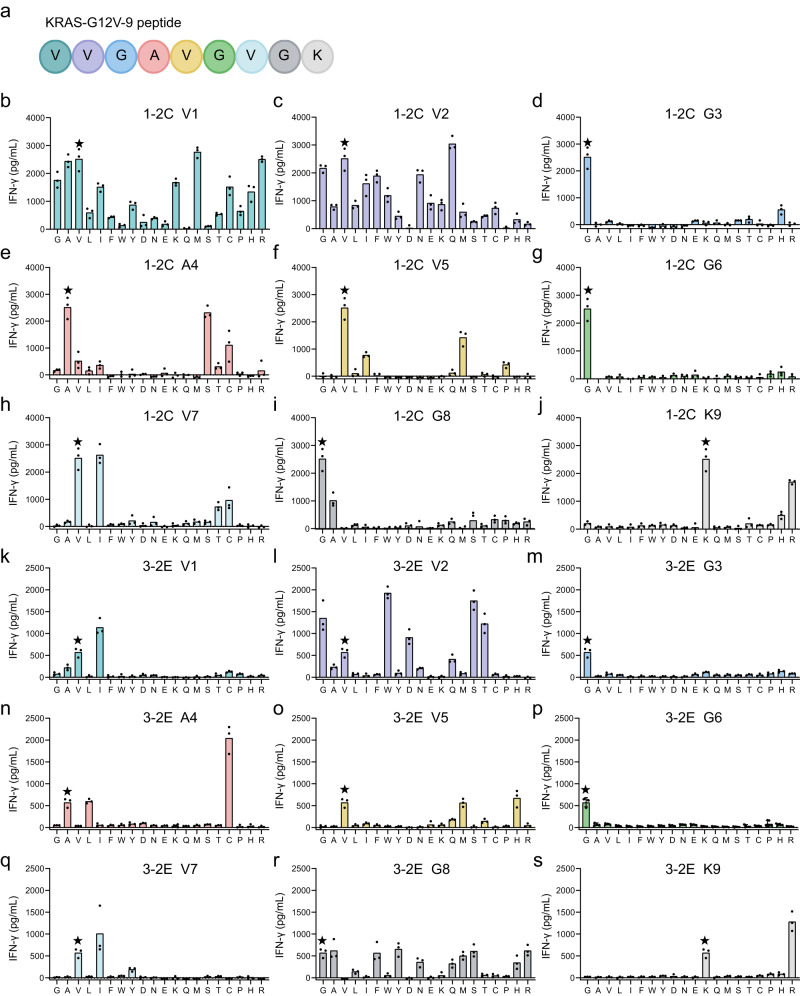
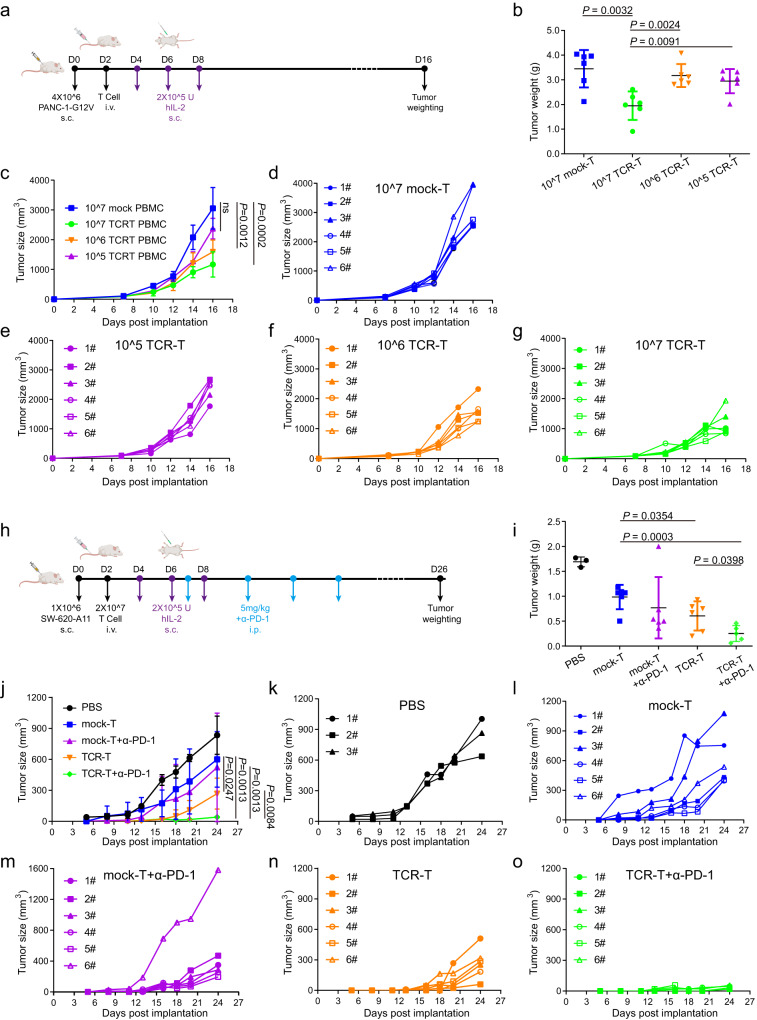
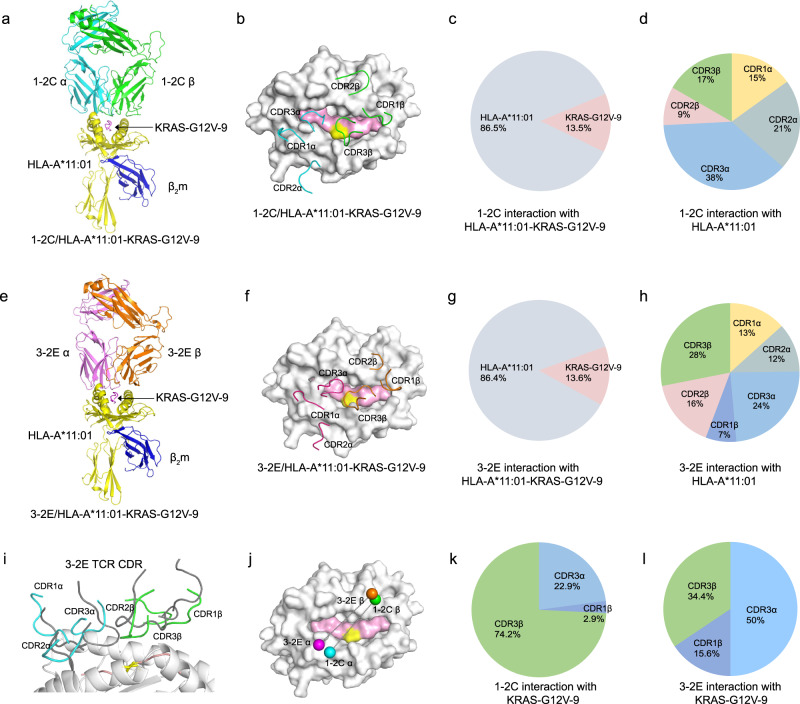
KRAS mutations are broadly recognized as promising targets for tumor therapy. T cell receptors (TCRs) can specifically recognize KRAS mutant neoantigens presented by human lymphocyte antigen (HLA) and mediate T cell responses to eliminate tumor cells. In the present study, we identify two TCRs specific for the 9-mer KRAS-G12V mutant neoantigen in the context of HLA-A*11:01. The TCR-T cells are constructed and display cytokine secretion and cytotoxicity upon co-culturing with varied tumor cells expressing the KRAS-G12V mutation. Moreover, 1-2C TCR-T cells show anti-tumor activity in preclinical models in female mice. The 9-mer KRAS-G12V mutant peptide exhibits a distinct conformation from the 9-mer wildtype peptide and its 10-mer counterparts. Specific recognition of the G12V mutant by TCR depends both on distinct conformation from wildtype peptide and on direct interaction with residues from TCRs. Our study reveals the mechanisms of presentation and TCR recognition of KRAS-G12V mutant peptide and describes TCRs with therapeutic potency for tumor immunotherapy.
KRAS突变被广泛认为是肿瘤治疗的有前景的靶点。T细胞受体(TCR)能够特异性识别由人类白细胞抗原(HLA)呈递的KRAS突变新抗原,并介导T细胞反应以消除肿瘤细胞。在本研究中,我们鉴定了在HLA-A*11:01背景下对9聚体KRAS-G12V突变新抗原有特异性的两种TCR。构建了TCR-T细胞,其在与表达KRAS-G12V突变的不同肿瘤细胞共培养时表现出细胞因子分泌和细胞毒性。此外,1-2C TCR-T细胞在雌性小鼠的临床前模型中显示出抗肿瘤活性。9聚体KRAS-G12V突变肽与9聚体野生型肽及其10聚体对应物呈现出不同的构象。TCR对G12V突变体的特异性识别既取决于与野生型肽不同的构象,也取决于与TCR残基的直接相互作用。我们的研究揭示了KRAS-G12V突变肽的呈递和TCR识别机制,并描述了具有肿瘤免疫治疗效力的TCR。