School of Life Science, Liaoning University, Shenyang, 110036, China.
Key Laboratory of Pollution Ecology and Environment Engineering, Institute of Applied Ecology, Chinese Academy of Sciences, Shenyang, 110016, China.
Sci Rep. 2022 Apr 27;12(1):6840. doi: 10.1038/s41598-022-10912-7.
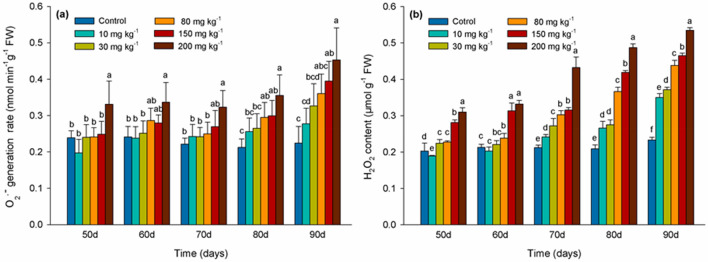
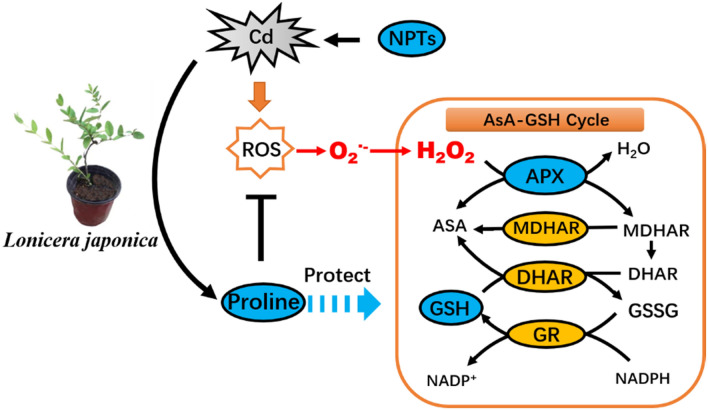
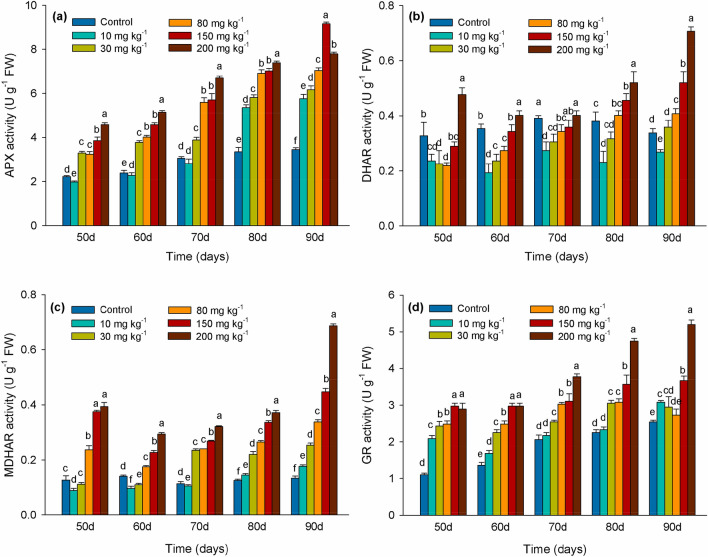
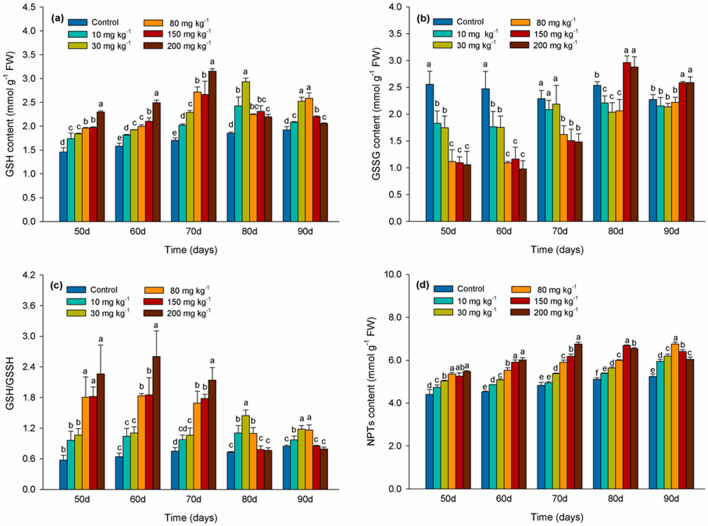
Cadmium (Cd), though potentially beneficial at lower levels to some plant species, at higher levels is a toxic metal that is detrimental to plant growth and development. Cd is also a carcinogen to humans and other contaminated plant consumers, affecting the kidneys and reducing bone strength. In this study we investigated responses of growth, chlorophyll content, reactive oxygen species levels, and antioxidant responses to Cd in honeysuckle leaves (Lonicera japonica Thunb.), a potential Cd hyperaccumulator. Results indicated that plant height, dry weight, leaf area, and chlorophyll content increased when honeysuckle was exposed to 10 mg kg or 30 mg kg Cd (low concentration). However, in response to 150 mg kg or 200 mg kg Cd (high concentration) these growth parameters and chlorophyll content significantly decreased relative to untreated control plant groups. Higher levels of superoxide radical (O) and hydrogen peroxide (HO) were observed in high concentration Cd groups. The activities of ascorbate peroxidase (APX), monodehydroascorbate reductase (MDHAR), dehydroascorbate reductase (DHAR), and glutathione reductase were enhanced with exposure to increasing levels of Cd. Additionally, the Ascorbate-Glutathione (AsA-GSH) cycle was activated for the removal of HO in honeysuckle in response to elevated Cd. The Pearson correlation analysis, a redundancy analysis, and a permutation test indicated that proline and APX were dominant antioxidants for removing O and HO. The antioxidants GSH and non-protein thiols (NPTs) also increased as the concentration of Cd increased.
镉(Cd)虽然在较低水平对某些植物物种有益,但在较高水平下是一种有毒金属,对植物的生长和发育有害。Cd 也是人类和其他受污染植物消费者的致癌物,会影响肾脏并降低骨强度。在这项研究中,我们研究了金银花(Lonicera japonica Thunb.)对 Cd 的生长、叶绿素含量、活性氧水平和抗氧化反应的响应,金银花是一种潜在的 Cd 超积累植物。结果表明,当金银花暴露于 10mgkg 或 30mgkg Cd(低浓度)时,株高、干重、叶面积和叶绿素含量增加。然而,当暴露于 150mgkg 或 200mgkg Cd(高浓度)时,这些生长参数和叶绿素含量与未经处理的对照植物群相比显著降低。在高浓度 Cd 组中观察到超氧自由基(O)和过氧化氢(HO)的水平更高。随着 Cd 水平的升高,抗坏血酸过氧化物酶(APX)、单脱氢抗坏血酸还原酶(MDHAR)、脱氢抗坏血酸还原酶(DHAR)和谷胱甘肽还原酶的活性增强。此外,为了去除 HO,金银花中的抗坏血酸-谷胱甘肽(AsA-GSH)循环被激活以应对 Cd 的增加。Pearson 相关分析、冗余分析和排列检验表明,脯氨酸和 APX 是去除 O 和 HO 的主要抗氧化剂。随着 Cd 浓度的增加,GSH 和非蛋白巯基(NPTs)也增加。