Hasanuzzaman Mirza, Nahar Kamrun, Gill Sarvajeet S, Alharby Hesham F, Razafindrabe Bam H N, Fujita Masayuki
Department of Agronomy, Faculty of Agriculture, Sher-e-Bangla Agricultural University Sher-e-Bangla Nagar, Bangladesh.
Department of Agricultural Botany, Faculty of Agriculture, Sher-e-Bangla Agricultural UniversitySher-e-Bangla Nagar, Bangladesh; Laboratory of Plant Stress Responses, Department of Applied Biological Science, Faculty of Agriculture, Kagawa UniversityMiki-cho, Japan.
Front Plant Sci. 2017 Feb 10;8:115. doi: 10.3389/fpls.2017.00115. eCollection 2017.
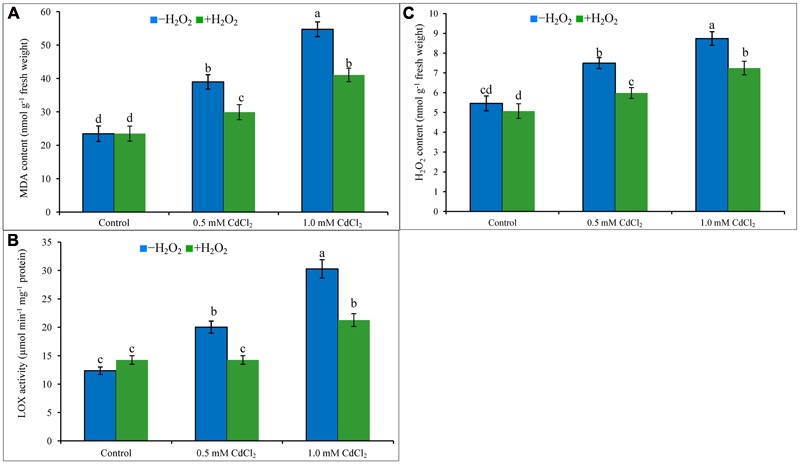
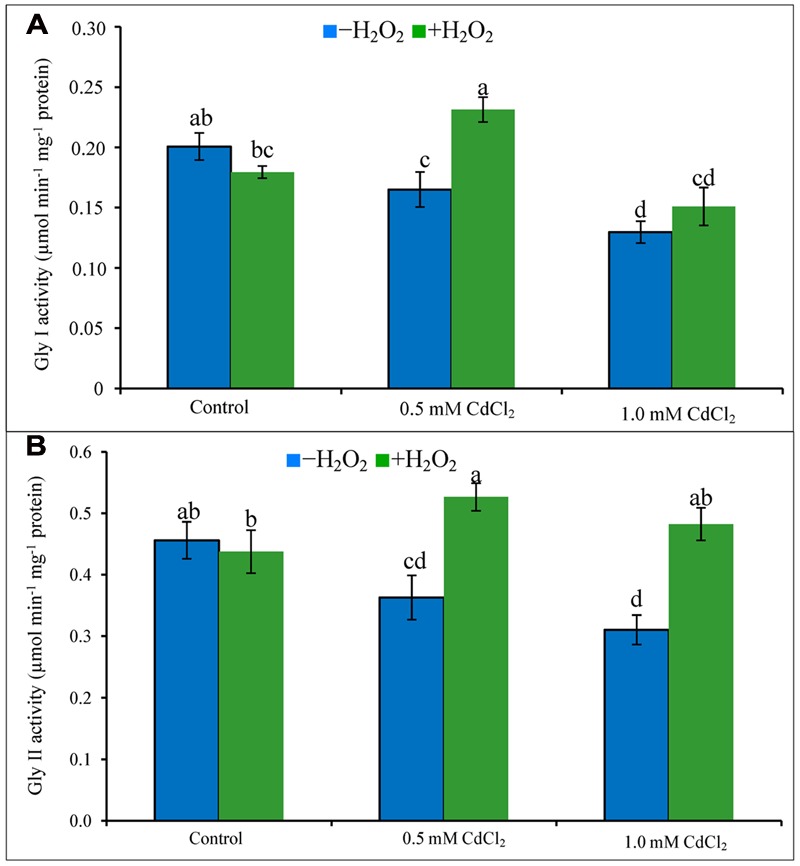
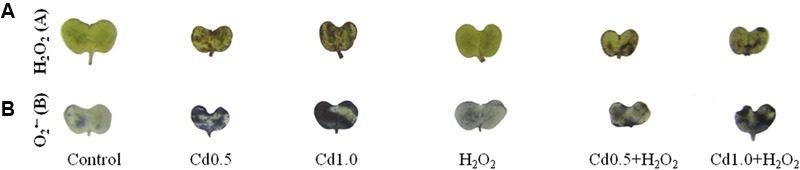
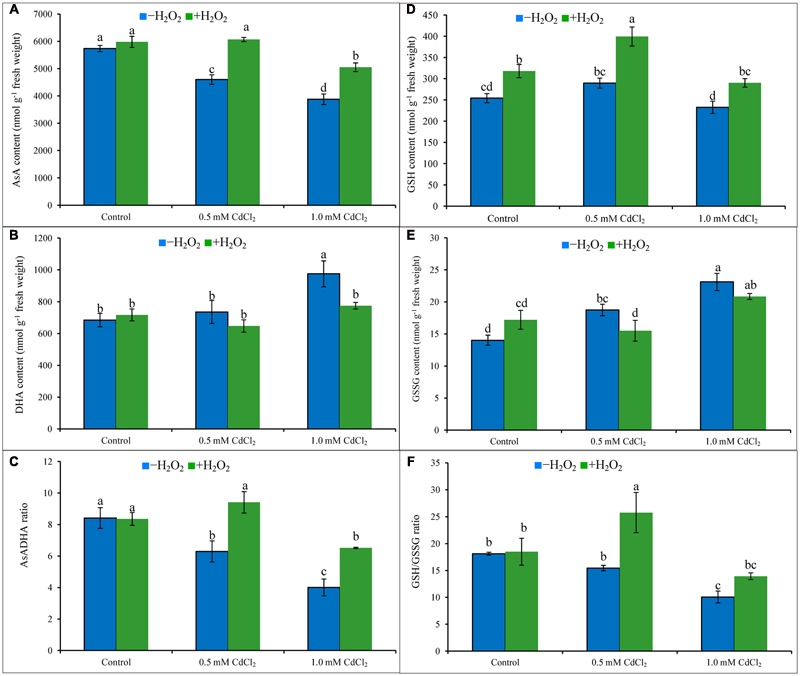
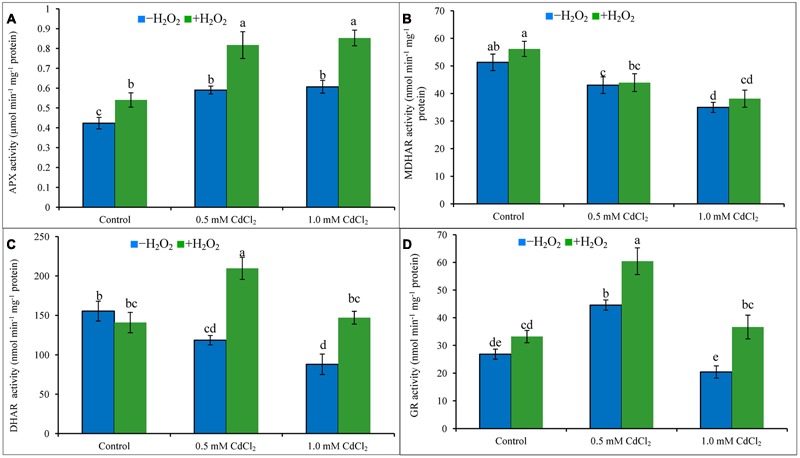
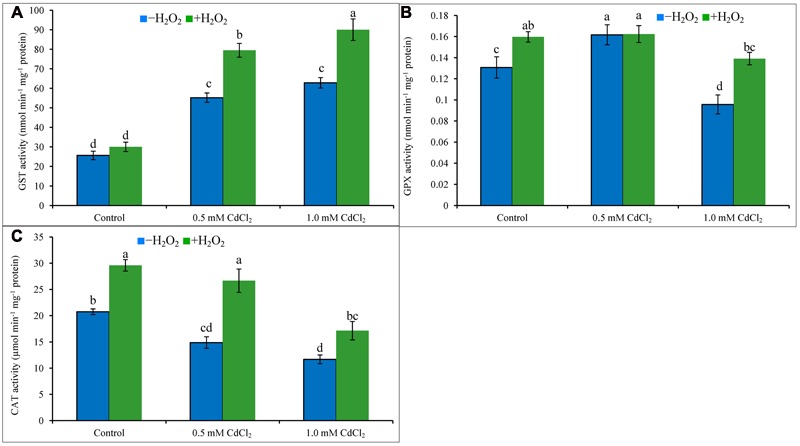
Cadmium (Cd) is considered as one of the most toxic metals for plant growth and development. In the present study, we investigated the role of externally applied hydrogen peroxide (HO) in regulating the antioxidant defense and glyoxalase systems in conferring Cd-induced oxidative stress tolerance in rapeseed ( L.). Seedlings were pretreated with 50 μM HO for 24 h. These pretreated seedlings as well as non-pretreated seedlings were grown for another 48 h at two concentrations of CdCl (0.5 and 1.0 mM). Both the levels of Cd increased MDA and HO levels and lipoxygenase activity while ascorbate (AsA) declined significantly. However, reduced glutathione (GSH) content showed an increase at 0.5 mM CdCl, but glutathione disulfide (GSSG) increased at any level of Cd with a decrease in GSH/GSSG ratio. The activities of ascorbate peroxidase (APX) and glutathione -transferase (GST) upregulated due to Cd treatment in dose-dependent manners, while glutathione reductase (GR) and glutathione peroxidase (GPX) increased only at 0.5 mM CdCl and decreased at higher dose. The activity of monodehydroascorbate reductase (MDHAR), dehydroascorbate reductase (DHAR), catalase (CAT), glyoxalase I (Gly I), and glyoxalase II (Gly II) decreased under Cd stress. On the other hand, HO pretreated seedlings, when exposed to Cd, AsA and GSH contents and GSH/GSSG ratio increased noticeably. HO pretreatment increased the activities of APX, MDHAR, DHAR, GR, GST, GPX, and CAT of Cd affected seedlings. Thus enhancement of both the non-enzymatic and enzymatic antioxidants helped to decrease the oxidative damage as indicated by decreased levels of HO and MDA. The seedlings which were pretreated with HO also showed enhanced glyoxalase system. The activities of Gly I, and Gly II and the content of GSH increased significantly due to HO pretreatment in Cd affected seedlings, compared to the Cd-stressed plants without HO pretreatment which were vital for methylglyoxal detoxification. So, the major roles of HO were improvement of antioxidant defense system and glyoxalase system which protected plants from the damage effects of ROS and MG. The mechanism of HO to induce antioxidant defense and glyoxalase system and improving physiology under stress condition is not known clearly which should be elucidated. The signaling roles of HO and its interaction with other signaling molecules, phytohormones or other biomolecules and their roles in stress protection should be explored.
镉(Cd)被认为是对植物生长发育毒性最大的金属之一。在本研究中,我们研究了外源施加过氧化氢(H₂O₂)在调节抗氧化防御和乙二醛酶系统以赋予油菜(Brassica napus L.)镉诱导的氧化应激耐受性中的作用。用50 μM H₂O₂预处理幼苗24小时。将这些预处理的幼苗以及未预处理的幼苗在两种浓度的CdCl₂(0.5和1.0 mM)下再培养48小时。两种镉水平均增加了丙二醛(MDA)和H₂O₂水平以及脂氧合酶活性,而抗坏血酸(AsA)显著下降。然而,还原型谷胱甘肽(GSH)含量在0.5 mM CdCl₂时增加,但谷胱甘肽二硫化物(GSSG)在任何镉水平下均增加,GSH/GSSG比值降低。镉处理使抗坏血酸过氧化物酶(APX)和谷胱甘肽 - S - 转移酶(GST)的活性以剂量依赖性方式上调,而谷胱甘肽还原酶(GR)和谷胱甘肽过氧化物酶(GPX)仅在0.5 mM CdCl₂时增加,在较高剂量时降低。单脱氢抗坏血酸还原酶(MDHAR)、脱氢抗坏血酸还原酶(DHAR)、过氧化氢酶(CAT)、乙二醛酶I(Gly I)和乙二醛酶II(Gly II)的活性在镉胁迫下降低。另一方面,用H₂O₂预处理的幼苗在暴露于镉时,AsA和GSH含量以及GSH/GSSG比值显著增加。H₂O₂预处理增加了受镉影响的幼苗中APX、MDHAR、DHAR、GR、GST、GPX和CAT的活性。因此,非酶促和酶促抗氧化剂的增强有助于减少氧化损伤,如H₂O₂和MDA水平的降低所示。用H₂O₂预处理的幼苗也显示出乙二醛酶系统增强。与未用H₂O₂预处理的镉胁迫植物相比,由于H₂O₂预处理,镉影响的幼苗中Gly I和Gly II的活性以及GSH含量显著增加,这对于甲基乙二醛解毒至关重要。因此,H₂O₂的主要作用是改善抗氧化防御系统和乙二醛酶系统,从而保护植物免受活性氧(ROS)和甲基乙二醛(MG)的损伤作用。H₂O₂在胁迫条件下诱导抗氧化防御和乙二醛酶系统以及改善生理功能的机制尚不清楚,需要阐明。应探索H₂O₂的信号作用及其与其他信号分子、植物激素或其他生物分子的相互作用及其在胁迫保护中的作用。