Shukla Nikunj M, Sato-Kaneko Fumi, Yao Shiyin, Pu Minya, Chan Michael, Lao Fitzgerald S, Sako Yukiya, Saito Tetsuya, Messer Karen, Hayashi Tomoko, Cottam Howard B, Corr Maripat, Carson Dennis A
Moores Cancer Center, University of California San Diego, La Jolla, CA, United States.
The Herbert Wertheim School of Public Health and Longevity, University of California San Diego, La Jolla, CA, United States.
Front Pharmacol. 2022 Apr 11;13:869649. doi: 10.3389/fphar.2022.869649. eCollection 2022.
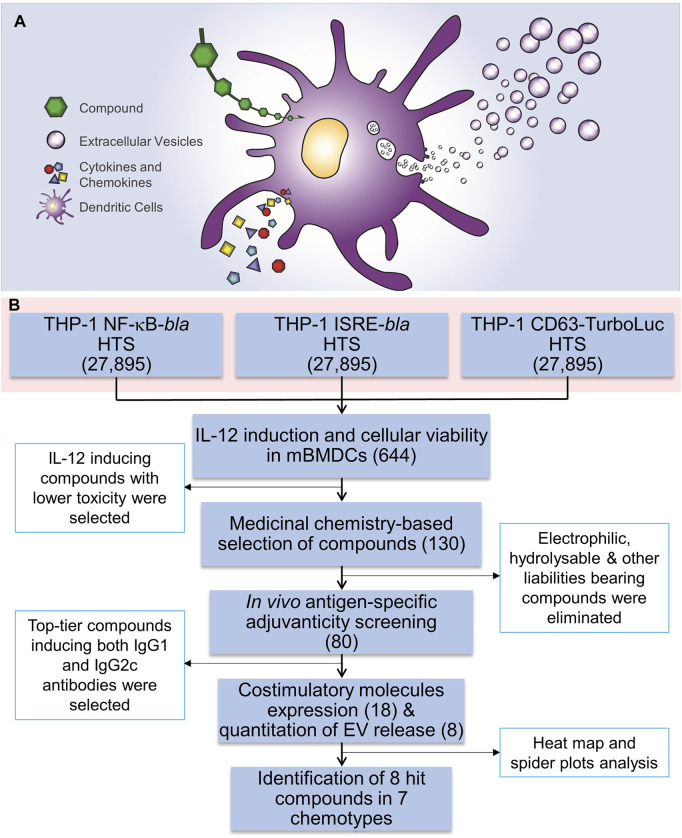
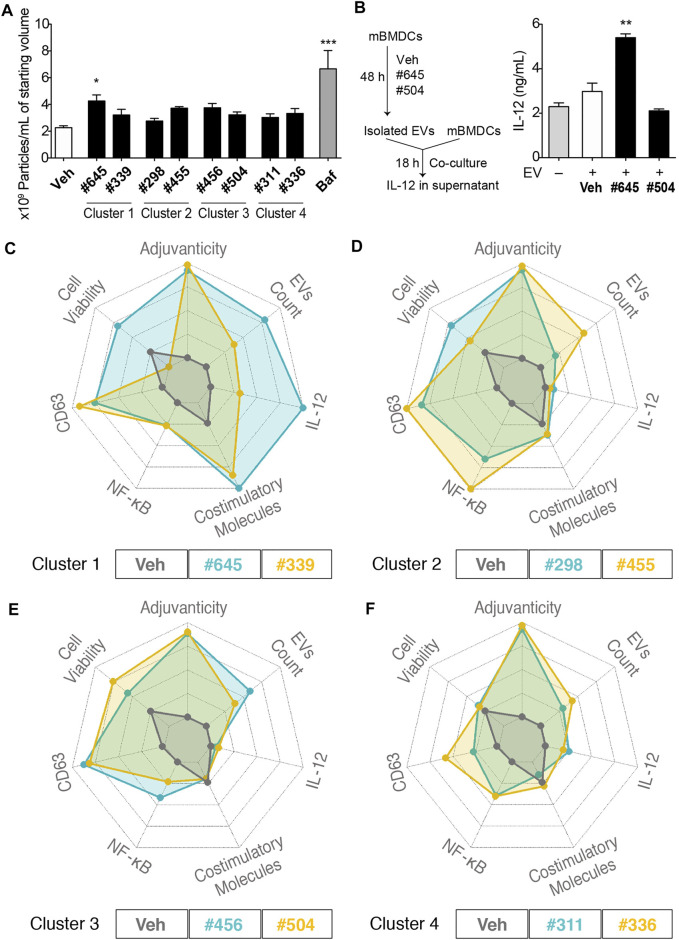
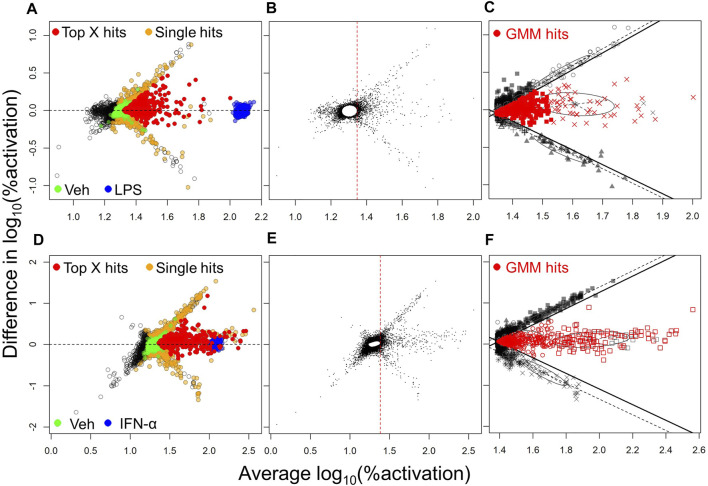
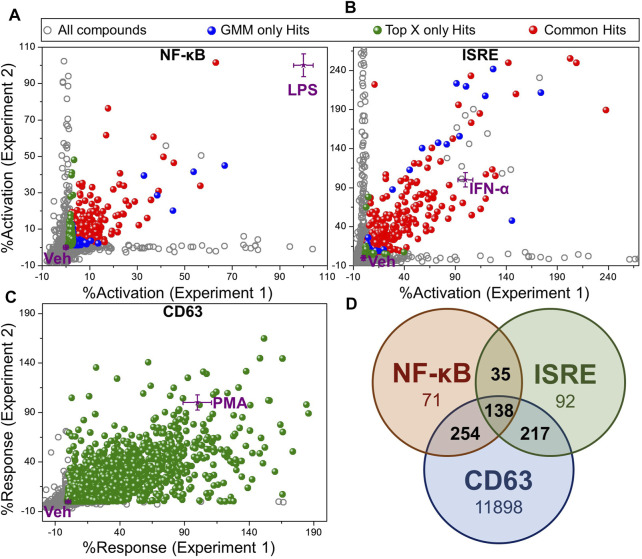
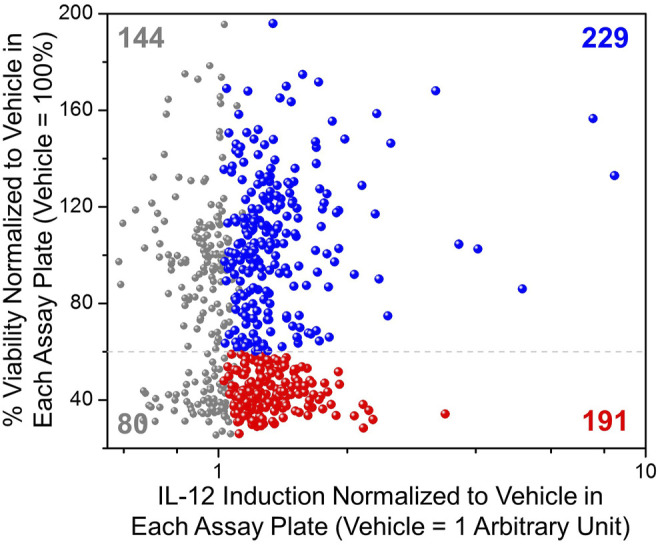
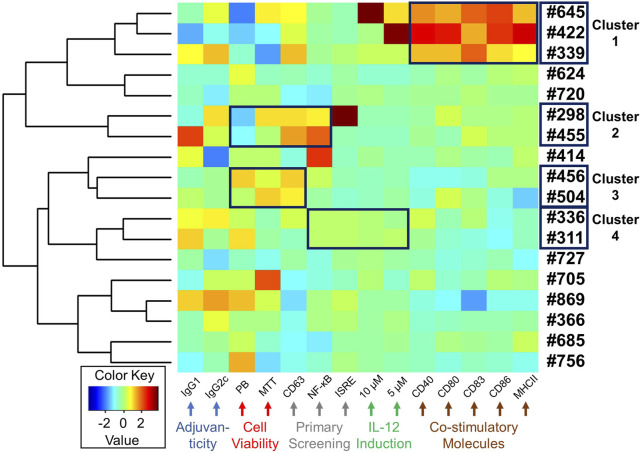
Extracellular vesicles (EVs) play an important role in intercellular communication and regulation of cells, especially in the immune system where EVs can participate in antigen presentation and may have adjuvant effects. We aimed to identify small molecule compounds that can increase EV release and thereby enhance the immunogenicity of vaccines. We utilized a THP-1 reporter cell line engineered to release EV-associated tetraspanin (CD63)-Turbo-luciferase to quantitatively measure EVs released in culture supernatants as a readout of a high throughput screen (HTS) of 27,895 compounds. In parallel, the cytotoxicity of the compounds was evaluated by PrestoBlue dye assay. For screening immunostimulatory potency, we performed two additional independent HTS on the same compound library using NF-κB and interferon-stimulated response element THP-1 reporter cell lines. Hit compounds were then identified in each of the 3 HTS's, using a "Top X″ and a Gaussian Mixture Model approach to rule out false positive compounds and to increase the sensitivity of the hit selection. Thus, 644 compounds were selected as hits which were further evaluated for induction of IL-12 in murine bone-marrow derived dendritic cells (mBMDCs) and for effects of cell viability. The resulting 130 hits were then assessed from a medicinal chemistry perspective to remove compounds with functional group liabilities. Finally, 80 compounds were evaluated as vaccine adjuvants using ovalbumin as a model antigen. We analyzed 18 compounds with adjuvant activity for their ability to induce the expression of co-stimulatory molecules on mBMDCs. The full complement of data was then used to cluster the compounds into 4 distinct biological activity profiles. These compounds were also evaluated for quantitation of EV release and spider plot overlays were generated to compare the activity profiles of compounds within each cluster. This tiered screening process identified two compounds that belong to the 4-thieno-2-thiopyrimidine scaffold with identical screening profiles supporting data reproducibility and validating the overall screening process. Correlation patterns in the adjuvanticity data suggested a role for CD63 and NF-κB pathways in potentiating antigen-specific antibody production. Thus, our three independent cell-based HTS campaigns led to identification of immunostimulatory compounds that release EVs and have adjuvant activity.
细胞外囊泡(EVs)在细胞间通讯和细胞调节中发挥着重要作用,尤其是在免疫系统中,EVs可参与抗原呈递并可能具有佐剂作用。我们旨在鉴定能够增加EV释放从而增强疫苗免疫原性的小分子化合物。我们利用一种经过基因工程改造的THP-1报告细胞系,该细胞系可释放与EV相关的四跨膜蛋白(CD63)-Turbo荧光素酶,以定量测量培养上清液中释放的EVs,作为对27,895种化合物进行高通量筛选(HTS)的读数。同时,通过PrestoBlue染料测定法评估这些化合物的细胞毒性。为了筛选免疫刺激效力,我们使用NF-κB和干扰素刺激反应元件THP-1报告细胞系,对同一化合物库进行了另外两次独立的高通量筛选。然后,在这3次高通量筛选中,分别使用“前X名”和高斯混合模型方法鉴定出命中化合物,以排除假阳性化合物并提高命中选择的灵敏度。因此,选择了644种化合物作为命中化合物,进一步评估它们在小鼠骨髓来源的树突状细胞(mBMDCs)中诱导IL-12的能力以及对细胞活力的影响。然后从药物化学角度评估最终得到的130种命中化合物,以去除具有官能团缺陷的化合物。最后,使用卵清蛋白作为模型抗原,对80种化合物作为疫苗佐剂进行评估。我们分析了18种具有佐剂活性的化合物诱导mBMDCs上共刺激分子表达的能力。然后使用完整的数据补充将这些化合物聚类为4种不同的生物活性谱。还对这些化合物进行了EV释放定量评估,并生成了蜘蛛图叠加图以比较每个簇内化合物的活性谱。这种分层筛选过程鉴定出两种属于4-噻吩-2-硫嘧啶支架的化合物,其相同的筛选谱支持数据的可重复性并验证了整个筛选过程。佐剂活性数据中的相关模式表明CD63和NF-κB途径在增强抗原特异性抗体产生中起作用。因此,我们的三次基于细胞的独立高通量筛选活动导致鉴定出具有免疫刺激作用、能释放EV且具有佐剂活性的化合物。