Moores Cancer Center, University of California San Diego, 9500 Gilman Dr, La Jolla, California 92093-0809, United States.
Department of Rheumatology, Graduate School of Medical and Dental Sciences, Tokyo Medical and Dental University (TMDU), Tokyo 113-8519, Japan.
ACS Chem Biol. 2023 Apr 21;18(4):982-993. doi: 10.1021/acschembio.3c00134. Epub 2023 Apr 11.
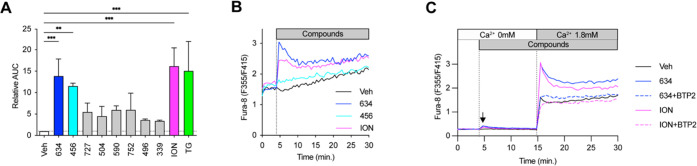
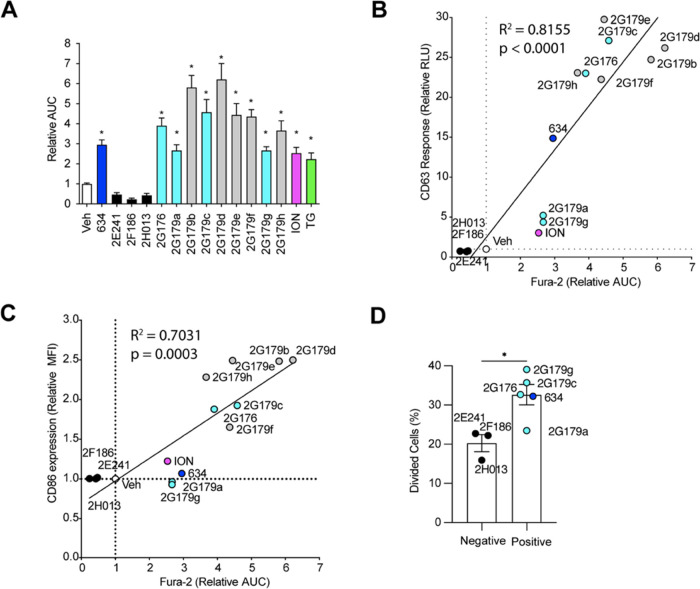
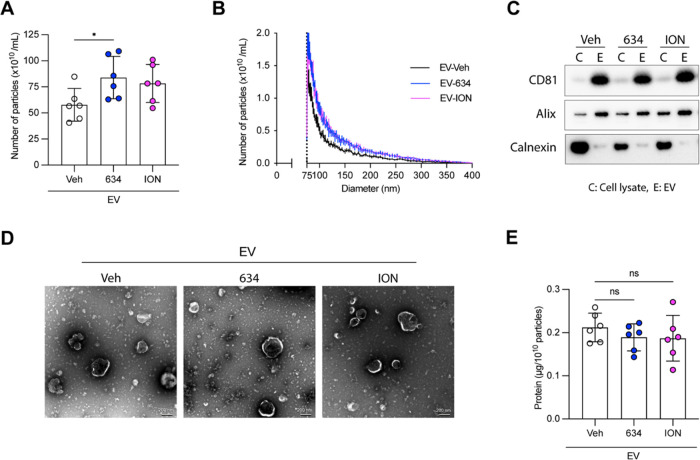
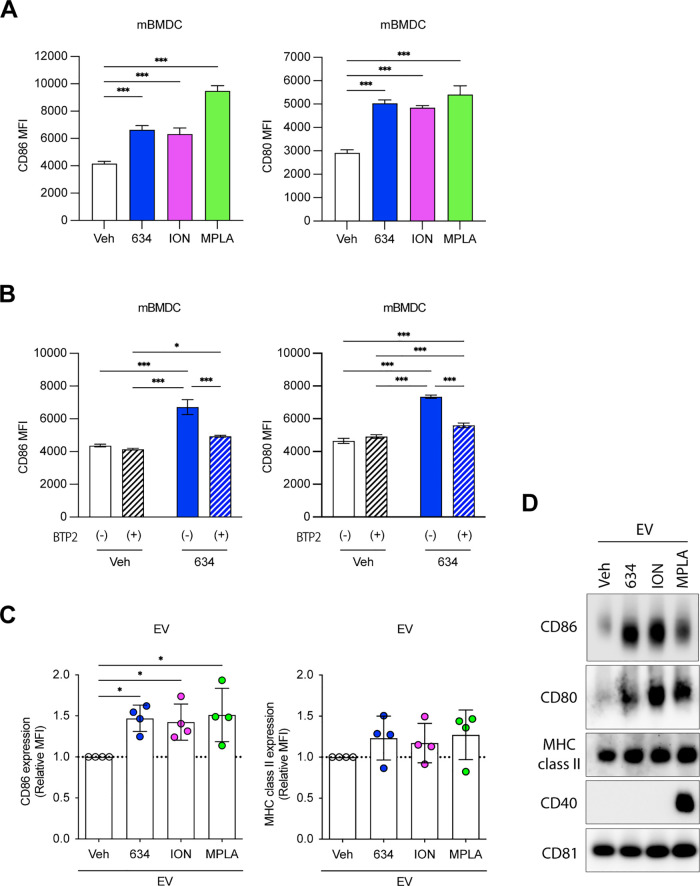
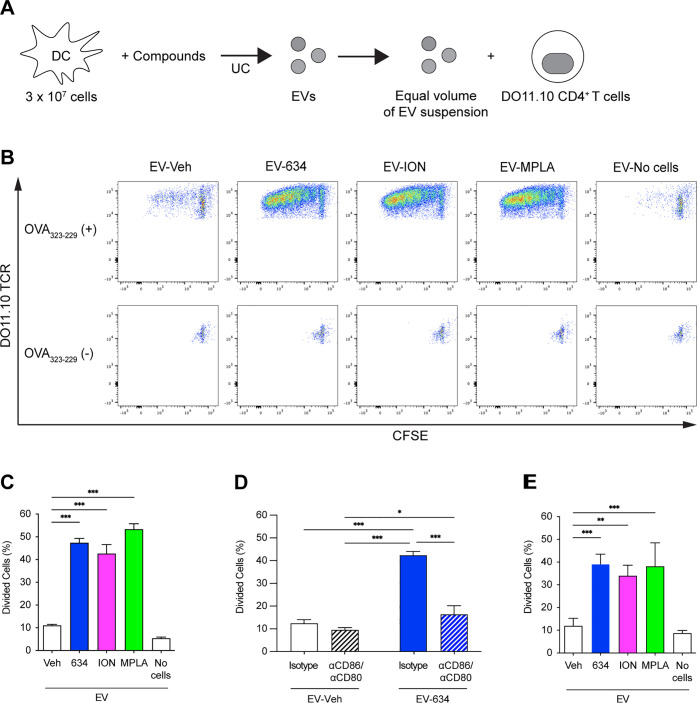
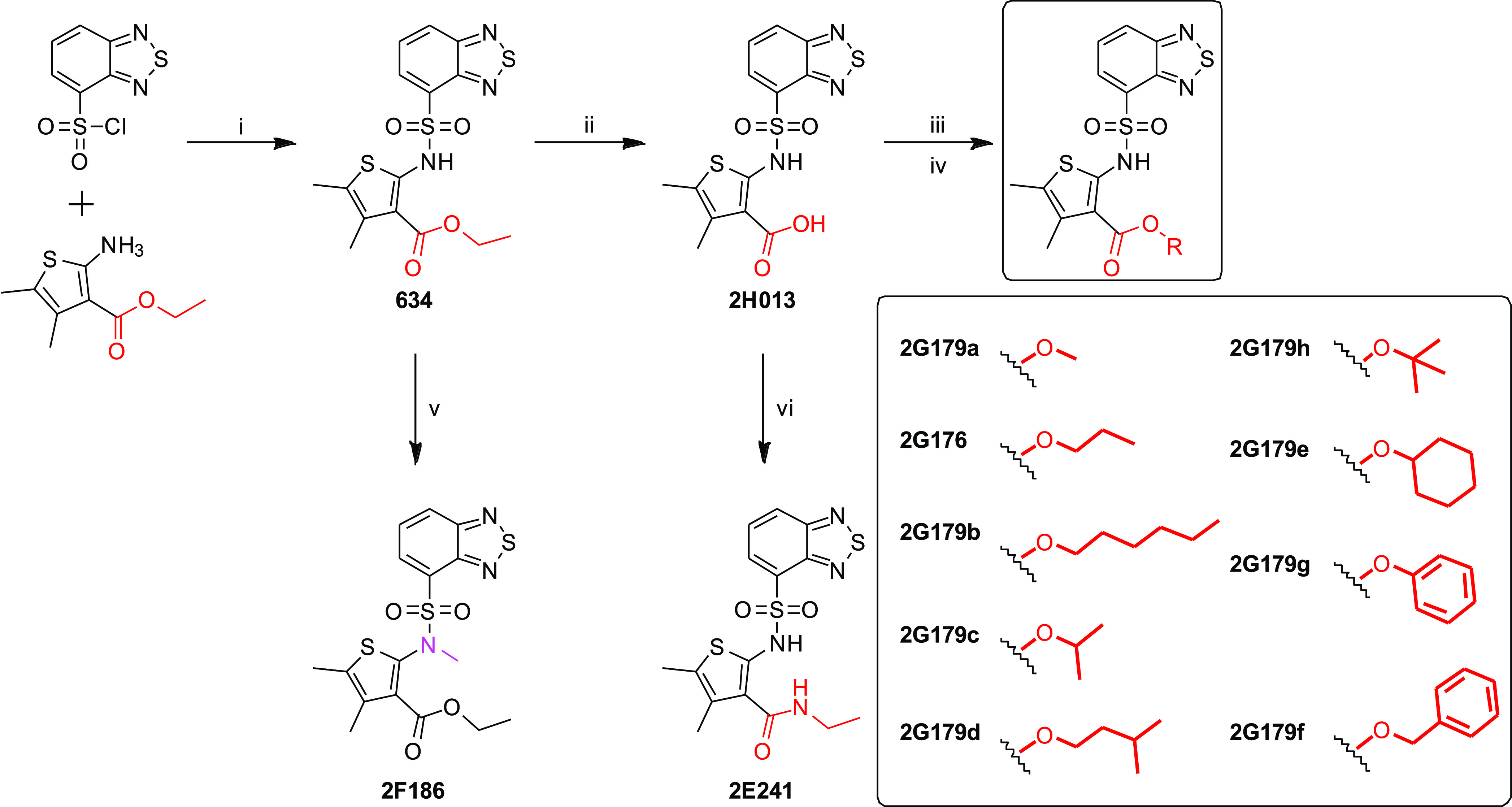
Extracellular vesicles (EVs) transfer antigens and immunomodulatory molecules in immunologic synapses as a part of intracellular communication, and EVs equipped with immunostimulatory functions have been utilized for vaccine formulation. Hence, we sought small-molecule compounds that increase immunostimulatory EVs released by antigen-presenting dendritic cells (DCs) for enhancement of vaccine immunogenicity. We previously performed high-throughput screening on a 28K compound library using three THP-1 reporter cell lines with CD63 Turbo-Luciferase, NF-κB, and interferon-sensitive response element (ISRE) reporter constructs, respectively. Because intracellular Ca elevation enhances EV release, we screened 80 hit compounds and identified compound as a Ca influx inducer. enhanced EV release in murine bone marrow-derived dendritic cells (mBMDCs) and increased costimulatory molecule expression on the surface of EVs and the parent cells. EVs isolated from -treated mBMDCs induced T cell proliferation in the presence of antigenic peptides. To assess the roles of intracellular Ca elevation in immunostimulatory EV release, we performed structure-activity relationship (SAR) studies of . The analogues that retained the ability to induce Ca influx induced more EVs with immunostimulatory properties from mBMDCs than did those that lacked the ability to induce Ca influx. The levels of Ca induction of synthesized analogues correlated with the numbers of EVs released and costimulatory molecule expression on the parent cells. Collectively, our study presents that a small molecule, , enhances the release of EVs with immunostimulatory potency via induction of Ca influx. This agent is a novel tool for EV-based immune studies and vaccine development.
细胞外囊泡 (EVs) 在免疫突触中作为细胞内通讯的一部分传递抗原和免疫调节分子,并且已经将具有免疫刺激功能的 EV 用于疫苗制剂。因此,我们寻求能够增加抗原呈递树突状细胞 (DC) 释放的具有免疫刺激功能的 EV 的小分子化合物,以增强疫苗的免疫原性。我们之前使用三个分别带有 CD63 Turbo-Luciferase、NF-κB 和干扰素敏感反应元件 (ISRE) 报告基因构建体的 THP-1 报告细胞系,对 28K 化合物文库进行了高通量筛选。由于细胞内 Ca2+ 升高可增强 EV 释放,我们筛选了 80 个命中化合物,并确定化合物 是一种 Ca2+ 内流诱导剂。 在小鼠骨髓来源的树突状细胞 (mBMDC) 中增强 EV 释放,并增加 EV 和亲本细胞表面上的共刺激分子表达。从 -处理的 mBMDC 分离的 EV 在抗原肽存在下诱导 T 细胞增殖。为了评估细胞内 Ca2+ 升高在免疫刺激 EV 释放中的作用,我们对 进行了结构-活性关系 (SAR) 研究。保留诱导 Ca2+ 内流能力的类似物比缺乏诱导 Ca2+ 内流能力的类似物从 mBMDC 中诱导出更多具有免疫刺激特性的 EV。合成类似物的 Ca2+ 诱导水平与释放的 EV 数量和亲本细胞上的共刺激分子表达相关。总的来说,我们的研究表明,小分子 通过诱导 Ca2+ 内流增强具有免疫刺激效力的 EV 的释放。该试剂是用于 EV 免疫研究和疫苗开发的新型工具。