Yao Mianzhi, Zhu Qianhui, Zou Jin, Shenkutie Abebe Mekuria, Hu Songnian, Qu Jiuxin, He Zilong, Leung Polly H M
Department of Health Technology and Informatics, The Hong Kong Polytechnic University, Hung Hom, Hong Kong SAR, China.
State Key Laboratory of Microbial Resources, Institute of Microbiology, Chinese Academy of Sciences, Beijing, China.
Front Microbiol. 2022 Apr 11;13:845045. doi: 10.3389/fmicb.2022.845045. eCollection 2022.
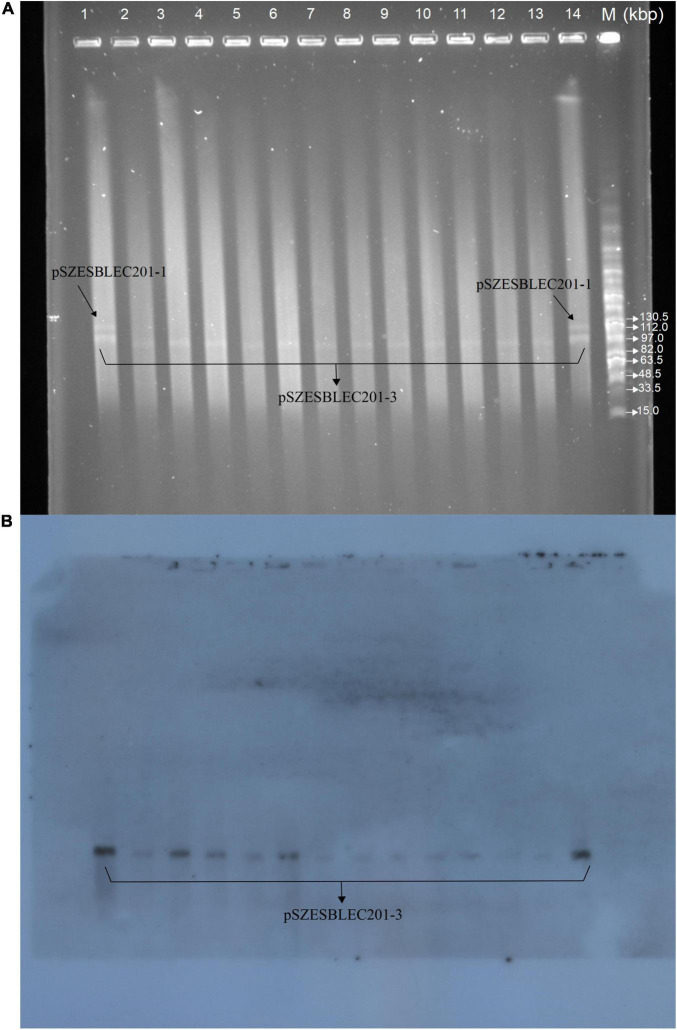
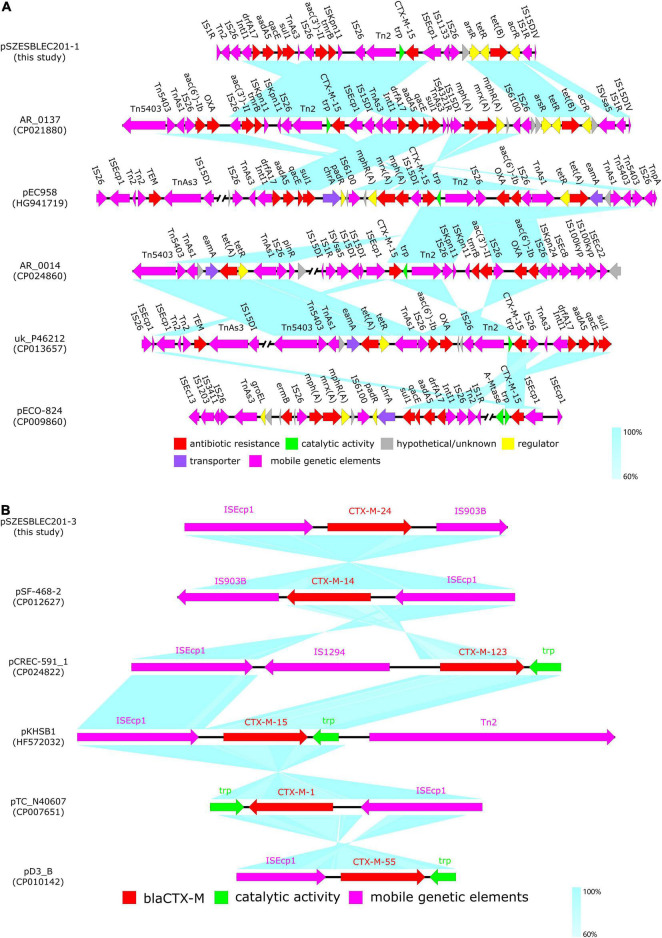
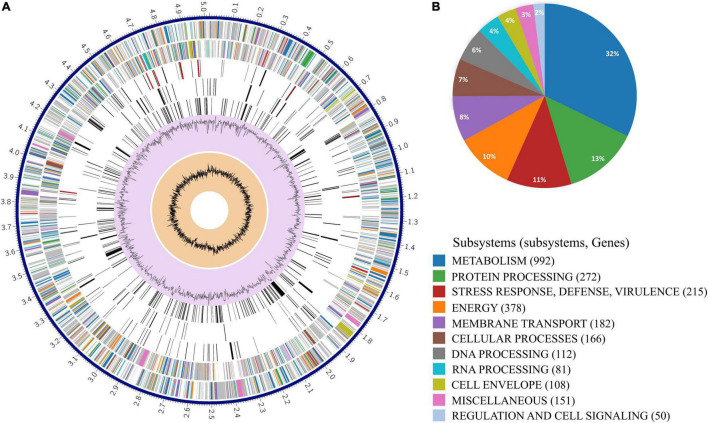
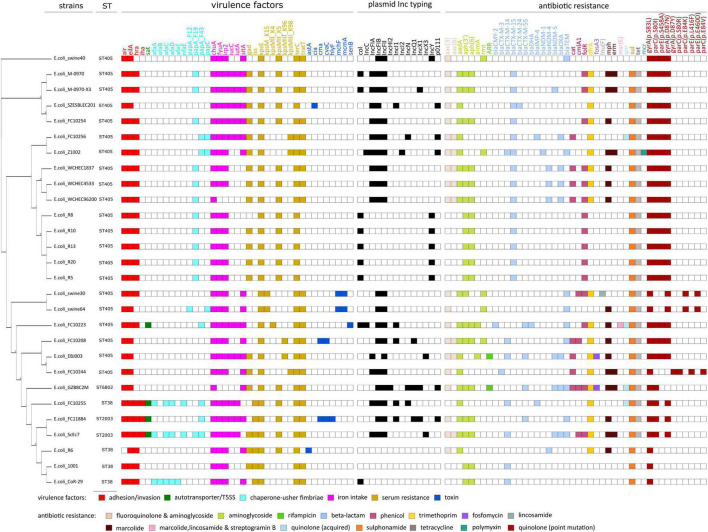
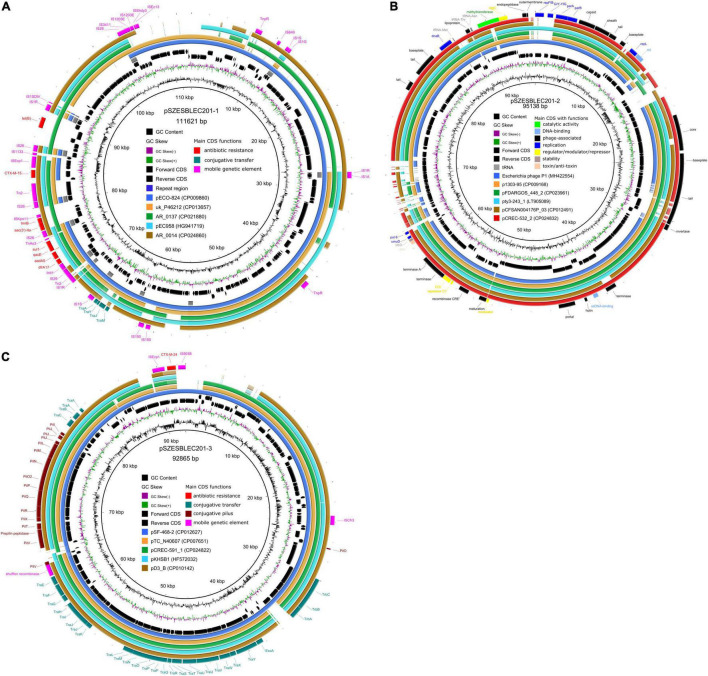
sequence type 405 is an emerging antibiotic-resistant clonal group associated with the global dissemination of extended-spectrum β-lactamase-producing . In this study, we report the genome assembly and characterization of a uropathogenic ST405 strain, SZESBLEC201, based on long and short reads obtained from the Nanopore and Illumina sequencing platforms, respectively. Whole-genome sequencing revealed that SZESBLEC201 harbors a 5,020,403 bp chromosome and three plasmids, namely, pSZESBLEC201-1, pSZESBLEC201-2, and pSZESBLEC201-3. pSZESBLEC201-1 (111,621 bp) belongs to the IncFIA-FIB type and harbors . However, this plasmid does not harbor conjugative transfer-associated genes, rendering pSZESBLEC201-1 unable to be conjugatively transferred. pSZESBLEC201-2 (95,138 bp) is a phage-like plasmid that shows a strong genome synteny with phage P1 but with the absence of mobile genetic elements and some regulatory genes. pSZESBLEC201-3 (92,865 bp) belongs to the IncI1 type and carries . In contrast to pSZESBLEC201-1, pSZESBLEC201-3 retains its full active conjugation machinery and can be transferred conjugation. The genetic features of the genome show that the SZESBLEC201 has a unique virulence pattern compared with genetically similar strains found in the same country (China). The plasmid backbones exhibit a high degree of similarity to those of geographically distant isolates, highlighting the global spread of genes and the genome plasticity of this clonal group. The coexistence of two variants in the same strain increases the risk of the emergence of new variants. Further studies on phage-like plasmids are necessary to provide insights into their biological activities and clinical significance.
序列类型405是一种新出现的耐抗生素克隆群,与产超广谱β-内酰胺酶的全球传播有关。在本研究中,我们报告了一株尿路致病性ST405菌株SZESBLEC201的基因组组装和特征分析,该分析分别基于从纳米孔和Illumina测序平台获得的长读段和短读段。全基因组测序显示,SZESBLEC201含有一条5,020,403 bp的染色体和三个质粒,即pSZESBLEC201-1、pSZESBLEC201-2和pSZESBLEC201-3。pSZESBLEC201-1(111,621 bp)属于IncFIA-FIB型,含有……。然而,该质粒不含有与接合转移相关的基因,使得pSZESBLEC201-1无法进行接合转移。pSZESBLEC201-2(95,138 bp)是一种噬菌体样质粒,与噬菌体P1具有很强的基因组同线性,但缺乏移动遗传元件和一些调控基因。pSZESBLEC201-3(92,865 bp)属于IncI1型,携带……。与pSZESBLEC201-1不同,pSZESBLEC201-3保留了其完整的活性接合机制,并且可以通过接合进行转移。基因组的遗传特征表明,与在同一国家(中国)发现的基因相似菌株相比,SZESBLEC201具有独特的毒力模式。质粒骨架与地理上遥远的分离株的质粒骨架表现出高度相似性,突出了……基因的全球传播和该克隆群的基因组可塑性。同一菌株中两种……变体的共存增加了新变体出现的风险。有必要对噬菌体样质粒进行进一步研究,以深入了解其生物学活性和临床意义。