Hounmanou Yaovi Mahuton Gildas, Bortolaia Valeria, Dang Son Thi Thanh, Truong Duong, Olsen John E, Dalsgaard Anders
Department of Veterinary and Animal Sciences, University of Copenhagen, Frederiksberg, Denmark.
Research Group for Genomic Epidemiology, National Food Institute, Technical University of Denmark, Kgs. Lyngby, Denmark.
Front Microbiol. 2021 Mar 11;12:629139. doi: 10.3389/fmicb.2021.629139. eCollection 2021.
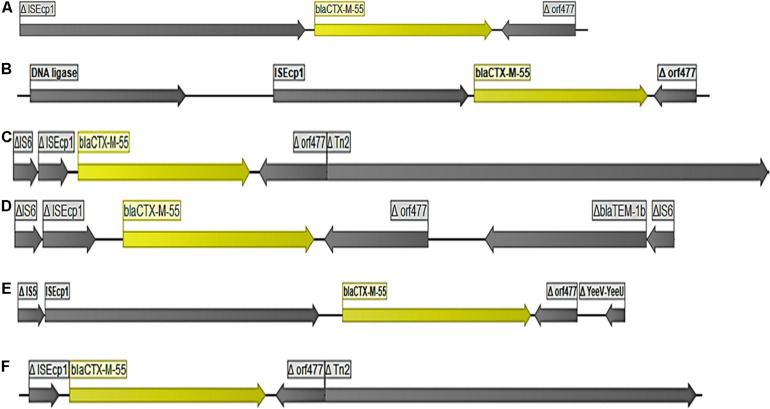
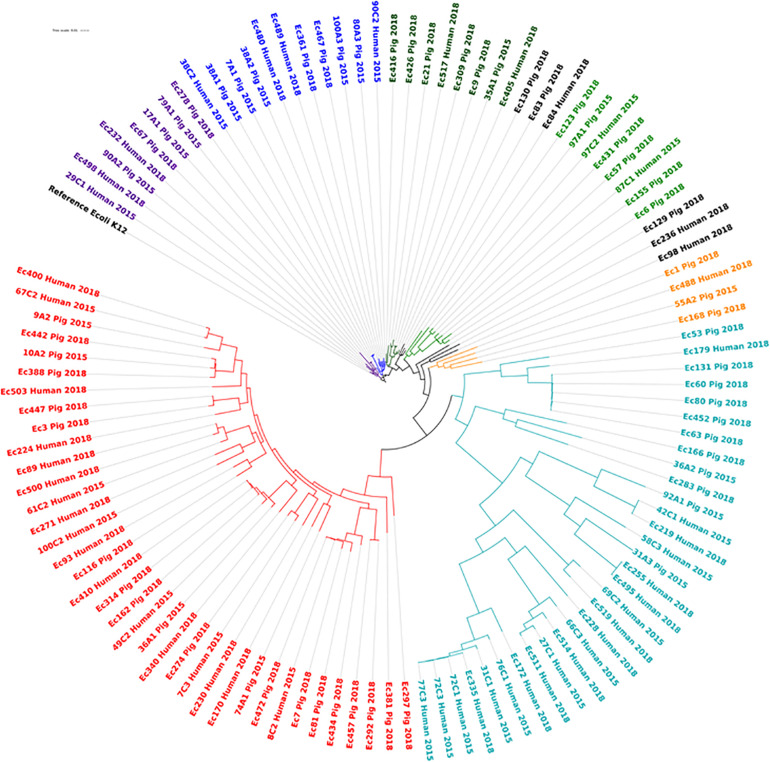
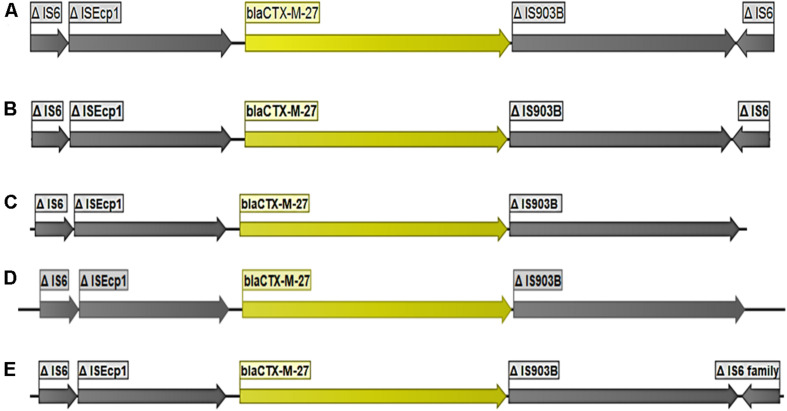
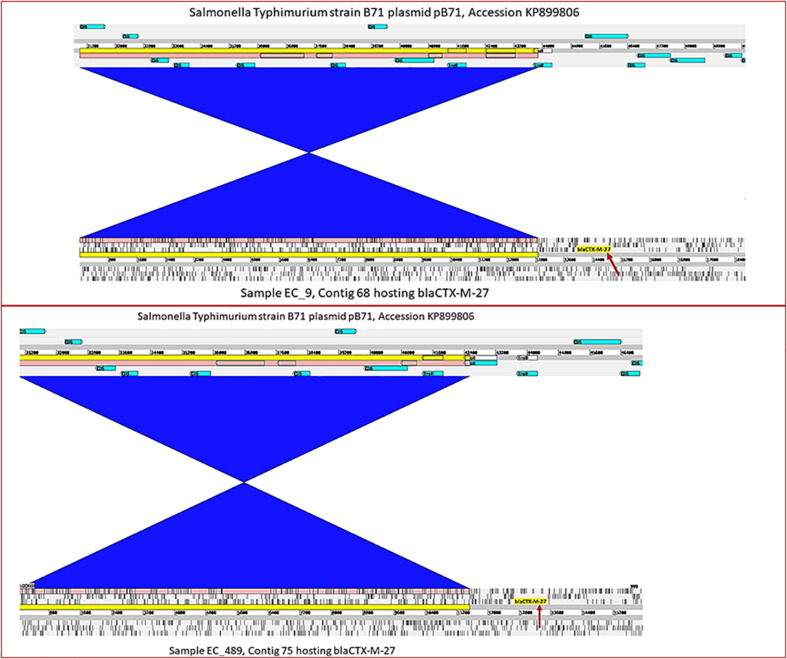
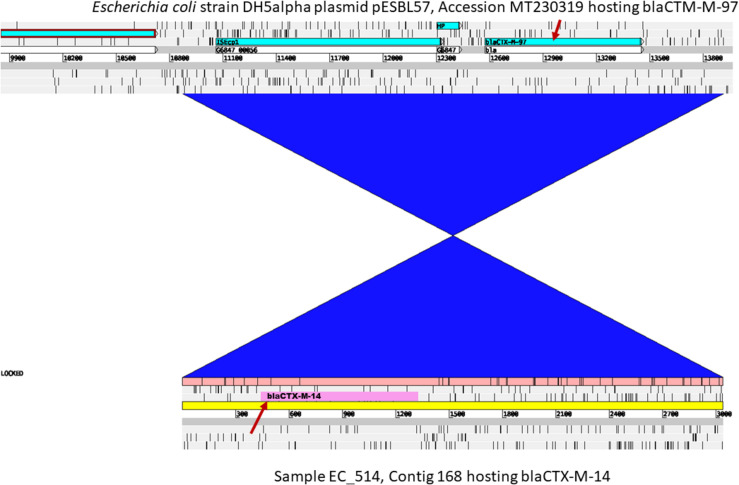
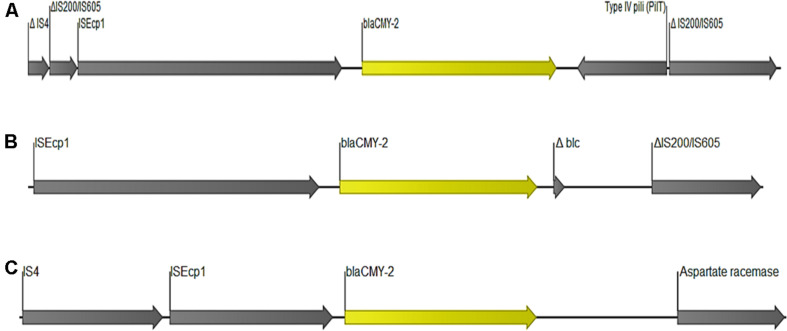
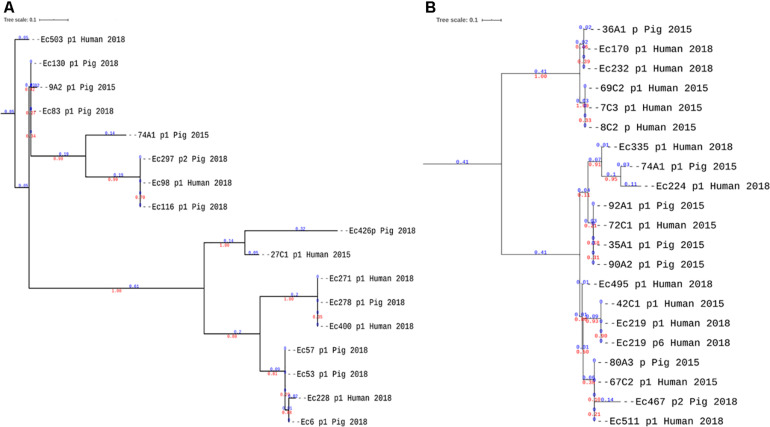
Animals are considered important sources of ESBL/AmpC-producing bacteria in humans. We analyzed indications of transfer of ESBL/AmpC genes between pigs and pig farmers in Vietnam by analyzing whole genome sequences of 114 ESBL/AmpC-producing isolated from the two hosts, and performed conjugation experiments and plasmid profiling to confirm that such transfer could have happened. ESBL-encoding genes detected in pigs and pig farmers included , , , , , , , and , and AmpC β-lactamases included , , and . The most frequent ESBL gene, , was carried on plasmid with replicons types IncF, IncX, IncH, IncN, IncR, and IncP. The insertion transposases downstream of the gene were different in plasmids carried by different strains. The second most detected gene, , is found in a stable genetic arrangement with the same flanking transposons seen across strains, and the gene was located on similar conjugal IncF plasmid types, suggesting a horizontal spread of these plasmids. In three strains, we observed a novel harboring IncF type of plasmid which had not been reported before. Its closest reference in NCBI was the non-ESBL Typhimurium plasmid pB71 that might have experienced an insertion of . Our data also point to an emergence of plasmids co-carrying ESBL genes, genes, quinolones and other antimicrobials resistance determinants, and such plasmids require special attention. Plasmids phylogeny confirmed that the encoding plasmids varied considerably, while those encoding were closely related. Plasmids harboring both ESBL genes were confirmed to be conjugative and not to differ in transfer efficacy. The isolates carrying the plasmids, even those with plasmids of similar types, showed wide genetic variation with high number of SNPs, suggesting horizontal spread of plasmids into different clonal lines. Their virulence profiles did not confirm to known pathotypes, suggesting that unrelated commensals are a main reservoir for ESBL and AmpC β-lactamases in both humans and pigs. Overall, despite evidence of transferability of plasmids in the analyzed strains, our findings do not support that ESBL-producing from pigs or their ESBL/AmpC encoding plasmids are commonly spread to workers in close contact with the animals.
动物被认为是人类产ESBL/AmpC细菌的重要来源。我们通过分析从猪和养猪户这两个宿主中分离出的114株产ESBL/AmpC细菌的全基因组序列,分析了越南猪与养猪户之间ESBL/AmpC基因转移的迹象,并进行了接合实验和质粒图谱分析,以证实这种转移可能已经发生。在猪和养猪户中检测到的ESBL编码基因包括 、 、 、 、 、 、 、 和 ,AmpC β-内酰胺酶包括 、 、 和 。最常见的ESBL基因 携带的质粒具有IncF、IncX、IncH、IncN、IncR和IncP等复制子类型。不同菌株携带的质粒中, 基因下游的插入转座酶不同。检测到的第二个最常见基因 在不同菌株中与相同侧翼转座子呈稳定的遗传排列,且该基因位于相似的接合IncF质粒类型上,表明这些质粒存在水平传播。在三株菌株中,我们观察到一种携带IncF型质粒的新型 ,此前未见报道。其在NCBI中最接近的参考序列是未产ESBL的鼠伤寒沙门氏菌质粒pB71,该质粒可能经历了 的插入。我们的数据还表明出现了共携带ESBL基因、 基因、喹诺酮类和其他抗菌药物耐药决定簇的质粒,此类质粒需要特别关注。质粒系统发育分析证实,编码 的质粒差异很大,而编码 的质粒关系密切。携带两种ESBL基因的质粒被证实具有接合性,且转移效率无差异。携带这些质粒的分离株,即使是那些具有相似类型质粒的分离株,也表现出广泛的遗传变异和大量的单核苷酸多态性,表明质粒向不同克隆系的水平传播。它们的毒力谱不符合已知的致病型,表明无关的共生菌是人和猪中产ESBL和AmpC β-内酰胺酶的主要储存库。总体而言,尽管在所分析的菌株中存在质粒可转移性的证据,但我们的研究结果并不支持猪中产ESBL的细菌或其ESBL/AmpC编码质粒通常会传播给与动物密切接触的工作人员。