Smilde Bernard J, Botman Esmée, de Ruiter Ruben D, Smit Jan Maerten, Teunissen Berend P, Lubbers Wouter D, Schwarte Lothar A, Schober Patrick, Eekhoff E Marelise W
Amsterdam UMC Location Vrije Universiteit Amsterdam, Department of Internal Medicine Section Endocrinology, Amsterdam, the Netherlands.
Amsterdam UMC, Amsterdam Bone Center, Amsterdam, the Netherlands.
Orthop Res Rev. 2022 Apr 20;14:113-120. doi: 10.2147/ORR.S337491. eCollection 2022.
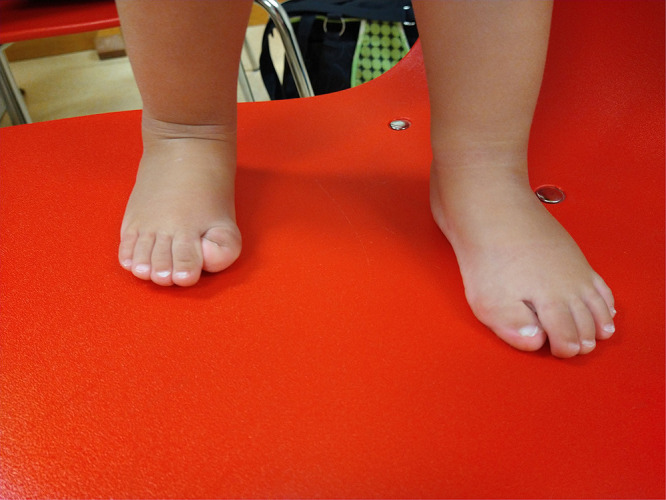
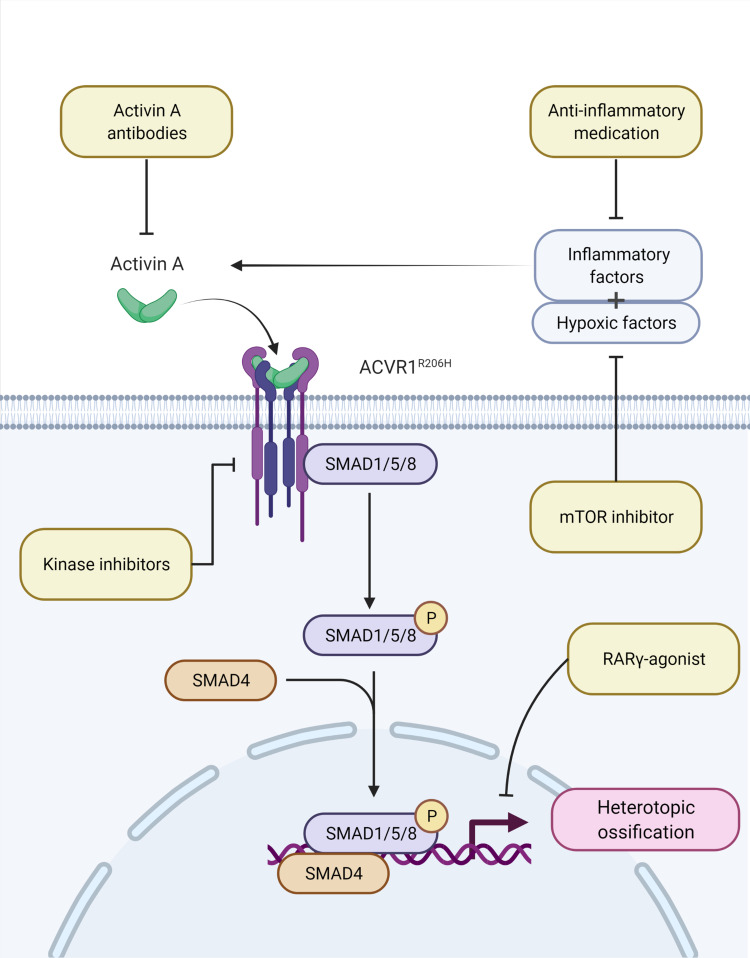
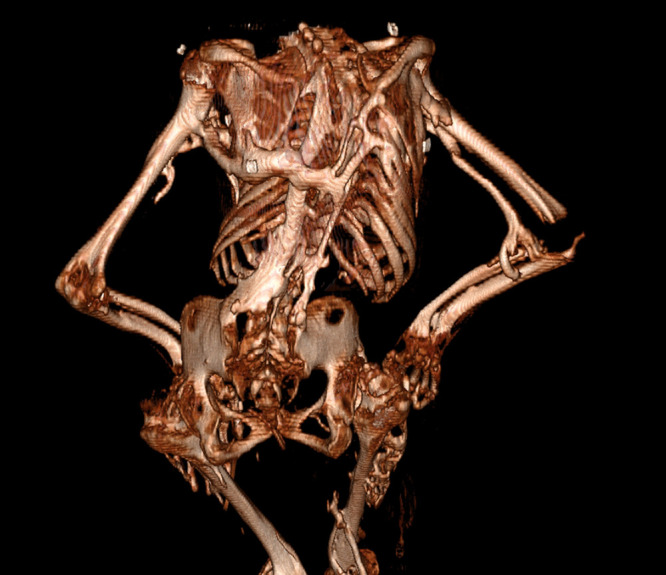
Fibrodysplasia ossificans progressiva (FOP), sometimes known as myositis ossificans progressiva, is an ultra-rare disease in which bone is formed in muscular tissue, tendons and ligaments. This is known as heterotopic ossification (HO). FOP is caused by a heterozygous mutation in the highly conserved ACVR1/ALK2 gene which affects about 1 in 1.5-2 million individuals. At birth, patients with the predominant R206H mutation only exhibit a bilateral hallux valgus. During childhood, heterotopic bone formation develops in a typical pattern, affecting the axial muscles first before appendicular body parts are involved. HO can start spontaneously but is often elicited by soft tissue trauma or medical procedures. After soft tissue injury, an inflammatory process called a flare-up can start, followed by the formation of HO. HO leads to a limited range of motion, culminating in complete ankylosis of nearly all joints. As a result of HO surrounding the thorax, patients often suffer from thoracic insufficiency syndrome (TIS). TIS is the most common cause of a limited life expectancy for FOP patients, with a median life expectancy of 56 years. Management is focused on preventing soft-tissue injury that can provoke flare-ups. This includes prevention of iatrogenic damage by biopsies, intramuscular injections and surgery. Anti-inflammatory medication is often started when a flare-up occurs but has a poor basis of evidence. Several forms of potential treatment for FOP are being researched in clinical trials. Progression of the disease is monitored using CT and 18F-NaF PET/CT combined with functional assessments. Patients are regularly evaluated for frequently occurring complications such as restrictive lung disease. Here, we review the current management, monitoring and treatment of FOP.
进行性骨化性纤维发育不良(FOP),有时也被称为进行性骨化性肌炎,是一种极为罕见的疾病,在肌肉组织、肌腱和韧带中会形成骨骼。这被称为异位骨化(HO)。FOP是由高度保守的ACVR1/ALK2基因中的杂合突变引起的,大约每150万至200万人中就有1人受影响。出生时,具有主要R206H突变的患者仅表现为双侧拇外翻。在儿童时期,异位骨化以典型模式发展,首先影响轴向肌肉,然后才累及附属身体部位。HO可自发开始,但通常由软组织创伤或医疗程序引发。软组织损伤后,会开始一个称为发作的炎症过程,随后形成HO。HO导致活动范围受限,最终几乎所有关节完全强直。由于胸部周围出现HO,患者常患有胸廓发育不全综合征(TIS)。TIS是FOP患者预期寿命有限的最常见原因,中位预期寿命为56岁。治疗重点在于预防可引发发作的软组织损伤。这包括预防活检、肌肉注射和手术造成的医源性损伤。发作时通常会开始使用抗炎药物,但证据基础薄弱。目前正在临床试验中研究几种FOP的潜在治疗方法。使用CT和18F-NaF PET/CT结合功能评估来监测疾病进展。定期评估患者是否出现诸如限制性肺病等常见并发症。在此,我们综述FOP的当前治疗、监测和治疗方法。