Department of Chemical and Biological Engineering, University of Saskatchewan, Saskatoon, SK S7N 5A9, Canada.
Department of Food and Bioproduct Sciences, University of Saskatchewan, Saskatoon, SK S7N 5A8, Canada.
J Microbiol Biotechnol. 2022 Jun 28;32(6):768-775. doi: 10.4014/jmb.2203.03056. Epub 2022 Apr 15.
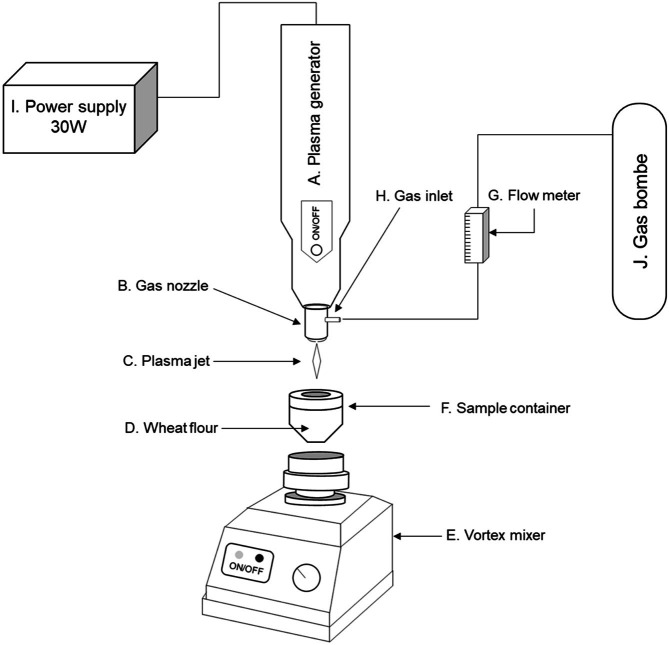
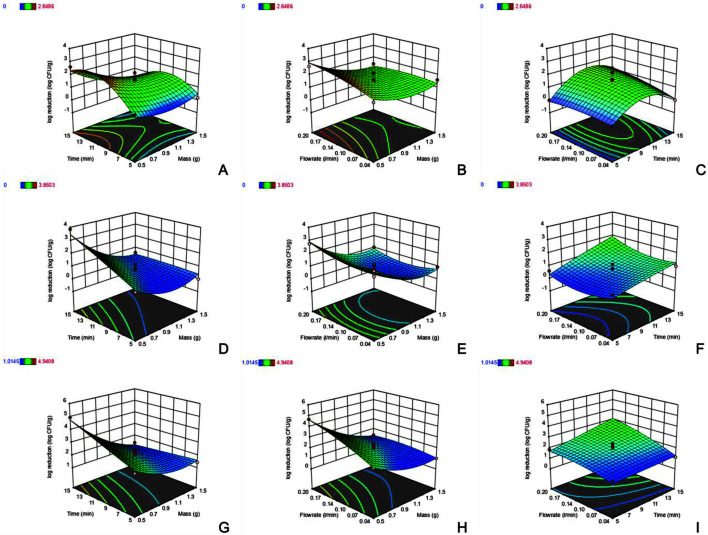
In this study we aimed to derive the response surface models for reduction in wheat flour using atmospheric cold plasma (ACP) with three types of gas. The jet-type atmospheric cold plasma wand system was used with a 30 W power supply, and three gases (argon, air, and nitrogen) were applied as the treatment gas. The operating parameters for process optimization considered were wheat flour mass (g), treatment time (min), and gas flow rate (L/min). The wheat flour samples were artificially contaminated with at a concentration of 9.25 ± 0.74 log CFU/g. ACP treatments with argon, air, and nitrogen resulted in 2.66, 4.21, and 5.55 log CFU/g reduction of , respectively, in wheat flour under optimized conditions. The optimized conditions to reduce were 0.5 g of the flour mass, 15 min of treatment time, and 0.20 L/min of nitrogen gas flow rate, and the predicted highest reduction level from modeling was 5.63 log CFU/g.
在这项研究中,我们旨在通过三种气体的大气压冷等离子体(ACP)来推导减少小麦粉的响应曲面模型。使用喷射式大气压冷等离子体棒系统,功率为 30 W,并应用三种气体(氩气、空气和氮气)作为处理气体。优化过程的操作参数考虑了小麦粉质量(g)、处理时间(min)和气体流量(L/min)。小麦粉样品被人工污染,污染浓度为 9.25±0.74 log CFU/g。在优化条件下,氩气、空气和氮气处理分别使小麦粉中的减少了 2.66、4.21 和 5.55 log CFU/g。减少的最佳条件是 0.5 g 的面粉质量、15 分钟的处理时间和 0.20 L/min 的氮气流量,预测的最高减少水平为 5.63 log CFU/g。