Department of Oncological Sciences, Icahn School of Medicine at Mount Sinai, New York, New York.
Department of Medicine, Massachusetts General Hospital, Boston, Massachusetts.
Clin Cancer Res. 2022 Nov 1;28(21):4618-4628. doi: 10.1158/1078-0432.CCR-21-2138.
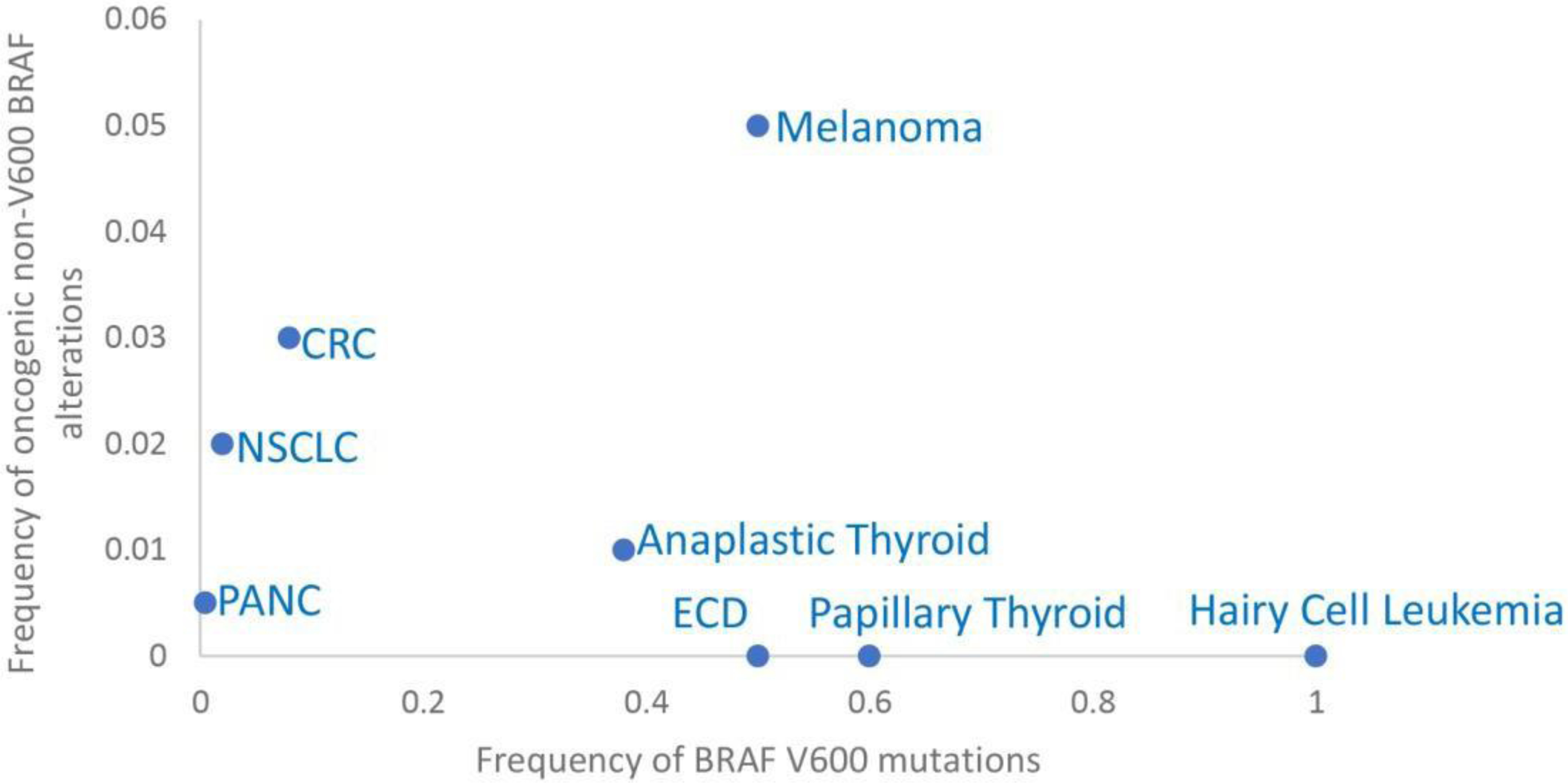
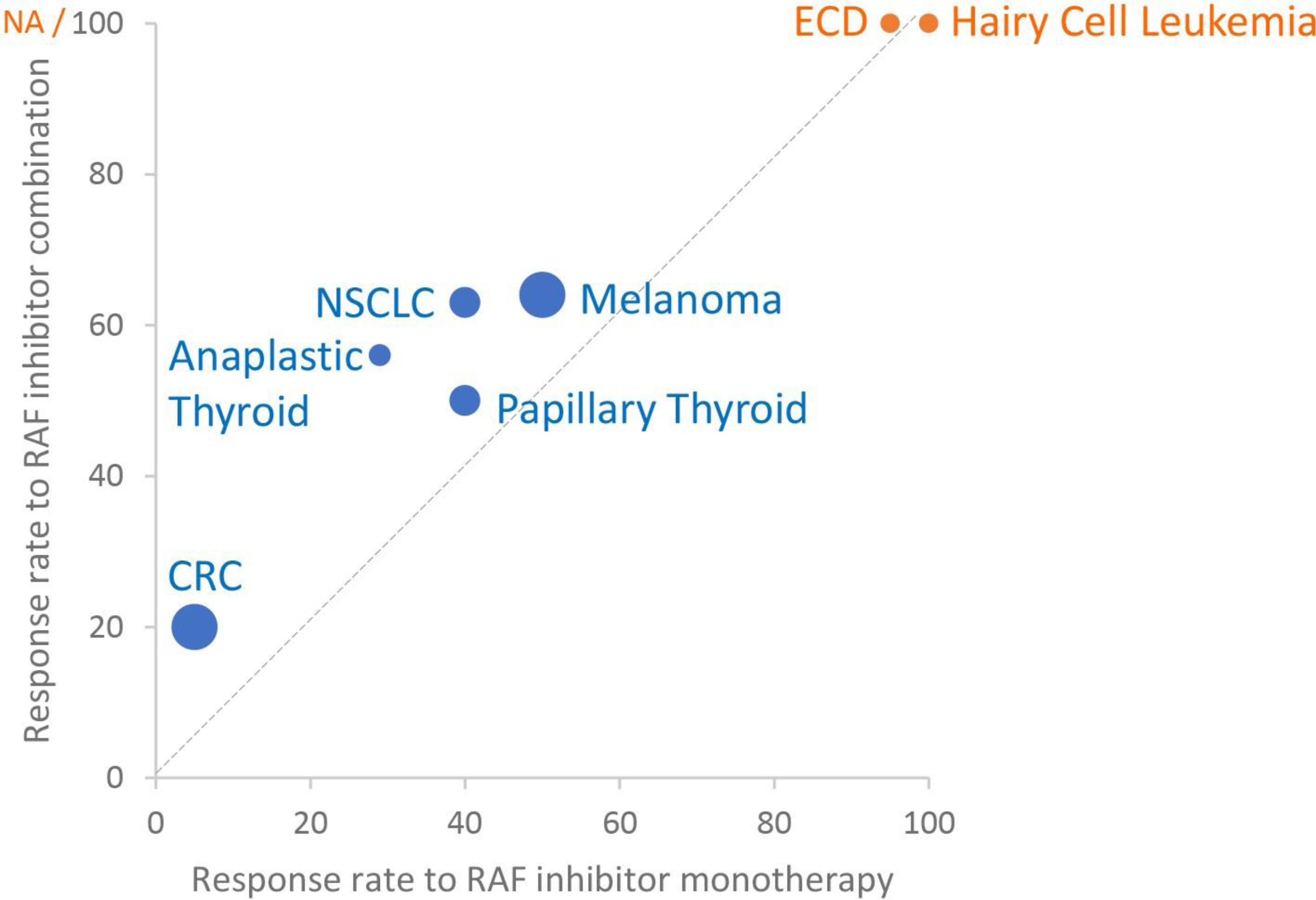
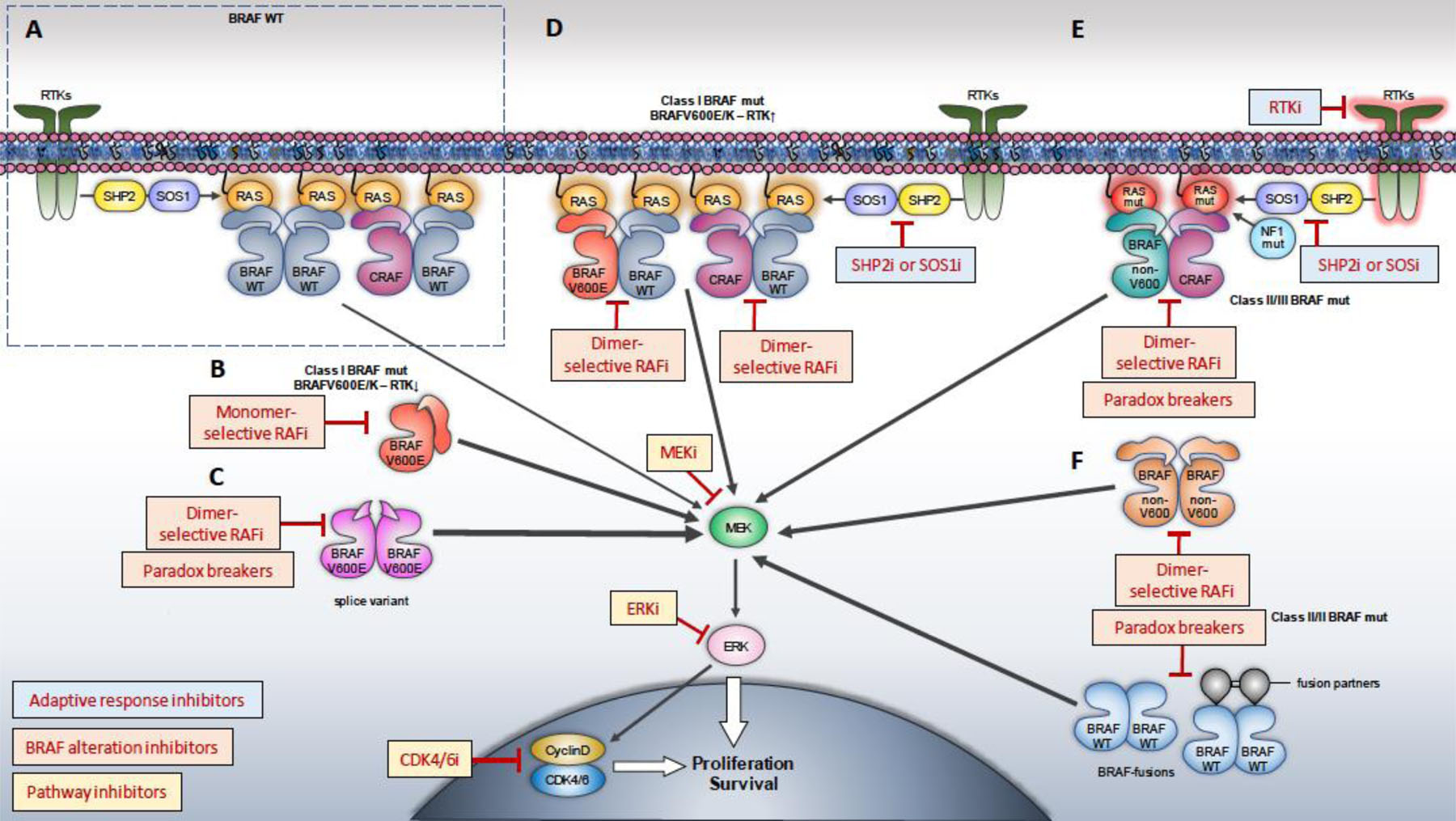
With the identification of activating mutations in BRAF across a wide variety of malignancies, substantial effort was placed in designing safe and effective therapeutic strategies to target BRAF. These efforts have led to the development and regulatory approval of three BRAF inhibitors as well as five combinations of a BRAF inhibitor plus an additional agent(s) to manage cancer such as melanoma, non-small cell lung cancer, anaplastic thyroid cancer, and colorectal cancer. To date, each regimen is effective only in patients with tumors harboring BRAFV600 mutations and the duration of benefit is often short-lived. Further limitations preventing optimal management of BRAF-mutant malignancies are that treatments of non-V600 BRAF mutations have been less profound and combination therapy is likely necessary to overcome resistance mechanisms, but multi-drug regimens are often too toxic. With the emergence of a deeper understanding of how BRAF mutations signal through the RAS/MAPK pathway, newer RAF inhibitors are being developed that may be more effective and potentially safer and more rational combination therapies are being tested in the clinic. In this review, we identify the mechanics of RAF signaling through the RAS/MAPK pathway, present existing data on single-agent and combination RAF targeting efforts, describe emerging combinations, summarize the toxicity of the various agents in clinical testing, and speculate as to where the field may be headed.
随着 BRAF 在多种恶性肿瘤中激活突变的鉴定,人们投入了大量精力来设计安全有效的靶向 BRAF 的治疗策略。这些努力导致了三种 BRAF 抑制剂以及五种 BRAF 抑制剂加一种或多种其他药物联合治疗癌症(如黑色素瘤、非小细胞肺癌、间变性甲状腺癌和结直肠癌)的开发和监管批准。迄今为止,每种方案仅对携带 BRAFV600 突变的肿瘤患者有效,且获益的持续时间通常很短。进一步限制 BRAF 突变恶性肿瘤最佳管理的因素是,对非 V600 BRAF 突变的治疗效果较差,并且可能需要联合治疗来克服耐药机制,但多药方案通常毒性太大。随着对 BRAF 突变如何通过 RAS/MAPK 通路信号转导的深入理解,正在开发新的 RAF 抑制剂,这些抑制剂可能更有效,并且潜在更安全、更合理的联合治疗正在临床试验中进行测试。在这篇综述中,我们确定了 RAF 通过 RAS/MAPK 通路信号转导的机制,介绍了单药和联合 RAF 靶向作用的现有数据,描述了新出现的联合治疗方法,总结了临床测试中各种药物的毒性,并推测该领域的发展方向。