Department of Pharmacology, New Haven, CT, USA.
Molecular, Cellular, and Developmental Biology, Yale University, New Haven, CT, USA.
Nat Commun. 2021 Feb 10;12(1):920. doi: 10.1038/s41467-021-21159-7.
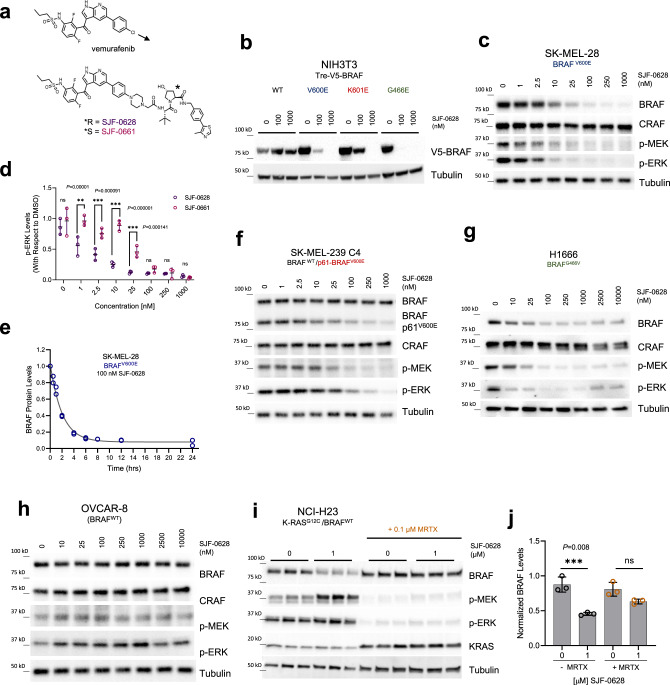
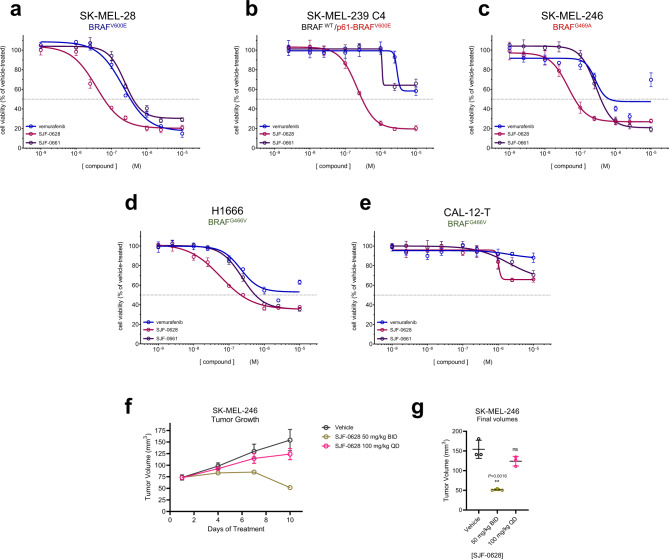
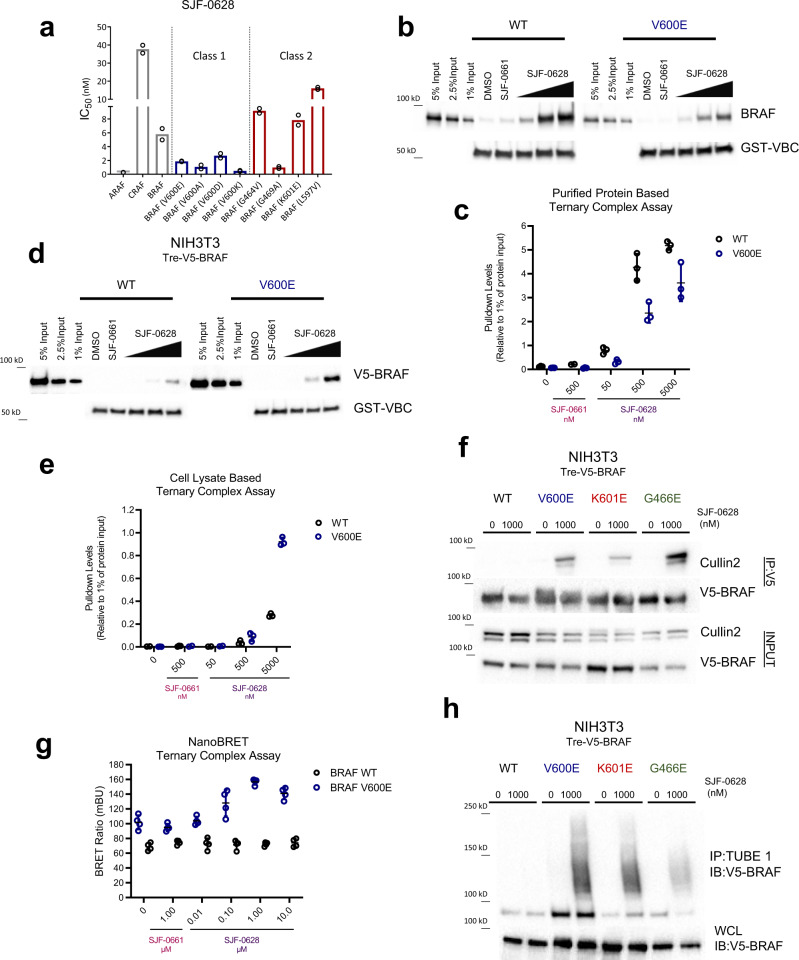
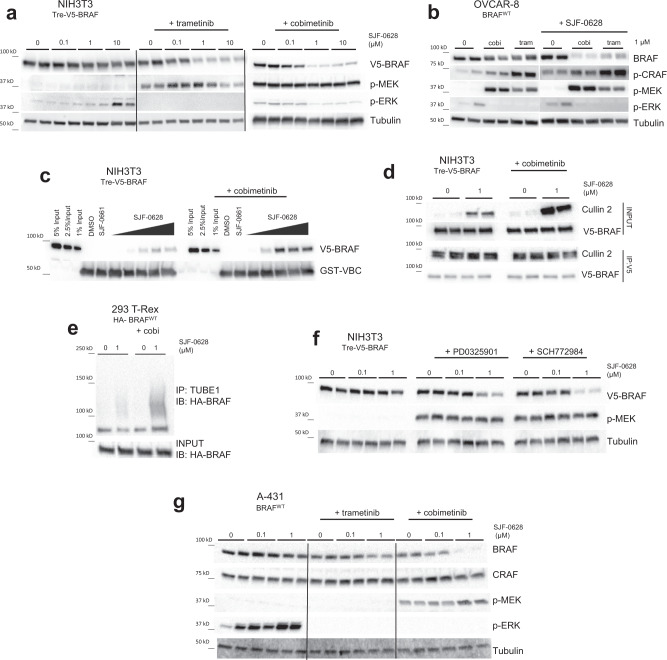
Over 300 BRAF missense mutations have been identified in patients, yet currently approved drugs target V600 mutants alone. Moreover, acquired resistance inevitably emerges, primarily due to RAF lesions that prevent inhibition of BRAF V600 with current treatments. Therefore, there is a need for new therapies that target other mechanisms of activated BRAF. In this study, we use the Proteolysis Targeting Chimera (PROTAC) technology, which promotes ubiquitination and degradation of neo-substrates, to address the limitations of BRAF inhibitor-based therapies. Using vemurafenib-based PROTACs, we achieve low nanomolar degradation of all classes of BRAF mutants, but spare degradation of WT RAF family members. Our lead PROTAC outperforms vemurafenib in inhibiting cancer cell growth and shows in vivo efficacy in a Class 2 BRAF xenograft model. Mechanistic studies reveal that BRAF is spared due to weak ternary complex formation in cells owing to its quiescent inactivated conformation, and activation of BRAF sensitizes it to degradation. This study highlights the degree of selectivity achievable with degradation-based approaches by targeting mutant BRAF-driven cancers while sparing BRAF, providing an anti-tumor drug modality that expands the therapeutic window.
在患者中已经发现了超过 300 种 BRAF 错义突变,但目前批准的药物仅针对 V600 突变体。此外,不可避免地会出现获得性耐药,主要是由于 RAF 病变,这会阻止当前治疗方法对 BRAF V600 的抑制。因此,需要新的治疗方法来针对激活的 BRAF 的其他机制。在这项研究中,我们使用蛋白水解靶向嵌合体 (PROTAC) 技术,该技术促进新底物的泛素化和降解,以解决基于 BRAF 抑制剂治疗的局限性。使用基于 vemurafenib 的 PROTAC,我们实现了所有类型的 BRAF 突变体的低纳摩尔降解,但对 WT RAF 家族成员无降解。我们的先导 PROTAC 在抑制癌细胞生长方面优于 vemurafenib,并在 2 类 BRAF 异种移植模型中显示出体内疗效。机制研究表明,由于其静止失活构象,BRAF 在细胞中由于三元复合物形成较弱而幸免降解,并且 BRAF 的激活使其易于降解。这项研究强调了基于降解的方法在靶向突变 BRAF 驱动的癌症的同时保留 BRAF 时所能达到的选择性程度,为扩大治疗窗口提供了一种抗肿瘤药物模式。