Jiang Huning, Cui Jiahua, Chu Hao, Xu Tingting, Xie Mengyan, Jing Xinming, Xu Jiali, Zhou Jianwei, Shu Yongqian
Department of Oncology, The First Affiliated Hospital of Nanjing Medical University, Nanjing, China.
Jiangsu Key Lab of Cancer Biomarkers, Prevention and Treatment, Collaborative Innovation Center for Cancer Personalized Medicine, Nanjing Medical University, Nanjing, China.
Cell Death Discov. 2022 Apr 29;8(1):235. doi: 10.1038/s41420-022-01033-1.
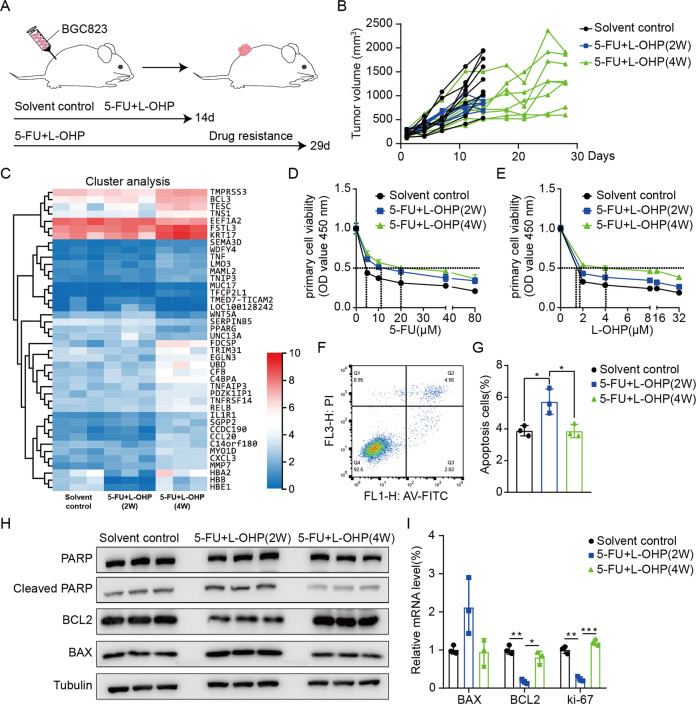
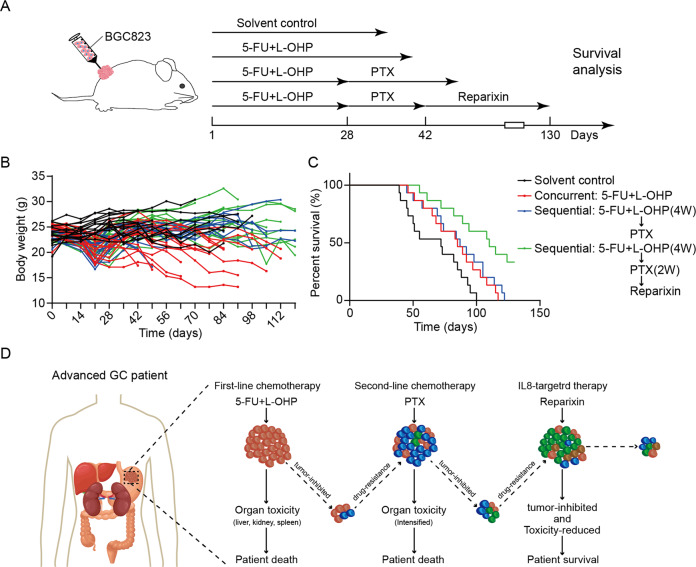
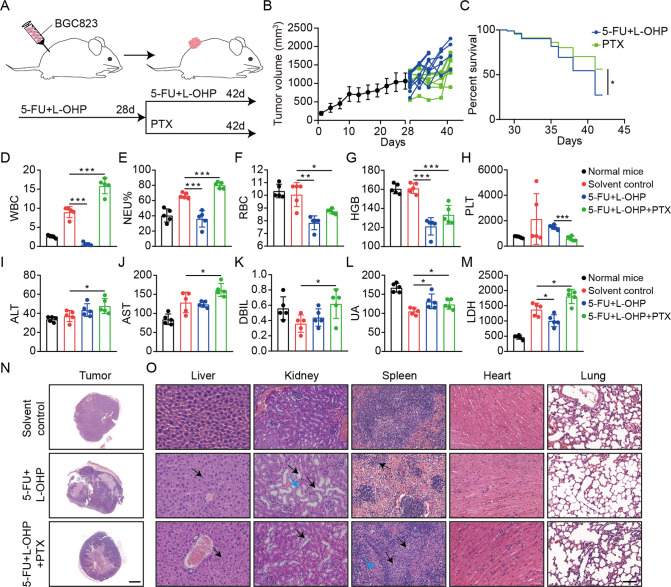
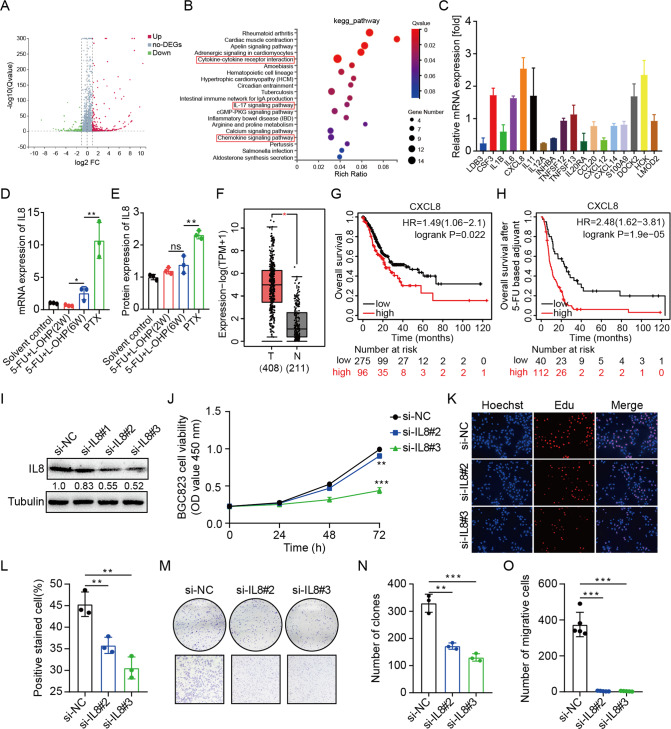
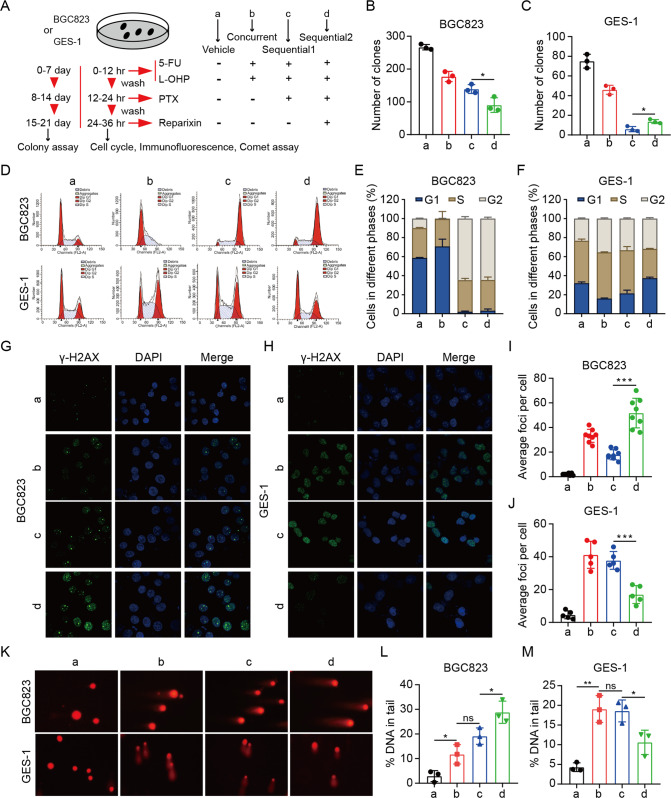
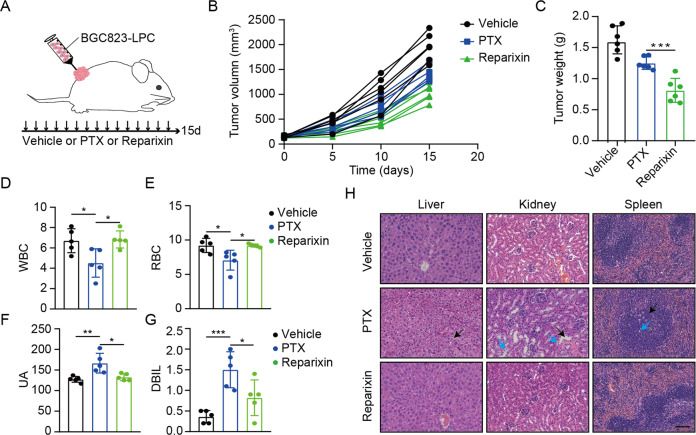
Systemic chemotherapy with multiple drug regimens is the main therapy option for advanced gastric cancer (GC) patients. However, many patients develop relapse soon. Here, we evaluated the therapeutic potential of targeting interleukin-8 (IL8) to overcome resistance to chemotherapy in advanced GC. RNA sequencing revealed crucial molecular changes after chemotherapy resistance, in which the expression of IL8 was significantly activated with the increase in drug resistance. Subsequently, the clinical significance of IL8 expression was determined in GC population specimens. IL8-targeted by RNA interference or reparixin reversed chemotherapy resistance with limited toxicity in vivo and vitro experiments. Sequential treatment with first-line, second-line chemotherapy and reparixin inhibited GC growth, reduced toxicity and prolonged survival. Collectively, our study provides a therapeutic strategy that targeting IL8 as a sequential therapy after chemotherapy resistance in advanced GC.
采用多种药物方案的全身化疗是晚期胃癌(GC)患者的主要治疗选择。然而,许多患者很快就会复发。在此,我们评估了靶向白细胞介素-8(IL8)以克服晚期GC化疗耐药性的治疗潜力。RNA测序揭示了化疗耐药后的关键分子变化,其中IL8的表达随着耐药性的增加而显著激活。随后,在GC人群标本中确定了IL8表达的临床意义。在体内和体外实验中,通过RNA干扰或瑞帕霉素靶向IL8可逆转化疗耐药性,且毒性有限。一线、二线化疗与瑞帕霉素序贯治疗可抑制GC生长、降低毒性并延长生存期。总体而言,我们的研究提供了一种治疗策略,即针对晚期GC化疗耐药后将IL8作为序贯治疗靶点。