Divisions of Child and Adolescent Medicine and Epilepsy, Department of Neurology, Mayo Clinic, Rochester, Minnesota, USA.
Dravet Syndrome Foundation, Cherry Hill, New Jersey, USA.
Epilepsia. 2022 Jul;63(7):1761-1777. doi: 10.1111/epi.17274. Epub 2022 May 12.
This study was undertaken to gain consensus from experienced physicians and caregivers regarding optimal diagnosis and management of Dravet syndrome (DS), in the context of recently approved, DS-specific therapies and emerging disease-modifying treatments.
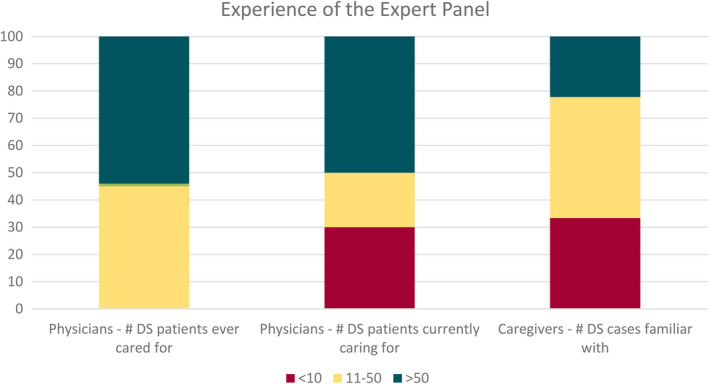
A core working group was convened consisting of six physicians with recognized expertise in DS and two representatives of the Dravet Syndrome Foundation. This core group summarized the current literature (focused on clinical presentation, comorbidities, maintenance and rescue therapies, and evolving disease-modifying therapies) and nominated the 31-member expert panel (ensuring international representation), which participated in two rounds of a Delphi process to gain consensus on diagnosis and management of DS.
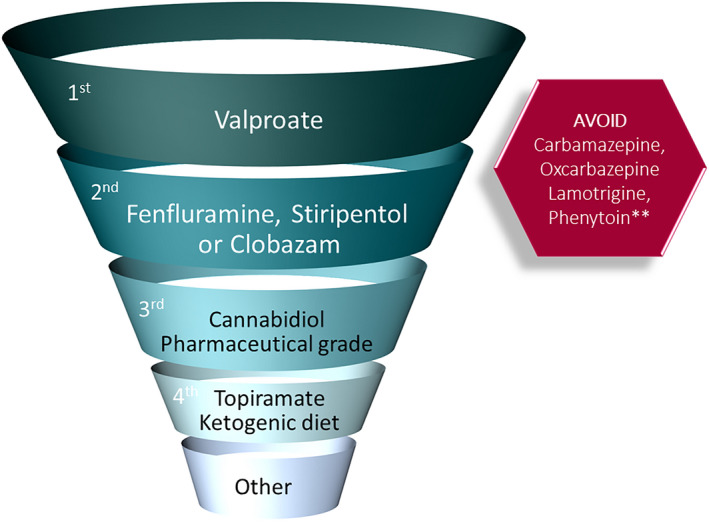
There was strong consensus that infants 2-15 months old, presenting with either a first prolonged hemiclonic seizure or first convulsive status epilepticus with fever or following vaccination, in the absence of another cause, should undergo genetic testing for DS. Panelists agreed on evolution of specific comorbidities with time, but less agreement was achieved on optimal management. There was also agreement on appropriate first- to third-line maintenance therapies, which included the newly approved agents. Whereas there was agreement for recommendation of disease-modifying therapies, if they are proven safe and efficacious for seizures and/or reduction of comorbidities, there was less consensus for when these should be started, with caregivers being more conservative than physicians.
This International DS Consensus, informed by both experienced global caregiver and physician voices, provides a strong overview of the impact of DS, therapeutic goals and optimal management strategies incorporating the recent therapeutic advances in DS, and evolving disease-modifying therapies.
本研究旨在就 Dravet 综合征(DS)的最佳诊断和管理达成共识,所依据的是最近批准的 DS 特异性治疗方法和新兴的疾病修饰治疗方法,并参考了经验丰富的医生和护理人员的意见。
成立了一个由 6 名在 DS 方面具有公认专业知识的医生和 2 名 Dravet 综合征基金会代表组成的核心工作组。该核心小组总结了当前的文献(重点关注临床表现、合并症、维持和抢救治疗以及不断发展的疾病修饰治疗),并提名了 31 名专家组成员(确保国际代表性),他们参与了两轮 Delphi 流程,就 DS 的诊断和管理达成共识。
专家组强烈认为,2-15 个月大的婴儿,如果出现以下情况之一,应进行 DS 的基因检测:首次出现长时间的单侧惊厥发作或伴有发热或疫苗接种后的首次惊厥性癫痫持续状态,且无其他原因。专家组一致认为,随着时间的推移,特定合并症会发生演变,但在最佳管理方面的意见不太一致。对于一线至三线维持治疗的选择,专家组也达成了一致,包括新批准的药物。专家组一致认为,如果疾病修饰疗法在安全性和疗效方面被证明对癫痫发作和/或减少合并症有效,应推荐使用,但对于何时开始使用,护理人员比医生更为保守。
本国际 DS 共识由经验丰富的全球护理人员和医生共同参与制定,提供了对 DS 的影响、治疗目标和最佳管理策略的全面概述,其中包括 DS 的最新治疗进展和新兴的疾病修饰治疗方法。