Yadav Jayanthi, Goel Garima, Purwar Shashank, Saigal Saurabh, Tandon Ashwani, Joshi Ankur, Patel Brinda, Js Sravan, S Mahaluxmi, Singh Jitendra, Shankar Prem, Arora Arneet, Singh Sarman
Forensic Medicine, All India Institute of Medical Sciences, Bhopal, Bhopal, IND.
Pathology, All India Institute of Medical Sciences, Bhopal, Bhopal, IND.
Cureus. 2022 Mar 27;14(3):e23538. doi: 10.7759/cureus.23538. eCollection 2022 Mar.
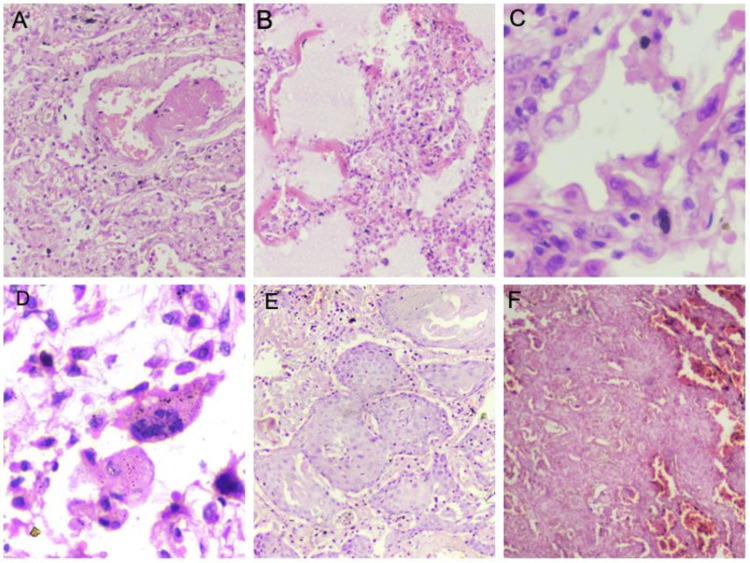
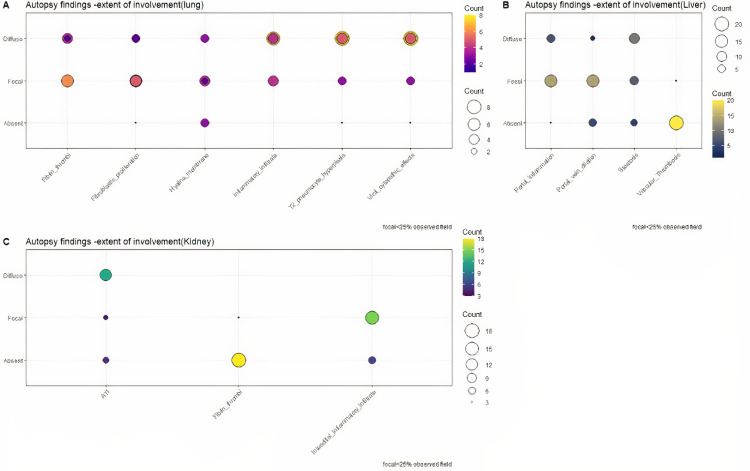
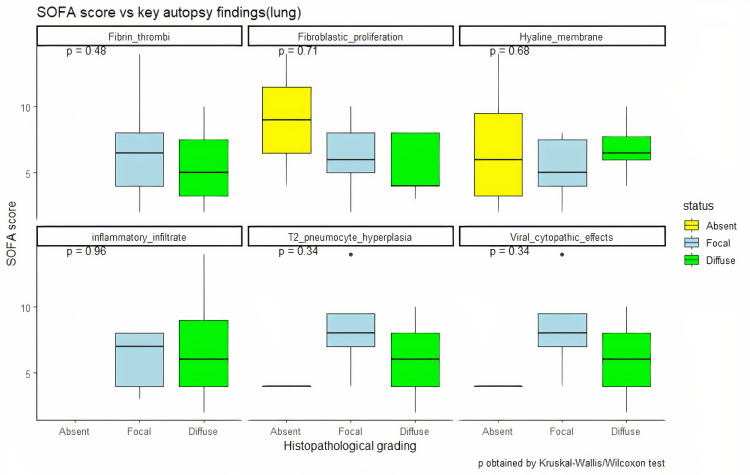
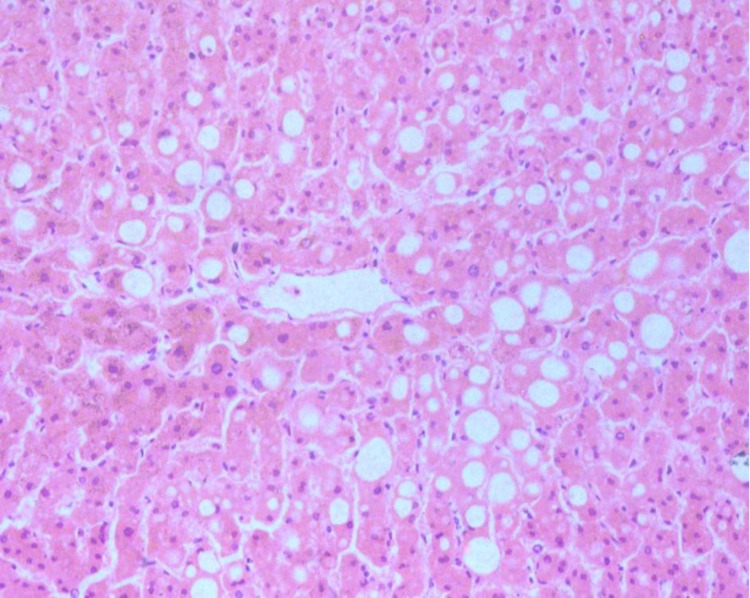
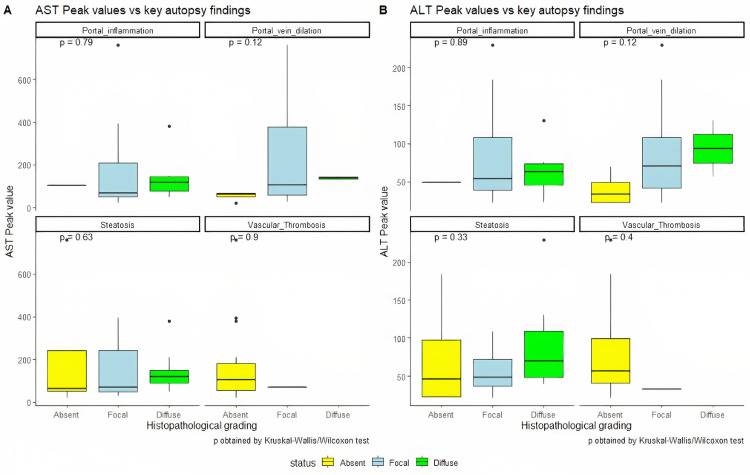
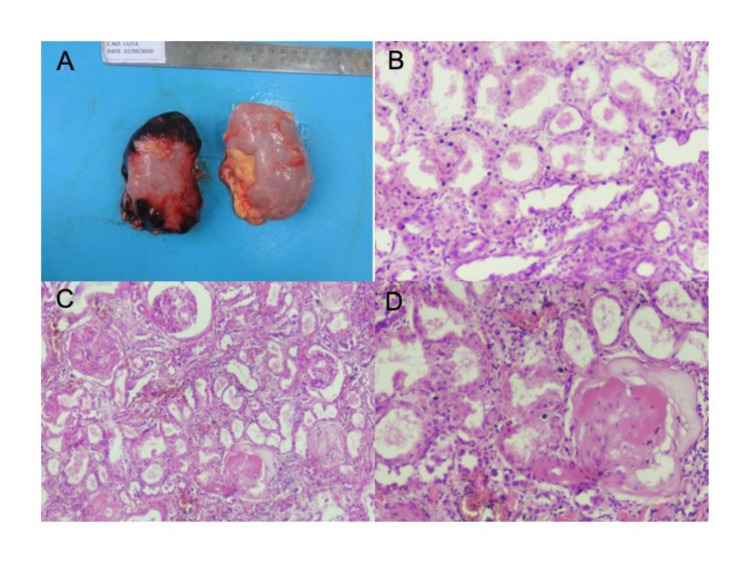
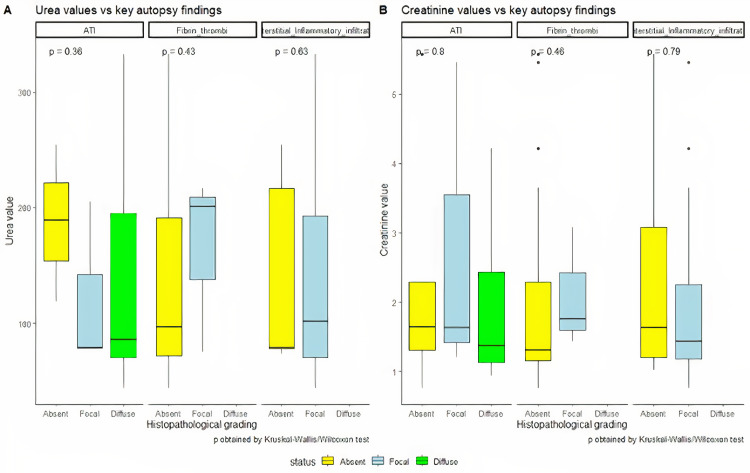
Background and objective Ever since its emergence in December 2019, coronavirus disease 2019 (COVID-19) has affected more than 220 million people worldwide, resulting in more than 45 million deaths. The present autopsy-based study was undertaken to understand the pathophysiology of the disease and correlate the histopathological and virological findings with the antemortem clinical and biochemical determinants. Methods In this prospective observational study, autopsies were carried out on 21 reverse transcription-polymerase chain reaction (RT-PCR)-proven COVID-19 patients who had died of the disease. The histopathological findings of tissue samples from lungs, liver, and kidneys collected during the autopsy were graded based on their presence or absence; if present, they were graded as either focal or diffuse. The findings were correlated with antemortem clinical and biochemical findings. Postmortem tissue RT-PCR analysis was conducted, and findings were compared with postmortem histopathological findings. Results There was multisystem involvement with the COVID-19 cases. The involvement of lungs was observed in most of the cases (90.4%). The presence of viral RNA was observed in all the organs including the liver (57.1%) and kidney (66.6%). An association was observed between antemortem biochemical parameters [aspartate aminotransferase (AST), alanine aminotransferase (ALT)] and the histopathological features in the liver. No correlation between the Sequential Organ Failure Assessment (SOFA) score recorded clinically and lung histopathology was observed; nor was there any correlation between blood urea-creatinine levels and kidney histopathology. Conclusions Our study shows that COVID-19 is a multisystemic disease and the mortality associated with it is likely to be multifactorial. Despite the presence of amplifiable severe acute respiratory syndrome coronavirus 2 (SARS-CoV-2) in various organs, no association could be established between the clinical and histopathology findings. Neither the duration of hospitalization nor the duration of mechanical ventilation showed any correlation with the severity of histopathological findings in the lungs at autopsy.
背景与目的 自2019年12月新型冠状病毒病(COVID-19)出现以来,已影响全球超过2.2亿人,导致超过4500万人死亡。本基于尸检的研究旨在了解该疾病的病理生理学,并将组织病理学和病毒学发现与生前临床及生化指标相关联。方法 在这项前瞻性观察性研究中,对21例经逆转录聚合酶链反应(RT-PCR)证实死于COVID-19的患者进行了尸检。对尸检期间采集的肺、肝和肾组织样本的组织病理学发现根据其有无进行分级;若有,则分为局灶性或弥漫性。将这些发现与生前临床及生化发现相关联。进行了死后组织RT-PCR分析,并将结果与死后组织病理学发现进行比较。结果 COVID-19病例存在多系统受累。大多数病例(90.4%)观察到肺部受累。在包括肝脏(57.1%)和肾脏(66.6%)在内的所有器官中均观察到病毒RNA的存在。观察到生前生化参数[天冬氨酸氨基转移酶(AST)、丙氨酸氨基转移酶(ALT)]与肝脏组织病理学特征之间存在关联。未观察到临床记录的序贯器官衰竭评估(SOFA)评分与肺组织病理学之间存在相关性;血尿素肌酐水平与肾脏组织病理学之间也无相关性。结论 我们的研究表明,COVID-19是一种多系统性疾病,与之相关的死亡率可能是多因素的。尽管在各个器官中存在可扩增的严重急性呼吸综合征冠状病毒2(SARS-CoV-2),但临床和组织病理学发现之间未建立关联。住院时间和机械通气时间均与尸检时肺部组织病理学发现的严重程度无任何相关性。