Wu Meiyu, Qin Shuxia, Wang Liting, Tan Chongqing, Peng Ye, Zeng Xiaohui, Luo Xia, Yi Lidan, Wan Xiaomin
Department of Pharmacy, The Second Xiangya Hospital, Central South University, Changsha, China.
Institute of Clinical Pharmacy, Central South University, Changsha, China.
Front Pharmacol. 2022 Apr 14;13:860109. doi: 10.3389/fphar.2022.860109. eCollection 2022.
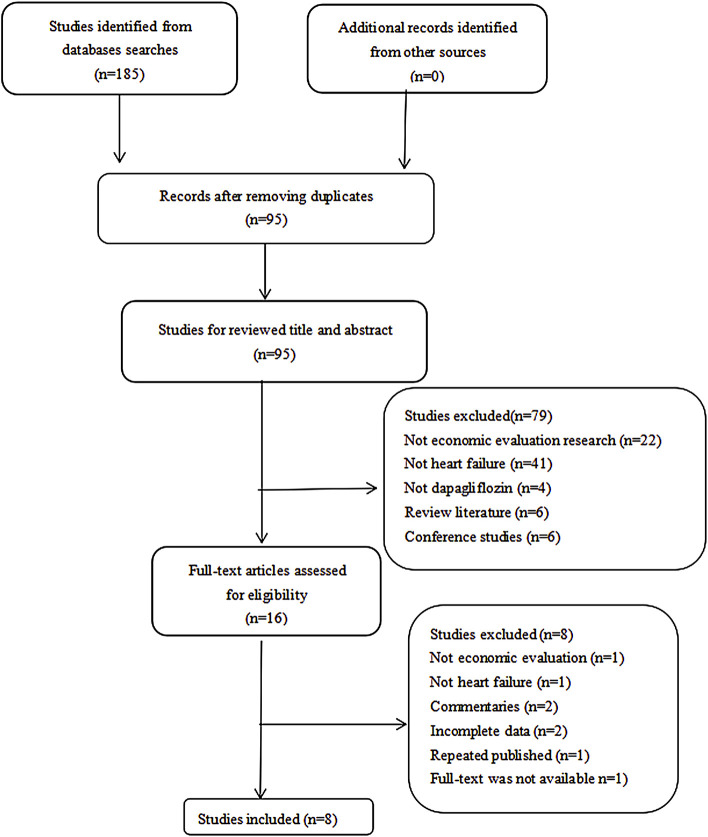
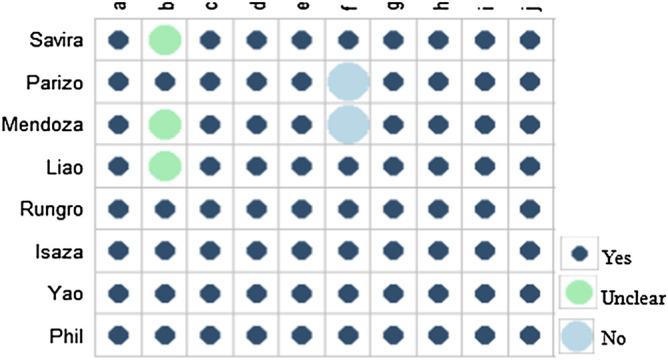
The objective of this study is to systematically review the economic evaluations of dapagliflozin in the treatment of patients with heart failure (HF) and describe their general and methodological features. This systematic review followed the PRISMA guidelines. MEDLINE/PubMed, Website Of Science, Embase, The Cochrane Library, ScienceDirect, CNKI, and Wanfang databases were searched to collect relevant studies, and the retrieval time ended on 31 October 2021. Articles on the economic evaluation of dapagliflozin in the treatment of heart failure were included. Secondary studies, incomplete economic indicators, and non-English-language and non-Chinese-language studies were excluded. Standard drug treatment was selected as the comparison. Basic characteristics, methods, and main results were extracted and analyzed systematically. A total of eight studies were identified, and the overall quality was accepted, which were performed in nine developed countries (Austria, United States, Korea, Japan, Singapore, Spanish, Germany, and United Kingdom) and three developing countries (the Philippines, Thailand, and China). With the exception of the Philippines, the remaining countries considered that dapagliflozin was cost effective. In the analyses of all included studies, the incremental cost-effectiveness ratios were most sensitive to the cost of dapagliflozin, cardiovascular mortality, the duration of dapagliflozin effectiveness, and the probability of HF hospitalization. Dapagliflozin in the treatment of patients with heart failure with reduced ejection fraction was considered cost effective. Further studies are needed to evaluate the comprehensive value of dapagliflozin on HF.
本研究的目的是系统评价达格列净治疗心力衰竭(HF)患者的经济学评价,并描述其一般特征和方法学特征。本系统评价遵循PRISMA指南。检索MEDLINE/PubMed、科学网、Embase、考克兰图书馆、ScienceDirect、中国知网和万方数据库以收集相关研究,检索时间截至2021年10月31日。纳入关于达格列净治疗心力衰竭的经济学评价的文章。排除二次研究、不完整的经济指标以及非英文和非中文研究。选择标准药物治疗作为对照。系统提取并分析基本特征、方法和主要结果。共纳入八项研究,总体质量可接受,这些研究在九个发达国家(奥地利、美国、韩国、日本、新加坡、西班牙、德国和英国)和三个发展中国家(菲律宾、泰国和中国)开展。除菲律宾外,其余国家均认为达格列净具有成本效益。在所有纳入研究的分析中,增量成本-效果比最敏感于达格列净成本、心血管死亡率、达格列净有效性持续时间以及心力衰竭住院概率。达格列净治疗射血分数降低的心力衰竭患者被认为具有成本效益。需要进一步研究以评估达格列净对心力衰竭的综合价值。