Department of Endocrinology, Zhongda Hospital, School of Medicine, Southeast University, Nanjing, China.
Key Laboratory of Environmental Medicine Engineering, Ministry of Education, School of Public Health, Southeast University, Nanjing, China.
Front Endocrinol (Lausanne). 2022 Apr 14;13:839865. doi: 10.3389/fendo.2022.839865. eCollection 2022.
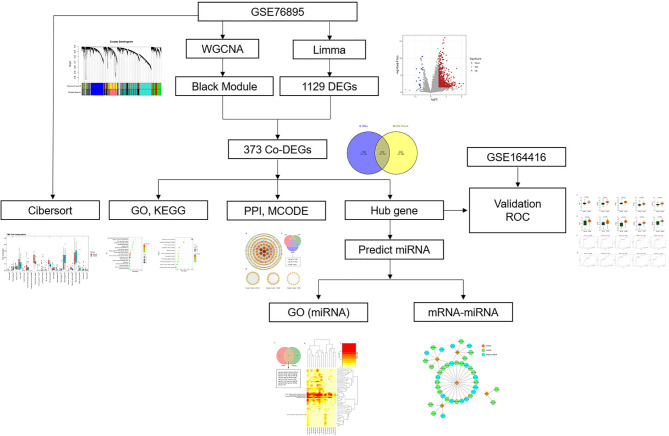
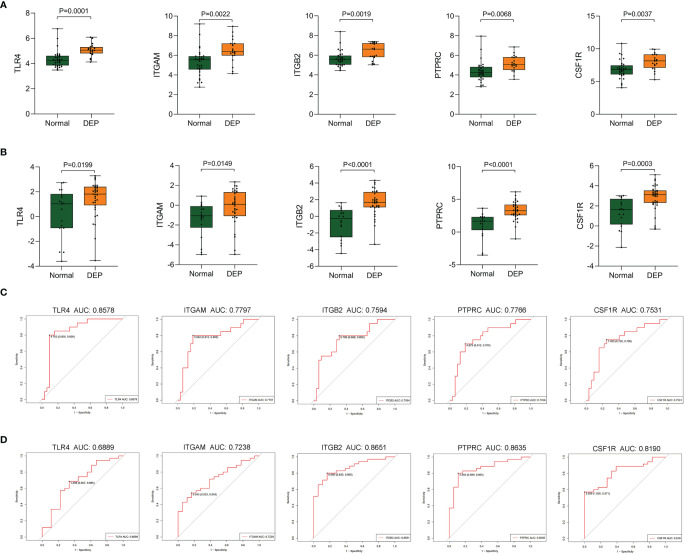
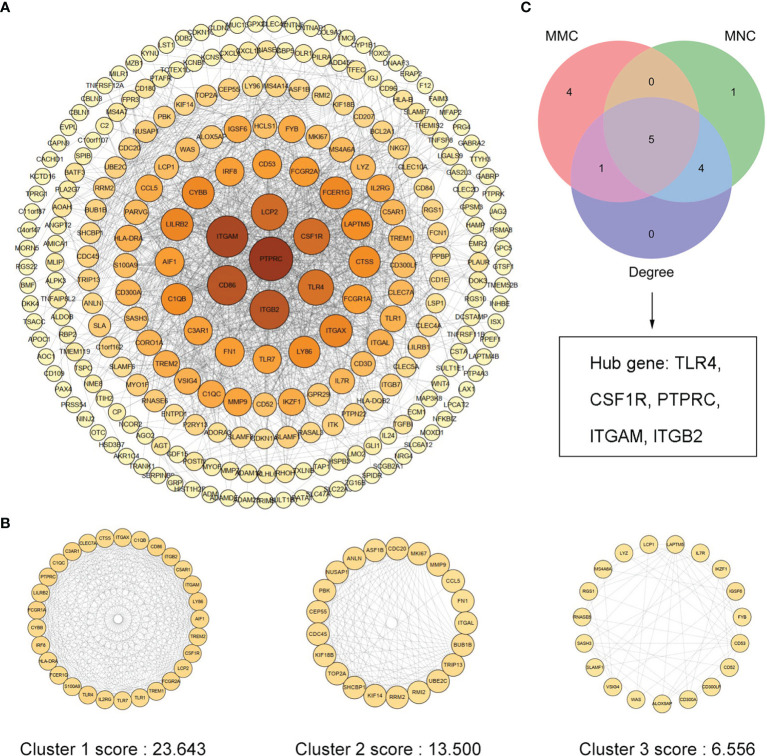
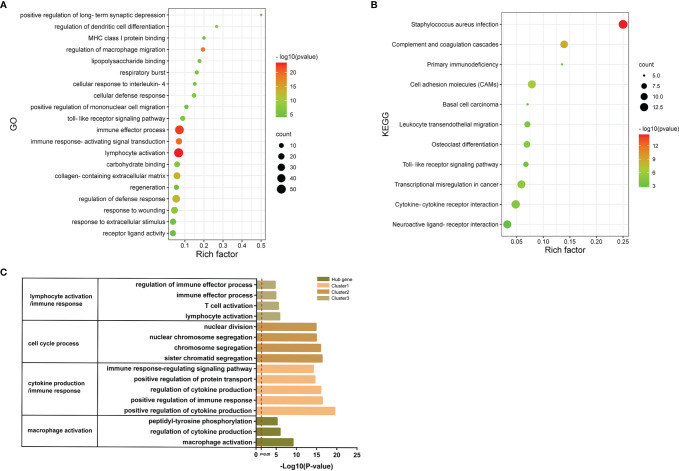
Diabetes of the exocrine pancreas (DEP), also commonly described as pancreatogenic diabetes mellitus, is a type of diabetes secondary to abnormalities in pancreatic or exocrine secretion of the pancreas. However, its pathogenesis is not yet known. The aim of this article was to explore the biomarkers of DEP and their potential molecular mechanisms. Based on GSE76896 dataset, which was acquired from Gene Expression Omnibus (GEO), we identified 373 genes by weighted gene co-expression network analysis (WGCNA) and differential expression analysis. In addition, protein-protein interaction (PPI) network analysis and cytoHubba were used to screen potential hub genes. Five hub genes were determined, comprising Toll-like receptor 4 (TLR4), ITGAM, ITGB2, PTPRC, and CSF1R. Gene Ontology (GO) analysis and Kyoto Encyclopedia of Genes and Genomes (KEGG) pathways suggested macrophage activation and Toll-like receptor signaling pathway as important pathophysiological features of DEP. CIBERSORT suggested that TLR4 may regulate the immune pathway via macrophages. Next, we validated the expression and receiver operating characteristic curve (ROC) of the hub genes using the GSE164416 dataset. In addition, we used miRNet to predict the target miRNAs of hub genes and intersected them with common miRNAs in diabetes from the Human MicroRNA Disease Database (HMDD), which was used to propose a possible mechanistic model for DEP. The miRNA-mRNA network showed that has-miR-155-5p/has-miR-27a-3p/has-miR-21-5p-TLR4 might lead to TLR4 signaling pathway activation in DEP. In conclusion, we identified five hub genes, namely, TLR4, ITGAM, ITGB2, PTPRC, and CSF1R, as biomarkers to aid in the diagnosis of DEP and conducted an in-depth study of the pathogenesis of DEP at the genetic level.
外分泌胰腺糖尿病(DEP),也常描述为胰源性糖尿病,是一种继发于胰腺或外分泌胰腺分泌异常的糖尿病。然而,其发病机制尚不清楚。本文旨在探讨 DEP 的生物标志物及其潜在的分子机制。基于从基因表达综合数据库(GEO)中获取的 GSE76896 数据集,我们通过加权基因共表达网络分析(WGCNA)和差异表达分析鉴定了 373 个基因。此外,还使用蛋白质-蛋白质相互作用(PPI)网络分析和 cytoHubba 筛选潜在的枢纽基因。确定了五个枢纽基因,包括 Toll 样受体 4(TLR4)、ITGAM、ITGB2、PTPRC 和 CSF1R。基因本体论(GO)分析和京都基因与基因组百科全书(KEGG)通路表明,巨噬细胞激活和 Toll 样受体信号通路是 DEP 的重要病理生理特征。CIBERSORT 表明 TLR4 可能通过巨噬细胞调节免疫途径。接下来,我们使用 GSE164416 数据集验证了枢纽基因的表达和受试者工作特征曲线(ROC)。此外,我们使用 miRNet 预测了枢纽基因的靶 miRNAs,并与来自人类 miRNA 疾病数据库(HMDD)的糖尿病常见 miRNAs 进行了交集,以提出 DEP 的可能机制模型。miRNA-mRNA 网络表明,has-miR-155-5p/has-miR-27a-3p/has-miR-21-5p-TLR4 可能导致 TLR4 信号通路在 DEP 中激活。总之,我们确定了五个枢纽基因,即 TLR4、ITGAM、ITGB2、PTPRC 和 CSF1R,作为辅助诊断 DEP 的生物标志物,并在遗传水平上深入研究了 DEP 的发病机制。