• 文献检索
  • 文档翻译
  • 深度研究
  • 学术资讯
  • Suppr Zotero 插件Zotero 插件
  • 邀请有礼
  • 套餐&价格
  • 历史记录
应用&插件
Suppr Zotero 插件Zotero 插件浏览器插件Mac 客户端Windows 客户端微信小程序
定价
高级版会员购买积分包购买API积分包
服务
文献检索文档翻译深度研究API 文档MCP 服务
关于我们
关于 Suppr公司介绍联系我们用户协议隐私条款
关注我们

Suppr 超能文献

核心技术专利:CN118964589B侵权必究
粤ICP备2023148730 号-1Suppr @ 2026

文献检索

告别复杂PubMed语法,用中文像聊天一样搜索,搜遍4000万医学文献。AI智能推荐,让科研检索更轻松。

立即免费搜索

文件翻译

保留排版,准确专业,支持PDF/Word/PPT等文件格式,支持 12+语言互译。

免费翻译文档

深度研究

AI帮你快速写综述,25分钟生成高质量综述,智能提取关键信息,辅助科研写作。

立即免费体验

GIPR 激动剂抑制 PYY 诱导的恶心样行为。

GIPR Agonism Inhibits PYY-Induced Nausea-Like Behavior.

机构信息

Lilly Research Laboratories, Lilly Corporate Center, Indianapolis, IN.

Department of Psychiatry, Perelman School of Medicine, University of Pennsylvania, Philadelphia, PA.

出版信息

Diabetes. 2022 Jul 1;71(7):1410-1423. doi: 10.2337/db21-0848.

DOI:10.2337/db21-0848
PMID:35499381
原文链接:https://pmc.ncbi.nlm.nih.gov/articles/PMC9233244/
Abstract

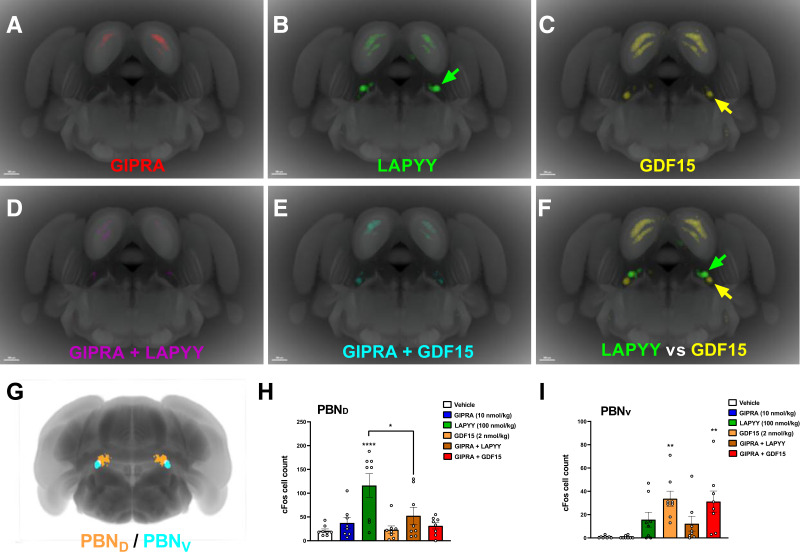
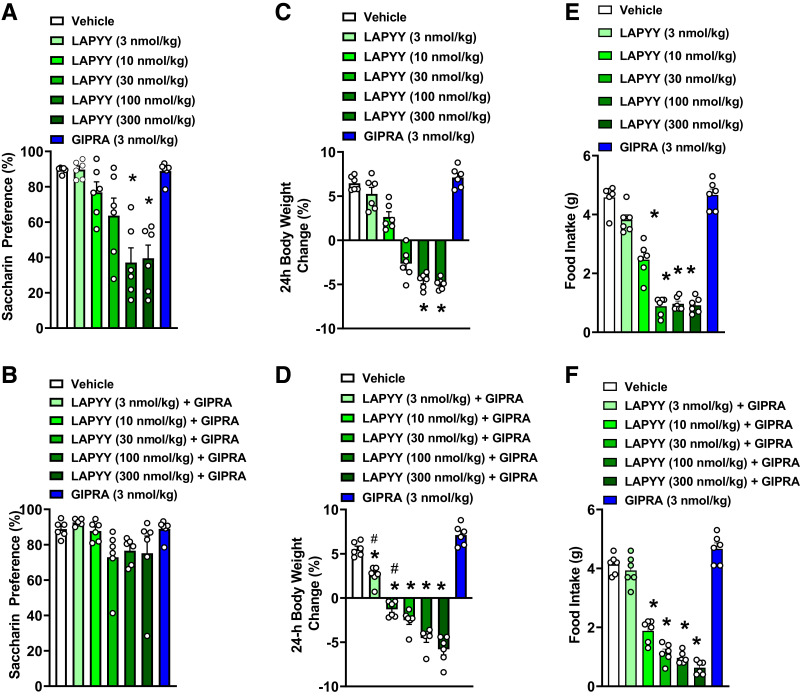
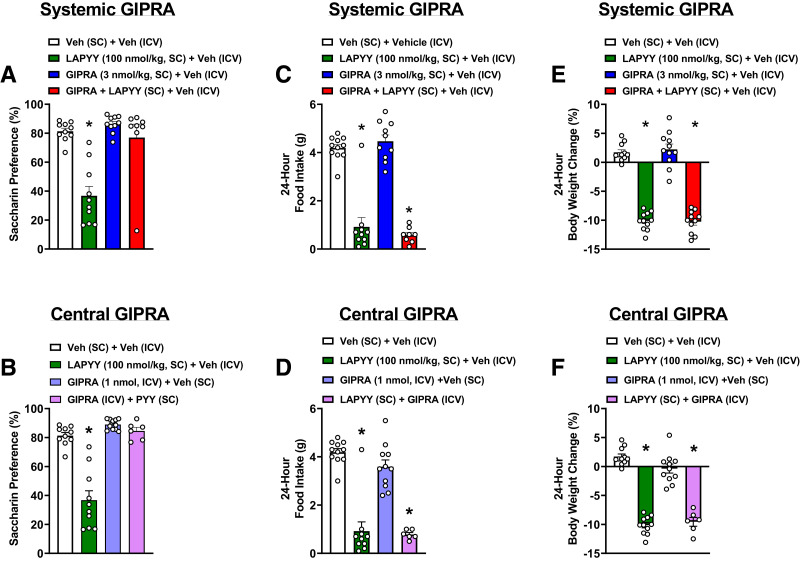
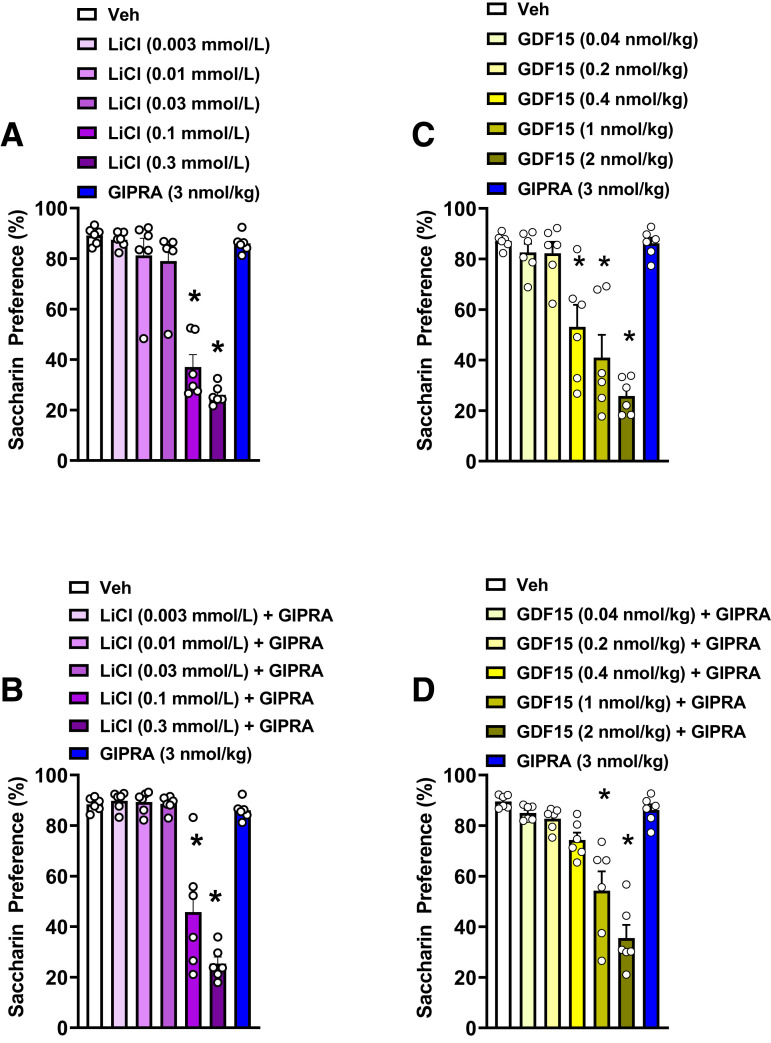
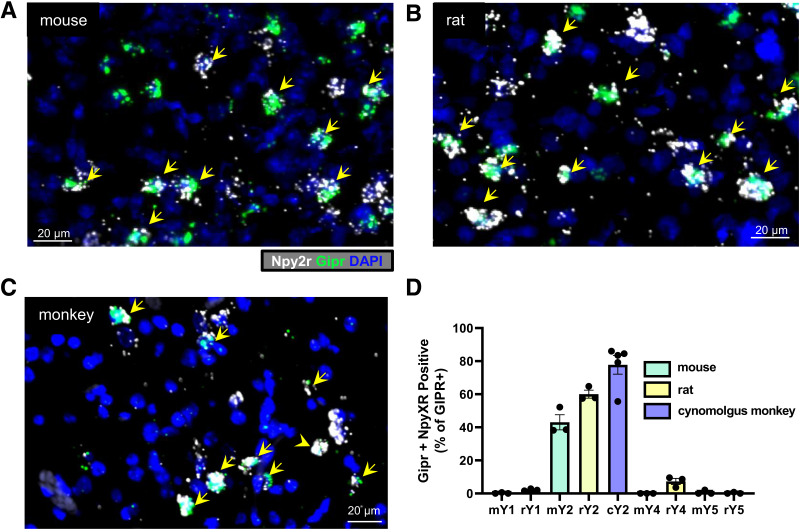
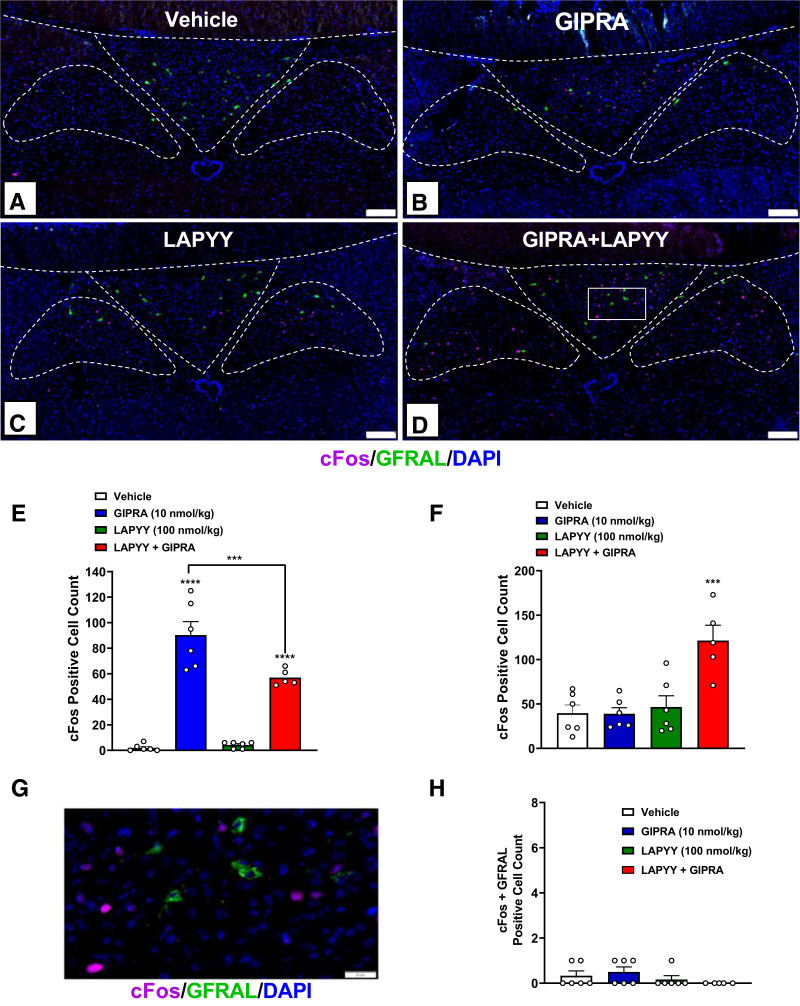
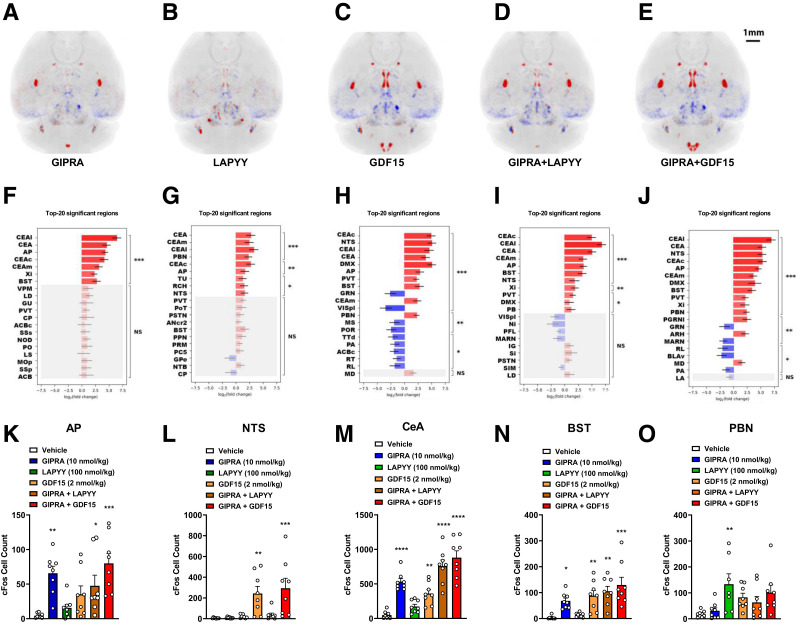
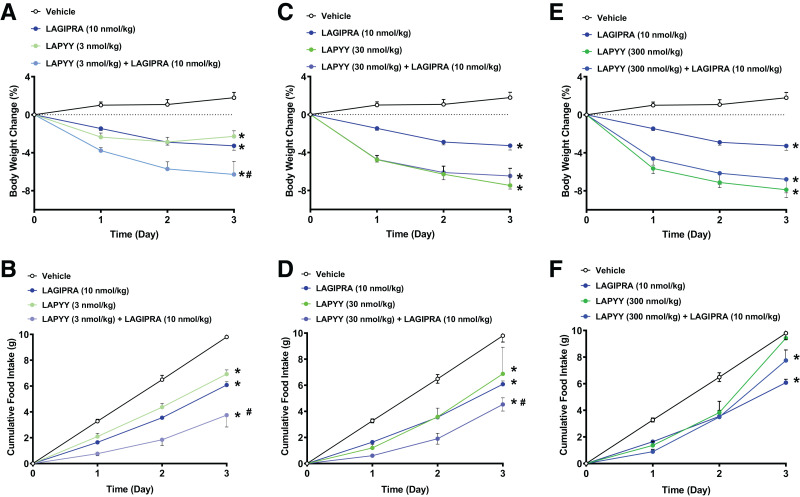
The induction of nausea and emesis is a major barrier to maximizing the weight loss profile of obesity medications, and therefore, identifying mechanisms that improve tolerability could result in added therapeutic benefit. The development of peptide YY (PYY)-based approaches to treat obesity are no exception, as PYY receptor agonism is often accompanied by nausea and vomiting. Here, we sought to determine whether glucose-dependent insulinotropic polypeptide (GIP) receptor (GIPR) agonism reduces PYY-induced nausea-like behavior in mice. We found that central and peripheral administration of a GIPR agonist reduced conditioned taste avoidance (CTA) without affecting hypophagia mediated by a PYY analog. The receptors for GIP and PYY (Gipr and Npy2r) were found to be expressed by the same neurons in the area postrema (AP), a brainstem nucleus involved in detecting aversive stimuli. Peripheral administration of a GIPR agonist induced neuronal activation (cFos) in the AP. Further, whole-brain cFos analyses indicated that PYY-induced CTA was associated with augmented neuronal activity in the parabrachial nucleus (PBN), a brainstem nucleus that relays aversive/emetic signals to brain regions that control feeding behavior. Importantly, GIPR agonism reduced PYY-mediated neuronal activity in the PBN, providing a potential mechanistic explanation for how GIPR agonist treatment reduces PYY-induced nausea-like behavior. Together, the results of our study indicate a novel mechanism by which GIP-based therapeutics may have benefit in improving the tolerability of weight loss agents.

摘要

诱导恶心和呕吐是最大限度发挥肥胖药物减肥效果的主要障碍,因此,确定改善耐受性的机制可能会带来额外的治疗益处。以肽 YY (PYY)为基础的治疗肥胖症的方法的发展也不例外,因为 PYY 受体激动剂常伴有恶心和呕吐。在这里,我们试图确定葡萄糖依赖性胰岛素释放肽 (GIP)受体 (GIPR)激动剂是否能减少小鼠 PYY 引起的类恶心行为。我们发现,GIPR 激动剂的中枢和外周给药可减少条件性味觉回避 (CTA),而不影响 PYY 类似物介导的食欲减退。发现 GIP 和 PYY(Gipr 和 Npy2r)的受体在参与检测厌恶性刺激的脑干核后区 (AP) 中由相同的神经元表达。GIPR 激动剂的外周给药诱导 AP 中的神经元激活(cFos)。此外,全脑 cFos 分析表明,PYY 引起的 CTA 与脑桥核 (PBN) 中神经元活性的增强有关,PBN 是将厌恶性/呕吐信号传递给控制进食行为的大脑区域的脑干核。重要的是,GIPR 激动剂减少了 PBN 中 PYY 介导的神经元活性,为 GIPR 激动剂治疗如何减少 PYY 引起的类恶心行为提供了潜在的机制解释。总之,我们的研究结果表明,基于 GIP 的治疗方法可能通过一种新的机制改善减肥药物的耐受性。
https://cdn.ncbi.nlm.nih.gov/pmc/blobs/d48a/9233244/85732e37a080/db210848f8.jpg
https://cdn.ncbi.nlm.nih.gov/pmc/blobs/d48a/9233244/68e696eeb4b2/db210848f1.jpg
https://cdn.ncbi.nlm.nih.gov/pmc/blobs/d48a/9233244/c48f2a6bdc4a/db210848f2.jpg
https://cdn.ncbi.nlm.nih.gov/pmc/blobs/d48a/9233244/c79e64ad8a3d/db210848f3.jpg
https://cdn.ncbi.nlm.nih.gov/pmc/blobs/d48a/9233244/a2c7d67f09d3/db210848f4.jpg
https://cdn.ncbi.nlm.nih.gov/pmc/blobs/d48a/9233244/cb5da88a7bf0/db210848f5.jpg
https://cdn.ncbi.nlm.nih.gov/pmc/blobs/d48a/9233244/dbc632e149e4/db210848f6.jpg
https://cdn.ncbi.nlm.nih.gov/pmc/blobs/d48a/9233244/b075d1488639/db210848f7.jpg
https://cdn.ncbi.nlm.nih.gov/pmc/blobs/d48a/9233244/85732e37a080/db210848f8.jpg
https://cdn.ncbi.nlm.nih.gov/pmc/blobs/d48a/9233244/68e696eeb4b2/db210848f1.jpg
https://cdn.ncbi.nlm.nih.gov/pmc/blobs/d48a/9233244/c48f2a6bdc4a/db210848f2.jpg
https://cdn.ncbi.nlm.nih.gov/pmc/blobs/d48a/9233244/c79e64ad8a3d/db210848f3.jpg
https://cdn.ncbi.nlm.nih.gov/pmc/blobs/d48a/9233244/a2c7d67f09d3/db210848f4.jpg
https://cdn.ncbi.nlm.nih.gov/pmc/blobs/d48a/9233244/cb5da88a7bf0/db210848f5.jpg
https://cdn.ncbi.nlm.nih.gov/pmc/blobs/d48a/9233244/dbc632e149e4/db210848f6.jpg
https://cdn.ncbi.nlm.nih.gov/pmc/blobs/d48a/9233244/b075d1488639/db210848f7.jpg
https://cdn.ncbi.nlm.nih.gov/pmc/blobs/d48a/9233244/85732e37a080/db210848f8.jpg

相似文献

1
GIPR Agonism Inhibits PYY-Induced Nausea-Like Behavior.GIPR 激动剂抑制 PYY 诱导的恶心样行为。
Diabetes. 2022 Jul 1;71(7):1410-1423. doi: 10.2337/db21-0848.
2
GIP Receptor Agonism Attenuates GLP-1 Receptor Agonist-Induced Nausea and Emesis in Preclinical Models.GIP 受体激动剂可减轻临床前模型中 GLP-1 受体激动剂引起的恶心和呕吐。
Diabetes. 2021 Nov;70(11):2545-2553. doi: 10.2337/db21-0459. Epub 2021 Aug 11.
3
Hypothalamic and brainstem glucose-dependent insulinotropic polypeptide receptor neurons employ distinct mechanisms to affect feeding.下丘脑和脑干葡萄糖依赖性胰岛素促分泌多肽受体神经元采用不同的机制来影响摄食。
JCI Insight. 2023 May 22;8(10):e164921. doi: 10.1172/jci.insight.164921.
4
Chronic glucose-dependent insulinotropic polypeptide receptor (GIPR) agonism desensitizes adipocyte GIPR activity mimicking functional GIPR antagonism.慢性葡萄糖依赖性胰岛素促分泌多肽受体(GIPR)激动剂作用脱敏可模拟功能性 GIPR 拮抗作用,使脂肪细胞 GIPR 活性降低。
Nat Commun. 2020 Oct 5;11(1):4981. doi: 10.1038/s41467-020-18751-8.
5
The glucose-dependent insulinotropic polypeptide (GIP) regulates body weight and food intake via CNS-GIPR signaling.葡萄糖依赖性胰岛素释放多肽(GIP)通过中枢神经系统-GIPR 信号来调节体重和食物摄入。
Cell Metab. 2021 Apr 6;33(4):833-844.e5. doi: 10.1016/j.cmet.2021.01.015. Epub 2021 Feb 10.
6
GIP receptor agonism blocks chemotherapy-induced nausea and vomiting.GIP 受体激动剂可阻断化疗引起的恶心和呕吐。
Mol Metab. 2023 Jul;73:101743. doi: 10.1016/j.molmet.2023.101743. Epub 2023 May 26.
7
Combined glucose-dependent insulinotropic polypeptide receptor and glucagon-like peptide-1 receptor agonism attenuates atherosclerosis severity in APOE*3-Leiden.CETP mice.联合葡萄糖依赖性胰岛素促分泌多肽受体和胰高血糖素样肽-1 受体激动剂可减轻 APOE*3-Leiden.CETP 小鼠的动脉粥样硬化严重程度。
Atherosclerosis. 2023 May;372:19-31. doi: 10.1016/j.atherosclerosis.2023.03.016. Epub 2023 Mar 28.
8
Targeting the GIPR for obesity: To agonize or antagonize? Potential mechanisms.针对肥胖的 GIPR 靶点:激动还是拮抗?潜在机制。
Mol Metab. 2021 Apr;46:101139. doi: 10.1016/j.molmet.2020.101139. Epub 2020 Dec 5.
9
Comparison of the metabolic effects of GIP receptor antagonism and PYY(3-36) receptor activation in high fat fed mice.高脂喂养小鼠中GIP受体拮抗与PYY(3-36)受体激活的代谢效应比较。
Peptides. 2007 Nov;28(11):2192-8. doi: 10.1016/j.peptides.2007.08.008. Epub 2007 Aug 19.
10
Glucose-Dependent Insulinotropic Polypeptide Receptor-Expressing Cells in the Hypothalamus Regulate Food Intake.下丘脑的葡萄糖依赖性胰岛素促分泌多肽受体表达细胞调节摄食。
Cell Metab. 2019 Nov 5;30(5):987-996.e6. doi: 10.1016/j.cmet.2019.07.013. Epub 2019 Aug 22.

引用本文的文献

1
GIP receptor agonism suppresses inflammation-induced aversion and food intake via distinct circuits.胃抑制多肽(GIP)受体激动作用通过不同的神经回路抑制炎症诱导的厌恶和食物摄入。
bioRxiv. 2025 Aug 15:2025.08.12.669936. doi: 10.1101/2025.08.12.669936.
2
Refractory Nausea and Vomiting Due to Central Nervous System Injury: A Focused Review.中枢神经系统损伤所致难治性恶心和呕吐:聚焦综述
Life (Basel). 2025 Jun 27;15(7):1021. doi: 10.3390/life15071021.
3
Evolving incretin-based therapies in Japan: optimizing treatment strategies for diverse clinical and socioeconomical profiles in type 2 diabetes.

本文引用的文献

1
Anorectic and aversive effects of GLP-1 receptor agonism are mediated by brainstem cholecystokinin neurons, and modulated by GIP receptor activation.GLP-1 受体激动剂的厌食和厌恶作用是由脑干胆囊收缩素神经元介导的,并受 GIP 受体激活的调节。
Mol Metab. 2022 Jan;55:101407. doi: 10.1016/j.molmet.2021.101407. Epub 2021 Nov 26.
2
GIP Receptor Agonism Attenuates GLP-1 Receptor Agonist-Induced Nausea and Emesis in Preclinical Models.GIP 受体激动剂可减轻临床前模型中 GLP-1 受体激动剂引起的恶心和呕吐。
Diabetes. 2021 Nov;70(11):2545-2553. doi: 10.2337/db21-0459. Epub 2021 Aug 11.
3
GIPR Function in the Central Nervous System: Implications and Novel Perspectives for GIP-Based Therapies in Treating Metabolic Disorders.
日本基于肠促胰岛素疗法的发展:针对2型糖尿病不同临床和社会经济状况优化治疗策略
Diabetol Int. 2025 May 15;16(3):457-468. doi: 10.1007/s13340-025-00818-w. eCollection 2025 Jul.
4
A Contemporary Rationale for Agonism of the GIP Receptor in the Treatment of Obesity.GIP受体激动剂治疗肥胖症的当代理论依据
Diabetes. 2025 Aug 1;74(8):1326-1333. doi: 10.2337/dbi24-0026.
5
Therapeutic Targeting of the GIP Receptor-Revisiting the Controversies.GIP受体的治疗靶向——重新审视争议
Diabetes. 2025 Aug 1;74(8):1320-1325. doi: 10.2337/db25-0393.
6
The Premise of the Paradox: Examining the Evidence That Motivated GIPR Agonist and Antagonist Drug Development Programs.悖论的前提:审视推动GIPR激动剂和拮抗剂药物研发项目的证据。
J Clin Med. 2025 May 29;14(11):3812. doi: 10.3390/jcm14113812.
7
GIPR-Ab/GLP-1 peptide-antibody conjugate requires brain GIPR and GLP-1R for additive weight loss in obese mice.GIPR抗体/GLP-1肽-抗体偶联物在肥胖小鼠中实现额外体重减轻需要脑GIPR和GLP-1R。
Nat Metab. 2025 Apr 29. doi: 10.1038/s42255-025-01295-w.
8
Investigating Mechanically Activated Currents from Trigeminal Neurons of Nonhuman Primates.研究非人灵长类动物三叉神经神经元的机械激活电流。
eNeuro. 2025 May 12;12(5). doi: 10.1523/ENEURO.0054-25.2025. Print 2025 May.
9
The role of GIPR in food intake control.胃抑制多肽受体(GIPR)在食物摄入控制中的作用。
Front Endocrinol (Lausanne). 2025 Mar 17;16:1532076. doi: 10.3389/fendo.2025.1532076. eCollection 2025.
10
Glucose-dependent insulinotropic polypeptide (GIP).葡萄糖依赖性促胰岛素多肽(GIP)。
Mol Metab. 2025 May;95:102118. doi: 10.1016/j.molmet.2025.102118. Epub 2025 Feb 28.
GIPR 在中枢神经系统中的功能:基于 GIP 的治疗代谢紊乱疗法的意义和新视角。
Diabetes. 2021 Sep;70(9):1938-1944. doi: 10.2337/dbi21-0002. Epub 2021 Jun 27.
4
The Role of GIP in the Regulation of GLP-1 Satiety and Nausea.GIP 在调控 GLP-1 饱腹感和恶心方面的作用。
Diabetes. 2021 Sep;70(9):1956-1961. doi: 10.2337/dbi21-0004. Epub 2021 Jun 27.
5
The glucose-dependent insulinotropic polypeptide (GIP) regulates body weight and food intake via CNS-GIPR signaling.葡萄糖依赖性胰岛素释放多肽(GIP)通过中枢神经系统-GIPR 信号来调节体重和食物摄入。
Cell Metab. 2021 Apr 6;33(4):833-844.e5. doi: 10.1016/j.cmet.2021.01.015. Epub 2021 Feb 10.
6
Area Postrema Cell Types that Mediate Nausea-Associated Behaviors.后极室细胞类型介导恶心相关行为。
Neuron. 2021 Feb 3;109(3):461-472.e5. doi: 10.1016/j.neuron.2020.11.010. Epub 2020 Dec 4.
7
An Optimized Mouse Brain Atlas for Automated Mapping and Quantification of Neuronal Activity Using iDISCO+ and Light Sheet Fluorescence Microscopy.利用 iDISCO+ 和光片荧光显微镜对神经元活动进行自动绘制和定量分析的优化小鼠脑图谱
Neuroinformatics. 2021 Jul;19(3):433-446. doi: 10.1007/s12021-020-09490-8.
8
The cytokine GDF15 signals through a population of brainstem cholecystokinin neurons to mediate anorectic signalling.细胞因子 GDF15 通过一群脑干胆囊收缩素神经元传递信号,从而介导厌食信号。
Elife. 2020 Jul 29;9:e55164. doi: 10.7554/eLife.55164.
9
How May GIP Enhance the Therapeutic Efficacy of GLP-1?GIP 如何增强 GLP-1 的治疗效果?
Trends Endocrinol Metab. 2020 Jun;31(6):410-421. doi: 10.1016/j.tem.2020.02.006. Epub 2020 Mar 16.
10
Drug Therapy in Obesity: A Review of Current and Emerging Treatments.肥胖症的药物治疗:当前及新兴治疗方法综述
Diabetes Ther. 2020 Jun;11(6):1199-1216. doi: 10.1007/s13300-020-00816-y. Epub 2020 Apr 15.