State Key Laboratory of Proteomics, Institute of Basic Medical Sciences, National Center of Biomedical Analysis, 100850, Beijing, China.
Department of Radiation Oncology, 5th Medical Center of Chinese PLA General Hospital, 100853, Beijing, China.
Br J Cancer. 2022 Sep;127(4):612-623. doi: 10.1038/s41416-022-01831-5. Epub 2022 Apr 30.
The mechanism of recurrence and metastasis of hepatocellular carcinoma (HCC) is complex and challenging. Methyl-CpG binding domain protein 3 (MBD3) is a key epigenetic regulator involved in the progression and metastasis of several cancers, but its role in HCC remains unknown.
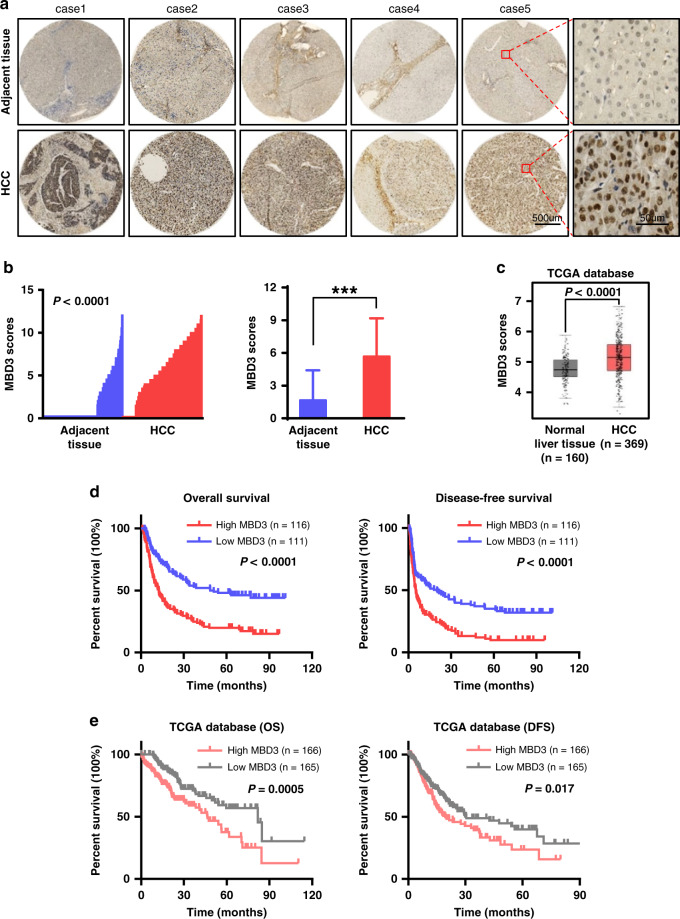
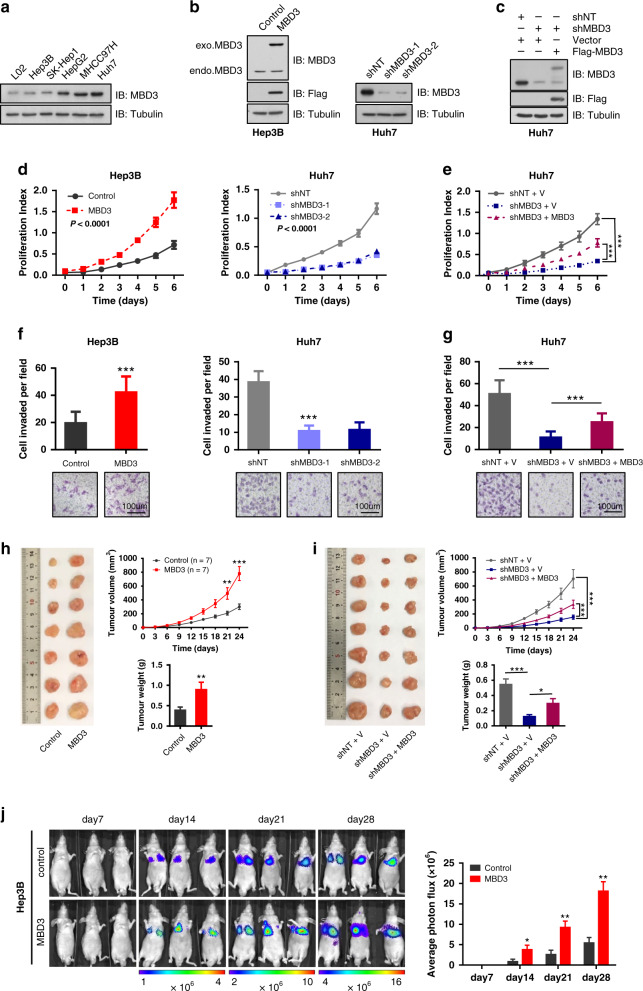
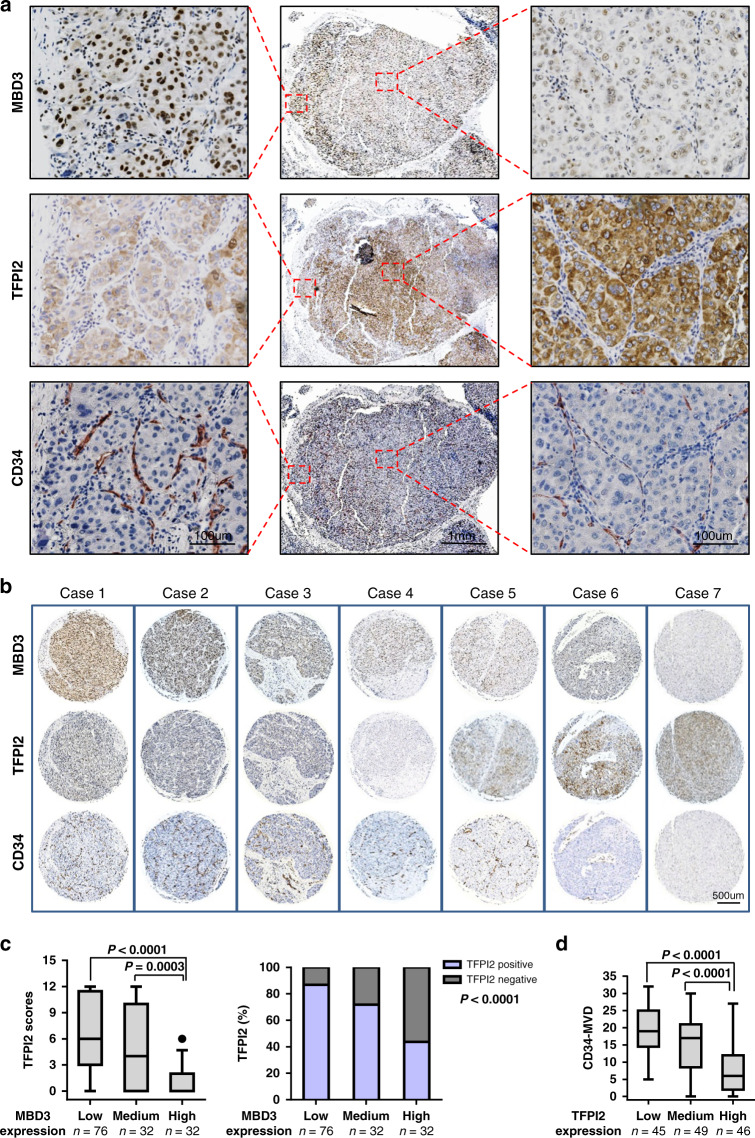
MBD3 expression in HCC was detected by immunohistochemistry and its association with clinicopathological features and patient's survival was analysed. The effects of MBD3 on hepatoma cells growth and metastasis were investigated, and the mechanism was explored.
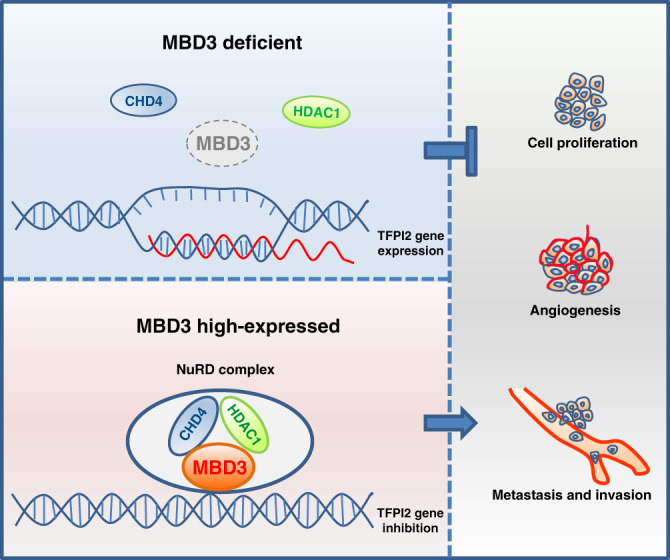
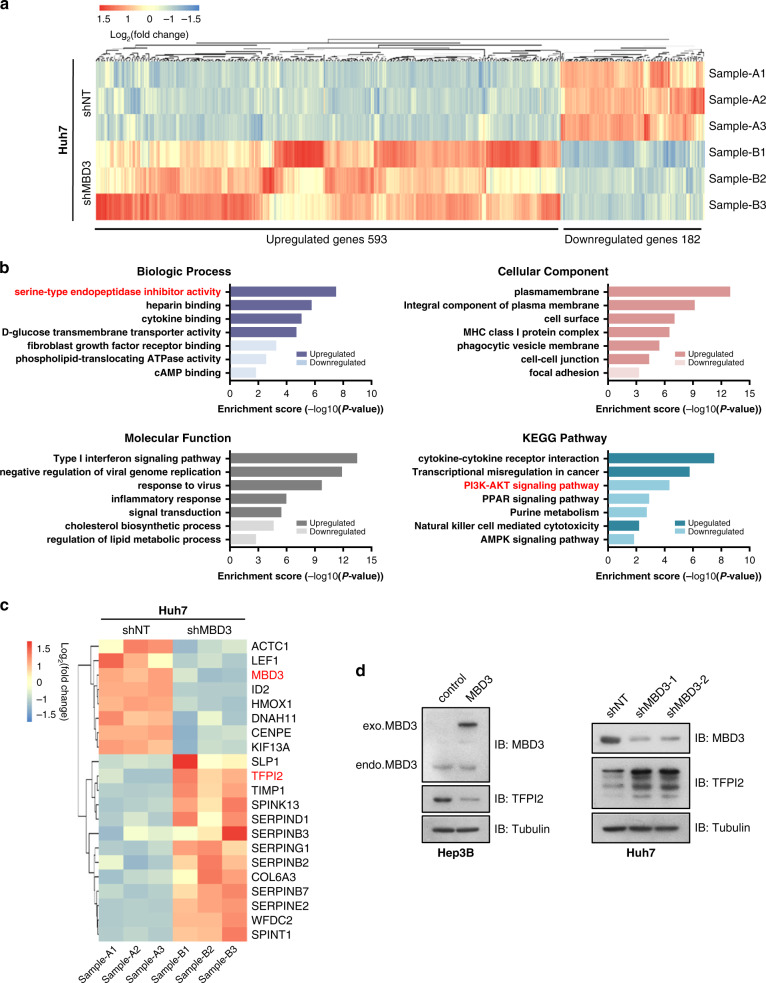
MBD3 is significantly highly expressed in HCC, associated with the advanced tumour stage and poor prognosis in HCC patients. MBD3 promotes the growth, angiogenesis and metastasis of HCC cells by inhibiting the tumour suppressor tissue factor pathway inhibitor 2 (TFPI2). Mechanistically, MBD3 can inhibit the TFPI2 transcription via the Nucleosome Remodeling and Deacetylase (NuRD) complex-mediated deacetylation, thus reactivating the activity of matrix metalloproteinases (MMPs) and PI3K/AKT signaling pathway, leading to the progression and metastasis of HCC CONCLUSIONS: Our results unravel the novel regulatory function of MBD3 in the progression and metastasis of HCC and identify MBD3 as an independent unfavourable prognostic factor for HCC patients, suggesting its potential as a promising therapeutic target as well.
肝细胞癌(HCC)的复发和转移机制复杂且具有挑战性。甲基化CpG 结合域蛋白 3(MBD3)是一种关键的表观遗传调控因子,参与多种癌症的进展和转移,但它在 HCC 中的作用尚不清楚。
通过免疫组织化学检测 HCC 中 MBD3 的表达,并分析其与临床病理特征和患者生存的关系。研究了 MBD3 对肝癌细胞生长和转移的影响,并探讨了其机制。
MBD3 在 HCC 中显著高表达,与 HCC 患者的晚期肿瘤分期和不良预后相关。MBD3 通过抑制肿瘤抑制因子组织因子途径抑制剂 2(TFPI2)促进 HCC 细胞的生长、血管生成和转移。机制上,MBD3 可以通过核小体重塑和去乙酰化酶(NuRD)复合物介导的去乙酰化抑制 TFPI2 的转录,从而重新激活基质金属蛋白酶(MMPs)和 PI3K/AKT 信号通路的活性,导致 HCC 的进展和转移。
我们的研究结果揭示了 MBD3 在 HCC 进展和转移中的新的调控功能,并确定 MBD3 是 HCC 患者独立的不良预后因素,表明其作为有前途的治疗靶点的潜力。