Hopp Children's Cancer Center (KiTZ), Heidelberg, Germany.
Division of Paediatric Neurooncology, German Cancer Research Center (DKFZ) and German Cancer Consortium (DKTK), Heidelberg, Germany.
Acta Neuropathol. 2022 Jun;143(6):697-711. doi: 10.1007/s00401-022-02424-5. Epub 2022 Apr 30.
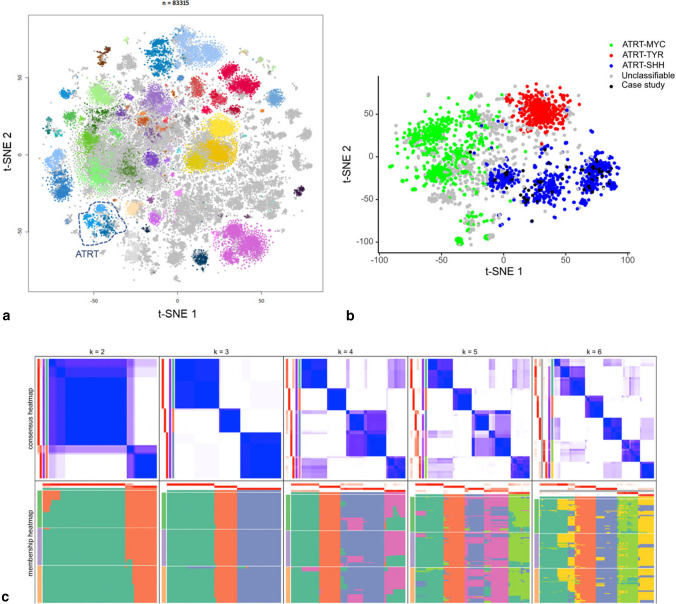
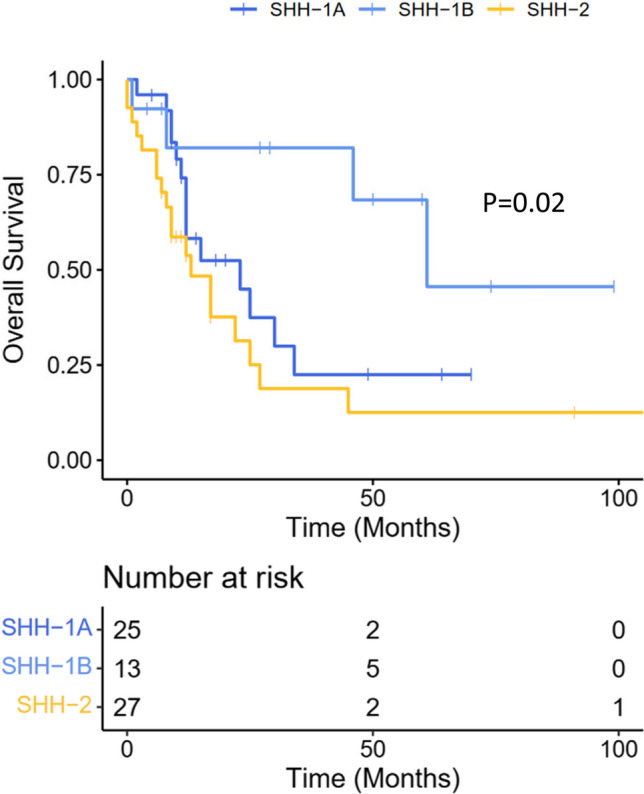
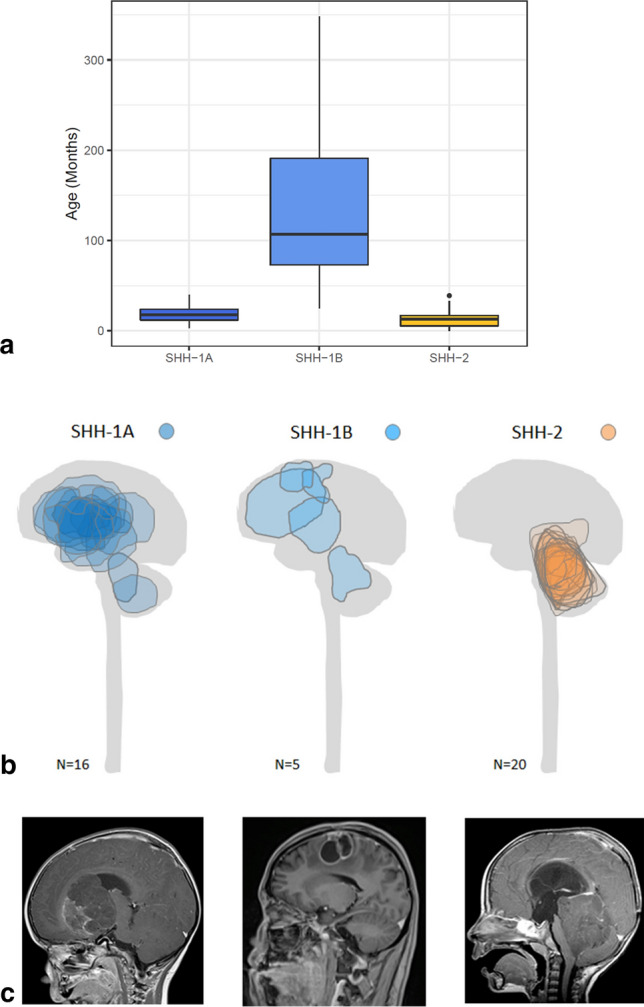
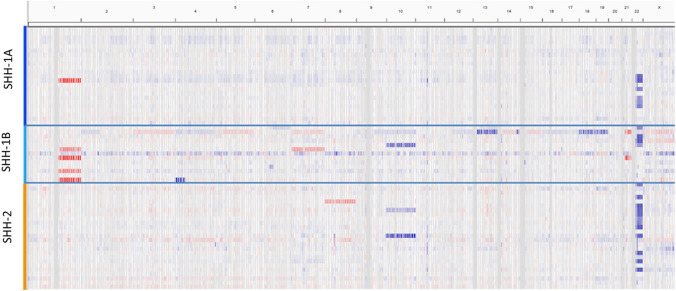
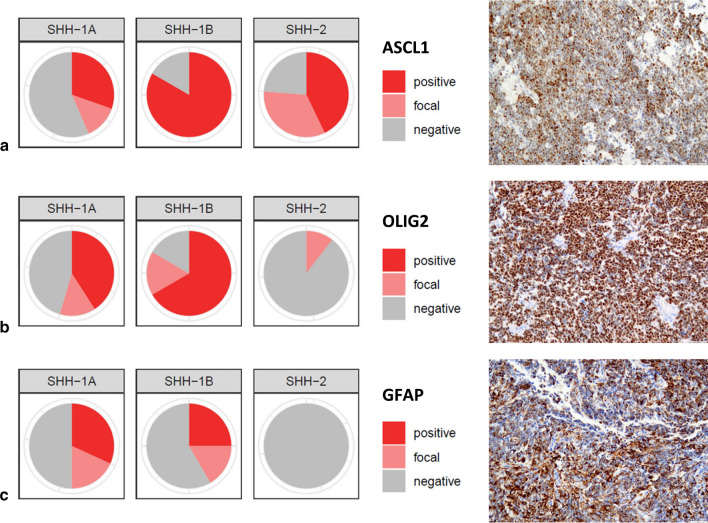
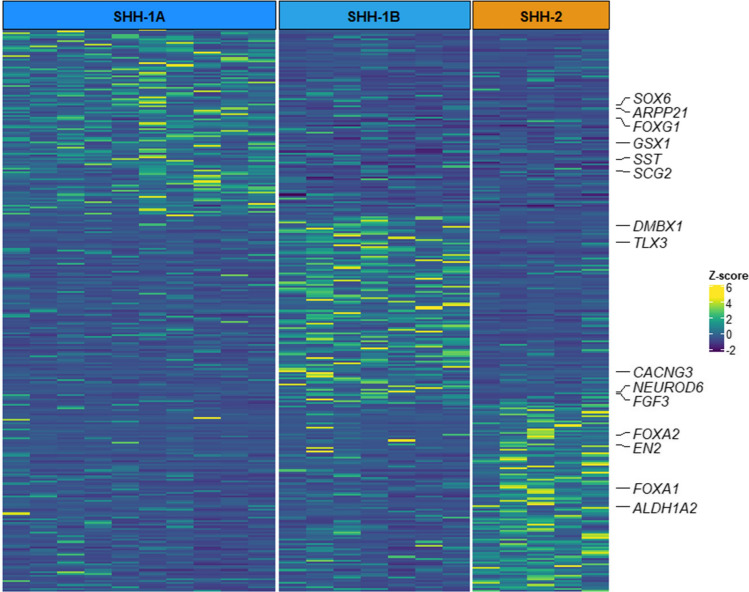
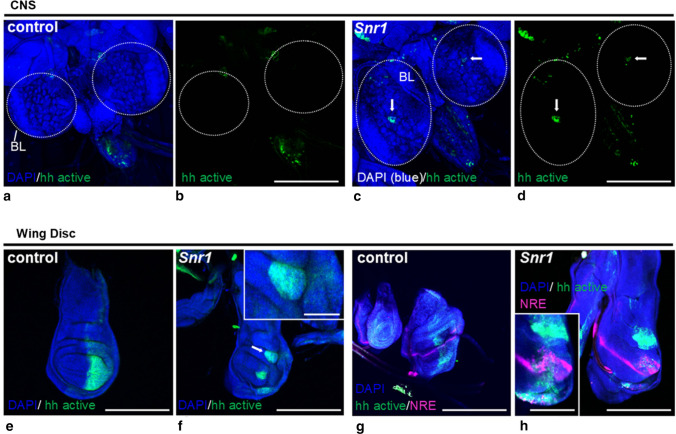
Atypical teratoid/rhabdoid tumor (ATRT) is an aggressive central nervous system tumor characterized by loss of SMARCB1/INI1 protein expression and comprises three distinct molecular groups, ATRT-TYR, ATRT-MYC and ATRT-SHH. ATRT-SHH represents the largest molecular group and is heterogeneous with regard to age, tumor location and epigenetic profile. We, therefore, aimed to investigate if heterogeneity within ATRT-SHH might also have biological and clinical importance. Consensus clustering of DNA methylation profiles and confirmatory t-SNE analysis of 65 ATRT-SHH yielded three robust molecular subgroups, i.e., SHH-1A, SHH-1B and SHH-2. These subgroups differed by median age of onset (SHH-1A: 18 months, SHH-1B: 107 months, SHH-2: 13 months) and tumor location (SHH-1A: 88% supratentorial; SHH-1B: 85% supratentorial; SHH-2: 93% infratentorial, often extending to the pineal region). Subgroups showed comparable SMARCB1 mutational profiles, but pathogenic/likely pathogenic SMARCB1 germline variants were over-represented in SHH-2 (63%) as compared to SHH-1A (20%) and SHH-1B (0%). Protein expression of proneural marker ASCL1 (enriched in SHH-1B) and glial markers OLIG2 and GFAP (absent in SHH-2) as well as global mRNA expression patterns differed, but all subgroups were characterized by overexpression of SHH as well as Notch pathway members. In a Drosophila model, knockdown of Snr1 (the fly homologue of SMARCB1) in hedgehog activated cells not only altered hedgehog signaling, but also caused aberrant Notch signaling and formation of tumor-like structures. Finally, on survival analysis, molecular subgroup and age of onset (but not ASCL1 staining status) were independently associated with overall survival, older patients (> 3 years) harboring SHH-1B experiencing relatively favorable outcome. In conclusion, ATRT-SHH comprises three subgroups characterized by SHH and Notch pathway activation, but divergent molecular and clinical features. Our data suggest that molecular subgrouping of ATRT-SHH has prognostic relevance and might aid to stratify patients within future clinical trials.
非典型畸胎样/横纹肌样肿瘤(ATRT)是一种侵袭性中枢神经系统肿瘤,其特征为 SMARCB1/INI1 蛋白表达缺失,并包含三个不同的分子群,即 ATRT-TYR、ATRT-MYC 和 ATRT-SHH。ATRT-SHH 是最大的分子群,在年龄、肿瘤位置和表观遗传特征方面具有异质性。因此,我们旨在研究 ATRT-SHH 内的异质性是否也具有生物学和临床意义。对 65 例 ATRT-SHH 的 DNA 甲基化谱进行共识聚类和确认性 t-SNE 分析,产生了三个稳健的分子亚群,即 SHH-1A、SHH-1B 和 SHH-2。这些亚群在发病年龄中位数(SHH-1A:18 个月;SHH-1B:107 个月;SHH-2:13 个月)和肿瘤位置(SHH-1A:88%幕上;SHH-1B:85%幕上;SHH-2:93%幕下,常延伸至松果体区域)方面存在差异。亚群表现出可比的 SMARCB1 突变谱,但致病性/可能致病性 SMARCB1 种系变异在 SHH-2(63%)中比 SHH-1A(20%)和 SHH-1B(0%)更为常见。神经前体细胞标记物 ASCL1(在 SHH-1B 中富集)和神经胶质标记物 OLIG2 和 GFAP(在 SHH-2 中不存在)的蛋白表达以及全局 mRNA 表达模式存在差异,但所有亚群均表现为 SHH 以及 Notch 通路成员的过度表达。在果蝇模型中,hedgehog 激活细胞中 Snr1(SMARCB1 的果蝇同源物)的敲低不仅改变了 hedgehog 信号,还导致异常的 Notch 信号和肿瘤样结构的形成。最后,在生存分析中,分子亚群和发病年龄(但不是 ASCL1 染色状态)与总生存独立相关,年龄较大(>3 岁)的患者具有 SHH-1B,预后相对较好。总之,ATRT-SHH 由三个亚群组成,其特征为 SHH 和 Notch 通路的激活,但具有不同的分子和临床特征。我们的数据表明,ATRT-SHH 的分子亚群具有预后意义,并可能有助于在未来的临床试验中对患者进行分层。