Magnusson Jesper M, Ericson Petrea, Tengvall Sara, Stockfelt Marit, Brundin Bettina, Lindén Anders, Riise Gerdt C
Department of Respiratory Medicine, Institute of Medicine Sahlgrenska Academy at the University of Gothenburg, Bruna stråket 11, 41345, Gothenburg, Sweden.
Division for Lung and Airway Research, Institute of Environmental Medicine, Karolinska Institutet, Stockholm, Sweden.
Respir Res. 2022 May 2;23(1):108. doi: 10.1186/s12931-022-02036-3.
The main long-term complication after lung transplantation is bronchiolitis obliterans syndrome (BOS), a deadly condition in which neutrophils may play a critical pathophysiological role. Recent studies show that the cytokine interleukin IL-26 can facilitate neutrophil recruitment in response to pro-inflammatory stimuli in the airways. In this pilot study, we characterized the local involvement of IL-26 during BOS and acute rejection (AR) in human patients.
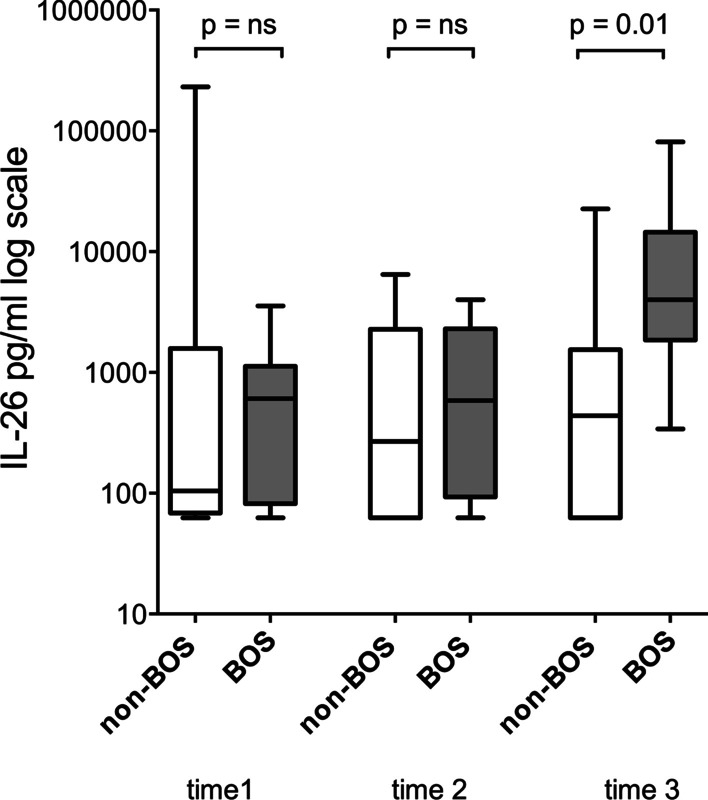
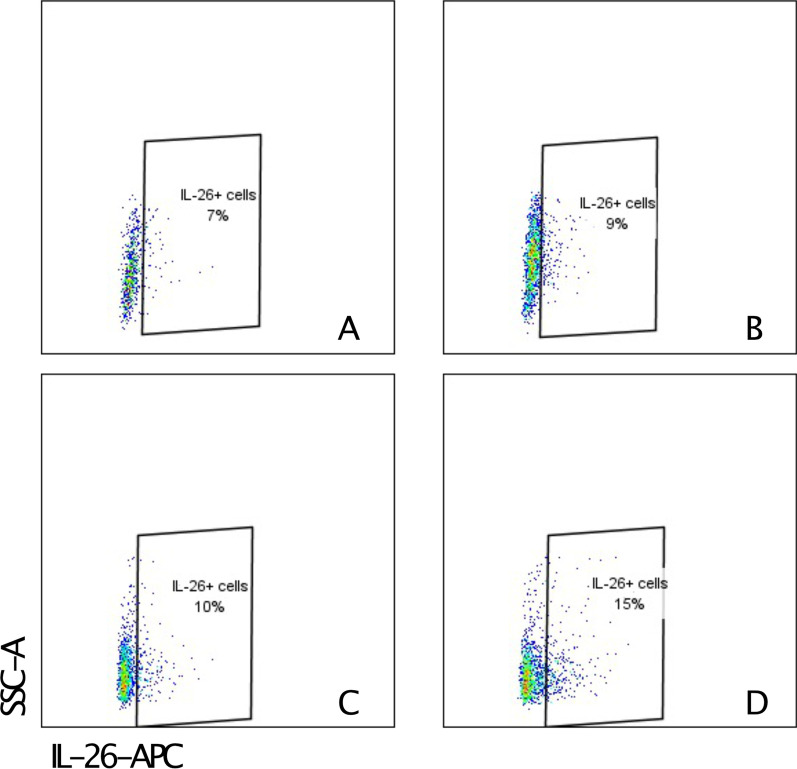
From a biobank containing bronchoalveolar lavage (BAL) samples from 148 lung transplant recipients (LTR), clinically-matched patient pairs were identified to minimize the influence of clinical confounders. We identified ten pairs (BOS/non-BOS) with BAL samples harvested on three occasions for our longitudinal investigation and 12 pairs of patients with and without AR. The pairs were matched for age, gender, preoperative diagnosis, type of and time after surgery. Extracellular IL-26 protein was quantified in cell-free BAL samples using an enzyme-linked immunosorbent assay. Intracellular IL-26 protein in BAL cells was determined using immunocytochemistry (ICC) and flow cytometry.
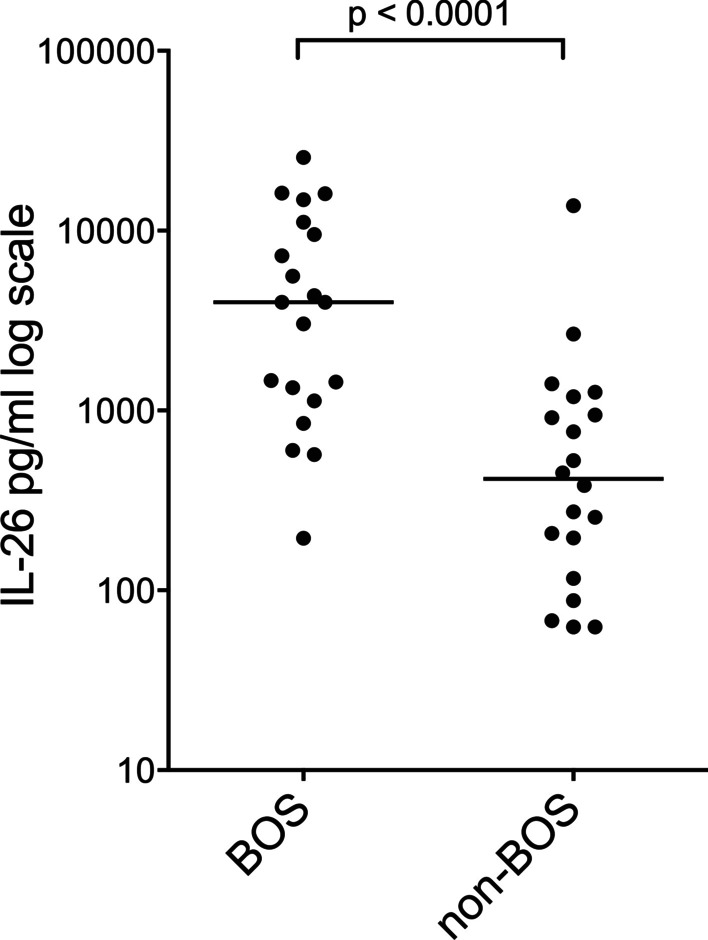
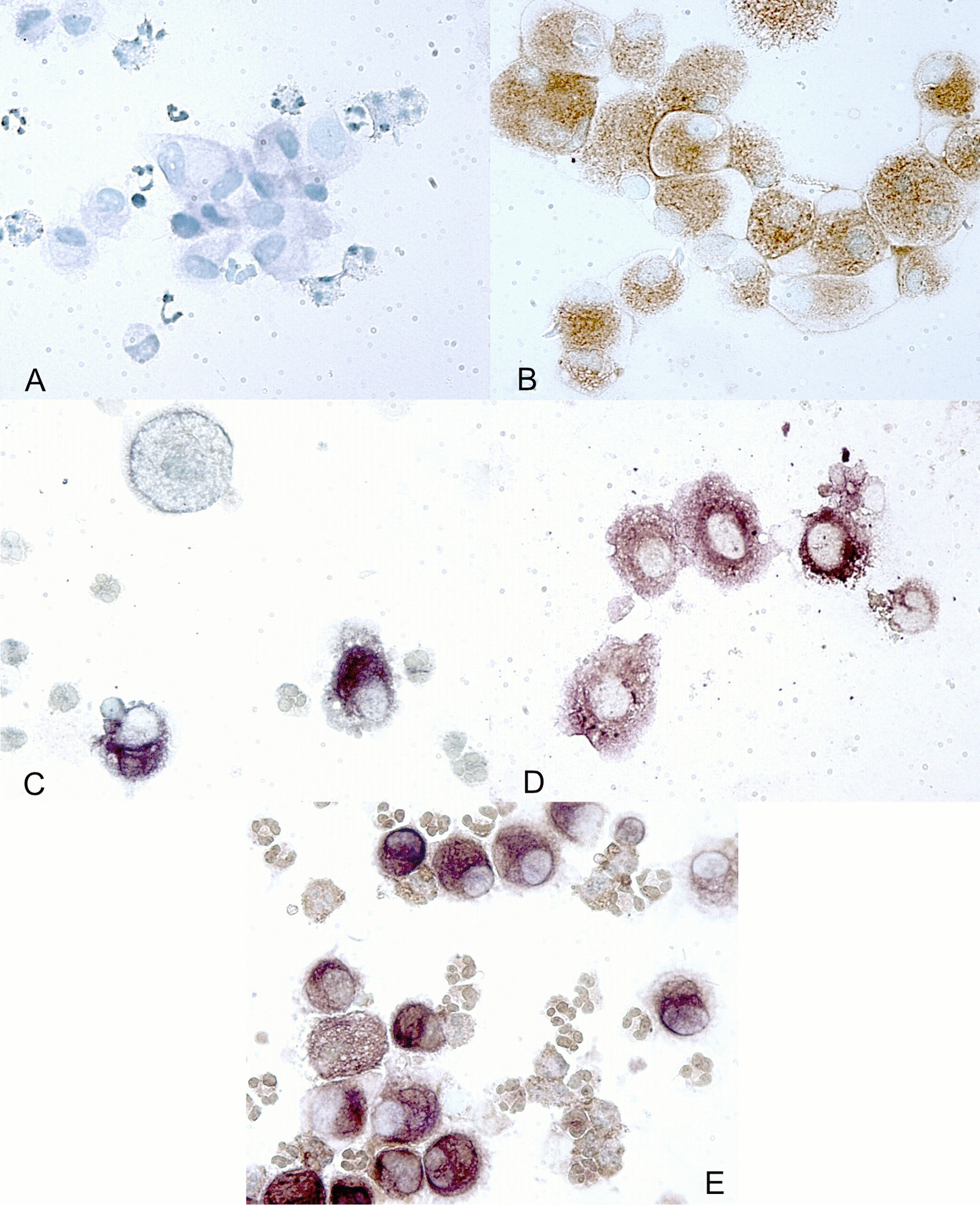
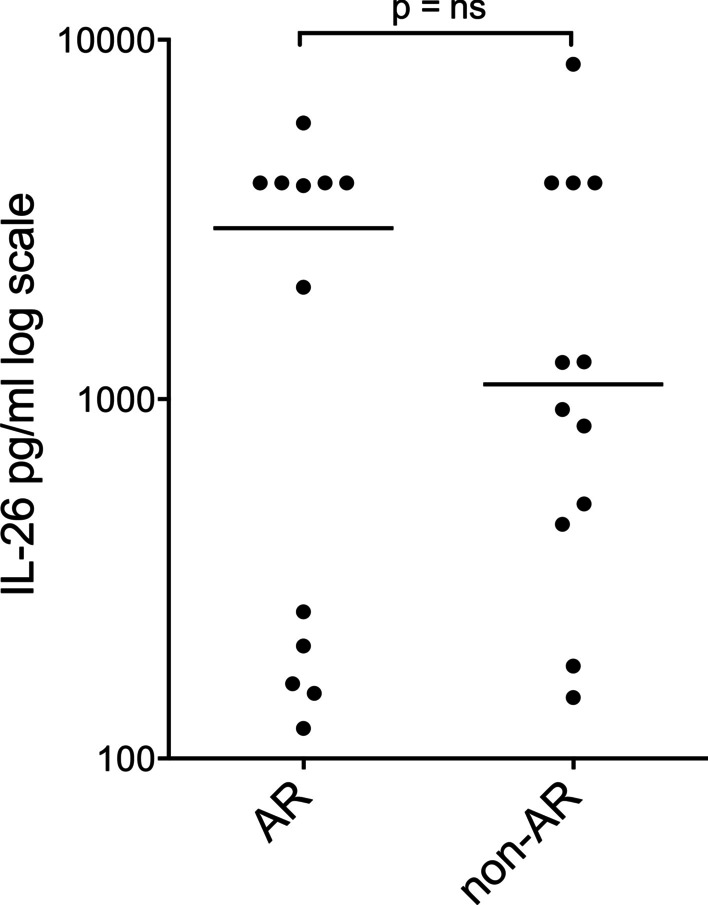
The median extracellular concentration of IL-26 protein was markedly increased in BAL samples from patients with BOS (p < 0.0001) but not in samples from patients with AR. Intracellular IL-26 protein was confirmed in alveolar macrophages and lymphocytes (through ICC and flow cytometry) among BAL cells obtained from BOS patients.
Local IL-26 seems to be involved in BOS but not AR, and macrophages as well as lymphocytes constitute cellular sources in this clinical setting. The enhancement of extracellular IL-26 protein in LTRs with BOS warrants further investigation of its potential as a target for diagnosing, monitoring, and treating BOS.
肺移植术后主要的长期并发症是闭塞性细支气管炎综合征(BOS),这是一种致命疾病,中性粒细胞可能在其病理生理过程中发挥关键作用。最近的研究表明,细胞因子白细胞介素IL-26可促进中性粒细胞在气道促炎刺激下的募集。在这项初步研究中,我们对人类患者BOS和急性排斥反应(AR)期间IL-26的局部参与情况进行了特征分析。
从一个包含148例肺移植受者(LTR)支气管肺泡灌洗(BAL)样本的生物样本库中,确定临床匹配的患者对,以尽量减少临床混杂因素的影响。我们确定了十对(BOS/非BOS),其BAL样本在三个时间点采集用于纵向研究,以及12对有或无AR的患者。这些对在年龄、性别、术前诊断、手术类型和术后时间方面进行了匹配。使用酶联免疫吸附测定法定量无细胞BAL样本中的细胞外IL-26蛋白。使用免疫细胞化学(ICC)和流式细胞术测定BAL细胞中的细胞内IL-26蛋白。
BOS患者BAL样本中IL-26蛋白的细胞外浓度中位数显著升高(p < 0.0001),但AR患者样本中未升高。在从BOS患者获得的BAL细胞中的肺泡巨噬细胞和淋巴细胞中(通过ICC和流式细胞术)证实了细胞内IL-26蛋白。
局部IL-26似乎与BOS有关,但与AR无关,在这种临床情况下,巨噬细胞和淋巴细胞构成细胞来源。BOS患者LTR中细胞外IL-26蛋白的增强值得进一步研究其作为BOS诊断、监测和治疗靶点的潜力。