Department of Health Systems and Policy, Institute of Public Health, College of Medicine and Health Sciences, University of Gondar, P.O. Box 196, Gondar, Ethiopia.
School of Public Health, The University of Queensland, Brisbane, Australia.
Health Res Policy Syst. 2022 May 2;20(1):50. doi: 10.1186/s12961-022-00858-7.
The shift in the global burden of disease from communicable to noncommunicable was a factor in mobilizing support for a broader post-Millennium Development Goals (MDGs) health agenda. To curb these and other global health problems, 193 Member States of the United Nations (UN) became signatories of the Sustainable Development Goals (SDGs) and committed to achieving universal health coverage (UHC) by 2030. In the context of the coronavirus disease 2019 (COVID-19) pandemic, the importance of health systems governance (HSG) is felt now more than ever for addressing the pandemic and continuing to provide essential health services. However, little is known about the successes and challenges of HSG with respect to UHC and health security. This study, therefore, aims to synthesize the evidence and identify successes and challenges of HSG towards UHC and health security.
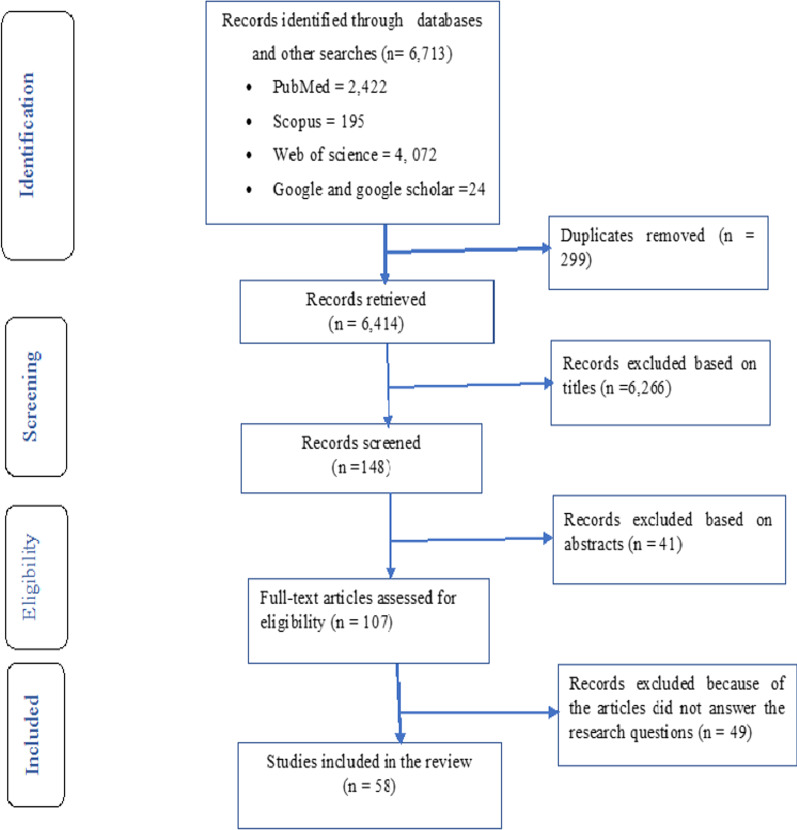
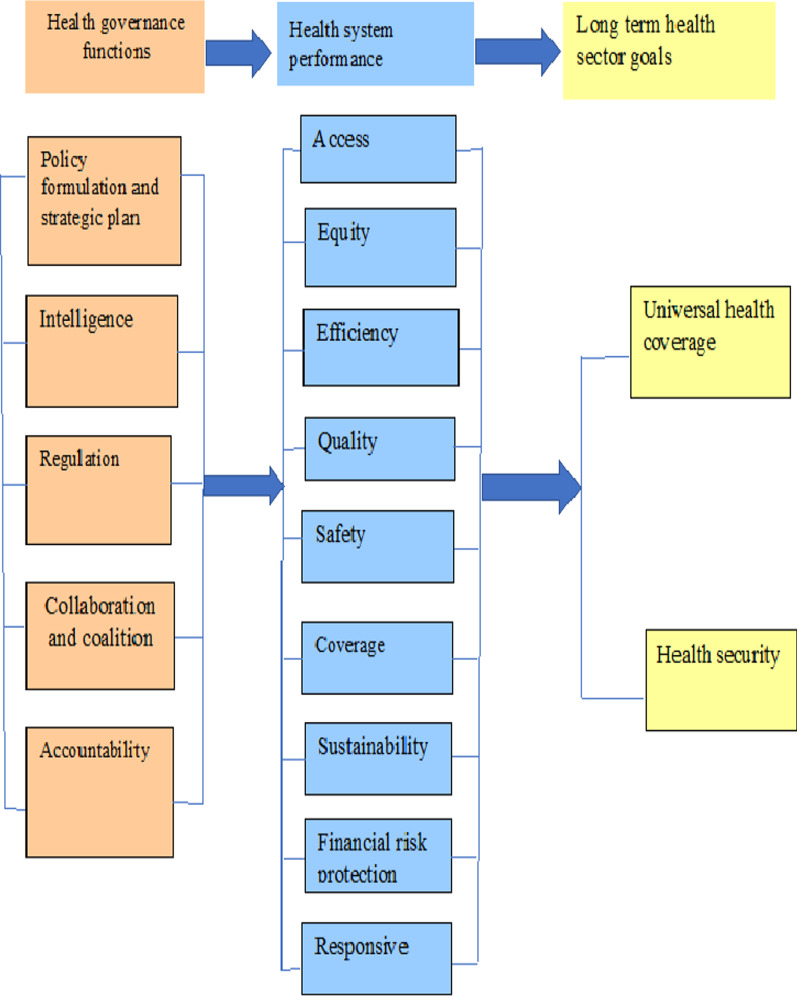
We conducted a structured narrative review of studies published through 28 July 2021. We searched the existing literature using three databases: PubMed, Scopus and Web of Science. Search terms included three themes: HSG, UHC and health security. We synthesized the findings using the five core functions of HSG: policy formulation and strategic plans; intelligence; regulation; collaboration and coalition; and accountability.
A total of 58 articles were included in the final review. We identified that context-specific health policy and health financing modalities helped to speed up the progress towards UHC and health security. Robust health intelligence, intersectoral collaboration and coalition were also essential to combat the pandemic and ensure the delivery of essential health services. On the contrary, execution of a one-size-fits-all HSG approach, lack of healthcare funding, corruption, inadequate health workforce, and weak regulatory and health government policies were major challenges to achieving UHC and health security.
Countries, individually and collectively, need strong HSG to speed up the progress towards UHC and health security. Decentralization of health services to grass root levels, support of stakeholders, fair contribution and distribution of resources are essential to support the implementation of programmes towards UHC and health security. It is also vital to ensure independent regulatory accreditation of organizations in the health system and to integrate quality- and equity-related health service indicators into the national social protection monitoring and evaluation system; these will speed up the progress towards UHC and health security.
从传染病到非传染性疾病的全球疾病负担转移是推动更广泛的千年发展目标后(MDGs)卫生议程获得支持的一个因素。为了遏制这些和其他全球卫生问题,联合国(UN)的 193 个会员国成为可持续发展目标(SDGs)的签署国,并承诺到 2030 年实现全民健康覆盖(UHC)。在 2019 年冠状病毒病(COVID-19)大流行的背景下,现在比以往任何时候都更能感受到卫生系统治理(HSG)的重要性,以应对大流行并继续提供基本卫生服务。然而,对于 HSG 在实现 UHC 和卫生安全方面的成功和挑战,人们知之甚少。因此,本研究旨在综合证据,并确定 HSG 在实现 UHC 和卫生安全方面的成功和挑战。
我们对截至 2021 年 7 月 28 日发表的研究进行了结构化的叙述性综述。我们使用三个数据库(PubMed、Scopus 和 Web of Science)搜索现有文献:卫生系统治理、全民健康覆盖和卫生安全。我们使用 HSG 的五个核心功能(政策制定和战略计划;情报;监管;合作和联盟;以及问责制)综合研究结果。
共有 58 篇文章被纳入最终综述。我们发现,特定于国情的卫生政策和卫生筹资模式有助于加快实现全民健康覆盖和卫生安全的进展。强大的卫生情报、部门间合作和联盟对于抗击大流行和确保基本卫生服务的提供也是至关重要的。相反,执行一刀切的 HSG 方法、缺乏医疗保健资金、腐败、卫生劳动力不足、以及薄弱的监管和卫生政策是实现全民健康覆盖和卫生安全的主要挑战。
各国需要强有力的 HSG,以加快实现全民健康覆盖和卫生安全的步伐。将卫生服务去中心化到基层、支持利益攸关方、公平地分配资源对于支持全民健康覆盖和卫生安全方案的实施至关重要。确保卫生系统组织的独立监管认证并将质量和公平相关的卫生服务指标纳入国家社会保护监测和评价系统也是至关重要的;这将加快实现全民健康覆盖和卫生安全的步伐。