Gordon F. Derner School of Psychology, Adelphi University, Garden City, NY, USA.
Department of Psychology and Neuroscience, Temple University, Philadelphia, PA, USA.
Neuroimage. 2022 Aug 1;256:119267. doi: 10.1016/j.neuroimage.2022.119267. Epub 2022 Apr 30.
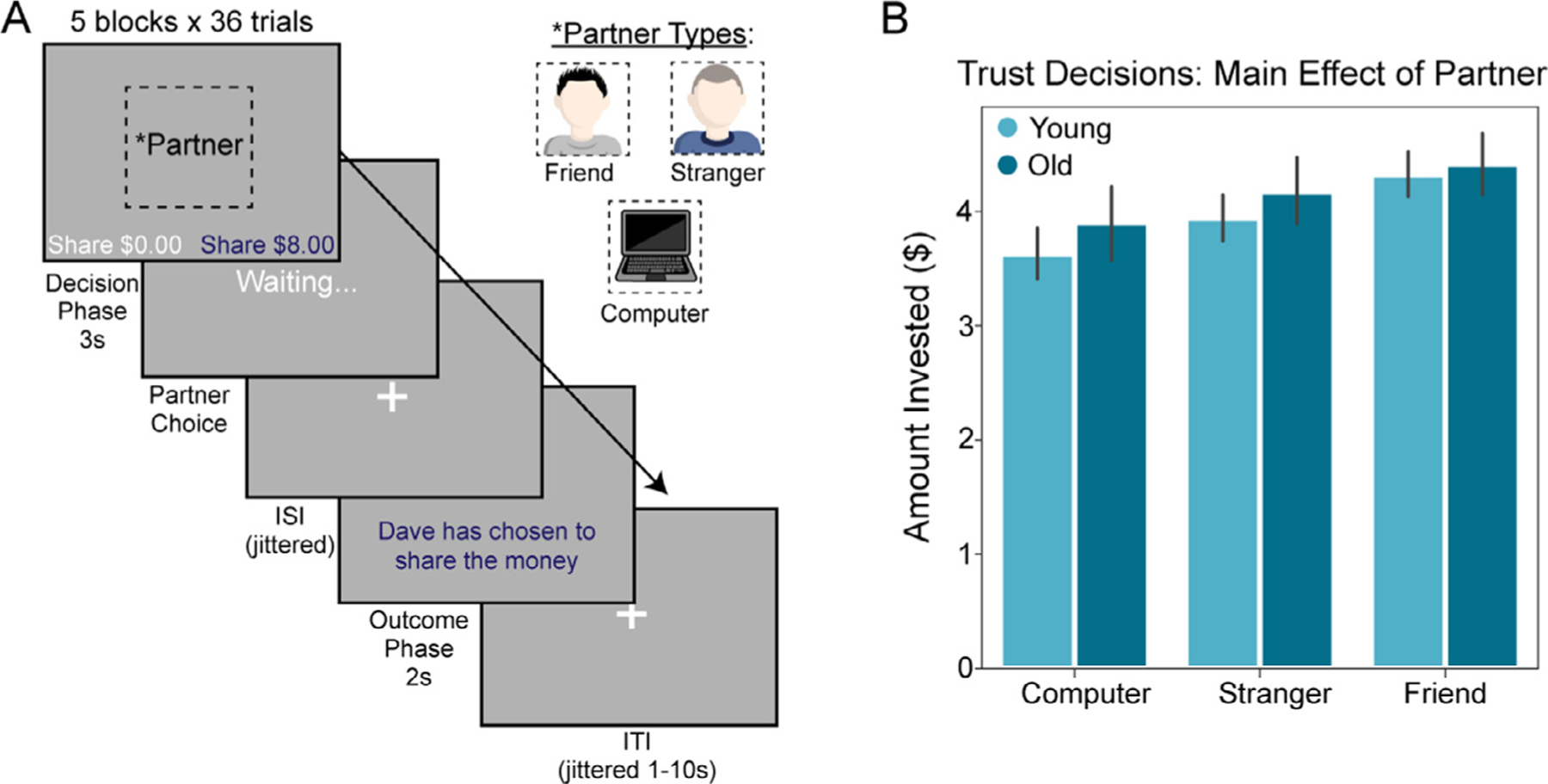
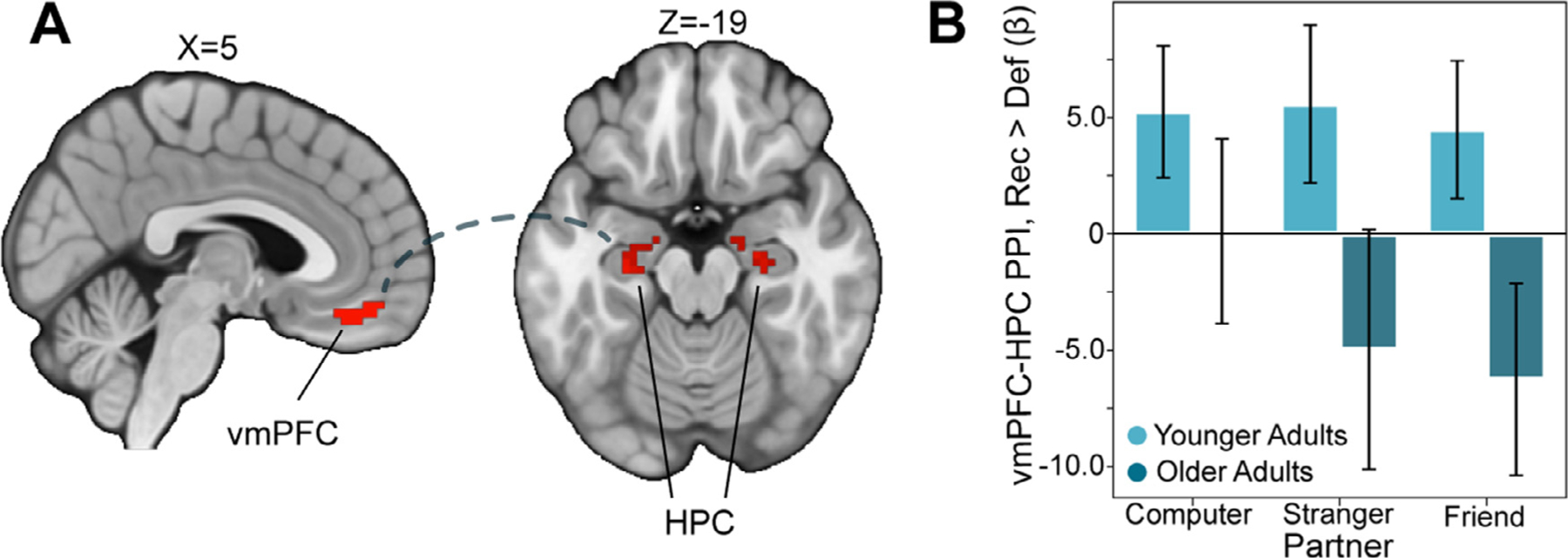
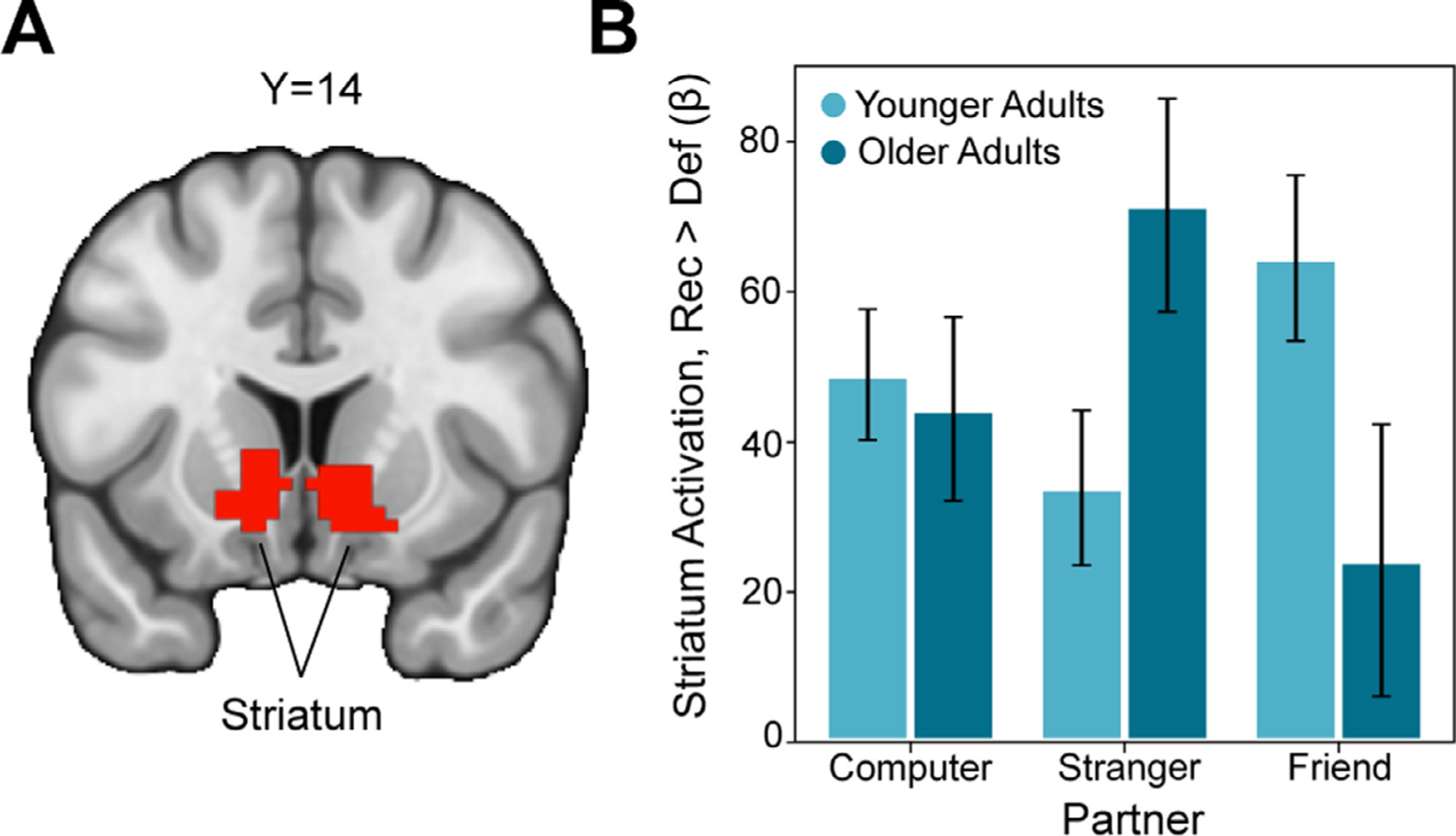
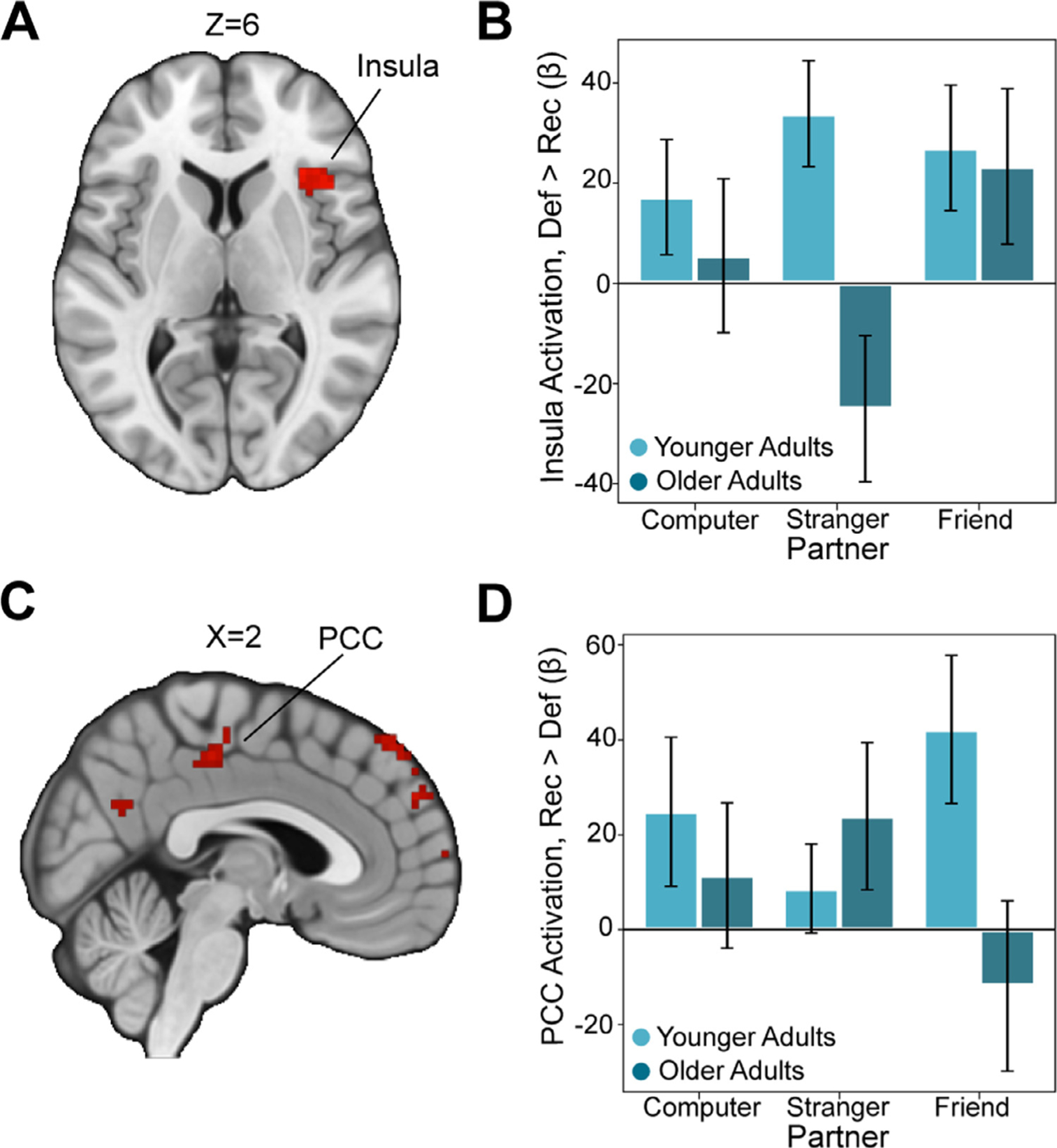
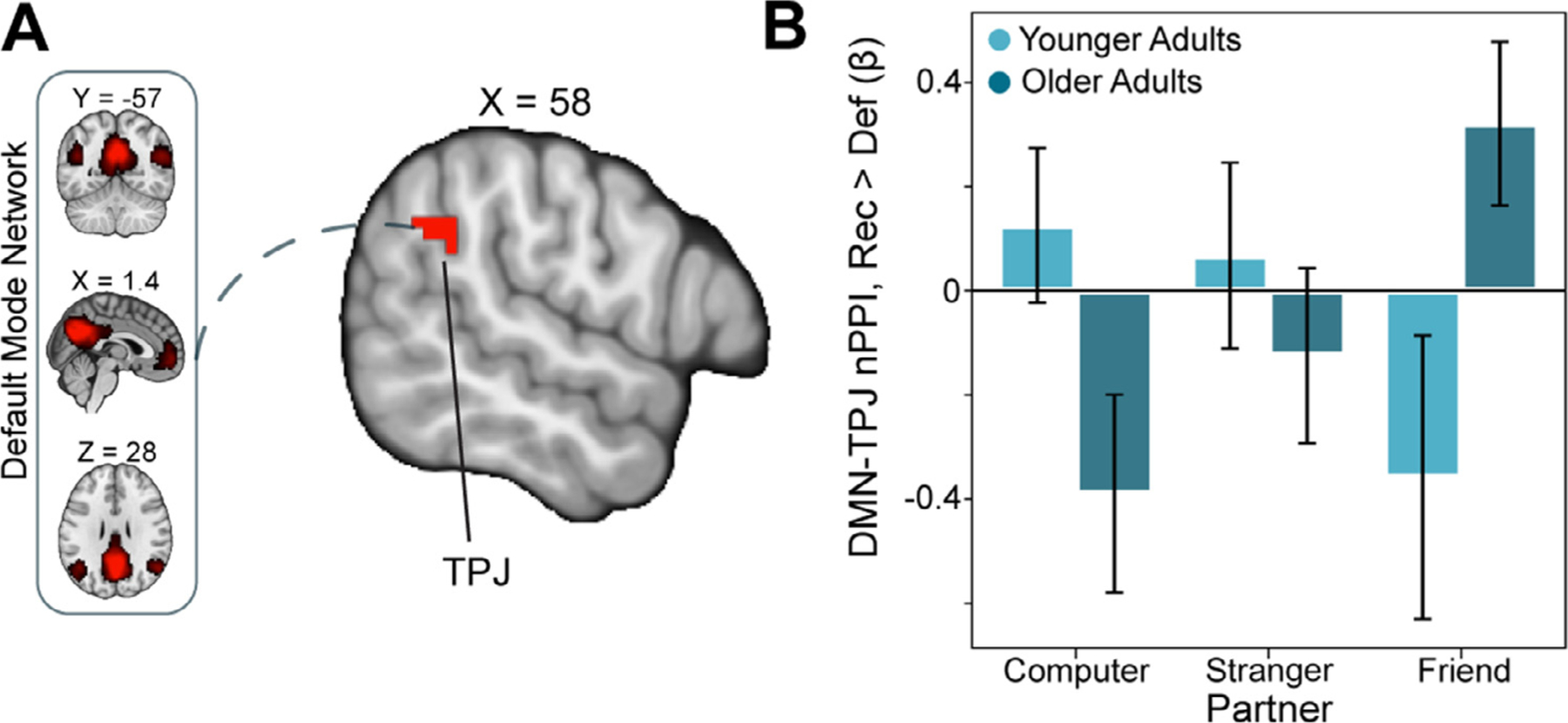
Social relationships change across the lifespan as social networks narrow and motivational priorities shift to the present. Interestingly, aging is also associated with changes in executive function, including decision-making abilities, but it remains unclear how age-related changes in both domains interact to impact financial decisions involving other people. To study this problem, we recruited 50 human participants (N = 26, ages 18-34; N = 24, ages 63-80) to play an economic trust game as the investor with three partners (friend, stranger, and computer) who played the role of investee. Investors underwent functional magnetic resonance imaging (fMRI) during the trust game while investees were seated outside of the scanner. Building on our previous work with younger adults showing both enhanced striatal responses and altered default-mode network (DMN) connectivity as a function of social closeness during reciprocated trust, we predicted that these relations would exhibit age-related differences. We found that striatal responses to reciprocated trust from friends relative to strangers and computers were blunted in older adults relative to younger adults, thus supporting our primary pre-registered hypothesis regarding social closeness. We also found that older adults exhibited enhanced DMN connectivity with the temporoparietal junction (TPJ) during reciprocated trust from friends compared to computers while younger adults exhibited the opposite pattern. Taken together, these results advance our understanding of age-related differences in sensitivity to social closeness in the context of trusting others.
社会关系会随着社交网络的缩小和当前动机优先级的变化而在整个生命周期中发生变化。有趣的是,衰老也与执行功能的变化有关,包括决策能力,但目前尚不清楚这两个领域的年龄相关性变化如何相互作用,从而影响涉及他人的财务决策。为了研究这个问题,我们招募了 50 名人类参与者(N=26,年龄 18-34 岁;N=24,年龄 63-80 岁)作为投资者,与三个合作伙伴(朋友、陌生人、电脑)玩经济信任游戏,他们扮演投资者的角色。投资者在信任游戏中接受功能磁共振成像(fMRI),而投资者则坐在扫描仪外。基于我们之前与年轻人的合作研究,表明在互惠信任过程中,随着社交亲密程度的增加,纹状体的反应增强,默认模式网络(DMN)的连接改变,我们预测这些关系会表现出与年龄相关的差异。我们发现,与陌生人或电脑相比,老年人对朋友的互惠信任的纹状体反应相对迟钝,这支持了我们关于社交亲密程度的主要预先注册假设。我们还发现,与年轻人相比,老年人在与朋友的互惠信任过程中表现出颞顶联合(TPJ)与 DMN 连接的增强,而年轻人则表现出相反的模式。综上所述,这些结果加深了我们对信任他人背景下对社交亲密程度的敏感性的年龄相关差异的理解。