Salmon and Trout Research Centre, Game and Wildlife Conservation Trust, The River Laboratory, Wareham, Dorset, UK.
Department of Life and Environmental Sciences, Faculty of Science and Technology, Bournemouth University, Poole, Dorset, UK.
Oecologia. 2022 May;199(1):103-117. doi: 10.1007/s00442-022-05163-2. Epub 2022 May 4.
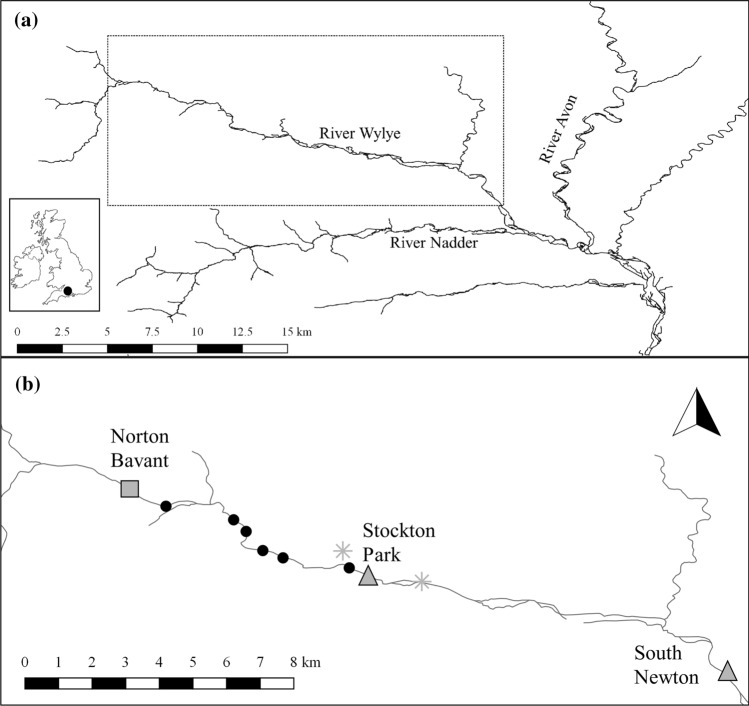
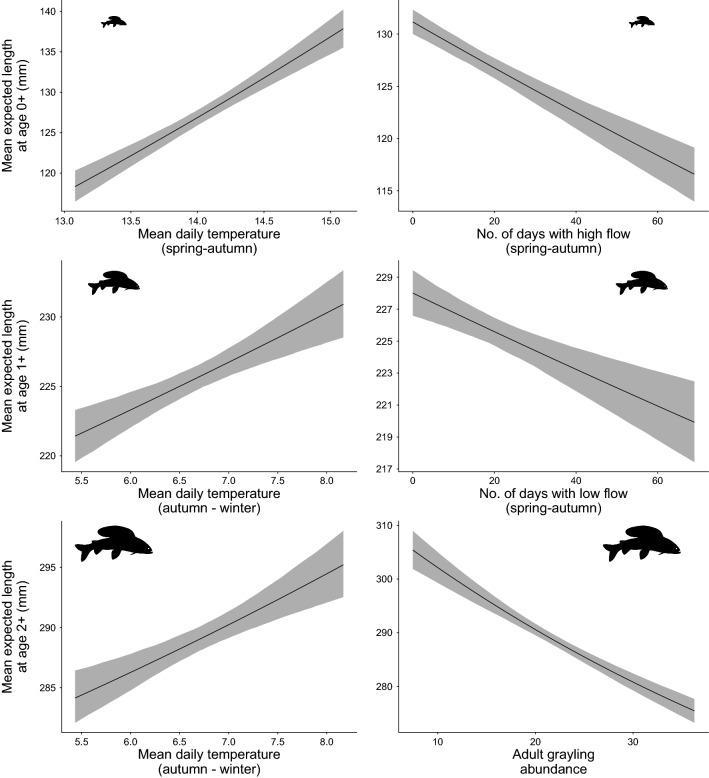
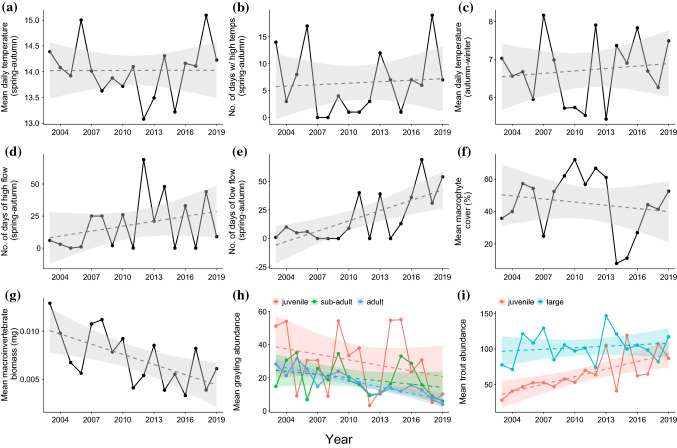
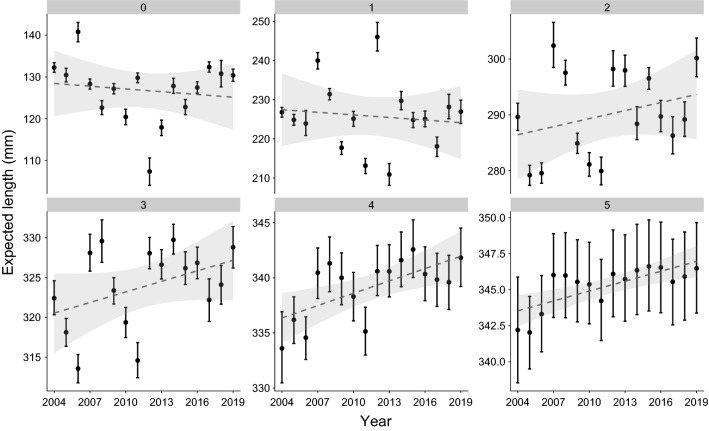
Fish somatic growth is indeterminate and can be influenced by a range of abiotic and biotic variables. With climate change forecast to increase the frequency of warming and unusual discharge events, it is thus important to understand how these variables currently influence somatic growth and how that might differ for specific age-classes and/ or life stages. Here, we used a 17-year dataset from a chalk stream in southern England to identify the abiotic and biotic influences on the growth of juvenile, sub-adult and adult life stages of European grayling (Thymallus thymallus), a cold-water riverine salmonid. The results revealed that interannual variations in grayling growth were well described by annual- and site-specific abiotic and biotic explanatory variables. We found divergent responses between life stages to increased temperature and unusual discharge during the main growth period with, for example, elevated temperatures related to increased juvenile growth but reduced sub-adult growth, and high discharge events related to increased sub-adult growth yet reduced juvenile growth. Conversely, stage-specific grayling abundance negatively influenced growth at each life stage, though only juvenile growth was impacted by the abundance of a competitor species, brown trout (Salmo trutta). These results emphasise the merits of testing a wide range of environmental and biological explanatory variables on fish growth, and across life stages. They also reveal the importance of maintaining high habitat heterogeneity in rivers to ensure all life stages can reduce their competitive interactions and have access to adequate flow and thermal refugia during periods of elevated environmental stress.
鱼类的躯体生长是不定向的,可以受到多种非生物和生物变量的影响。随着气候变化预计会增加升温及异常排放事件的频率,因此了解这些变量目前如何影响躯体生长,以及特定年龄组和/或生命阶段的影响可能有何不同,这一点很重要。在这里,我们使用了来自英格兰南部一条白垩溪流的 17 年数据集,以确定环境和生物因素对幼年、亚成年和成年生命阶段的欧鳟(Thymallus thymallus)生长的影响,欧鳟是一种冷水洄游性鲑鱼。结果表明,鳟鱼生长的年际变化可以很好地用年度和特定地点的非生物和生物解释变量来描述。我们发现,在主要生长期间,温度和异常排放的增加对不同生命阶段的反应存在差异,例如,温度升高与幼年生长增加有关,但与亚成年生长减少有关,而高排放事件与亚成年生长增加有关,但与幼年生长减少有关。相反,特定阶段的鳟鱼丰度对每个生命阶段的生长都有负面影响,但只有幼年生长受到竞争物种褐鳟(Salmo trutta)丰度的影响。这些结果强调了在鱼类生长和各生命阶段测试广泛的环境和生物解释变量的重要性。它们还揭示了在河流中保持高栖息地异质性的重要性,以确保所有生命阶段都可以减少其竞争相互作用,并在环境压力升高期间获得足够的水流和热避难所。