Burke George W, Chandar Jayanthi, Sageshima Junichiro, Ortigosa-Goggins Mariella, Amarapurkar Pooja, Mitrofanova Alla, Defreitas Marissa J, Katsoufis Chryso P, Seeherunvong Wacharee, Centeno Alexandra, Pagan Javier, Mendez-Castaner Lumen A, Mattiazzi Adela D, Kupin Warren L, Guerra Giselle, Chen Linda J, Morsi Mahmoud, Figueiro Jose M G, Vianna Rodrigo, Abitbol Carolyn L, Roth David, Fornoni Alessia, Ruiz Phillip, Ciancio Gaetano, Garin Eduardo H
Division of Kidney-Pancreas Transplantation, Department of Surgery, Miami Transplant Institute, University of Miami Miller School of Medicine, 1801 NW 9th Ave, Highland Professional Building, Miami, FL, 33136, USA.
Division of Pediatric Kidney Transplantation, Department of Pediatrics, Miami Transplant Institute, University of Miami Miller School of Medicine, Miami, FL, 33136, USA.
Pediatr Nephrol. 2023 Jan;38(1):145-159. doi: 10.1007/s00467-022-05549-7. Epub 2022 May 4.
Primary FSGS manifests with nephrotic syndrome and may recur following KT. Failure to respond to conventional therapy after recurrence results in poor outcomes. Evaluation of podocyte B7-1 expression and treatment with abatacept (a B7-1 antagonist) has shown promise but remains controversial.
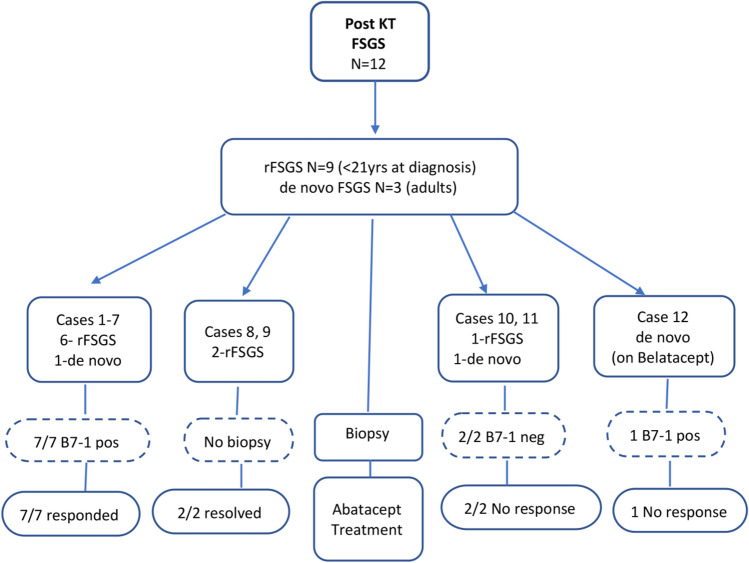
From 2012 to 2020, twelve patients developed post-KT FSGS with nephrotic range proteinuria, failed conventional therapy, and were treated with abatacept. Nine/twelve (< 21 years old) experienced recurrent FSGS; three adults developed de novo FSGS, occurring from immediately, up to 8 years after KT. KT biopsies were stained for B7-1.
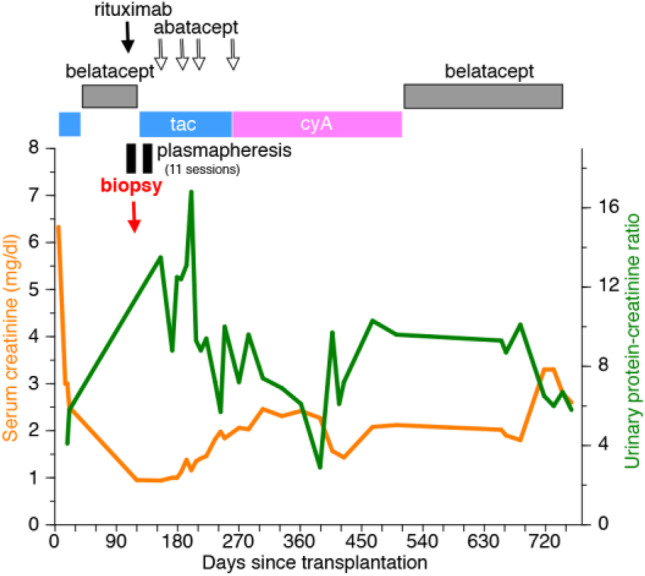
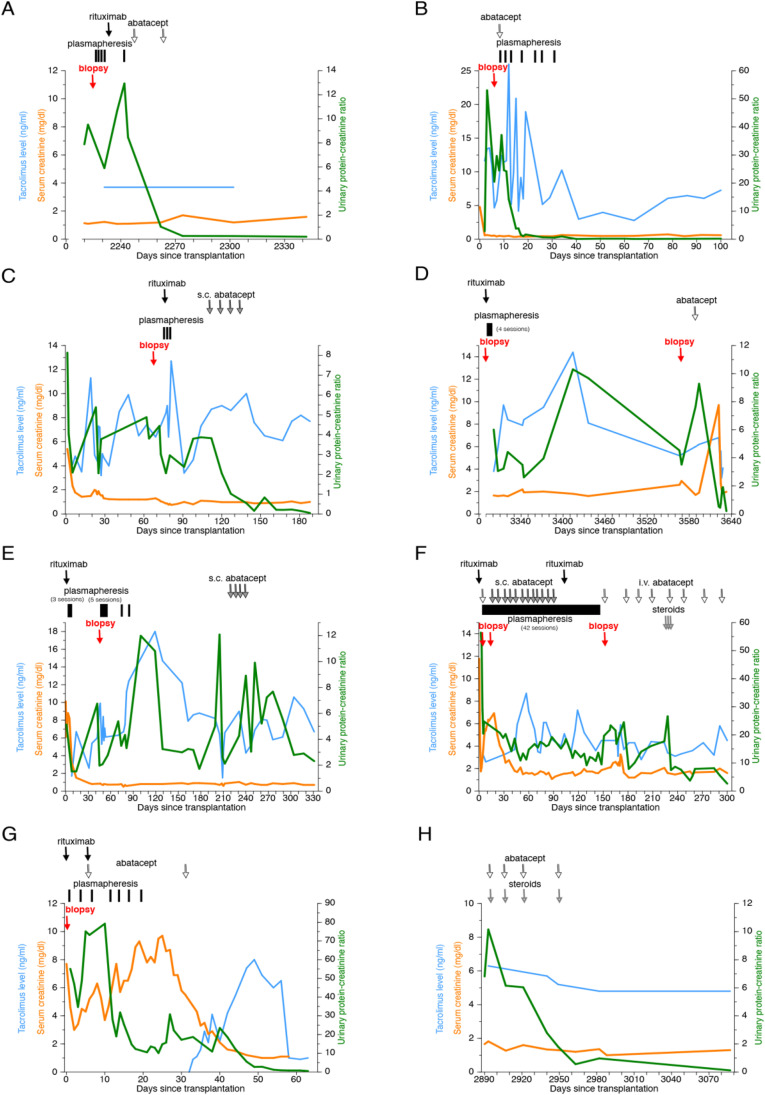
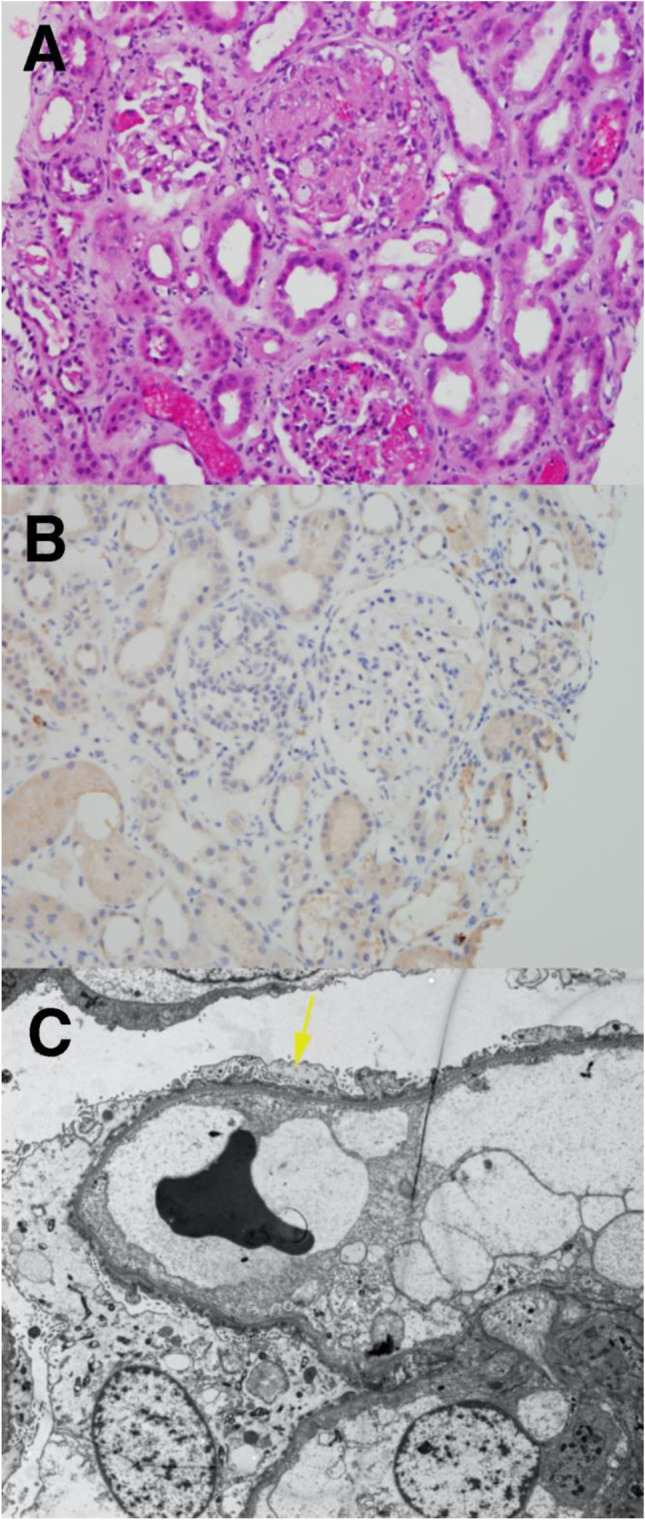
Nine KTRs (75%) responded to abatacept. Seven of nine KTRs were B7-1 positive and responded with improvement/resolution of proteinuria. Two patients with rFSGS without biopsies resolved proteinuria after abatacept. Pre-treatment UPCR was 27.0 ± 20.4 (median 13, range 8-56); follow-up UPCR was 0.8 ± 1.3 (median 0.2, range 0.07-3.9, p < 0.004). Two patients who were B7-1 negative on multiple KT biopsies did not respond to abatacept and lost graft function. One patient developed proteinuria while receiving belatacept, stained B7-1 positive, but did not respond to abatacept.
Podocyte B7-1 staining in biopsies of KTRs with post-transplant FSGS identifies a subset of patients who may benefit from abatacept. A higher resolution version of the Graphical abstract is available as Supplementary information.
原发性局灶节段性肾小球硬化症(FSGS)表现为肾病综合征,肾移植(KT)后可能复发。复发后对传统治疗无反应会导致不良预后。评估足细胞B7-1表达并用阿巴西普(一种B7-1拮抗剂)治疗已显示出前景,但仍存在争议。
2012年至2020年期间,12例KT后发生FSGS且有肾病范围蛋白尿、传统治疗无效的患者接受了阿巴西普治疗。12例中有9例(<21岁)经历了复发性FSGS;3名成年人发生了新发FSGS,发生在KT后即刻至8年。对KT活检组织进行B7-1染色。
9例肾移植受者(75%)对阿巴西普有反应。9例肾移植受者中有7例B7-1阳性,蛋白尿改善/消失。2例未进行活检的复发性FSGS患者在接受阿巴西普治疗后蛋白尿消失。治疗前的尿蛋白肌酐比(UPCR)为27.0±20.4(中位数13,范围8-56);随访时UPCR为0.8±1.3(中位数0.2,范围0.07-3.9,p<0.004)。在多次KT活检中B7-1阴性的2例患者对阿巴西普无反应,移植肾功能丧失。1例患者在接受贝拉西普治疗时出现蛋白尿,B7-1染色阳性,但对阿巴西普无反应。
移植后FSGS的肾移植受者活检组织中的足细胞B7-1染色可识别出可能从阿巴西普治疗中获益的患者亚组。更高分辨率的图形摘要版本可作为补充信息获取。