Slade Erin, McKechnie Iain, Salomon Anne K
School of Resource and Environmental Management, Simon Fraser University, Burnaby, British Columbia V5A 1S6 Canada.
Historical Ecology & Coastal Archaeology Laboratory, Department of Anthropology, University of Victoria, Cornett B246a, 3800 Finnerty Rd, Victoria, British Columbia V8P 5C2 Canada.
Ecosystems. 2022;25(3):548-566. doi: 10.1007/s10021-021-00671-3. Epub 2021 Aug 17.
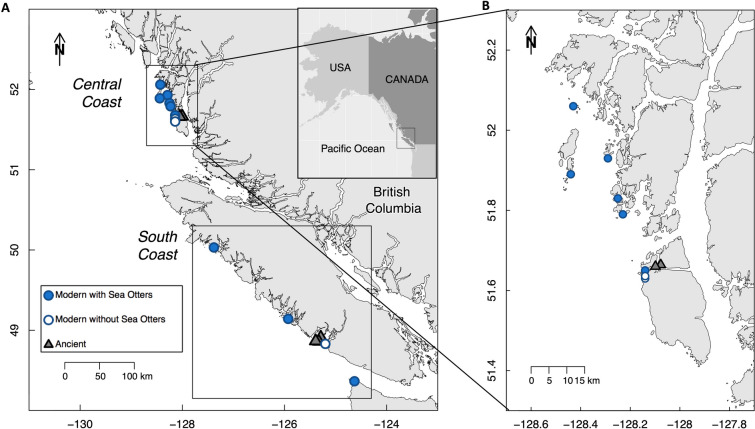
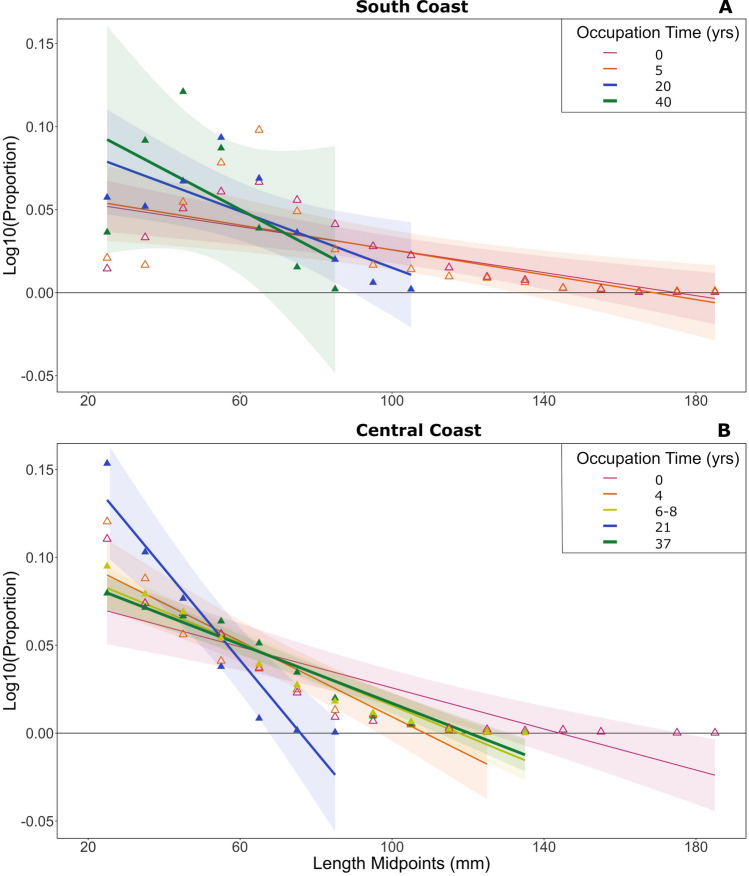
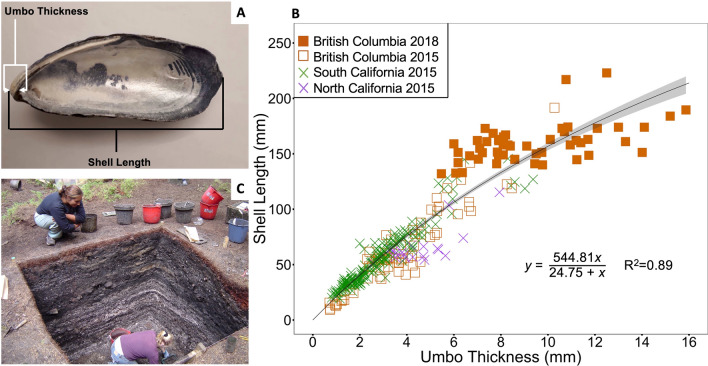
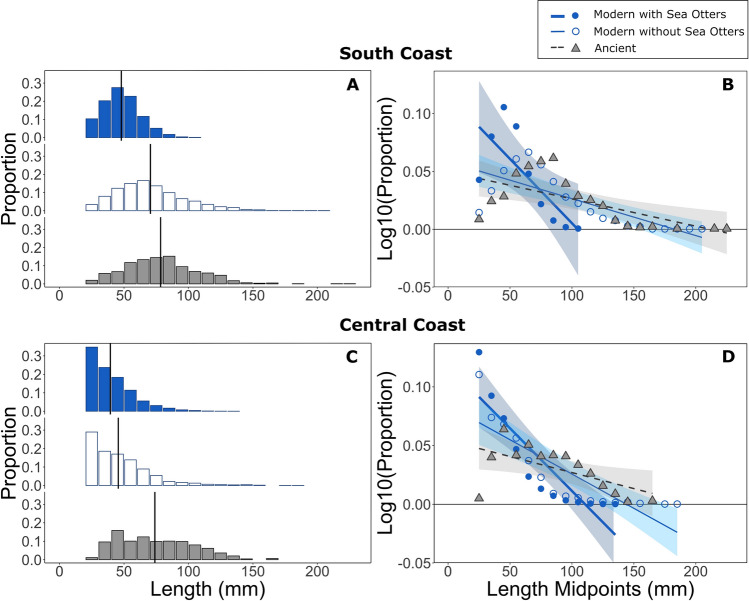
The historic extirpation and subsequent recovery of sea otters () have profoundly changed coastal social-ecological systems across the northeastern Pacific. Today, the conservation status of sea otters is informed by estimates of population carrying capacity or growth rates independent of human impacts. However, archaeological and ethnographic evidence suggests that for millennia, complex hunting and management protocols by Indigenous communities limited sea otter abundance near human settlements to reduce the negative impacts of this keystone predator on shared shellfish prey. To assess relative sea otter prevalence in the Holocene, we compared the size structure of ancient California mussels () from six archaeological sites in two regions on the Pacific Northwest Coast, to modern California mussels at locations with and without sea otters. We also quantified modern mussel size distributions from eight locations on the Central Coast of British Columbia, Canada, varying in sea otter occupation time. Comparisons of mussel size spectra revealed that ancient mussel size distributions are consistently more similar to modern size distributions at locations with a prolonged absence of sea otters. This indicates that late Holocene sea otters were maintained well below carrying capacity near human settlements as a result of human intervention. These findings illuminate the conditions under which sea otters and humans persisted over millennia prior to the Pacific maritime fur trade and raise important questions about contemporary conservation objectives for an iconic marine mammal and the social-ecological system in which it is embedded.
The online version contains supplementary material available at 10.1007/s10021-021-00671-3.
海獭曾经的灭绝及随后的恢复,深刻改变了东北太平洋沿岸的社会生态系统。如今,海獭的保护状况是通过对其种群承载能力或增长率的估计来确定的,这些估计独立于人类影响因素。然而,考古学和人种学证据表明,数千年来,原住民社区复杂的狩猎和管理协议限制了人类定居点附近海獭的数量,以减少这种关键捕食者对共享贝类猎物的负面影响。为了评估全新世中海獭的相对普遍程度,我们将西北太平洋海岸两个地区六个考古遗址的古代加州贻贝()的大小结构,与有海獭和没有海獭地区的现代加州贻贝进行了比较。我们还对加拿大不列颠哥伦比亚省中部海岸八个海獭占据时间不同的地点的现代贻贝大小分布进行了量化。贻贝大小谱的比较表明,古代贻贝的大小分布始终与长期没有海獭的地点的现代大小分布更为相似。这表明,由于人类干预,全新世晚期人类定居点附近的海獭数量一直维持在远低于承载能力的水平。这些发现揭示了在太平洋海上皮毛贸易之前的数千年里,海獭和人类得以存续的条件,并对这种标志性海洋哺乳动物及其所处的社会生态系统的当代保护目标提出了重要问题。
在线版本包含可在10.1007/s10021-021-00671-3获取 的补充材料。