Ni Jingyu, Liu Zhihao, Jiang Miaomiao, Li Lan, Deng Jie, Wang Xiaodan, Su Jing, Zhu Yan, He Feng, Mao Jingyuan, Gao Xiumei, Fan Guanwei
National Clinical Research Center for Chinese Medicine Acupuncture and Moxibustion, First Teaching Hospital of Tianjin University of Traditional Chinese Medicine, Tianjin, China.
Hubei Key Laboratory of Economic Forest Germplasm Improvement and Resources Comprehensive Utilization, Huanggang Normal University, Huanggang, China.
J Ginseng Res. 2022 Mar;46(2):235-247. doi: 10.1016/j.jgr.2021.06.001. Epub 2021 Jun 5.
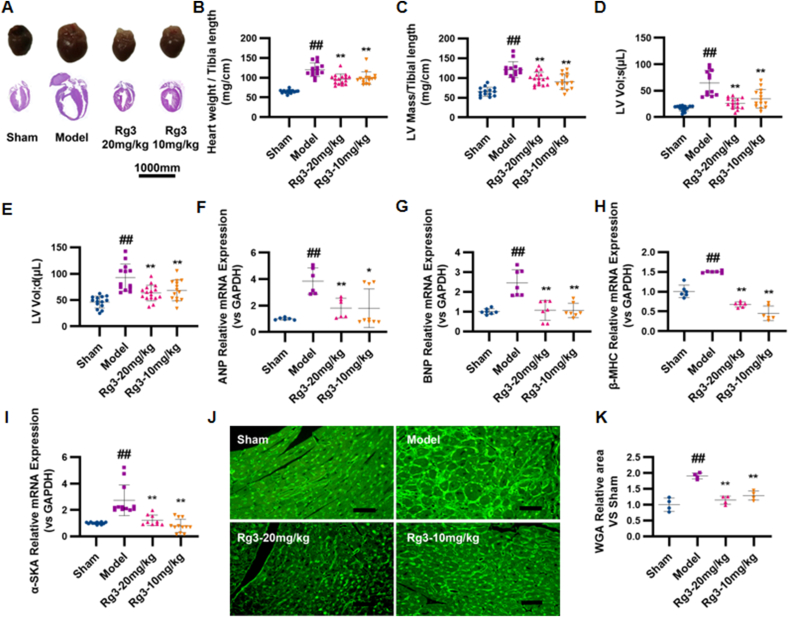
Ginsenoside Rg3 is one of the main active ingredients in ginseng. Here, we aimed to confirm its protective effect on the heart function in transverse aortic coarctation (TAC)-induced heart failure mice and explore the potential molecular mechanisms involved.
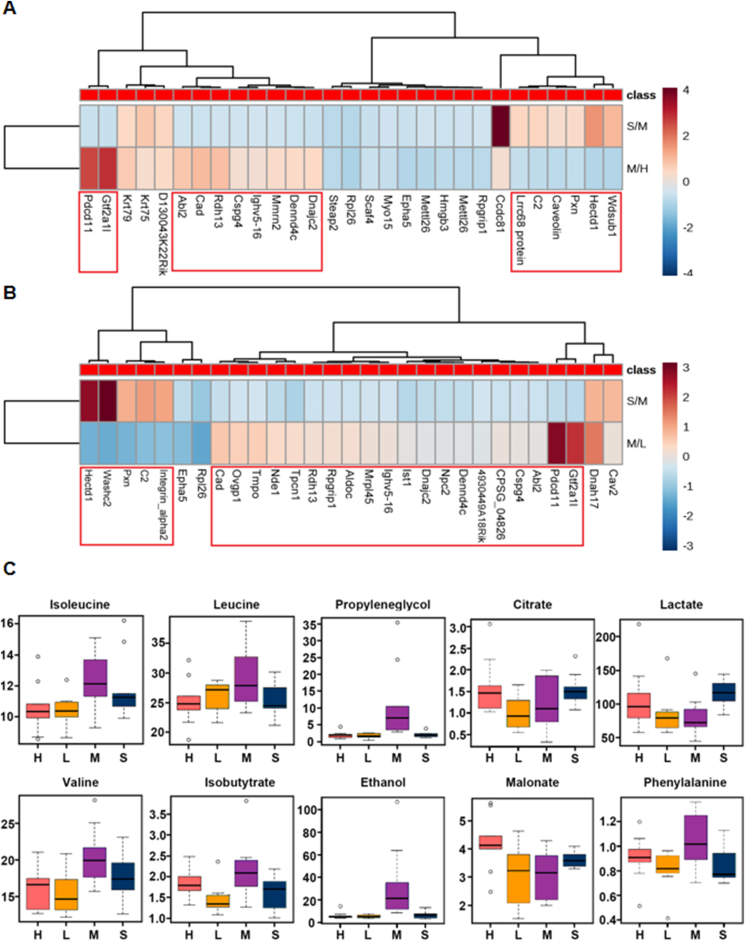
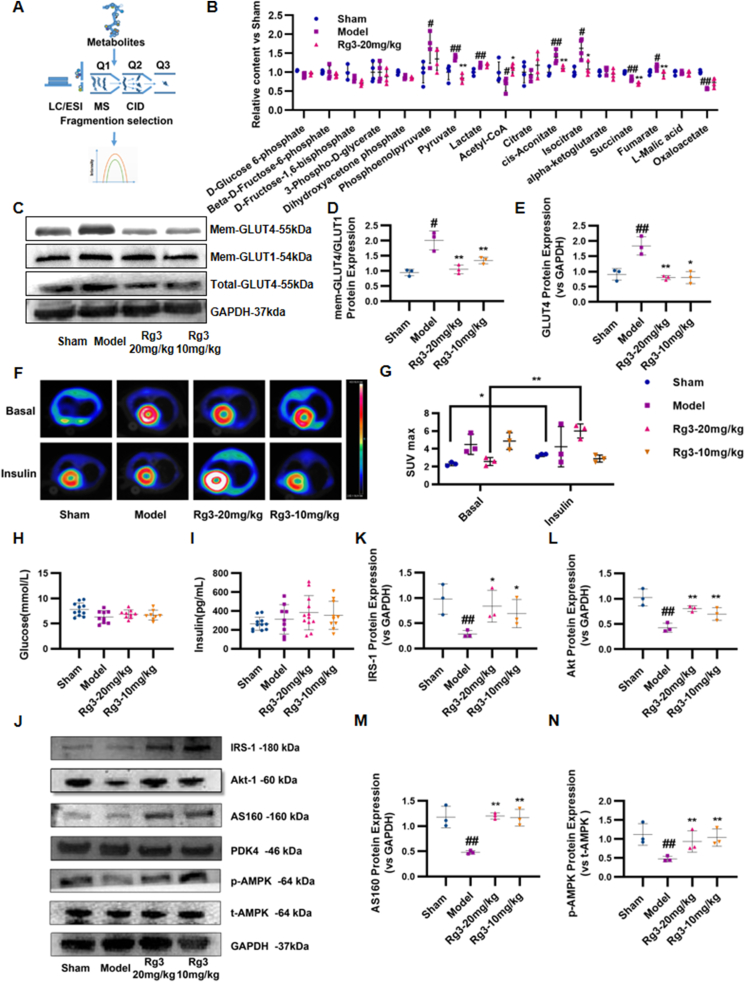
The effects of ginsenoside Rg3 on heart and mitochondrial function were investigated by treating TAC-induced heart failure in mice. The mechanism of ginsenoside Rg3 for improving heart and mitochondrial function in mice with heart failure was predicted through integrative analysis of the proteome and plasma metabolome. Glucose uptake and myocardial insulin sensitivity were evaluated using micro-positron emission tomography. The effect of ginsenoside Rg3 on myocardial insulin sensitivity was clarified by combining animal experiments and cell experiments.
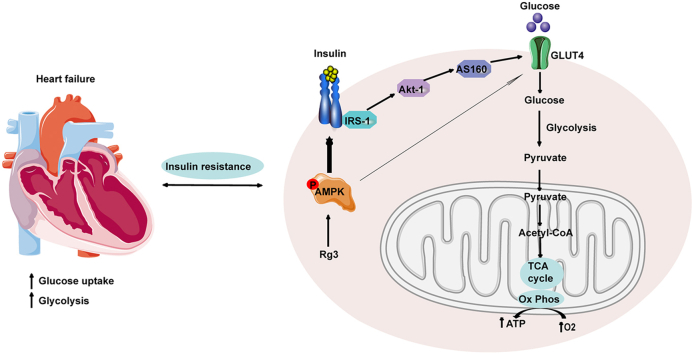
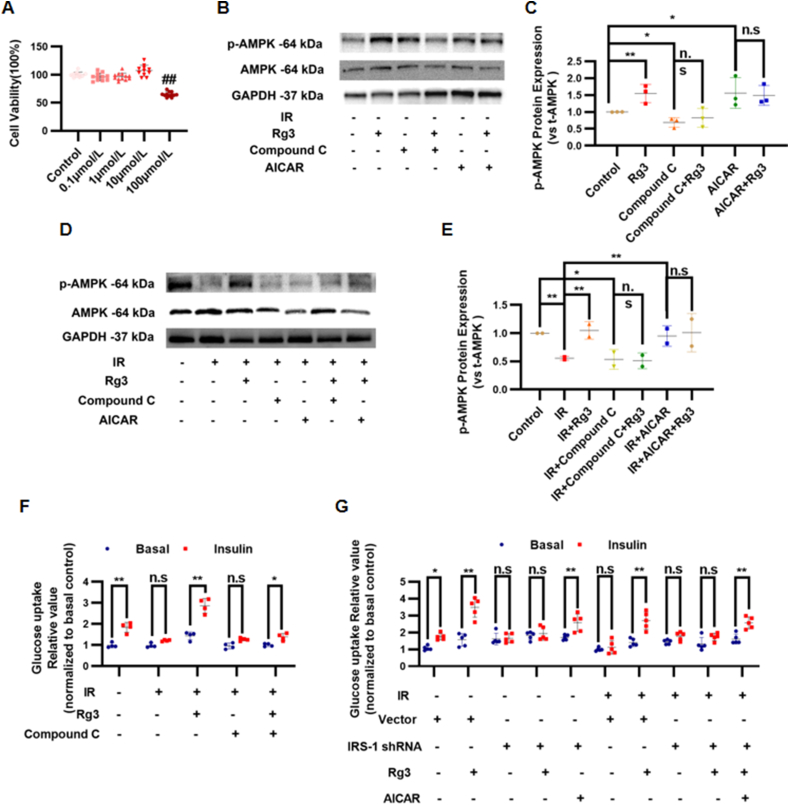
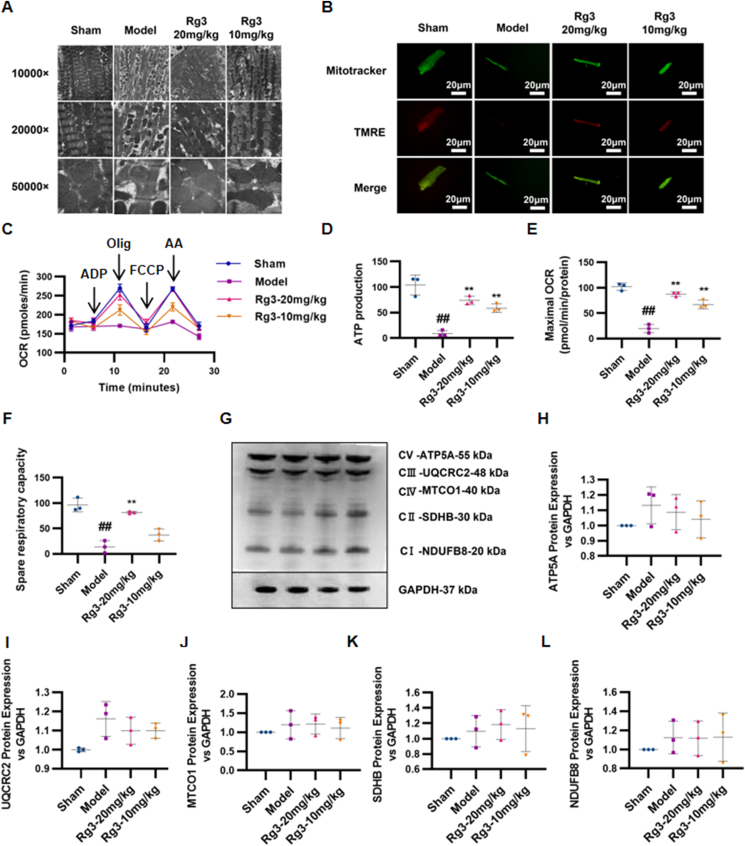
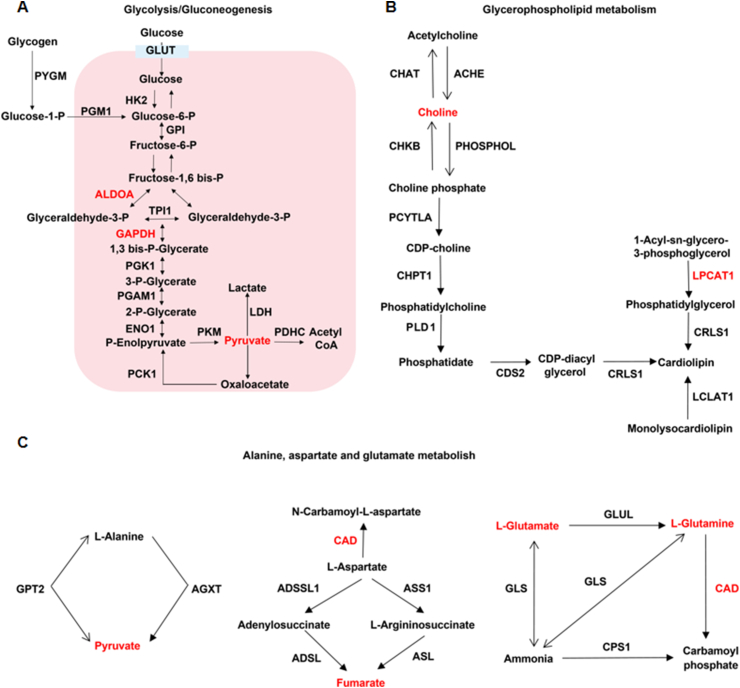
Treatment of TAC-induced mouse models with ginsenoside Rg3 significantly improved heart function and protected mitochondrial structure and function. Fusion of metabolomics, proteomics, and targeted metabolomics data showed that Rg3 regulated the glycolysis process, and Rg3 not only regulated glucose uptake but also improve myocardial insulin resistance. The molecular mechanism of ginsenoside Rg3 regulation of glucose metabolism was determined by exploring the interaction pathways of AMPK, insulin resistance, and glucose metabolism. The effect of ginsenoside Rg3 on the promotion of glucose uptake in IR-H9c2 cells by AMPK activation was dependent on the insulin signaling pathway.
Ginsenoside Rg3 modulates glucose metabolism and significantly ameliorates insulin resistance through activation of the AMPK pathway.
人参皂苷Rg3是人参的主要活性成分之一。在此,我们旨在证实其对经胸主动脉缩窄(TAC)诱导的心力衰竭小鼠心脏功能的保护作用,并探索其中潜在的分子机制。
通过治疗TAC诱导的小鼠心力衰竭来研究人参皂苷Rg3对心脏和线粒体功能的影响。通过蛋白质组学和血浆代谢组学的综合分析预测人参皂苷Rg3改善心力衰竭小鼠心脏和线粒体功能的机制。使用微型正电子发射断层扫描评估葡萄糖摄取和心肌胰岛素敏感性。通过结合动物实验和细胞实验阐明人参皂苷Rg3对心肌胰岛素敏感性的影响。
用人参皂苷Rg3治疗TAC诱导的小鼠模型可显著改善心脏功能,并保护线粒体结构和功能。代谢组学、蛋白质组学和靶向代谢组学数据的融合表明,Rg3调节糖酵解过程,且Rg3不仅调节葡萄糖摄取,还改善心肌胰岛素抵抗。通过探索AMPK、胰岛素抵抗和葡萄糖代谢的相互作用途径,确定了人参皂苷Rg3调节葡萄糖代谢的分子机制。人参皂苷Rg3通过激活AMPK途径促进IR-H9c2细胞中葡萄糖摄取的作用依赖于胰岛素信号通路。
人参皂苷Rg3通过激活AMPK途径调节葡萄糖代谢并显著改善胰岛素抵抗。