Altaf Reem, Nadeem Humaira, Ilyas Umair, Iqbal Jamshed, Paracha Rehan Zafar, Zafar Hajra, Paiva-Santos Ana Cláudia, Sulaiman Muhammad, Raza Faisal
Department of Pharmaceutical Chemistry, Faculty of Pharmaceutical Sciences, Riphah International University, Islamabad 44000, Pakistan.
Department of Pharmaceutical Sciences, Iqra University Islamabad Campus, Islamabad, 44000, Pakistan.
J Oncol. 2022 Apr 25;2022:7715689. doi: 10.1155/2022/7715689. eCollection 2022.
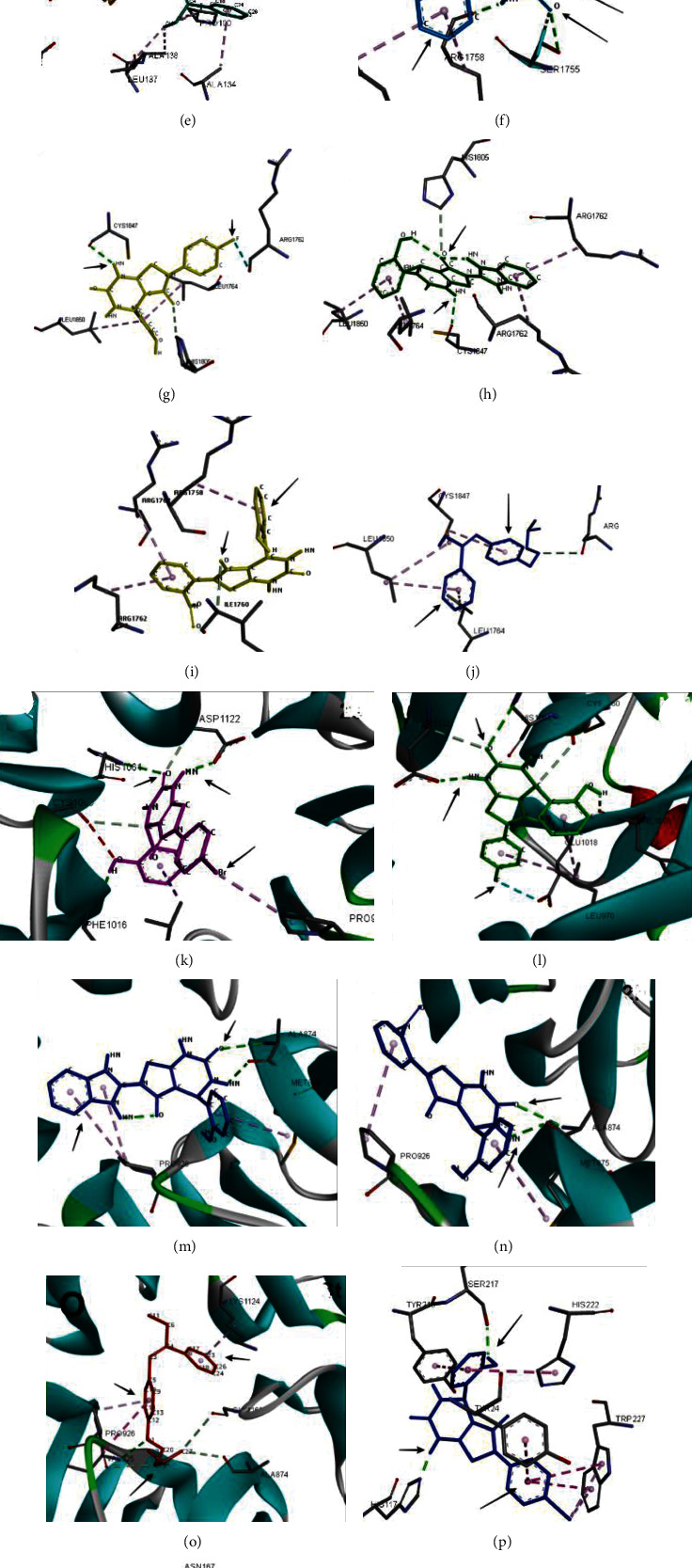
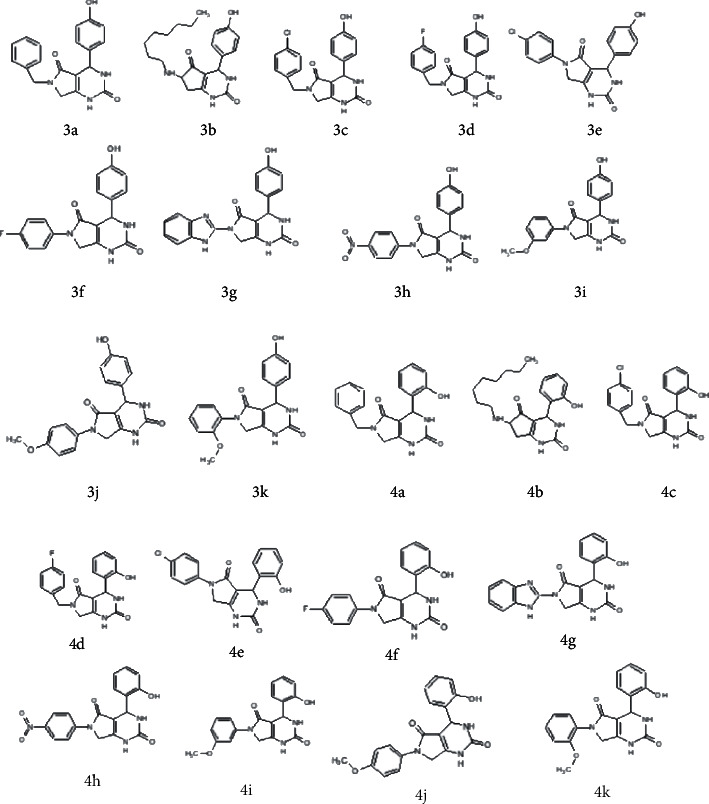
The diverse pharmacological role of dihydropyrimidinone scaffold has made it to be an interesting drug target. Because of the high incidence and mortality rate of breast cancer, there is a dire need of discovering new pharmacotherapeutic agents in managing this disease. A series of twenty-two derivatives of and synthesized in a previous study were evaluated for their anticancer potential against breast cancer cell line. Molecular docking studies were performed to analyze the binding mode and interaction pattern of these compounds against nine breast cancer target proteins. The cell proliferation assay was performed against the breast cancer cell line MCF-7. The structure activity relationship of these compounds was further studied using QSARINS. Among nine proteins, the docking analysis revealed efficient binding of compounds 4f, 4e, 3e, 4g, and 4h against all target proteins. The cytotoxic assay revealed significant anticancer activity of compound 4f having IC of 2.15 M. The compounds 4e, 3e, 4g, and 4h also showed anticancer activities with IC of 2.401, 2.41, 2.47 and 2.33 M, respectively. The standard tamoxifen showed IC 1.88 M. The 2D qualitative structure-activity relationship (QSAR) analysis was also carried out to identify potential breast cancer targets through QSARINS. The final QSAR equation revealed good predictivity and statistical validation and values for the model obtained from QSARINS was 0.98 and 0.97, respectively. The active compounds showed very good anticancer activities, and the binding analysis has revealed stable hydrogen bonding of these compounds with the target proteins. Moreover, the QSAR analysis has predicted useful information on the structural requirement of these compounds as anticancer agents with the importance of topological and autocorrelated descriptors in effecting the cancer activities.
二氢嘧啶酮支架的多种药理作用使其成为一个有趣的药物靶点。由于乳腺癌的高发病率和死亡率,迫切需要发现新的药物治疗剂来管理这种疾病。对先前研究中合成的一系列二十二种衍生物进行了评估,以确定它们对乳腺癌细胞系的抗癌潜力。进行了分子对接研究,以分析这些化合物与九种乳腺癌靶蛋白的结合模式和相互作用模式。针对乳腺癌细胞系MCF-7进行了细胞增殖测定。使用QSARINS进一步研究了这些化合物的构效关系。在九种蛋白质中,对接分析显示化合物4f、4e、3e、4g和4h与所有靶蛋白有效结合。细胞毒性测定显示化合物4f具有显著的抗癌活性,IC50为2.15μM。化合物4e、3e、4g和4h也显示出抗癌活性,IC50分别为2.401、2.41、2.47和2.33μM。标准他莫昔芬的IC50为1.88μM。还进行了二维定性构效关系(QSAR)分析,以通过QSARINS识别潜在的乳腺癌靶点。最终的QSAR方程显示出良好的预测性和统计验证,从QSARINS获得的模型的R2和Q2值分别为0.98和0.97。活性化合物显示出非常好的抗癌活性,结合分析表明这些化合物与靶蛋白形成稳定的氢键。此外,QSAR分析预测了这些化合物作为抗癌剂的结构要求的有用信息,以及拓扑和自相关描述符在影响癌症活性方面的重要性。